Mitt i nyårsmiddagen lade Stella ifrån sig besticken. – Elara, titta på Livia. Hon liknar inte Caspian alls. Hela Bergssläkten har höga kindben och ljusa ögon, men den här ungen … mörka ögon, liten näsa.
Vem vet vems barn du kom hem med? Livia slutade tugga. Hennes ögon fylldes med tårar. Runt bordet blev det knäpptyst.
– Stella, sa jag och försökte hålla rösten lugn. – Sådant säger man inte framför ett barn. – Det är bara ett skämt, sa svärmor och lade en bit mat på Stellas tallrik. – Ta inte illa upp, Elara.
Du ska väl inte förstöra stämningen. Caspian, min man, sänkte blicken. Han petade med gaffeln i den kalla maten och teg. Jag väntade på att han skulle resa sig, försvara mig, försvara sin dotter.
Han gjorde det inte. Ingen såg åt mitt håll. I fem år hade jag slitit i deras kök och betalat deras räkningar. Den kvällen valde jag att slå tillbaka.
Jag lade ifrån mig besticken och log. – Mamma har rätt. Nyårsafton ska man skämta. Då vill jag också berätta en rolig historia.
Sedan berättade jag om en ung kvinna från en fin familj som hade en affär med en gift man. Fruns privatdetektiv kom på dem. Kvinnan hoppade från hotellbalkongen i en badrock, bröt benet och ljög sedan för hela världen om att hon hade halkat i trappan. Stellas ansikte blev kritvitt.
Hon tappade glaset; apelsinjuicen rann ut över klinkern. – Tycker ni inte att det är lustigt, sa jag, att någon med så smutsiga hemligheter står och predikar moral för andra? Svärmor skrek att jag kom med struntprat. Jag tog fram telefonen.
– Vill ni se en bild? En vän på sjukhuset skickade den till mig. Stella satt som förstenad. Jag fortsatte.
– Stella, minns du de 120 000 kronor du lånade av mig? Du sa att det var till en skönhetssalong. Det var till en bil. Du har kört runt i den och låtsats vara framgångsrik medan jag sparade mina sista slantar till min dotters utbildning.
Iris, den yngre svärdottern, slog sin tallrik i bordet. – Mamma, jag har sagt det förut: du favoriserar Stella. Du lät oss bo i en fuktskadad hyreslägenhet och krävde pengar av oss, medan Stella fick allt. Hon har lurat Elara på pengar, och du har låtsats inte se.
Ruben instämde. Släkten började viska. Svärmor reste sig, vräkte omkull ett bord och pekade på mig. – Ta din dotter och försvinn från mitt hus!
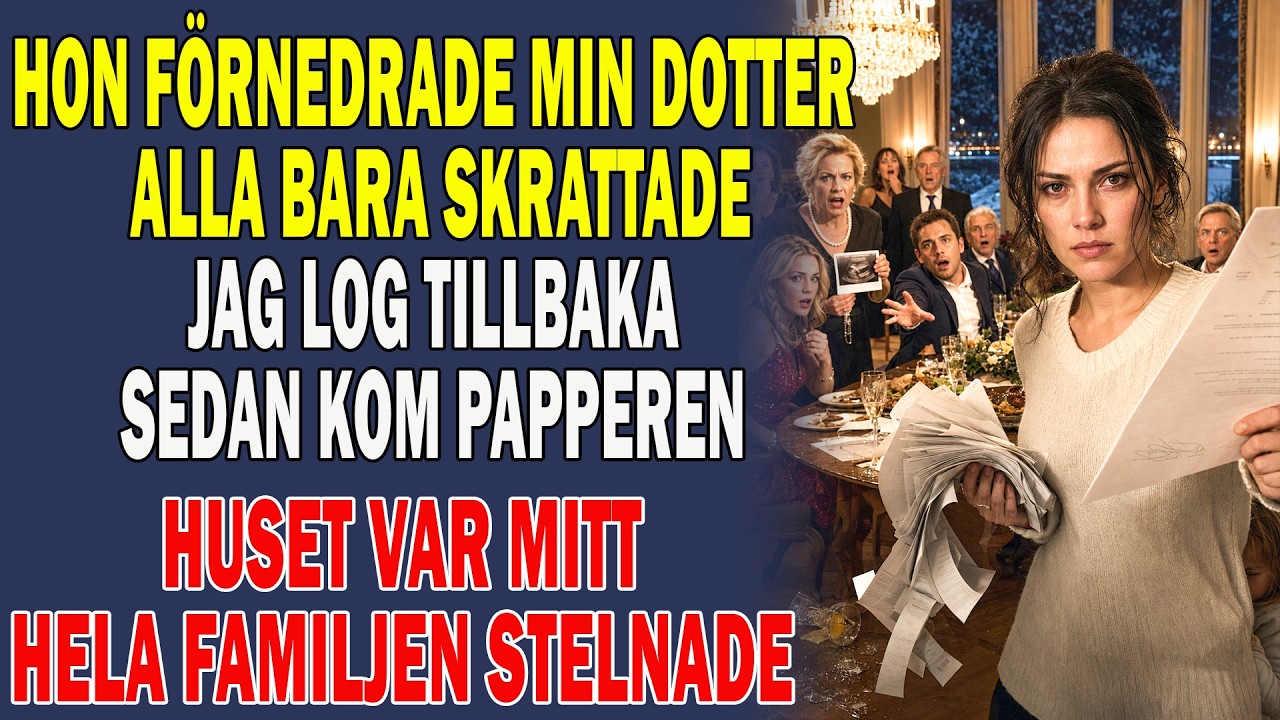
– Det här huset är inte ditt, sa jag lugnt. – Men det får ni veta om en stund. Jag tog upp ett brunt kuvert och kastade det på bordet. Kontoutdrag från Caspians bankkonto.
Kvitton på designerväskor, klockor och smycken. Månatliga överföringar på hundratusentals kronor till en kvinna som hette Lin. Inget av det var till mig eller hans familj. Allt gick till en älskarinna i en exklusiv lägenhet i utkanten av staden.
Caspian gapade. Svärmor stirrade på pappren. Svärfar Stellan reste sig, tog ett kontoutdrag och läste. Sedan small en örfil.
– Din usling! Din fru sliter för det här huset medan du försörjer en annan kvinna? Ur bunten gled ett ultraljudspapper. Svärmor fångade det.
Hennes ansikte förändrades när hon läste. – Lin … gravid i vecka tjugo. Det är en pojke. Hon log och vände sig mot mig.
– Elara, förlåt honom. När Lin har fött barnet kan du uppfostra det som ditt eget. En kvinna som inte kan föda en son får acceptera att lida lite. Jag skrattade.
Ett kort, isande skratt. – Så långt har er moral sjunkit. Jag lade två dokument på bordet. – Lagfarten till det här huset.
Registreringsbeviset till bilen. Båda står i mitt namn. Mina föräldrar sålde sin sommarstuga för att jag skulle kunna köpa huset. Ni har bott här på mina pengar och kallat mitt barn för oäkting.
Det är inte jag som ska lämna huset. Det är ni. Caspian försökte protestera. – Jag är familjeförsörjare.
Jag har också bidragit. Jag drog fram det sista pappret. – Du förskingrade 400 000 kronor från ditt företag för tre år sedan. Du föll på knä och bad mig rädda dig.
Mina föräldrar sålde sin sommarstuga för att betala tillbaka pengarna. Det här är återbetalningsavtalet. Din familj har levt på deras blod och svett. Caspian sjönk ihop.
Stellan blev grå i ansiktet. Svärmor tog till sitt vanliga knep. Hon föll ihop, höll sig för bröstet och jämrade sig. – Mitt hjärta!
Hon försöker döda mig! Stella skrek att jag var hjärtlös. Jag svarade:
– Sluta spela teater. I tre år har jag gett dig 150 000 kronor till mediciner.
Jag var på hälsokostbutiken. Du behövde billiga vitaminer. Resten gick till Stellas kläder, spa och älskare. Du och Stella konspirerade för att suga ut mig.
Iris reste sig igen. – Tvingade du oss också att skicka pengar till medicin för att ge allt till Stella? Vi har knappt råd att leva. Mamma, du har gått för långt.
Svärmor satt på golvet, blek och tom i blicken. Fasaden var raserad. Jag lade skilsmässoansökan framför Caspian. – Skriv under.
Jag kräver inget underhåll. Livia tar jag själv hand om. Ni får stanna här över nyår, men den sjunde januari ska ni ha lämnat mitt hus. Annars byter jag lås.
Svärmor stirrade på mig, reste sig och grep en fruktkniv. – Jag dör hellre än flyttar! Det här huset ska bli ett spökhus! Stella rusade mot mig, men hennes klack fastnade i såsen på golvet.
Hon halkade, slog i knäet – samma ben som nyss varit gipsat – och skrek. Kniven föll i golvet när svärmor kröp fram till sin dotter. Jag tog Livia, packade en väska med hennes kläder och gick. När jag öppnade dörren mötte nyårskylan mig.
Men jag frös inte. Fyrverkerierna smällde mot natthimlen. Ett år senare fick jag rapporten från Iris. Stellan fick högt blodtryck och hamnade på akuten samma natt.
Den sjunde januari flyttade de ut. Iris och Ruben vägrade ta emot dem. Stella förlorade sin rika pojkvän, tvingades jobba som servitris och fick dagligen utstå sin chefs hårda order. Lin aborterade och försvann när pengarna tog slut.
Caspian förlorade jobbet, bröt ihop och försörjer nu sina åldrande föräldrar med ströjobb i en fuktskadad lägenhet. En eftermiddag mötte jag min före detta svärmor på ett torg. Hon var mager, fårad och klädd i slitet tyg. När hon fick syn på mig sänkte hon huvudet och vände om.
Jag stod kvar och såg henne försvinna. Jag kände varken hat eller triumf. Bara lugn. Jag sålde huset, köpte en lägenhet närmare centrum och blev regional försäljningschef.
Livia går i en internationell förskola. I eftermiddags sprang hon ut genom grinden och kramade mitt ben. Hon visade stolt upp en teckning: två gestalter som höll varandra i handen under en stjärnhimmel, båda med strålande leenden. Jag lyfte upp henne och pussade hennes kinder.
Hennes skratt ekade i vårvinden.