Da saß ich also am Flughafen, drei Stunden vor Abflug. Ich überprüfte mein Ticket zum zehnten Mal. Zeit, Datum, alles stimmte. Am Schalter sah mich die Angestellte verwirrt an.
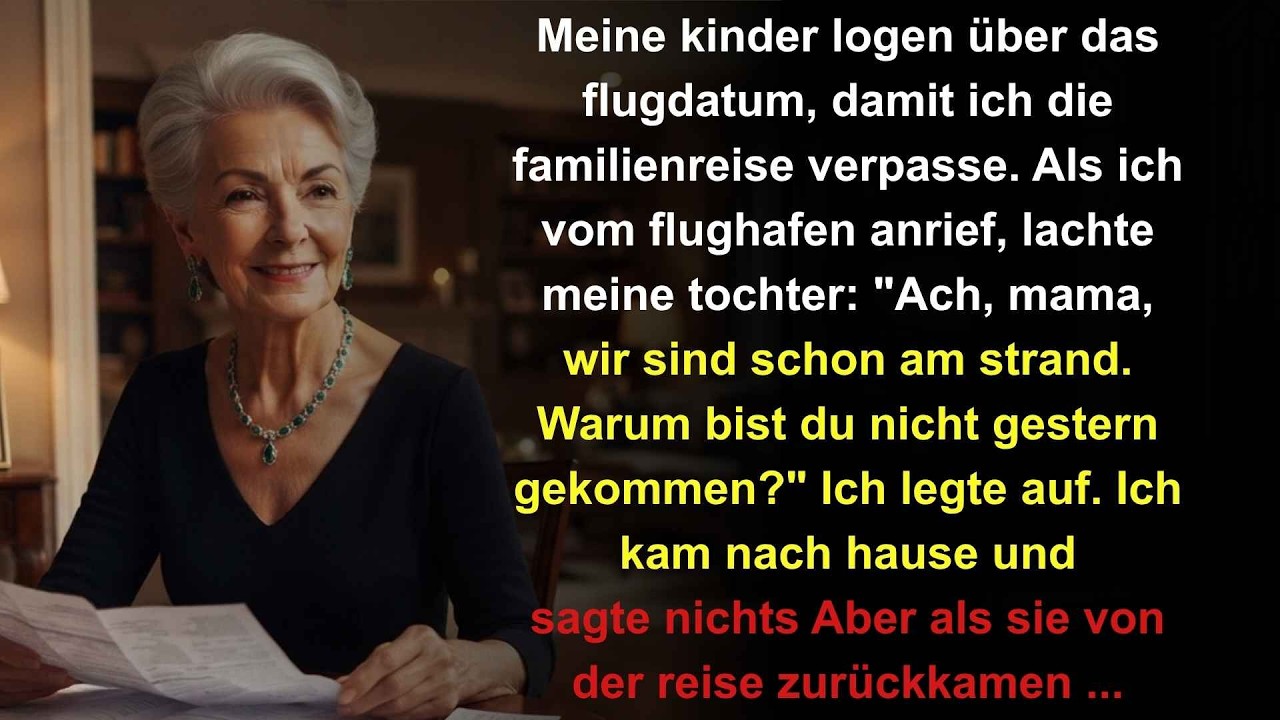
„Mein Flug sei schon am Vortag gegangen. “ Unmöglich. Meine Kinder hatten mir bestätigt, dass er heute geht. Ich suchte auf meinem Handy die Nachricht.
Da stand es: „Mama, der Flug ist morgen um 8 Uhr. “ Von Lena. Ich rief sie an. Im Hintergrund hörte ich Musik, Lachen, das Rauschen des Meeres.
„Ach Mama, wir sind schon am Strand. Warum bist du gestern nicht gekommen? “ Ihr Lachen brach mir das Herz. Ich legte auf, ohne zu antworten.
Vierzig Minuten saß ich auf einem Stuhl und sah Familien, die pünktlich zu ihrem Urlaub aufbrachen. Meine eigenen Kinder hatten mich belogen, damit ich diese Reise verpasste. Ich kehrte nach Hause zurück. Ich weinte nicht, ich schrie nicht.
Als sie aus dem Urlaub zurückkamen, empfing ich sie wie immer. Sie umarmten mich, erzählten von den schönen Tagen. Ihre Worte klangen einstudiert. Es war, als hätte meine Abwesenheit keine Rolle gespielt.
Ich war immer die Organisatorin gewesen. Ich plante die Reisen, zahlte alles, hielt die Familie zusammen. Nach dem Tod meines Mannes war der Freitag heilig geworden: Lena und Elias kamen mit ihren Familien, ich kochte ihre Lieblingsgerichte, hörte zu, half, wo ich konnte. Ich dachte, wir wären eine enge Familie.
Jetzt fragte ich mich, ob ich die Einzige war, die daran glaubte. Eine Woche nach ihrer Rückkehr räumte ich mein Arbeitszimmer auf. Hinter alten Ordnern entdeckte ich einen unbekannten Ordner. Er war versteckt, als sollte ich ihn nicht finden.
Ich öffnete ihn. Und mein Herz blieb stehen. Darin lagen Kopien medizinischer Dokumente. Ein Psychologe, den ich nie gesehen hatte, beschrieb Symptome von Altersdemenz.
Angeblich war ich dreimal untersucht worden. Nie. Dann ein Antrag auf Feststellung meiner geistigen Unfähigkeit, unterschrieben von Lena und Elias. Sie behaupteten, ich hätte Verwirrungsepisoden, vergäße Medikamente, könne meine Finanzen nicht mehr verwalten.
Datiert vor zwei Monaten, lange bevor der Flug losging. Dazu eine Bewertung meines Hauses. Alles war katalogisiert: Möbel, Schmuck, Auto. Und dann ausgedruckte Textnachrichten zwischen meinen Kindern.
„Der Psychologe sagt, wir brauchen mehr Beweise. “ „Ich habe Aufnahmen, als sie ihre Medikamente wiederholt hat. “ „Sobald wir die Kontrolle haben, verkaufen wir das Haus. Sie kann in eine Einrichtung.
“ „Dann haben wir endlich das Leben, das wir verdienen. “
Meine Hände zitterten. Meine eigenen Kinder hatten geplant, mich in ein Heim zu stecken, mein Haus zu verkaufen und mein Geld zu behalten. Deshalb durfte ich nicht mit auf die Reise.
Sie brauchten die Zeit, um ihren Plan abzuschließen. Ich versteckte den Ordner an einem sicheren Ort. Sie wussten nicht, dass ich es wusste. Das war mein Vorteil.
In den nächsten Tagen untersuchte ich alles. Bei der Bank sagte mir der Manager: „Ihre Kinder waren letzte Woche hier und haben sich nach Ihren Konten erkundigt. “ Ich entdeckte Abhebungen, die ich nie autorisiert hatte. Meine Unterschrift war gefälscht worden.
Ich ließ alle Konten einfrieren. Beim Anwalt, angeblich ein Freund meines Sohnes, fand ich Vollmachten und Unfähigkeitsanträge, die ich nie unterschrieben hatte. Der Anwalt wurde blass. „Ihr Sohn hat mir medizinische Dokumente gezeigt.
“ Ich erwiderte: „Die sind gefälscht. “ Ich nahm Kopien mit und verlangte, dass alle Anträge in meinem Namen sofort zurückgezogen wurden. Beim Psychologen erfuhr ich: Die Sitzungen hatte meine Tochter wahrgenommen. Lena hatte in meinem Namen Symptome gemeldet und sogar Videos gezeigt, in denen eine Frau verwirrt wirkte.
Ich wusste: Ich war nie gefilmt worden. Sie hatten alles erfunden. Meine Freundin Susanne war entsetzt. „Jetzt verstehe ich, warum mich Lena so oft nach deinem Verhalten gefragt hat.
“ Sie gab mir den Namen einer Anwältin, die sich auf Missbrauch an älteren Menschen spezialisiert hatte. Nora sah sich die Beweise an. „Das ist ein schweres Verbrechen. Wir müssen schnell handeln.
“
Am Freitag kamen meine Kinder zum Abendessen, wie immer. Ich spielte die verwirrte alte Frau. „Ich weiß nicht, Kinder, in letzter Zeit fühle ich mich so durcheinander. Gestern wusste ich nicht mehr, ob ich die Tür abgeschlossen habe.
“ Ihre Augen leuchteten. Genau das wollten sie hören. Sie schlugen einen Neurologen vor, Hilfe im Haus, die Verwaltung meiner Finanzen. Später hörte ich sie flüstern: „Sie wird schneller schlechter, als wir dachten.
“ „Nächste Woche reichen wir die Unterlagen ein. “
Am Montagmorgen klingelte es. Eine junge Frau in weißer Uniform stand vor der Tür. „Ich bin Amalia, die Pflegerin, die Ihre Kinder eingestellt haben.
“ Sie hatte die Anweisung, jedes seltsame Verhalten zu melden. Ich schickte sie weg. Meine Kinder hatten eine Grenze überschritten. Kurz darauf kamen Lena und Elias.
„Mama, du kannst keine wichtigen Entscheidungen mehr treffen. “ Sie sagten, ich komme in eine Einrichtung. „Es ist keine Bitte. Wir haben mit allen gesprochen.
“ Ich sagte Nein. Da klingelte es wieder. Zwei Sanitäter standen vor der Tür, mit einer Trage und einem medizinischen Dokument, das mich in eine Pflegeeinrichtung bringen sollte. Ich wusste, es war gefälscht.
Ich schloss mich im Badezimmer ein und rief Nora an. „Sie sind hier. Sie wollen mich mitnehmen. “ Nora: „Halten Sie durch.
Ich habe die gerichtliche Anordnung. Die Polizei ist unterwegs. “ Ich hörte, wie sie gegen die Tür hämmerten. „Wenn du nicht rauskommst, brechen wir auf.
“ Dann Sirenen. Polizei. Meine Kinder standen in Handschellen. Nora war mit der Anordnung da.
Die Sanitäter gaben zu, getäuscht worden zu sein. In den folgenden Wochen kam die ganze Wahrheit ans Licht. Lena und Elias waren Teil eines Netzwerks, das ältere Menschen mit gefälschten Dokumenten für unfähig erklären ließ. Zwei andere Opfer waren unter ungeklärten Umständen gestorben.
Lena hatte Schulden und Spielprobleme. Elias wollte vom Gewinn profitieren. Sie hatten ein Angebot für mein Haus bekommen, weit über dem, was sie mir je genannt hatten. Sie wollten es vor Jahresende verkaufen.
Ich lernte Frau Stein kennen, ein früheres Opfer. Sie hatte alles verloren, aber ihre Aussage half, das Muster zu erkennen. Sie nahm meine Hände: „Sie haben Glück, dass Sie sie erwischt haben, bevor sie ihren Plan abschließen konnten. “
Der Prozess endete sechs Monate später.
Lena und Elias wurden zu fünfzehn Jahren verurteilt. Der Anwalt zu zwanzig. Das Netzwerk wurde zerschlagen. Ich bekam die Kontrolle über mein Leben zurück.
Ich verkaufte das Haus. Nicht, weil mich jemand zwang, sondern weil ich es so wollte. Ich kaufte eine kleine Wohnung am Meer. Susanne fragte, ob ich traurig sei, alles zurückzulassen.
„Nein. Dieses Haus stand für ein Leben, das nie echt war. “
Ich gründete eine Stiftung für ältere Menschen, die von ihren Familien missbraucht werden. Frau Stein wurde meine Partnerin.
Mit dem Geld aus der Entschädigung konnten wir Rechtshilfe und Unterkünfte anbieten. Es war das Beste, was ich in meinem Leben getan habe. Meine Enkel waren der größte Verlust. Sie waren unschuldig, aber ihre Eltern hatten sie gegen mich aufgehetzt.
Ich habe alle Beweise aufbewahrt. Wenn sie eines Tages die Wahrheit suchen, können sie sie finden. Am Ende saß ich in meinem Garten unter den Sternen, in meiner letzten Nacht in diesem Haus. Morgen ziehe ich ans Meer.
Ich dachte an Lena, an ihren wütenden Blick bei der Verhaftung: „Du wirst am Ende allein sein. “ Sie hatte recht. Aber es fühlte sich nicht wie eine Drohung an. Es fühlte sich wie Freiheit an.
Mit dreiundsiebzig Jahren habe ich gelernt, was es heißt, für mich selbst zu stehen. Ich bin allein. Aber zum ersten Mal in meinem Leben bin ich in Frieden.