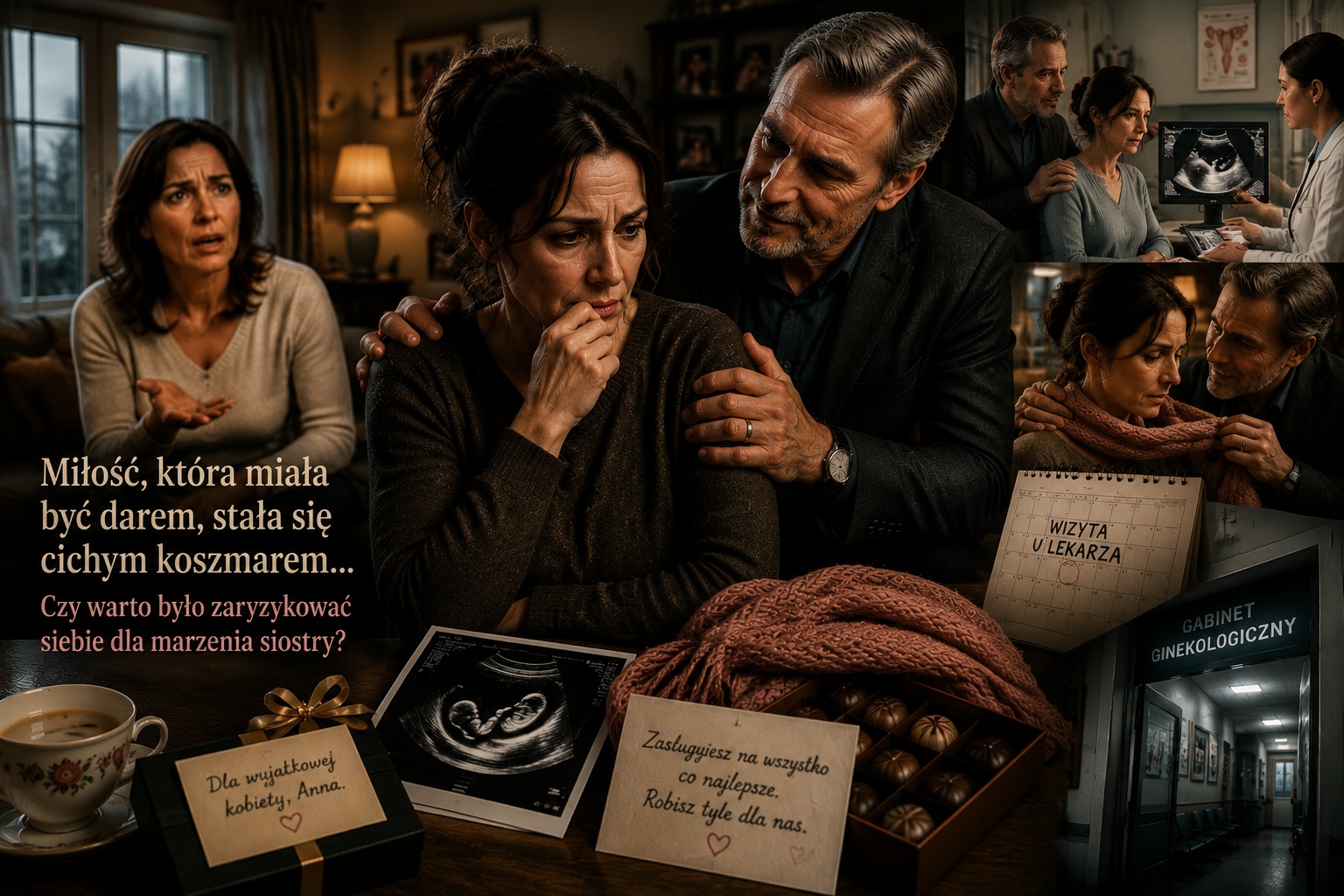
Nigdy nie zapomnę chwili, w której moja własna siostra spojrzała mi w oczy i poprosiła o coś, co miało zmienić całe moje życie. Myślałam wtedy, że robię największy akt miłości, na jaki człowiek może się zdobyć. Chciałam dać jej szczęście, którego pragnęła od lat. Nie wiedziałam jednak, że za tym pięknym gestem kryje się plan, który miał zniszczyć nasze relacje, odebrać mi spokój i sprawić, że zacznę bać się ludzi, którym najbardziej ufałam.
Mam na imię Anna. Mam czterdzieści dwa lata i przez większość życia wierzyłam, że rodzina jest miejscem, w którym człowiek zawsze może znaleźć bezpieczeństwo. Dzisiaj wiem, że czasami największe rany zadają nam właśnie ci, którym otwieramy drzwi bez żadnych pytań.
Wszystko zaczęło się pewnego chłodnego jesiennego popołudnia w Krakowie. Pamiętam zapach herbaty z malinami, szum deszczu uderzającego o szyby i ciszę, która nagle pojawiła się w domu mojej siostry Renaty.
Siedziałyśmy razem przy stole. Tak jak robiłyśmy to setki razy wcześniej. Renata zawsze była tą silniejszą z nas. Starszą, bardziej opanowaną, zawsze gotową pomagać innym. Przez trzydzieści lat małżeństwa z Wiktorem przeszła wiele trudnych chwil, ale nigdy nie widziałam jej tak przygaszonej jak wtedy.
Spojrzała na mnie i długo milczała.
— Aniu… muszę cię o coś poprosić — powiedziała cicho.
Uśmiechnęłam się lekko.
— Oczywiście. Wiesz, że możesz na mnie liczyć.
Wtedy jeszcze nie wiedziałam, że te słowa będą miały tak ogromną cenę.
Renata zacisnęła dłonie na filiżance.
— Chcę zostać matką.
Zdziwiłam się, ale nic nie powiedziałam. Wiedziałam, że od lat marzyła o dziecku. Wiedziałam też, że lekarze odebrali jej tę nadzieję wiele razy.
— Renata… przecież próbowałaś wszystkiego.
Łzy pojawiły się w jej oczach.
— Właśnie dlatego chcę spróbować czegoś innego.
Zatrzymała wzrok na mnie.
— Chcę, żebyś została moją surogatką.
Przez kilka sekund miałam wrażenie, że przestałam słyszeć wszystko wokół.
Deszcz. Zegar na ścianie. Nawet własny oddech.
— Ja?
Skinęła głową.
— Jesteś zdrowa. Jesteś moją siostrą. Ufam ci bardziej niż komukolwiek.
To zdanie powinno mnie uspokoić.
Ale coś w jej głosie sprawiło, że poczułam dziwny niepokój.
Tamtej nocy długo siedziałam sama w samochodzie przed własnym domem. Wiedziałam, że to ogromna decyzja. Wiedziałam, że ciąża dla kogoś innego zmieni moje życie.
Ale jednocześnie myślałam o Renacie.
O wszystkich latach, kiedy była przy mnie.
O tym, jak pomagała mi, gdy rozwodziłam się z pierwszym mężem.
O tym, jak trzymała mnie za rękę podczas najtrudniejszych chwil.
Jak mogłam odmówić?
Kilka dni później odwiedził mnie Wiktor.
Nie spodziewałam się go.
Stał przed drzwiami z tym swoim spokojnym uśmiechem, który zawsze sprawiał, że ludzie mu ufali.
Miał sześćdziesiąt pięć lat, ale nadal wyglądał bardzo dobrze. Zadbany, elegancki, pewny siebie.
— Musimy porozmawiać, Aniu.
Wpuściłam go do środka.
— Renata powiedziała mi, że się zastanawiasz.
— To nie jest łatwa decyzja.
Usiadł naprzeciwko mnie.
— Wiem. Dlatego właśnie chcę ci powiedzieć, jak wiele to dla nas znaczy.
Dla nas.
To słowo zostało w mojej głowie.
— Renata zawsze była dla mnie jak siostra — kontynuował. — A ty możesz dać jej największy prezent w życiu.
Pokiwałam głową.
Brzmiało pięknie.
Prawie zbyt pięknie.
Ale wtedy jeszcze nie potrafiłam nazwać tego uczucia.
Kilka tygodni później rozpoczęły się badania.
Lekarze, dokumenty, rozmowy, przygotowania.
Wszystko działo się bardzo szybko.
I wtedy zauważyłam coś dziwnego.
Wiktor był zawsze obok.
Za każdym razem.
Gdy miałam wizytę u lekarza — pojawiał się.
Gdy potrzebowałam odebrać wyniki — oferował pomoc.
Gdy Renata była zajęta — natychmiast znajdował powód, żeby ze mną porozmawiać.
Na początku uważałam, że to troska.
Że chce po prostu zadbać o mnie.
Ale z czasem zaczęłam czuć dyskomfort.
Pewnego dnia po badaniu wyszliśmy ze szpitala.
Było zimno. Wiatr przeszywał powietrze.
Wiktor zatrzymał się obok samochodu.
— Wszystko dobrze? — zapytał.
— Tak. Jestem tylko zmęczona.
Spojrzał na mnie dłużej niż powinien.
— Wiesz, Aniu… jesteś wyjątkową kobietą.
Odwróciłam wzrok.
— Dziękuję.
— Renata miała szczęście, że ma kogoś takiego jak ty.
Jego ręka przez chwilę spoczęła na moim ramieniu.
Niby zwykły gest.
Ale coś we mnie krzyczało, że powinnam się odsunąć.
I wtedy pierwszy raz pomyślałam:
Czy ja naprawdę pomagam mojej siostrze… czy właśnie wchodzę w czyjąś starannie przygotowaną pułapkę?
Kilka dni później dostałam wiadomość.
Od Wiktora.
„Musimy porozmawiać. Są rzeczy, których jeszcze nie wiesz.”
Patrzyłam na ekran telefonu przez kilka minut.
Nie odpisałam.
Ale tej nocy nie zasnęłam.
Bo po raz pierwszy poczułam, że największym zagrożeniem może nie być sama sytuacja.
Największym zagrożeniem może być człowiek, któremu wszyscy ufają.
A najgorsze miało dopiero nadejść…
Przez kilka następnych dni próbowałam wmówić sobie, że przesadzam.
Że Wiktor po prostu za bardzo się angażuje.
Że jego troska jest tylko troską.
Że szukam problemu tam, gdzie go nie ma.
Ale im bardziej próbowałam uspokoić własne myśli, tym wyraźniej czułam, że coś jest nie tak.
Najgorsze było to, że nie potrafiłam powiedzieć dokładnie co.
To nie były wielkie rzeczy.
Nie było jednego momentu, w którym mogłabym powiedzieć: „Właśnie wtedy przekroczył granicę”.
To były drobiazgi.
Sposób, w jaki patrzył.
Zbyt osobiste pytania.
Zbyt częste wiadomości.
Słowa, które dla innych brzmiałyby normalnie, ale dla mnie zaczynały mieć drugie znaczenie.
Pewnego wieczoru siedziałam sama w domu, kiedy telefon nagle zawibrował.
Wiadomość od Wiktora.
„Wiem, że coś czujesz. Porozmawiajmy, zanim będzie za późno.”
Serce zaczęło mi bić szybciej.
Skąd wiedział?
Skąd wiedział, że od kilku dni czuję strach?
Nie odpisałam.
Odłożyłam telefon na stół.
Ale wtedy wydarzyło się coś, czego nigdy się nie spodziewałam.
Kilka godzin później usłyszałam dzwonek do drzwi.
Otworzyłam.
Wiktor stał na klatce schodowej.
— Anna, musimy porozmawiać.
Spojrzałam na niego z niedowierzaniem.
— Co ty tutaj robisz?
— Martwię się o ciebie.
To zdanie zabrzmiało dziwnie.
Nie jak troska.
Bardziej jak ostrzeżenie.
Wpuściłam go, ale nie zaprosiłam do środka.
Stałam przy drzwiach.
— Powiedz mi prawdę, Wiktor.
Zmarszczył brwi.
— O czym mówisz?
— Dlaczego jesteś przy mnie cały czas?
Przez chwilę milczał.
A potem uśmiechnął się.
Ale nie był to ten sam spokojny uśmiech, który widziałam wcześniej.
Było w nim coś chłodnego.
— Naprawdę myślisz, że wszystko rozumiesz?
Poczułam zimno.
— Myślę, że próbujesz coś przede mną ukryć.
Zbliżył się krok.
— Anna… nie wiesz, w co się mieszasz.
Te słowa zapamiętałam na zawsze.
Bo człowiek, który nie ma nic do ukrycia, zwykle mówi:
„Nieporozumienie”.
Nie mówi:
„Nie wiesz, w co się mieszasz”.
Tej nocy podjęłam decyzję.
Musiałam znaleźć prawdę.
Nawet jeśli miała mnie zranić.
Kilka dni później pojechałam do domu Renaty.
Powiedziałam jej, że szukam starej książki, którą kiedyś mi pożyczyła.
To było kłamstwo.
Tak naprawdę szukałam odpowiedzi.
Czułam się źle.
To była moja siostra.
Jej dom.
Jej prywatność.
Ale coś we mnie mówiło, że jeśli teraz się wycofam, później może być za późno.
Kiedy Renata była w kuchni, weszłam do gabinetu Wiktora.
Pokój wyglądał dokładnie tak, jak on sam.
Uporządkowany.
Elegancki.
Zimny.
Na biurku leżały dokumenty.
Faktury.
Umowy.
Notatki.
Już miałam wyjść, kiedy zauważyłam zamkniętą szufladę.
Nie wiem dlaczego.
Może intuicja.
Może strach.
Otworzyłam ją.
I wtedy zobaczyłam kopertę.
Na górze było moje imię.
Anna.
Przez kilka sekund tylko patrzyłam.
Nie chciałam jej otwierać.
Naprawdę nie chciałam.
Bo czasami człowiek boi się prawdy bardziej niż kłamstwa.
Ale moje ręce same sięgnęły po list.
Pierwsze zdanie sprawiło, że poczułam, jakby ktoś odebrał mi powietrze.
„Anna jest najlepszym rozwiązaniem. Ufa nam i właśnie dlatego będzie łatwa do przekonania.”
Przeczytałam dalej.
Każde kolejne słowo bolało bardziej.
Wiktor od miesięcy planował wszystko.
Nie chodziło tylko o dziecko.
Chodziło o kontrolę.
Chciał, aby po narodzinach dziecka wszystkie decyzje należały do niego.
Przygotowywał dokumenty.
Rozmawiał z prawnikami.
Szukając sposobu, aby ograniczyć moje prawa jako biologicznej matki.
A Renata?
Moja siostra?
Nie wiedziała nic.
Była tylko kolejną osobą, którą manipulował.
Odłożyłam list.
Łzy napłynęły mi do oczu.
Najbardziej bolało nie to, że mnie wykorzystał.
Najbardziej bolało to, że wykorzystał moją miłość do Renaty.
Wyszłam z gabinetu i wróciłam do kuchni.
Renata odwróciła się.
— Znalazłaś książkę?
Spojrzałam na nią.
Na kobietę, którą kochałam całe życie.
I nie byłam w stanie powiedzieć prawdy.
Jeszcze nie.
Bo jak mówi się siostrze, że człowiek, z którym spędziła trzydzieści lat życia, budował za jej plecami plan?
Jak niszczy się komuś cały świat jednym zdaniem?
Tego wieczoru nie spałam.
Następnego dnia zadzwoniłam do kancelarii prawnej, którą znalazłam w dokumentach Wiktora.
Udawałam, że potrzebuję informacji dotyczących macierzyństwa zastępczego.
Prawnik długo przeglądał dokumenty.
A potem spojrzał na mnie poważnie.
— Pani Anno… czy pani zna pana Wiktora?
Zamarłam.
— Tak.
Westchnął.
— Był tutaj kilka razy.
— Po co?
Mężczyzna zawahał się.
— Pytał o możliwość uzyskania pełnej kontroli prawnej nad dzieckiem po narodzinach.
Poczułam, jak żołądek zaciska mi się z bólu.
— Czyli… chciał mnie usunąć?
Prawnik milczał.
A ta cisza była odpowiedzią.
Wyszłam z kancelarii i długo siedziałam w samochodzie.
Nie płakałam.
Byłam zbyt wściekła.
Wtedy wiedziałam już jedno.
Muszę powiedzieć Renacie.
Nawet jeśli mnie znienawidzi.
Nawet jeśli nie uwierzy.
Pojechałam do niej jeszcze tego samego dnia.
Siedziała na tarasie i robiła małe ubranka dla dziecka.
Widok, który jeszcze kilka dni wcześniej sprawiłby mi radość, teraz łamał mi serce.
— Renata…
Spojrzała na mnie.
— Co się stało?
Usiadłam obok niej.
Moje ręce drżały.
— Muszę ci coś powiedzieć o Wiktorze.
Jej twarz natychmiast się zmieniła.
— Co?
Wyjęłam kopię dokumentów.
Potem opowiedziałam wszystko.
Wiadomości.
List.
Prawnika.
Każde szczegóły.
A ona słuchała.
Bez ruchu.
Bez słowa.
Kiedy skończyłam, przez długi czas patrzyła przed siebie.
— To niemożliwe…
Jej głos był ledwie słyszalny.
— On by mi tego nie zrobił.
Przytuliłam ją.
A wtedy pierwszy raz zobaczyłam, jak bardzo cierpi.
— Renata… on już to zrobił.
Następnego dnia Wiktor przyszedł do domu.
Nie wiedział, że wszystko odkryłyśmy.
Wszedł spokojnie.
Pewny siebie.
Ale kiedy zobaczył nasze twarze, zatrzymał się.
Wiedział.
— Więc już wiecie — powiedział cicho.
Renata wstała.
— Dlaczego?
Jedno słowo.
Ale było w nim trzydzieści lat bólu.
Wiktor spojrzał na nią.
— Bo całe życie musiałem walczyć o swoje.
— O swoje? — wyszeptała. — A ja?
Jego twarz stwardniała.
— Myślałaś, że to wszystko było takie proste?
Wtedy zrozumiałam coś jeszcze.
Wiktor nie uważał się za złego człowieka.
I właśnie to było najbardziej przerażające.
On naprawdę wierzył, że miał prawo zrobić wszystko.
— To dziecko miało naprawić moje życie — powiedział.
Zapadła cisza.
Renata spojrzała na niego ze łzami w oczach.
— Nie.
Wiktor zmarszczył brwi.
— Co?
— Nie dostaniesz tego dziecka.
Pierwszy raz zobaczyłam strach na jego twarzy.
Bo po raz pierwszy stracił kontrolę.
Ale wtedy wydarzyło się coś, czego żadna z nas nie przewidziała…
Bo prawdziwy sekret Wiktora dopiero miał zostać odkryty.
A kiedy poznaliśmy całą prawdę, zrozumiałyśmy, że jego plan był jeszcze większy, niż mogłyśmy sobie wyobrazić.
Ciąg dalszy nastąpi…