Nigdy nie zapomnę chwili, kiedy drzwi starego magazynu zamknęły się za mną, a ja zostałam sama w ciemności. Jeszcze kilka dni wcześniej wierzyłam, że przeprowadzka do domu mojego syna będzie początkiem spokojniejszego życia. Po śmierci męża bałam się samotności, dlatego kiedy mój syn powiedział: „Mamo, chcę, żebyś była blisko nas”, poczułam ogromną ulgę. Myślałam, że w końcu znalazłam miejsce, gdzie będę kochana i potrzebna. Nie oczekiwałam wiele. Nie chciałam luksusu ani specjalnej opieki. Chciałam tylko zwykłej obecności, rozmowy i poczucia, że nadal jestem częścią rodziny.
Wszystko zmieniło się jednak w dniu, kiedy mój syn wyjechał w delegację. Moja synowa, która przy nim zawsze udawała troskliwą i spokojną kobietę, nagle przestała ukrywać swoje prawdziwe nastawienie. Najpierw zaczęła narzekać, że zajmuję zbyt dużo miejsca, że wszystko musi robić przeze mnie i że jej życie byłoby łatwiejsze, gdybym mieszkała gdzie indziej. Myślałam, że to tylko chwilowa złość. Nie przypuszczałam, że za chwilę usłyszę słowa, które zapamiętam do końca życia.
„Jesteś tylko ciężarem dla mojego męża. On poświęca swoje życie, żeby się tobą zajmować.”
Stałam przed nią w ciszy, nie mogąc uwierzyć, że mówi to osoba, którą uważałam za rodzinę. Przez lata pomagałam mojemu synowi i jego żonie. Gotowałam, sprzątałam, zajmowałam się domem i nigdy nie pytałam, co dostanę w zamian. Robiłam to, bo ich kochałam. Ale dla niej nie byłam matką jej męża. Byłam przeszkodą.
Kiedy powiedziałam, że porozmawiam z synem po jego powrocie, jej zachowanie całkowicie się zmieniło. Nie chciała, żebym do niego zadzwoniła. Wyrwała mi telefon z ręki i powiedziała, że zawsze robię z siebie ofiarę. Próbowałam zachować spokój. Chciałam tylko odejść do swojego pokoju i przeczekać te kilka dni, aż mój syn wróci. Jednak wtedy pojawiła się również jej matka, która przyjechała tego samego dnia.
Obie zaczęły mnie atakować słowami.
„Powinnaś być wdzięczna, że w ogóle możesz tutaj mieszkać.”
„Nic już nie wnosisz do tego domu.”
Każde zdanie bolało bardziej niż poprzednie. Nie dlatego, że były prawdziwe. Bolało dlatego, że wypowiadały je osoby, które mieszkały ze mną pod jednym dachem.
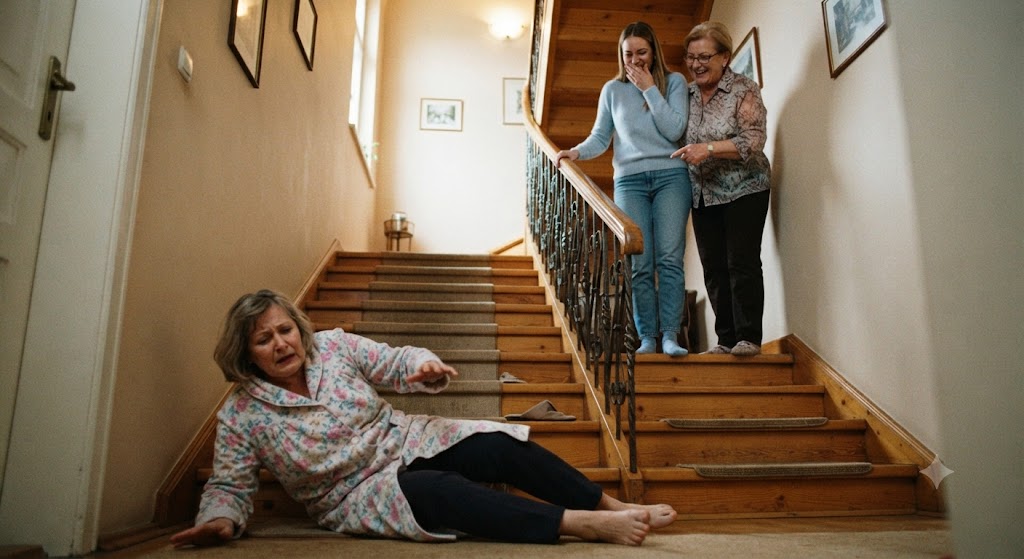
W pewnym momencie próbowałam przejść obok nich i wrócić do pokoju. Nie chciałam się kłócić. Nie chciałam robić sceny. Ale wtedy poczułam mocne szarpnięcie za ramię. Straciłam równowagę i zanim zdążyłam się czegoś złapać, poczułam, jak moje ciało spada po schodach. Przez chwilę widziałam tylko sufit i słyszałam ich głosy gdzieś daleko. Potem wszystko zniknęło.
Kiedy odzyskałam przytomność, leżałam na zimnej podłodze i nie wiedziałam, ile czasu minęło. Każda próba poruszenia się sprawiała ból. Ale najbardziej bolało coś innego — świadomość, że osoba, której ufałam, mogła zrobić mi coś takiego. Przez całe życie chroniłam mojego syna. Byłam przy nim, kiedy był dzieckiem. Wspierałam go, kiedy zaczynał dorosłe życie. A teraz zostałam sama w miejscu, które miało być moim schronieniem.
Próbowałam zawołać pomoc, ale mój głos był zbyt słaby. Mój telefon nadal był poza moim zasięgiem. Po raz pierwszy poczułam prawdziwy strach. Nie o siebie. O to, że może nikt mnie nie znajdzie.
Wtedy nagle usłyszałam kroki.
Ktoś chodził po domu.
Przez chwilę pomyślałam, że to moja synowa wróciła. Zamknęłam oczy i przygotowałam się na kolejne cierpienie. Ale po chwili usłyszałam głos, którego nigdy nie zapomnę.
„Czy ktoś tam jest? Słyszę kogoś na dole.”
To był mój sąsiad.
Mieszkał kilka domów dalej i znał mnie od wielu lat. Zauważył, że od kilku dni nie wychodziłam z domu i że coś jest nie tak. Zapytał moją synową, gdzie jestem, ale ona odpowiedziała spokojnie, że odpoczywam i nie chcę z nikim rozmawiać. Jednak on znał mnie zbyt długo, żeby w to uwierzyć. Wiedział, że nigdy nie zniknęłabym bez słowa.
Dlatego wrócił.
I właśnie ta decyzja uratowała mi życie.
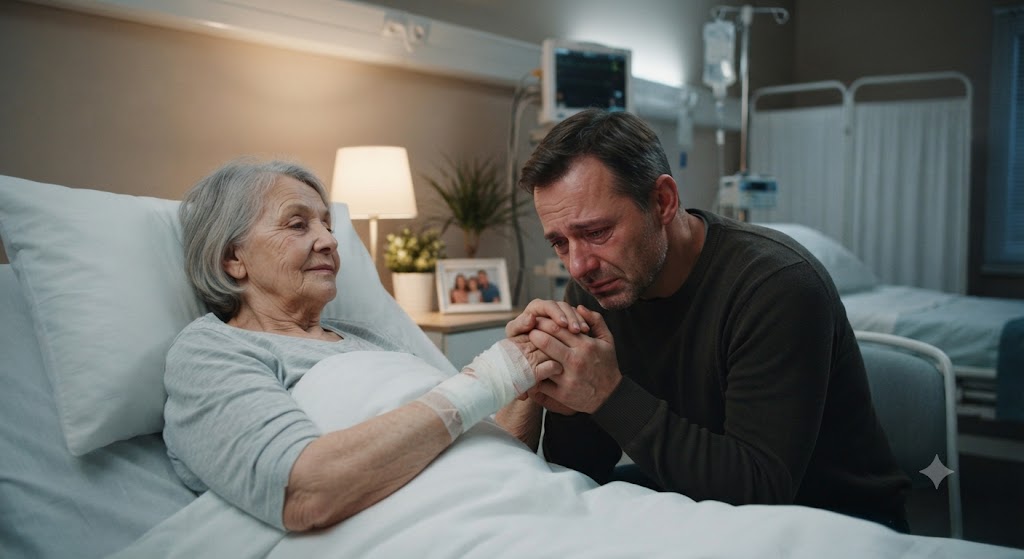
Kiedy otworzył drzwi magazynu i zobaczył mnie leżącą na podłodze, natychmiast wezwał pomoc. W szpitalu lekarze powiedzieli, że miałam dużo szczęścia. Obrażenia były poważne, ale mogły skończyć się znacznie gorzej. Leżałam w łóżku i czekałam na mojego syna, nie wiedząc, czy bardziej boli mnie ciało, czy serce.
Kiedy wszedł do sali, zobaczyłam w jego oczach strach i poczucie winy. Podszedł do mnie, chwycił mnie za rękę i wyszeptał:
„Mamo… przepraszam. Nie wiedziałem, co się dzieje.”
Patrzyłam na niego długo, zanim odpowiedziałam.
„Synu, właśnie to boli najbardziej. Nie wiedziałeś, bo nie chciałeś zobaczyć.”
Te słowa sprawiły, że spuścił wzrok.
Po raz pierwszy zrozumiał, że jego największym błędem nie było tylko to, że zostawił mnie z niewłaściwą osobą. Największym błędem było to, że przestał zauważać własną matkę.
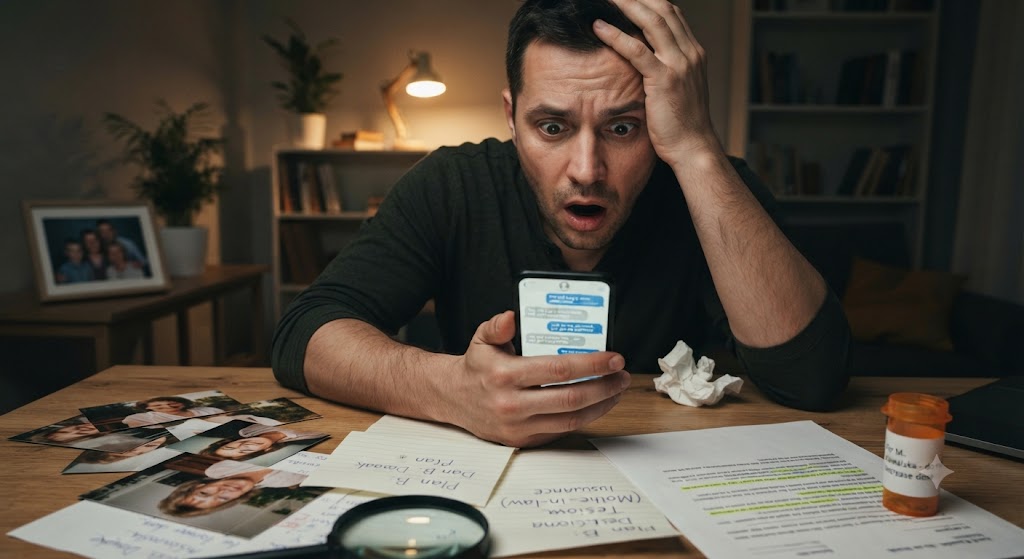
Później prawda zaczęła wychodzić na jaw. Mój syn sprawdził wiadomości, rozmowy i dowiedział się, że zachowanie jego żony nie było przypadkowe. Od dawna uważała mnie za problem. Nie chodziło o jeden konflikt ani jeden zły dzień. Ona naprawdę chciała, żebym zniknęła z ich życia.
Mój syn długo milczał, kiedy poznał całą prawdę. Widziałam w jego oczach ogromny żal. Powiedział, że nigdy sobie nie wybaczy, że pozwolił, aby coś takiego mi się stało.
Nie odpowiedziałam od razu.
Bo czasami przeprosiny są początkiem drogi, ale nie usuwają bólu, który już powstał.
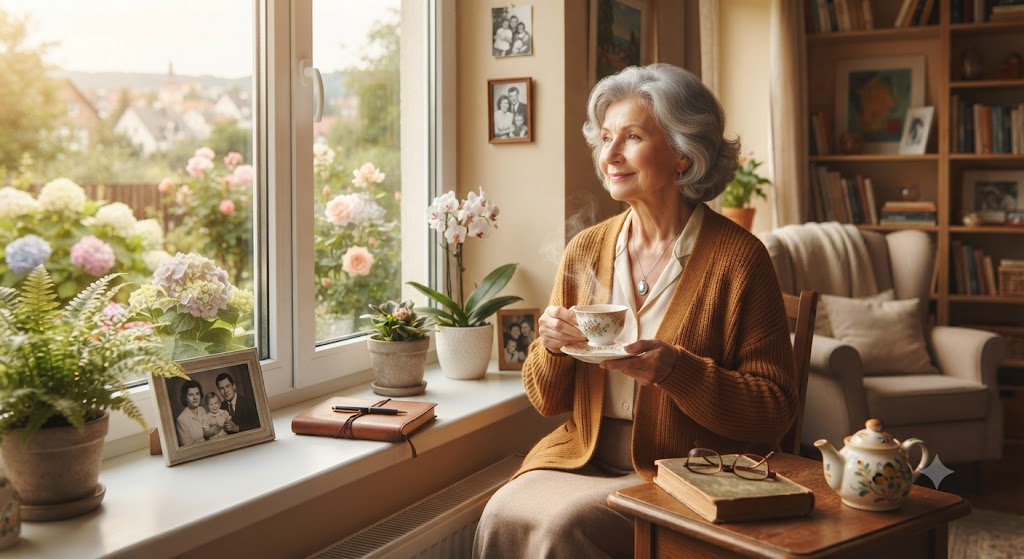
Dzisiaj nadal kocham mojego syna. Jest moim dzieckiem i zawsze nim będzie. Ale nauczyłam się czegoś ważnego — miłość do rodziny nie oznacza, że musimy pozwalać innym odbierać sobie godność.
Tamtego dnia myślałam, że upadłam na schodach.
Ale prawda była inna.
Tamtego dnia po raz pierwszy od wielu lat podniosłam się jako kobieta, która zrozumiała, że również zasługuje na szacunek.