In a fiery Senate committee exchange, Foreign Minister Penny Wong faced intense scrutiny from Senator Jane Hume over the government’s bid to host COP 31. Hume’s relentless questioning unveiled alarming gaps in leadership and preparation, raising doubts about Australia’s readiness for this crucial climate conference amid fierce competition from Turkey.
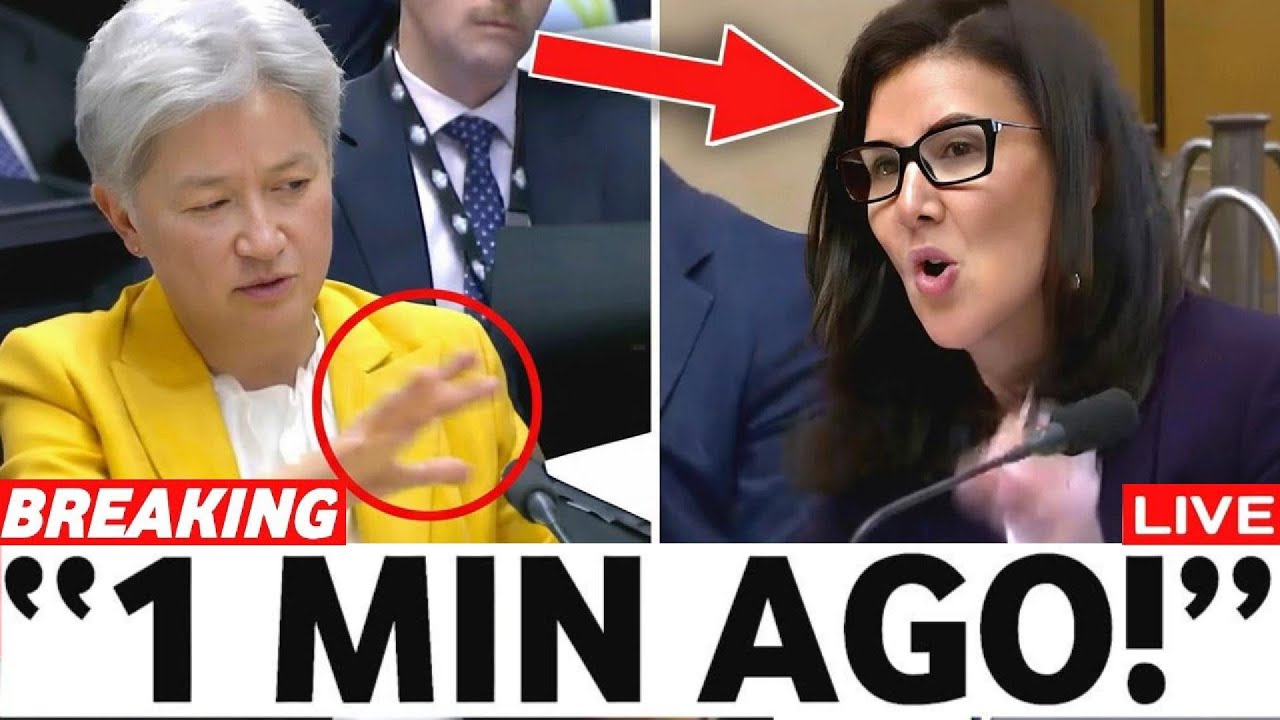 The atmosphere in the committee room shifted dramatically as Hume methodically challenged Wong. What began as a routine inquiry quickly escalated into an urgent examination of accountability. Hume’s calm yet incisive approach peeled back Wong’s assurances, revealing a troubling lack of clarity regarding the prime minister’s involvement and the overall coordination of the bid.
As the questioning intensified, it became evident that the government’s commitment to hosting COP 31 was not as robust as previously claimed. Hume pressed Wong on the prime minister’s role, only to receive vague responses about whole-of-government engagement. The lack of direct involvement from the prime minister raised eyebrows and deepened concerns about the bid’s viability.
Hume’s inquiries highlighted a disconcerting reality: key project boards had barely convened since the bid’s announcement, and critical logistical details remained unresolved. The senator’s probing revealed that while Australia touts its climate leadership, behind the scenes, the efforts appeared disjointed and undercooked, lacking the urgency required for such a monumental event.

The stakes are high as Australia competes against Turkey, which is aggressively pursuing its own bid. Hume’s relentless questioning underscored the risk of a fragmented strategy, where responsibility seemed diffused among various departments. The message was clear: without cohesive leadership, Australia’s bid could falter under the weight of international scrutiny.
As the exchange unfolded, it became apparent that the government’s narrative of preparedness was beginning to unravel. Hume’s pointed questions about logistics and contingency planning revealed a lack of clarity that could jeopardize the entire endeavor. The urgency of the situation was palpable, as preparations for an event expected to attract tens of thousands of delegates are still in question.

Australians are left wondering whether the government is genuinely committed to this monumental task or merely paying lip service to climate diplomacy. With only a year to go before COP 31, the public’s trust in the government’s ability to deliver is being tested. The fallout from this exchange is likely to reverberate beyond the Senate, impacting public perception and international relations.
In a political landscape where credibility is paramount, the implications of this hearing are profound. As Hume’s questions 𝓮𝔁𝓹𝓸𝓼𝓮𝓭 the cracks in the government’s approach, it became evident that the narrative of strong leadership is at risk of being overshadowed by a reality of uncertainty and disarray.

The consequences of this moment could be far-reaching. If the bid fails or is perceived as half-hearted, it could undermine Australia’s standing in global climate discussions. As the world watches closely, the pressure is mounting for the government to demonstrate not just ambition but also the capacity to execute its plans effectively.
In the wake of this pivotal exchange, the questions remain: Is the prime minister truly committed to COP 31, or is the bid drifting on hope alone? As Australians grapple with these uncertainties, the urgency for clear, decisive action has never been more critical. The clock is ticking, and the stakes have never been higher.