
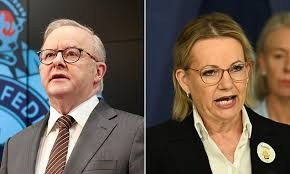
Prime Minister Anthony Albanese is facing intense backlash as the Coalition criticizes his decision to exclude top intelligence chiefs from crucial National Security Committee meetings over the past two years. This controversy has erupted following a tragic incident in Bondi, raising urgent questions about Australia’s national security protocols and decision-making processes.
 Albanese defended his administration’s choices during a heated press conference, asserting that the intelligence heads were always present when vital intelligence matters were discussed. However, critics are not convinced. The opposition argues that excluding key figures from security discussions is a glaring oversight, especially in light of recent security threats.
 The timing of this debate couldn’t be more critical. Following the Bondi incident, where suspects with alarming backgrounds evaded scrutiny, public confidence in the government’s handling of national security is wavering. Calls for a Royal Commission are mounting, reflecting widespread concern over how intelligence information is shared among agencies.
 New South Wales Premier Chris Minns has indicated that a state-level inquiry may be necessary to address local security issues, emphasizing that swift action is essential in vulnerable communities. This adds another layer of complexity to an already fraught political landscape.
The Coalition’s push for a comprehensive Royal Commission aims to explore institutional failures across various sectors, including universities and cultural institutions. Opposition leaders argue that the government has been resistant to such inquiries, only conceding under public pressure.
Albanese’s government has now committed to a fast-tracked Royal Commission, aiming to deliver answers without the usual lengthy delays. However, critics remain skeptical, questioning whether this decision stems from genuine concern or mere political expediency.
 As the situation unfolds, the ramifications for national security and public trust are profound. The effectiveness of Australia’s intelligence apparatus is under scrutiny, with many demanding accountability and transparency in how decisions are made.
This political chess match continues to evolve, with both state and federal governments navigating a complex web of inquiries and community expectations. The outcome will significantly impact how Australia addresses its security challenges moving forward.
 In this charged atmosphere, the debate over the role of intelligence chiefs in security meetings is emblematic of broader concerns about governance and public safety. As Australians await further developments, the urgency for clarity and action has never been more pronounced.