Przez długi czas wierzyłam, że Kamil jest po prostu człowiekiem, który dobrze zarządza pieniędzmi.
Tak sobie tłumaczyłam.
Nie jest skąpy.
Nie jest kontrolujący.
Po prostu jest ostrożny.
Ale prawda była znacznie prostsza.
On nie zarządzał pieniędzmi.
On zarządzał mną.
Każdy wydatek musiał przejść przez jego akceptację.
Każda moja prośba musiała mieć uzasadnienie.
Każda złotówka wydana na mnie wyglądała w jego oczach jak strata.
A przecież mieszkaliśmy w mieszkaniu po mojej babci Czesławie.
Nie wynajmowaliśmy.
Nie spłacaliśmy kredytu.
Nie zaczynaliśmy od zera.
To było mieszkanie mojej rodziny.
Siódme piętro przy ulicy Grunwaldzkiej.
Stary kredens w kuchni.
Haftowane obrusy.
Cukiernica, którą babcia trzymała na stole przez całe życie.
To miejsce miało duszę.
Ale Kamil zachowywał się tak, jakby to on był panem wszystkiego.
Kiedy urodził się Nikodem, wszystko się zmieniło.
Byłam na urlopie macierzyńskim.
Moje dochody spadły.
Jego wzrosły.
I nagle pojawiła się nowa zasada.
Jego pieniądze były „jego”.
A moje potrzeby były „problemem”.
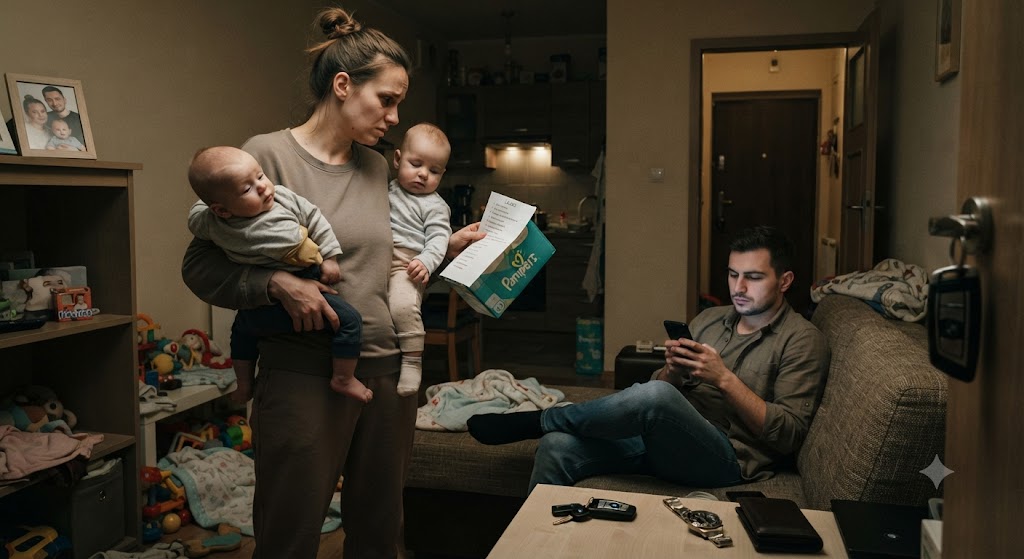
Tamtego dnia Nikodem miał sześć miesięcy.
Wyrósł z pieluch.
Normalna rzecz.
Dziecko rośnie.
Potrzebuje większych ubrań.
Więcej mleka.
Nowych rzeczy.
Podeszłam do Kamila spokojnie.
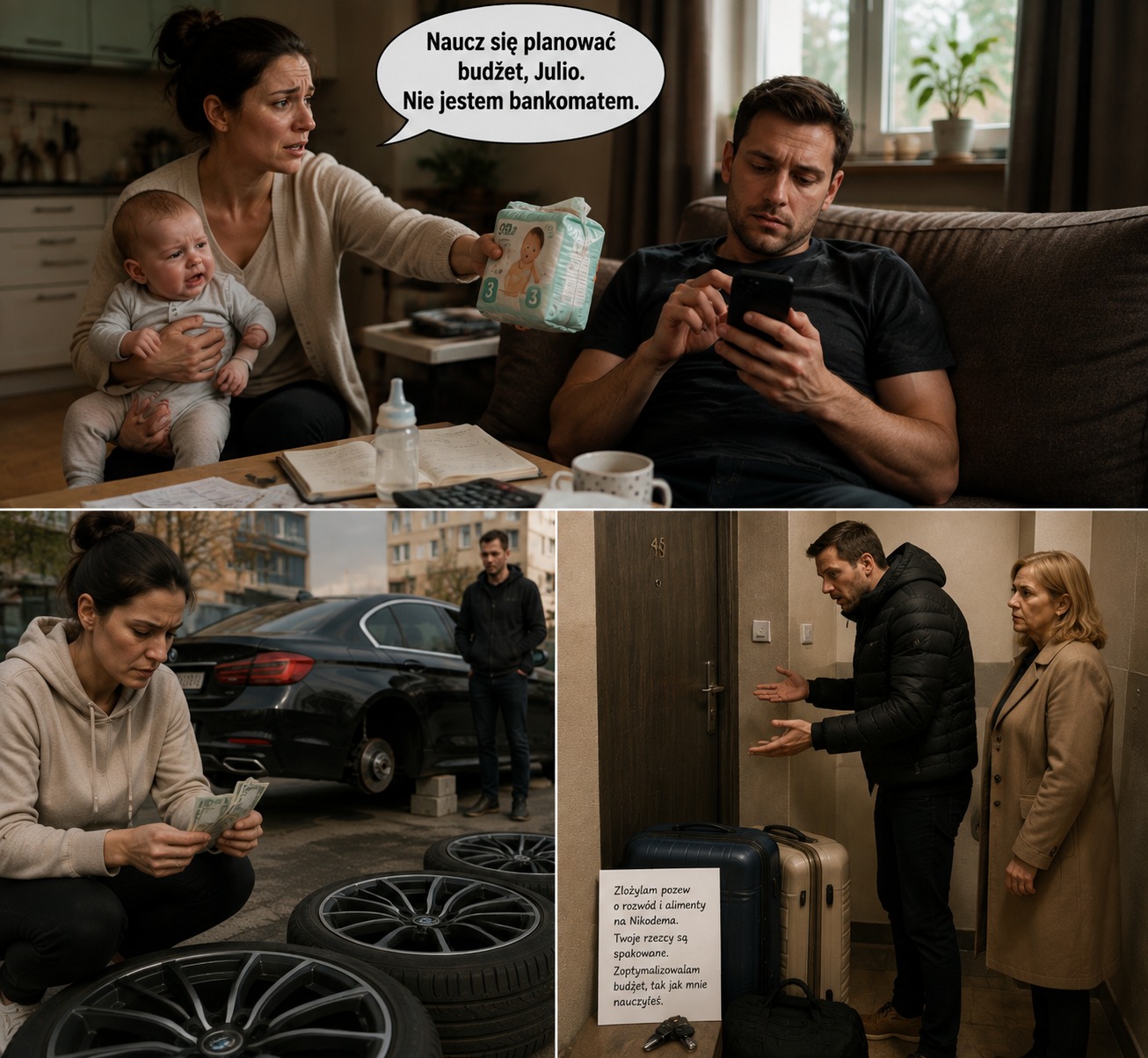
— Kamil, potrzebuję pieniędzy na pieluchy i mleko.
Siedział na kanapie.
Telefon w ręce.
Nawet na mnie nie spojrzał.
— Dałem ci przecież 300 zł w zeszłym tygodniu.
— To było na lekarstwa, kiedy Nikodem miał gorączkę.
— Pieluchy i mleko to inny wydatek.
Westchnął.
Tak, jakbym znowu zrobiła coś źle.
— Zawsze znajdziesz jakiś powód.
Poczułam ukłucie.
— Kamil, to jest twój syn.
Dopiero wtedy spojrzał.
Ale nie z troską.
Z irytacją.
— Julio, naucz się planować.
— Nie jestem bankomatem.
Poszłam do kuchni.
Otworzyłam lodówkę.
Prawie pusta.
Resztka mleka dla Nikodema.
Kilka podstawowych rzeczy.
Nic więcej.
Spojrzałam na blat.
Stała tam cukiernica babci.
Dotknęłam jej dłonią.
I wtedy pomyślałam:
„Jak to możliwe, że w moim własnym domu czuję się jak gość?”
Wieczorem Kamil oglądał mecz.
A ja siedziałam przy stole.
Wzięłam kartkę.
I zaczęłam liczyć.
Nie emocje.
Nie wspomnienia.
Fakty.
Mieszkanie.
Moje.
Samochód Kamila.
Jego.
Kupiony przed ślubem.
Wspólne konto.
Puste.
Jego osobne oszczędności.
Jego inwestycje.
I jedna rzecz, z której był najbardziej dumny.
Samochód.
Nie.
Nie samochód.
Koła.
Felgi.
Te przeklęte felgi.
Tydzień wcześniej stał przy aucie jak dziecko przy nowej zabawce.
— Widzisz?
Powiedział.
— To inwestycja w wizerunek.
Cztery tysiące złotych.
Nowe opony.
Najlepsza jakość.
Pamiętam, jak wtedy trzymałam Nikodema i patrzyłam na niego.
Mój syn potrzebował pieluch.
A jego ojciec inwestował w wygląd samochodu.
I wtedy coś we mnie pękło.
Nie złość.
Nie rozpacz.
Decyzja.
Następnego ranka, kiedy Kamil pojechał do pracy, zrobiłam zdjęcia.
Felgi.
Opony.
Wystawiłam ogłoszenie.
Nie minęło nawet pół godziny.
Telefon zaczął dzwonić.
Wybrałam Rafała.
Przyjechał tego samego dnia.
Obejrzał wszystko dokładnie.
— Ładny zestaw.
Powiedział.
— Mąż będzie zadowolony?
Spojrzałam na niego.
— To już nie moja sprawa.
Uśmiechnął się lekko.
— Rozumiem.
Kiedy zobaczył klucz zabezpieczający do felg, pokręcił głową.
— Ciekawe.
— Człowiek zabezpiecza się przed złodziejami…
Spojrzał na mnie.
— A nie zauważa, że największe problemy robią ludzie, którym ufa.
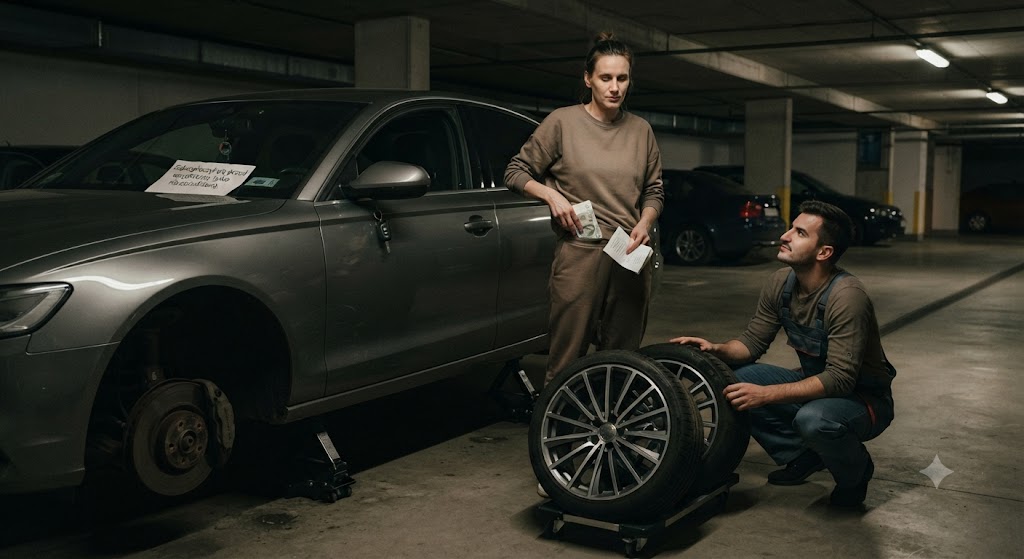
Czterdzieści minut później samochód Kamila stał na betonowych klockach.
Bez felg.
Bez opon.
Bez tego symbolu, którym tak bardzo się chwalił.
A ja trzymałam w ręce prawie 5000 zł.
Pierwszy raz od dawna.
Nie prosiłam.
Nie tłumaczyłam.
Nie czekałam na pozwolenie.
Pojechałam kupić wszystko, czego potrzebował mój syn.
Pieluchy.
Mleko.
Ubranka.
Krem.
Fotelik, o którym marzyłam od miesięcy.
Nie kupiłam luksusu.
Kupiłam spokój.
Następnego dnia zaczęłam pakować rzeczy Kamila.
Spokojnie.
Bez zemsty.
Bez niszczenia.
Jego ubrania.
Sprzęt.
Dokumenty.
Wszystko równo.
Wieczorem zadzwoniłam do ślusarza.
Pan Stanisław spojrzał na drzwi.
— Wymiana zamka?
— Tak.
— Wszystkie stare klucze mają przestać działać?
— Tak.
Spojrzał na walizki.
Potem na mnie.
— Wie pani…
— Po trzydziestu latach pracy człowiek poznaje różnicę.
— Jedni wymieniają zamki przed złodziejem.
— Inni po prostu w końcu zamykają drzwi przed kimś, kto ich nie szanuje.
Tego samego dnia złożyłam pozew.
Rozwód.
Alimenty dla Nikodema.
Nie robiłam tego z nienawiści.
Robiłam to dlatego, że moje dziecko zasługiwało na ojca, który pamięta o nim bardziej niż o własnym samochodzie.
Kamil wrócił wieczorem do domu.
Nie sam.
Z Lucyną.
Swoją matką.
Kobietą, która od początku uważała, że kobiety trzeba „ustawiać”.
— Musisz być stanowczy, synku.
Powtarzała.
— Kobieta czasem musi wiedzieć, gdzie jest jej miejsce.
I Kamil zawsze słuchał.
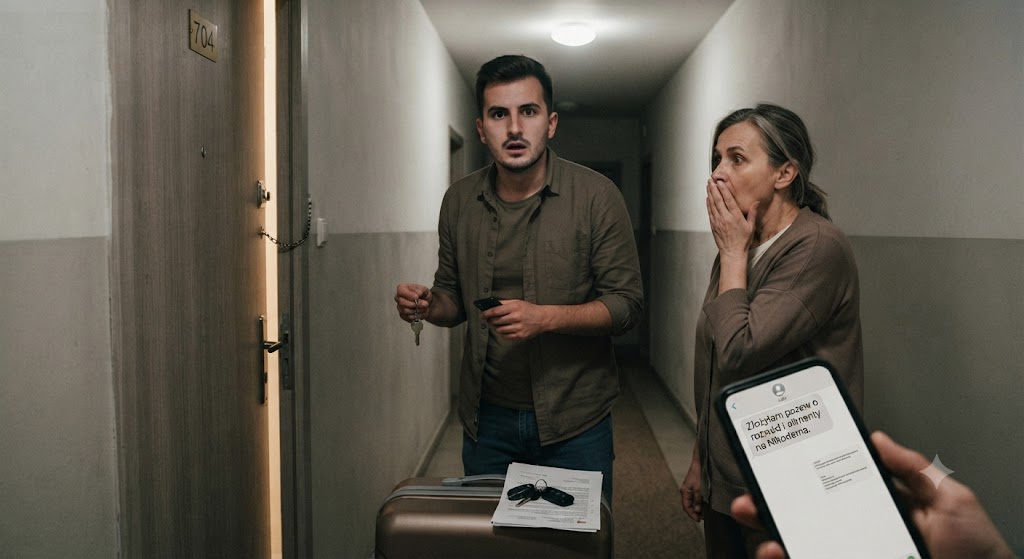
Weszli na siódme piętro.
Kamil wyjął klucze.
Nie działały.
Spróbował jeszcze raz.
Nic.
Zapukał.
Cisza.
Wtedy zobaczył walizki.
Na jednej leżała kartka.
I kluczyki do samochodu.
Telefon zawibrował.
Moja wiadomość:
„Kamilu. Złożyłam pozew o rozwód i alimenty na Nikodema. Twoje rzeczy są spakowane. Kluczyki leżą przy walizkach. Zoptymalizowałam budżet, tak jak mnie nauczyłeś.”
Lucyna przeczytała wiadomość.
I pierwszy raz nie miała gotowej odpowiedzi.
Bo przez lata myślała, że Julia zawsze wróci.
Ale Julia już nie wracała.
Kamil zszedł do garażu.
Zobaczył samochód.
Stanął.
Patrzył długo.
Na puste miejsca po felgach.
Na betonowe klocki.
Na rzecz, która jeszcze kilka dni wcześniej była jego dumą.
— Kto by się odważył?
Powiedział cicho.
Ale odpowiedź znał.
Kobieta, której odmówił pieniędzy na potrzeby własnego dziecka.
Dzisiaj siedzę w kuchni mojej babci Czesławy.
Ten sam stół.
Ta sama cukiernica.
Te same przepisy zapisane ołówkiem.
Ale coś jest inne.
Nie czuję już, że muszę pytać o pozwolenie.
Nie czuję, że każda moja potrzeba jest problemem.
Nie jestem czyimś wydatkiem.
Nie jestem czyjąś odpowiedzialnością.
Jestem kobietą, która pewnego dnia przestała prosić o szacunek.
I zaczęła go sobie dawać sama.
Bo prawdziwa wartość człowieka nigdy nie znajduje się na koncie bankowym.
Tylko w tym, czy potrafi stanąć po swojej stronie, kiedy nikt inny tego nie zrobi.