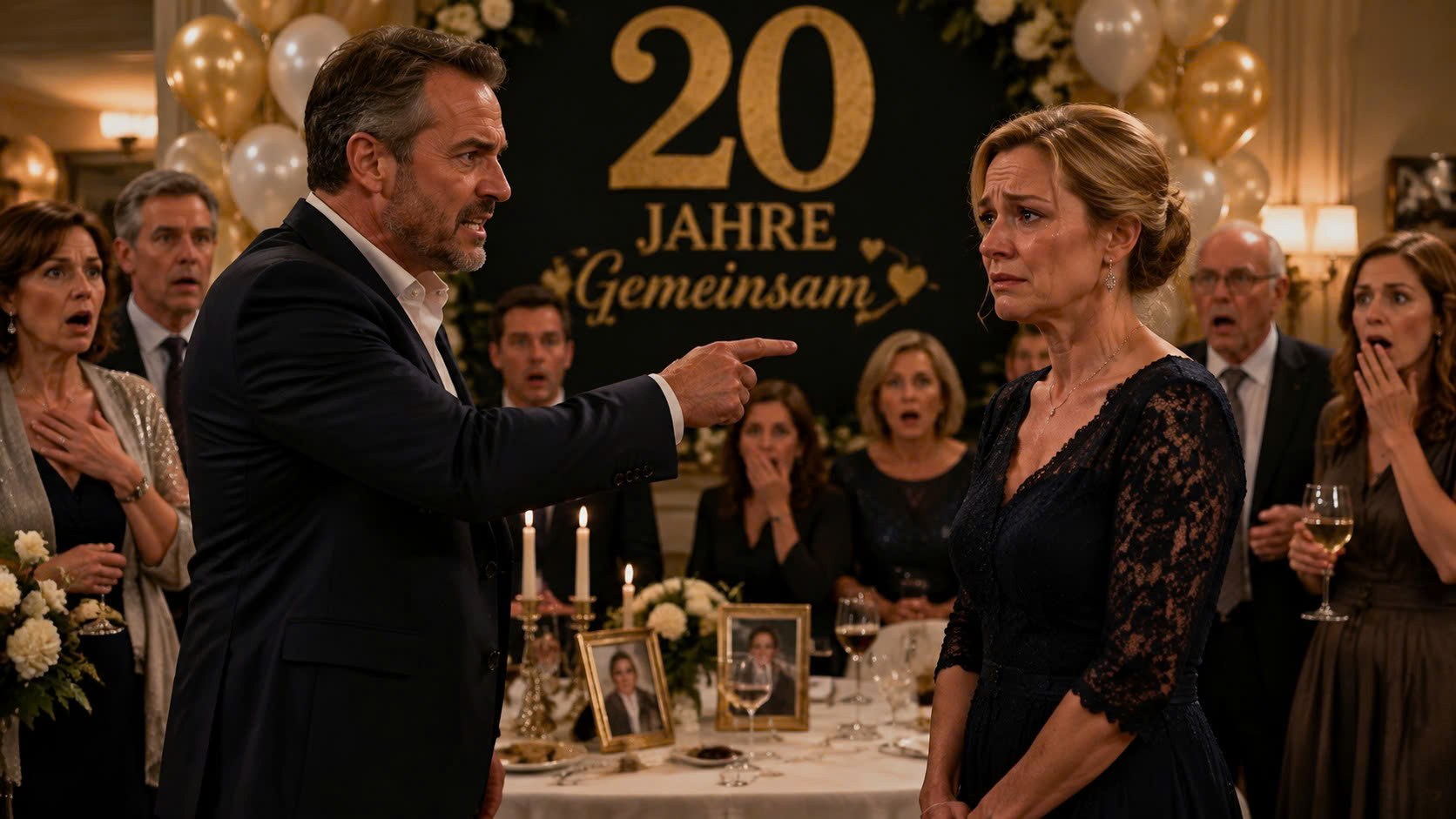
**Am Abend unseres zwanzigsten Hochzeitstags hatte ich das Essen mit denselben Händen zubereitet, die zwanzig Jahre lang unsere Familie aufgebaut hatten. Ich hatte sein Lieblingsgericht gekocht, die Kerzen angezündet und das Kleid angezogen, das er liebte. Ich dachte, wir würden die Liebe unseres Lebens feiern. Stattdessen sah mich Marco vor unseren Kindern an und sagte: „Du bist nur eine Hausfrau. Ich will wieder leben.“ In diesem Moment spürte ich, wie mein Herz zerbrach…**
**TEIL 1**
Wenn es eine Sache gibt, die ich nach zwanzig Jahren Ehe gelernt habe, dann ist es diese: Manchmal ist der Moment, in dem jemand beschließt, dich zu verlassen, nicht der Moment, in dem du alles verlierst. Es ist der Moment, in dem du endlich beginnst, dich selbst wiederzufinden. An jenem Abend hatte ich das perfekte Essen vorbereitet. Zwanzig Jahre Ehe. Zwanzig Jahre zum Feiern. Ich hatte jedes Detail mit derselben Sorgfalt arrangiert, mit der ich unsere Familie aufgebaut hatte. Die Kerzen auf dem Tisch. Das gute Geschirr. Das Lieblingsgericht meines Mannes. Der Wein, den wir für einen besonderen Anlass aufbewahrt hatten. Ich dachte, das würde ein Abend zum Erinnern werden. Ich wusste nicht, dass es die Nacht werden würde, in der meine Ehe starb.
Mein Name ist Giulia Ferri. Ich bin fünfundvierzig Jahre alt. Und den größten Teil meines Lebens war ich auf eine einfache Weise bekannt: die Frau von Marco. Die Mutter von Ethan und Sofia. Die Frau, die die Familie zusammenhielt. Doch bevor ich Ehefrau und Mutter war… war ich ein Mädchen mit Träumen. Mit zwanzig studierte ich Modedesign. Ich liebte es zu erschaffen. Ich verbrachte Stunden mit Bleistiften, Stoffen und Fotografien von Kleidern. Ich hatte sogar ein Angebot von einer kleinen Boutique in Mailand erhalten. Es war mein erster echter Schritt in die Modewelt. Ich war aufgeregt. Ich hatte eine Zukunft vor mir. Dann traf ich Marco Bellini. Marco war kein schlechter Mann. Zumindest nicht am Anfang. Er war intelligent. Ambitioniert. Entschlossen. Als wir uns kennenlernten, arbeitete er bereits in der Geschäftswelt. Er brachte mich zum Lachen. Er ließ mich gesehen fühlen. Eines Abends sagte er: „Giulia, du hast etwas, das keine andere Person hat.“ Ich lächelte. „Was?“ Er sah mich an. „Vorstellungskraft.“ Diese Worte eroberten mich. Nach wenigen Monaten verliebten wir uns. Als ich mit unserem ersten Kind schwanger wurde, dachte ich, das Leben böte mir etwas noch Größeres. Die Karriere konnte warten. Die Familie war wichtiger. Also verzichtete ich auf die Boutique. Ich legte meine Träume beiseite. Ich sagte mir: „Eines Tages werde ich wieder erschaffen.“ Doch dieser Tag kam nie.
Marco arbeitete immer mehr. Ich kümmerte mich um das Haus. Um die Kinder. Um die tausend unsichtbaren Dinge, die eine Familie am Laufen halten. Ich bereitete die Abendessen zu. Organisierte Termine. Kümmerte mich um die Schule der Kinder. Ich war diejenige, die an jeden Geburtstag dachte. An jeden Arzttermin. An jedes Problem. Jahrelang fragte ich mich nie, ob jemand das bemerkte. Ich dachte, Lieben bedeute auch das. Geben, ohne zu fordern. Wir bekamen zwei Kinder. Ethan, den Älteren. Einen freundlichen Jungen, der seinem Vater im Charakter ähnelte, aber andere Werte hatte. Und Sofia, die Jüngere. Meine Kopie. Dieselbe Entschlossenheit. Derselbe starke Charakter. Sie war immer diejenige, die mir sagte: „Mama, du musst auch etwas für dich tun.“ Ich lachte. „Zuerst kommt die Familie.“ Sie rollte mit den Augen. „Das sagst du immer.“ Sie hatte recht. Die Jahre vergingen. Und langsam veränderte sich etwas. Marco begann, anders zu sein. Nicht auf eine offensichtliche Weise. Nicht genug, dass ich hätte sagen können: „Irgendwas stimmt nicht.“ Es war subtiler. Er kam später nach Hause. Sprach weniger. Schaue öfter aufs Telefon. Wenn ich ihm etwas von meinem Tag erzählte, schien er nur zur Hälfte zuzuhören. Ich suchte Ausreden. „Er ist gestresst.“ „Er hat so viele Verantwortungen.“ „Das ist normal nach zwanzig Jahren.“
Dann kam unser zwanzigster Hochzeitstag. Ich hatte alles organisiert. Nicht, weil ich eine riesige Party wollte. Sondern weil ich ihn daran erinnern wollte, wer wir gewesen waren. Das junge Paar, das sich liebte. Die beiden jungen Leute, die angefangen hatten, ohne zu wissen, was kommen würde. An jenem Abend kam Ethan in die Küche. „Mama, soll ich den Champagner in den Kühlschrank stellen?“ Ich lächelte. „Noch nicht. Wir warten auf Papa.“ Sofia kam kurz darauf. „Soll ich das Obst schneiden?“ „Ja, Schatz.“ Ich sah beide an. Meine Kinder. Mein größtes Werk. Und ich dachte: „Was auch immer passiert, wenigstens das ist real.“ Um sieben kam Marco nicht. Um halb acht war das Essen fertig. Um acht rief ich an. Keine Antwort. Um neun hörte Sofia auf, so zu tun, als wäre sie nicht wütend. „Mama, können wir ohne ihn essen?“ Ich schüttelte den Kopf. „Er wird ein Problem bei der Arbeit gehabt haben.“ Doch tief in mir wusste ich, dass das nicht stimmte. Ethan schenkte etwas Champagner ein. Er hob das Glas. „Auf dich, Mama.“ Ich sah ihn an. „Du bist der beste Mensch, den ich kenne.“ Diese Worte ließen mich lächeln. Aber sie taten auch weh. Denn in diesem Moment begriff ich, dass mein Sohn etwas sah, das mein Mann aufgehört hatte zu sehen. Um Mitternacht ging Sofia schlafen. Bevor sie die Treppe hinaufstieg, umarmte sie mich. „Alles Gute zum Hochzeitstag, Mama.“ Sie sagte nicht „Papa“. Sie hatte bereits verstanden. Ethan blieb bei mir, um die Küche aufzuräumen. „Vielleicht kommt er noch“, sagte er. Ich nickte. Doch der Zweifel war inzwischen zu schwer geworden.
Es war fast drei Uhr morgens, als ich die Tür öffnen hörte. Marco trat ein. Keine Eile. Keine Entschuldigung. Kein Schuldgefühl. Er trug einen eleganten Mantel. Sein Gesicht war ruhig. Als wäre es irgendeine Nacht. Er sah mich an. „Bist du noch wach?“ Ich blieb stehen. „Es ist unser Hochzeitstag.“ Stille. „Wir haben auf dich gewartet.“ Er ging in die Küche. Nahm ein Glas Wasser. Dann sagte er: „Wir müssen reden.“ Dieser Satz ließ mich erstarren. Er lehnte sich an die Theke. „Ich habe eine Entscheidung getroffen.“ Ich sah ihn an. „Welche Entscheidung?“ Seine Stimme war kalt. Fast professionell. „Ich will mich trennen.“ Für ein paar Sekunden verstand ich nicht. Ich dachte, ich hätte mich verhört. „Was?“ „Ich gehe morgen.“ Die Welt schien stehenzubleiben. „Marco…“ Meine Stimme zitterte. „Nach zwanzig Jahren?“ Er seufzte. Als wäre ich es, die die Dinge kompliziert machte. „Giulia, es funktioniert nicht mehr.“ Ich starrte ihn an. „Seit wann?“ Er antwortete nicht sofort. Und das war bereits eine Antwort. Dann sagte er das, was mich am meisten verletzte. „Du bist nicht mehr die Frau, die ich geheiratet habe.“ Ich blieb stumm. „Früher warst du anders“, fuhr er fort. „Du hattest Energie. Ambition.“ Er sah mein Kleid an. Dann mein müdes Gesicht. „Jetzt bist du nur eine Hausfrau.“ Diese Worte brannten. Denn er beschrieb nicht, wer ich war. Er beschrieb, wen er beschlossen hatte, dass ich sei. Ich sah ihn an. „Gibt es eine andere Frau?“ Stille. Seine Finger bewegten sich nervös. Dann sagte er: „Ja.“ Mein Herz zerbrach langsam. „Wie jung ist sie?“ Marco senkte den Blick. „Siebenundzwanzig Jahre.“ Siebenundzwanzig. Fast die Hälfte meiner Jahre. „Sie heißt Tiffany“, sagte er. „Mit ihr fühle ich mich lebendig.“ Diese Worte ließen mich fast lächeln. Denn plötzlich begriff ich. Er hatte keine bessere Person gefunden. Er hatte jemanden gefunden, der seine schlechteren Seiten noch nicht kannte.
In diesem Moment erschien Ethan im Flur. Er hatte alles gehört. „Du verlässt Mama?“ Marco versteifte sich. „Ethan, geh schlafen.“ „Nein.“ Mein Sohn machte einen Schritt vor. „Du hast auf unseren Hochzeitstag gewartet, um das zu sagen?“ Marco verlor die Geduld. „Misch dich nicht ein.“ Ethan sah ihm in die Augen. „Wenn ein Mann zu sein bedeutet, das zu tun, was du tust, dann will ich nicht werden wie du.“ Marco wurde rot vor Wut. Er nahm die Schlüssel. „Meine Entscheidung steht fest.“ Dann fügte er hinzu: „Ich nehme das Auto. Einen Teil der Ersparnisse. Und das Haus am See.“ Ich sah ihn ungläubig an. „Das Haus am See?“ „Ich habe zwanzig Jahre für diese Familie gearbeitet“, sagte er. „Jetzt will ich etwas für mich.“ Bevor er hinausging, blieb er stehen. „Und sag Sofia, sie soll aufhören, sich wie du zu verhalten.“ Diese Worte waren der finale Schlag. Die Tür schloss sich. Das Geräusch durchzog das ganze Haus. Ich blieb regungslos stehen. Dann hörte ich etwas zerbrechen. Eine alte Statuette auf dem Sideboard. Ein Geschenk zu unserem zehnten Hochzeitstag. Sie fiel zu Boden. Sie zerbrach. Wie etwas, das nicht mehr repariert werden konnte. Sofia erschien auf der Treppe. Die Augen voller Angst. „Mama…“ Ich konnte nicht sprechen. Ethan umarmte mich. „Es wird alles gut“, sagte er. Doch zum ersten Mal in meinem Leben… wusste ich nicht, ob das wahr war.
Am nächsten Morgen wachte ich in einem anderen Haus auf. Dasselbe Haus. Aber anders. Die Stille wirkte schwerer. Auf dem Nachttisch fand ich eine Quittung. Eine Quittung, die ich nie gesehen hatte. Eine Luxusboutique. Drei Tage zuvor. Ein Diamantarmband. Bezahlt von Marco. Es war kein Impuls gewesen. Es war nicht in jener Nacht passiert. Marco hatte alles vorbereitet. Seit Monaten. An diesem Tag entdeckte ich, dass mein Mann mich nicht einfach verlassen hatte. Er hatte geplant, mich auszulöschen. Und während ich versuchte, unsere Ehe zu retten… baute er bereits ein Leben ohne mich auf. Doch er wusste noch nicht eines. Ich hatte mich selbst zwanzig Jahre lang verloren. Und jetzt hatte ich nichts mehr zu verlieren.
**TEIL 2**
Einige Tage nachdem Marco gegangen war, war ich nicht mehr dieselbe Person. Nicht, weil ich ihn noch liebte. Sondern weil ein Teil meiner Identität um ihn herum aufgebaut worden war. Zwanzig Jahre lang war ich Ehefrau gewesen. Mutter. Die Person, die alles löste. Und plötzlich brauchte mich niemand mehr. Oder zumindest dachte ich das. Das Haus war voller Stille. Der Ort, an dem ich Tausende von Abendessen zubereitet hatte, wirkte fremd. Marcos Stuhl war leer. Sein Schrank halb offen. Sein Duft noch in der Luft. Und das Schlimmste war zu wissen, dass während ich litt… er wahrscheinlich glücklich war. Mit Tiffany. Mit seinem neuen Leben. Mit der Version von mir, die er beschlossen hatte auszulöschen.
Fünf Tage vergingen. Ich verließ kaum das Zimmer. Sofia brachte mir Tee. Ethan bereitete das Abendessen zu. Ich sah die Sorge in ihren Augen. Und das ließ mich noch schlechter fühlen. Denn eine Mutter sollte ihre Kinder schützen. Nicht sie zwingen, sich um sie zu kümmern. Dann kam Claire. Meine beste Freundin seit der Uni. Die Person, die mich kannte, bevor Marco kam. Bevor die Ehe. Bevor ich alle anderen vor mich selbst stellte. Sie klingelte dreimal. Dann begann sie zu klopfen. „Giulia!“ Ich antwortete nicht. „Wenn du diese Tür nicht öffnest, schwöre ich, ich rufe jemanden und lasse sie aufbrechen.“ Ethan öffnete. Sie trat ein. Als sie mich auf dem Sofa sah, im selben Schlafanzug seit Tagen, veränderte sich ihr Gesicht. Sie empfand kein Mitleid. Sie empfand Wut. „Steh auf.“ Ich sah sie an, ohne zu verstehen. „Was?“ „Ich habe gesagt, steh auf.“ „Claire, ich schaffe das nicht.“ Sie öffnete die Vorhänge. Licht strömte in den Raum. „Nein“, sagte sie. „Ich werde nicht zulassen, dass du verschwindest.“ Diese Worte taten weh. Denn vielleicht war genau das, was ich tat. Verschwinden. Sie zwang mich, zu duschen. Etwas zu essen. Mich anzuziehen. Dann setzte sie sich vor mich mit einer Mappe in der Hand. „Ich habe ein paar Nachforschungen angestellt.“ Ich sah sie an. „Worüber?“ Ihr Blick wurde ernst. „Über Marco.“ Sie zeigte mir einige Dokumente. Überweisungen. Gesellschaften. Verträge. „Er hat dich nicht plötzlich verlassen“, sagte sie. „Er hat alles vorbereitet.“ Ich spürte Kälte durch mich gehen. „Was bedeutet das?“ „Es bedeutet, dass er seit Monaten Geld verschoben hat.“ Sie öffnete ein weiteres Dokument. „Er hat eine private Gesellschaft gegründet.“ Ein weiteres. „Er hat versucht, einige Immobilien zu übertragen.“ Ich blieb regungslos. „Er wollte mich ohne nichts zurücklassen.“ Claire nickte. „Genau.“
An diesem Tag traf ich den Anwalt. Daniel Moretti. Ein präziser Mann. Wenig geneigt zu Emotionen. Der Typ Mensch, der zuerst die Dokumente betrachtet und dann die Personen. Und genau das brauchte ich. Nachdem er meine Geschichte gehört hatte, sagte er: „Frau Ferri, Ihr Mann hat einen Fehler begangen.“ Ich sah ihn an. „Welchen?“ „Er hat gedacht, Sie seien unsichtbar.“ Pause. „Aber zwanzig Jahre Ehe hinterlassen Spuren.“ Das Problem war, dass ich keinen Job hatte. Keine aktuelle Karriere. Ich hatte alles der Familie gewidmet. Und zum ersten Mal schien diese Entscheidung ein Fehler. „Ich muss einen Job finden“, sagte ich. Claire sah mich an. „Nein.“ Ich lächelte bitter. „Claire, ich bin fünfundvierzig.“ „Und?“ „Ich bin seit zwanzig Jahren draußen aus der Arbeitswelt.“ Sie nahm eine Schachtel aus meinem Zimmer. Öffnete sie. Drinnen waren alte Zeichnungen. Stoffe. Skizzen. Meine Vergangenheit. Ich war sprachlos. Es war mein altes Modeheft. Das, das ich vor der Hochzeit benutzt hatte. Drinnen waren Ideen. Zeichnungen. Projekte. Das Mädchen, das ich gewesen war, bevor ich nur noch die Frau von jemandem wurde. „Giulia“, sagte Claire. „Diese Frau ist immer noch da.“ Ich sah diese Zeichnungen an. Jahrelang hatte ich gedacht, ich hätte diesen Teil von mir verloren. Doch vielleicht hatte ich ihn nur versteckt. Dann sah ich ein Foto. Ich. Zwanzig Jahre zuvor. Neben einem jungen Mann. Julian West. Mein bester Freund aus der Designschule. Einer der vielversprechendsten Talente unserer Klasse. Wir hatten versprochen, eines Tages zusammenzuarbeiten. Dann hatte das Leben einen anderen Weg genommen.
Claire machte ein paar Anrufe. Zwei Tage später hatte ich einen Termin. Julians Atelier lag im Zentrum von Mailand. Riesige Glasfronten. Stoffe überall. Kleider, die wie Kunstwerke wirkten. Als ich eintrat, fühlte ich mich fehl am Platz. Dann sagte eine Stimme: „Giulia?“ Ich drehte mich um. Julian. Älter. Einige silberne Haare. Aber dasselbe Lächeln. Er umarmte mich. Er fragte nicht: „Was ist passiert?“ Er sagte nicht: „Es tut mir leid.“ Er sagte nur: „Endlich bist du zurück.“ Diese Worte zerbrachen mich. Denn zum ersten Mal nach so langer Zeit sah jemand nicht eine zerstörte Frau. Er sah mich. Ich erzählte ihm alles. Die Ehe. Marco. Den Verrat. Das Gefühl, nicht mehr zu wissen, wer ich war. Julian hörte zu. Dann nahm er mein altes Heft. Blätterte darin. Lächelte. „Ich wusste es.“ „Was?“ „Dass du das Talent nicht verloren hattest.“ Er bot mir einen Job an. Nicht als Gefallen. Als Chance. „Ich brauche jemanden, der Menschen versteht“, sagte er. „Mode ist nicht nur Kleider nähen. Es ist, Geschichten zu erzählen.“ Der erste Tag war schwer. Meine Hände zitterten. Ich hatte vieles vergessen. Doch langsam kam alles zurück. Die Bewegung der Schere. Das Verhältnis zu den Stoffen. Der Instinkt. Die Kreativität. Nach zwei Wochen fertigte ich mein erstes Kleid an. Ein einfaches. Elegantes. Modernes. Als Julian es sah, blieb er still. „Nun?“ fragte ich. Er lächelte. „Die Frau, die das geschaffen hat, ist nie verschwunden.“
In der Zwischenzeit ging der Rechtsstreit weiter. Marco hatte teure Anwälte engagiert. Er dachte immer noch, er könne alles kontrollieren. Doch Daniel fand etwas. Eine Reihe finanzieller Dokumente. Versteckte Konten. Gefälschte Verträge. Beweise, dass Marco die Trennung Monate zuvor vorbereitet hatte. Dann kam eine Überraschung. Ein Anruf. Von Tiffany. Der Frau, für die Marco mich verlassen hatte. Wir trafen uns in einem kleinen Café. Sie wirkte nicht mehr so sicher wie auf dem Foto. Sie wirkte verängstigt. „Ich weiß nicht, warum ich hier bin“, sagte sie. „Weil du begriffen hast, wer er wirklich ist“, antwortete ich. Sie senkte den Blick. „Ich dachte, er liebe mich.“ Stille. „Aber jetzt macht er mit mir dasselbe, was er mit dir gemacht hat.“ Ich blieb stehen. „Was meinst du?“ Tiffany zog einen USB-Stick heraus. „Ich habe Dateien auf seinem Computer gefunden.“ Sie nahm ihn zwischen die Finger. „Ich wusste nicht, was das war. Aber ich denke, du solltest sie sehen.“ Daniel analysierte alles. Und das Ergebnis veränderte alles. Marco hatte nicht nur Geld versteckt. Er hatte ein Netzwerk von Gesellschaften geschaffen, um sein persönliches Vermögen zu schützen. Er hatte geplant, mich ohne nichts zurückzulassen. Doch er hatte Spuren hinterlassen.
Der Tag der Verhandlung kam. Marco betrat den Gerichtssaal in seinem perfekten Anzug. Er war selbstsicher. Bis Daniel begann, die Beweise vorzulegen. Marcos Gesicht veränderte sich. Zum ersten Mal wirkte er besorgt. Am Ende ordnete der Richter eine vollständige Prüfung seiner Vermögenswerte an. Sein Plan war zusammengebrochen. Vor dem Gerichtshof hielt Marco mich an. „Giulia.“ Ich drehte mich um. Er wirkte anders. Müder. „Ich dachte nicht, dass du kämpfen würdest.“ Ich sah ihn an. „Das war dein Fehler.“ Stille. „Du dachtest, du kenntest mich.“ Pause. „Aber du kanntest nur die Frau, die ich beschlossen hatte, für dich zu sein.“ Marco senkte den Blick. „Können wir die Dinge noch in Ordnung bringen?“ Ich schüttelte den Kopf. „Nein.“ Meine Stimme war ruhig. „Ich will nicht in das Leben zurückkehren, aus dem ich mich retten musste.“ Einige Monate später nahm ich an einem Modewettbewerb teil. Meine Kollektion hieß: „Asche und Fäden.“ Sie erzählte meine Geschichte. Den Verlust. Die Verwandlung. Die Wiedergeburt. Als ich die Catwalk hinaufging, sah ich Ethan und Sofia in der ersten Reihe. Stolz. Glücklich. Und zum ersten Mal nach Jahren suchte ich nicht die Zustimmung von irgendwem. Ich war dort. Nur Giulia. Nach der Show kam Marco zu mir. Er sah mich an. „Du hast dich verändert.“ Ich lächelte. „Nein.“ Pause. „Ich bin zurückgekehrt.“
Eine Woche später unterschrieb ich die endgültige Scheidung. Mit der erhaltenen Entschädigung eröffnete ich mein erstes Atelier. Giulia Ferri Atelier. Ein Raum ganz für mich. Jahre später, als ich meine Tochter bei den Vorbereitungen für ihre Hochzeit sah, in einem Kleid, das ich selbst geschaffen hatte… begriff ich etwas. Marco dachte, er hätte mir alles genommen. Mein Zuhause. Meine Sicherheit. Meine Identität. Doch er hatte mir etwas gegeben, ohne es zu wollen. Die Möglichkeit, die Frau wiederzufinden, die ich war, bevor ich mich selbst verlor. Zwanzig Jahre lang hatte ich das Leben anderer genäht. Jetzt erschuf ich endlich meins. Und diesmal… würde es mir niemand mehr entreißen können.
**ENDE DER GESCHICHTE.**