Pamiętam dokładnie tamtą godzinę.
15:00.
Centrum Macierzyństwa w Wilanowie.
Miejsce, do którego przychodziłam co miesiąc, żeby zobaczyć moje dzieci.
Dwa małe życia, które były wtedy całym moim światem.
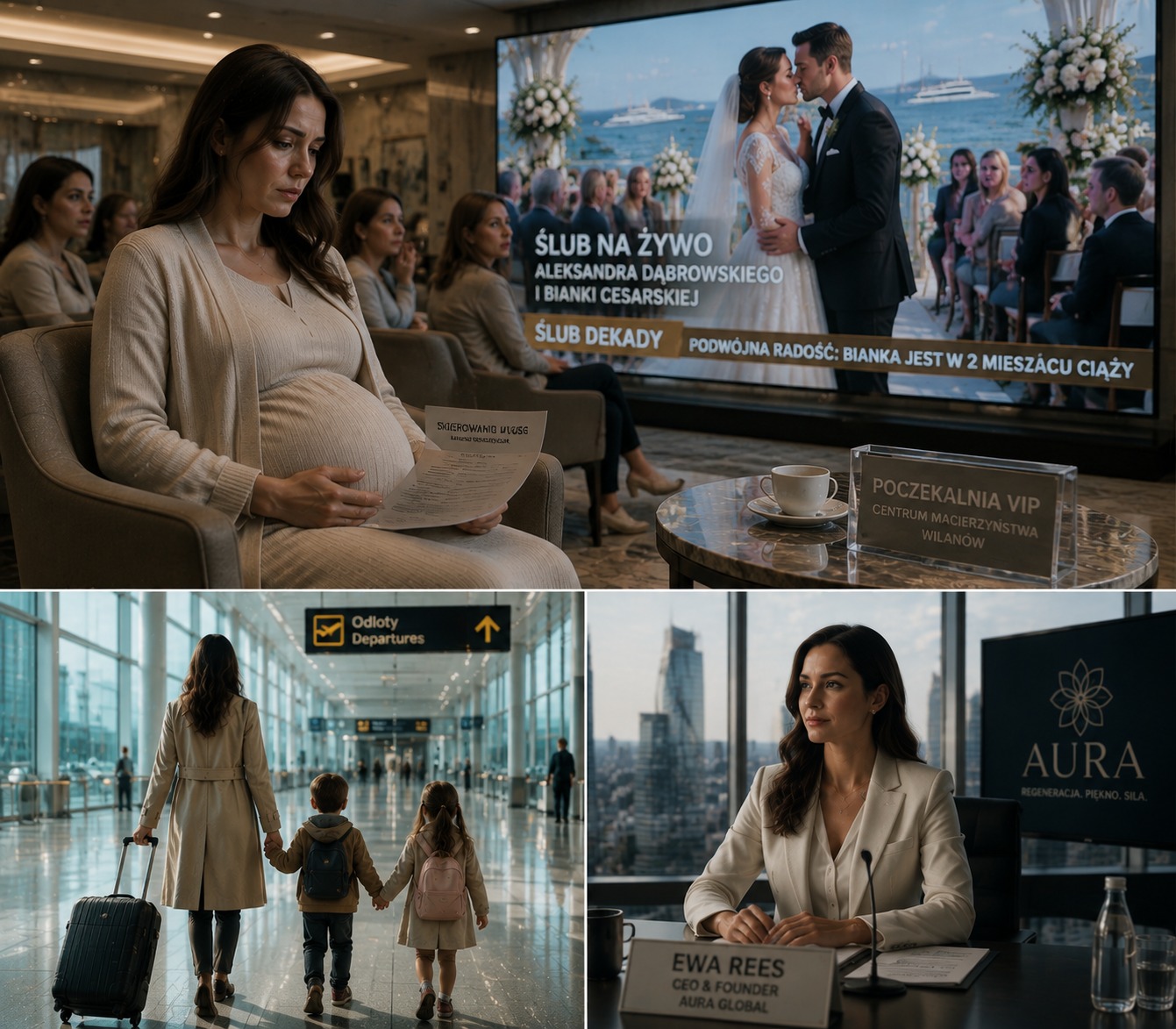
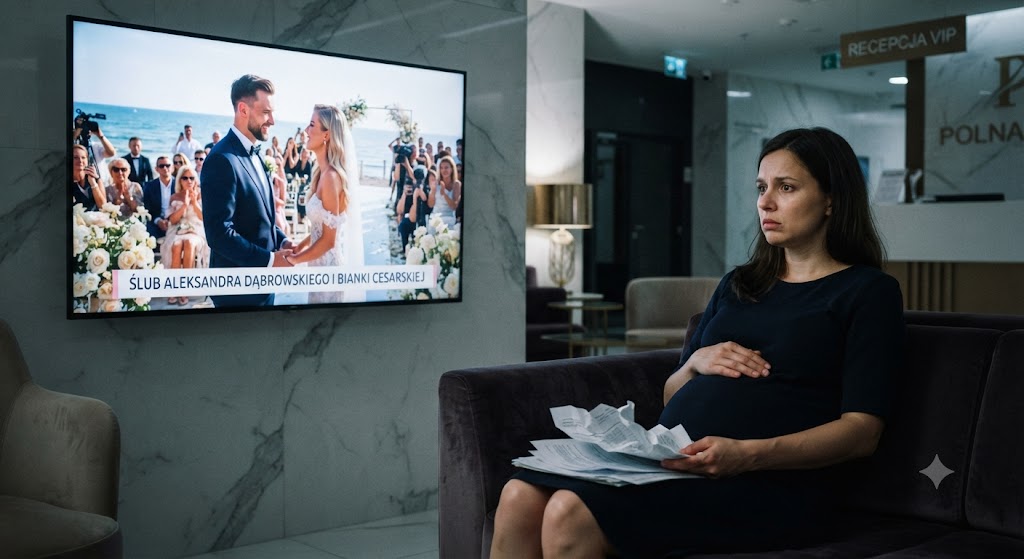
Siedziałam w poczekalni VIP, trzymając dłoń na zaokrąglonym brzuchu.
Byłam zmęczona.
Ostatnie miesiące ciąży nie były łatwe.
Ale byłam szczęśliwa.
Bo wierzyłam, że już niedługo Aleksander weźmie nasze dzieci na ręce.
Że w końcu stworzymy rodzinę, której tak bardzo pragnęłam.
Mój telefon leżał obok.
Od rana czekałam na jedną wiadomość.
„Przyjadę.”
Tylko tyle chciałam zobaczyć.
Przez pięć miesięcy ciąży ani razu nie pojawił się na badaniu.
Zawsze było coś ważniejszego.
Spotkanie.
Kontrakt.
Kolacja biznesowa.
Ale dzień wcześniej jego asystentka zapewniała mnie:
— Pani Ewo, pan Dąbrowski na pewno znajdzie czas.
Uwierzyłam.
Jak zawsze.
Wtedy nagle cała poczekalnia ucichła.
— Spójrzcie.
— To Aleksander Dąbrowski.
— On bierze ślub?
Podniosłam głowę.
Na ogromnym ekranie, który zwykle wyświetlał informacje dla ciężarnych kobiet, pojawiła się transmisja na żywo.
Nie reklama.
Nie program edukacyjny.
Ślub.
Jego ślub.
Najpierw zobaczyłam białą kaplicę nad morzem.
Czerwony dywan.
Setki gości.
Kamery.
Dziennikarzy.
Wszystko wyglądało jak bajka.
A potem pojawił się on.
Aleksander.
Mój mąż.
W czarnym smokingu.
Stał pod ołtarzem i czekał na kobietę, która miała zająć moje miejsce.
— To Bianka Cesarska.
Powiedziała jakaś kobieta obok.
— Aktorka.
— Podobno jest w ciąży.
Te słowa uderzyły we mnie mocniej niż cokolwiek innego.
W ciąży.
Bianka była w ciąży.
A ja siedziałam kilka metrów dalej.
Z jego dziećmi pod sercem.
Kamera zbliżyła się do twarzy Aleksandra.
Znałam ten wyraz.
Zmarszczone brwi.
Lekko napięta szczęka.
Ten sam gest, kiedy był zdenerwowany.
Ale tym razem nie patrzył na mnie.
Patrzył na inną kobietę.
Ksiądz podniósł głos.
— Aleksandrze, czy bierzesz Biankę za żonę?
W poczekalni zrobiło się cicho.
Wszyscy czekali.
Ja też.
Może przez jedną sekundę jakaś część mnie nadal wierzyła, że powie:
„Nie.”
Że zatrzyma tę farsę.
Że przypomni sobie o mnie.
O naszych dzieciach.
O obietnicach.
Ale usłyszałam:
— Tak.
Jego głos był spokojny.
Pewny.
— Biorę.
Wtedy moje dziecko poruszyło się w brzuchu.
Jakby wyczuło mój ból.
Nie płakałam.
Nie krzyczałam.
Po prostu siedziałam i patrzyłam, jak człowiek, którego kochałam najbardziej na świecie, niszczy wszystko jednym słowem.
Kilka sekund później Aleksander podniósł welon Bianki.
Pocałował ją.
Długo.
Przed kamerami.
Przed całą Polską.
Przede mną.
Pielęgniarka dotknęła mojego ramienia.
— Pani Ewo?
— Wszystko w porządku?
Spojrzałam na nią.
I ku własnemu zaskoczeniu odpowiedziałam spokojnie:
— Tak.
— Wszystko jest w porządku.
Ale już wtedy wiedziałam.
Nic nigdy nie będzie takie samo.
W gabinecie lekarza zobaczyłam moje dzieci.
Dwie małe istoty.
Chłopiec.
Dziewczynka.
Ich serca biły mocno.
Lekarka uśmiechnęła się.
— Bliźnięta rozwijają się idealnie.
Patrzyłam na ekran.
I pomyślałam:
„Tylko ja was ochronię.”
Po badaniu mój telefon zadzwonił.
Aleksander.
Patrzyłam na jego imię przez kilka sekund.
Kiedyś odebrałabym natychmiast.
Tym razem przesunęłam palcem.
Odrzuciłam.
Po chwili wiadomość:
„Kolacja w Ember Room. Mama mówi, że musisz być o 19:00.”
Zaśmiałam się cicho.
Pierwszy raz od dawna.
Nie z radości.
Z niedowierzania.
Człowiek, który właśnie poślubił inną kobietę przed kamerami, nadal oczekiwał, że pojawię się na rodzinnej kolacji.
Pojechałam do Katarzyny.
Mojej najlepszej przyjaciółki.
Ledwo otworzyła drzwi, zobaczyła moją twarz.
— Ewa…
Nie odpowiedziałam.
Weszłam do środka.
Zamknęłam drzwi.
I dopiero wtedy powiedziałam:
— Aleksander się dzisiaj ożenił.
Jej twarz pobladła.
— Co?
— Z Bianką Cesarską.
Zapadła cisza.
Katarzyna przez chwilę nie mówiła nic.
A potem wybuchła:
— On jest szalony.
— Przecież wy nadal jesteście małżeństwem!
Pokręciłam głową.
— Wiem.
— Ale Dąbrowscy zawsze dostają to, czego chcą.
Wtedy po raz pierwszy powiedziałam coś, co od dawna ukrywałam:
— Kasiu.
— Chcę wyjechać.
Spojrzała na mnie.
— Dokąd?
Położyłam dłoń na brzuchu.
— Gdziekolwiek.
— Byle moje dzieci nie dorastały w świecie, w którym ich matka jest nikim.
Katarzyna próbowała mnie zatrzymać.
— Ewa, jesteś w piątym miesiącu ciąży.
— Będziesz sama.
Spojrzałam jej w oczy.
— Zostanie tutaj byłoby trudniejsze.
Bo tutaj każdego dnia przypominałabym sobie, że człowiek, który miał mnie chronić, wybrał kogoś innego.
Tego wieczoru podjęłyśmy decyzję.
Singapur.
Nowa tożsamość.
Nowy początek.
Nie zabrałam pierścionka.
Nie zabrałam luksusowych rzeczy.
Nie zabrałam niczego, co należało do życia Ewy Dąbrowskiej.
Zabrałam tylko:
paszport,
dokumenty,
oszczędności,
i moje dzieci.

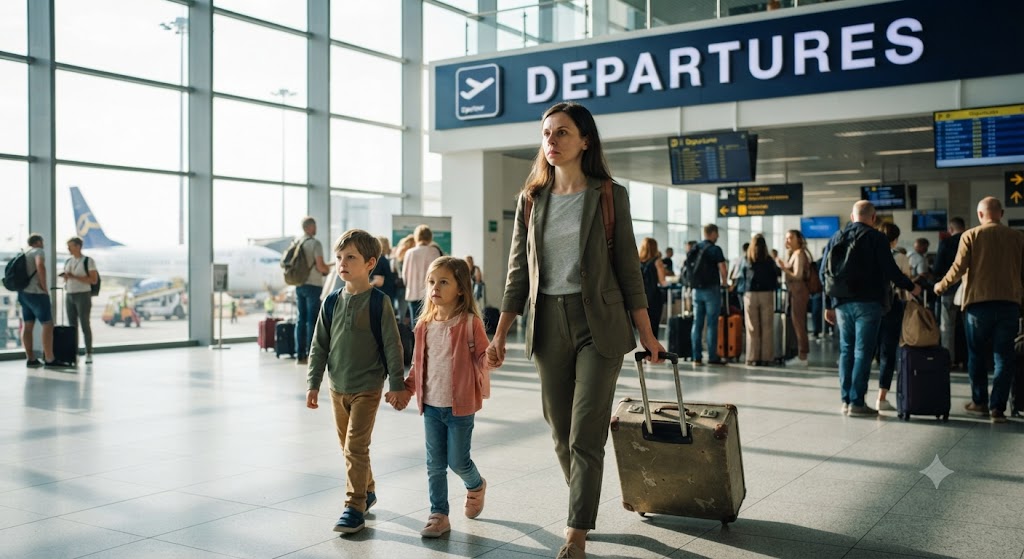
Kiedy samolot oderwał się od ziemi, spojrzałam przez okno.
Warszawa znikała pod chmurami.
Przyłożyłam rękę do brzucha.
— Obiecuję wam.
— Mama was ochroni.
Singapur nie był łatwy.
Byłam sama.
W obcym kraju.
W siódmym miesiącu ciąży urodziłam bliźnięta.
Natana i Gaję.
Kiedy pierwszy raz usłyszałam ich płacz…
wszystko, co wydarzyło się wcześniej, przestało mieć znaczenie.
Nie miałam już męża.
Nie miałam domu Dąbrowskich.
Nie miałam nazwiska, które kiedyś miało coś znaczyć.
Miałam tylko dwoje dzieci.
I to wystarczyło.
Pierwsze lata były ciężkie.
Pracowałam.
Uczyłam się.
Budowałam.
Z pomocą cioci Heleny stworzyłam pierwsze centrum regeneracji poporodowej.
Nadałam mu nazwę:
Aura.
Nikt nie wiedział, kim byłam wcześniej.
Nie byłam żoną Aleksandra Dąbrowskiego.
Nie byłam kobietą porzuconą przed kamerami.
Byłam Ewą Rees.
Kobietą, która zbudowała wszystko własnymi rękami.
Pięć lat później wróciłam do Warszawy.
Nie jako ofiara.
Jako właścicielka międzynarodowej marki.
Na gali biznesowej zobaczyłam go ponownie.
Aleksandra.
Stał kilka metrów ode mnie.
Patrzył tak, jakby zobaczył ducha.
— Ewa…
Uśmiechnęłam się spokojnie.
— Panie Dąbrowski.
— Dawno się nie widzieliśmy.
Wtedy po raz pierwszy zobaczył kobietę, którą stworzyłam.
Nie tę, którą zostawił.
Nie tę, którą uważał za słabą.
A kilka dni później zobaczył coś jeszcze.
Natana i Gaję.
Dwoje dzieci, które wychowałam sama.
Dwoje dzieci, których pierwszych kroków nie widział.
Pierwszych słów.
Pierwszych gorączek.
Pierwszych łez.
Patrzył na nich i zrozumiał.
Stracił pięć lat.
Nie dlatego, że mu je zabrałam.
Dlatego, że sam je oddał.
Nie wróciłam do Warszawy po zemstę.
Wróciłam po swoje życie.
Po swoją prawdę.
Po przyszłość moich dzieci.
Bo czasami największą karą dla człowieka nie jest to, że coś mu odbierzesz.
Największą karą jest pozwolić mu zobaczyć, co stracił.
A potem odejść dalej.