The Lost in Space Secret Hollywood Never Told Fans: The Actor Who Stole the Show, the Star Who Was Forgotten, and the Cast Drama Hidden Inside the Jupiter 2
For 60 years, audiences believed Lost in Space was a simple family adventure about a spaceship lost among the stars. But behind the colorful aliens, the famous robot, and the smiling Robinson family was a much darker Hollywood story — a battle over fame, control, screen time, and a show that changed forever when one actor transformed himself from a temporary villain into its biggest star.
When Lost in Space premiered in 1965, nobody expected the biggest controversy behind the series to come from the character who was never supposed to matter.
Dr. Zachary Smith was created as a problem. A villain. A character designed to create conflict before eventually disappearing from the story. He was supposed to be the enemy of the Robinson family, the dangerous spy who sabotaged their mission and sent them drifting into space.
But then Jonathan Harris arrived.

And instead of playing Smith the way the producers imagined, he completely changed him.
Behind the cameras, Harris looked at the role and immediately understood something important: a villain with a short lifespan was not going to build a lasting career. He knew that if Smith remained a one-dimensional enemy, his time on the show would be limited. So he made a risky decision. He began rewriting the character himself, changing the dialogue, adjusting the personality, and turning Smith into something nobody expected.
According to those who worked on the show, Harris would arrive on set with new pages and casually announce, “Let us go over the scene. I have changed all the dialogue.” What began as a small creative adjustment slowly became a complete transformation. The cold villain became a dramatic, selfish, hilarious character whose cowardice and exaggerated reactions became the very thing audiences loved.
The irony was impossible to ignore. The character who was supposed to disappear became the reason millions of viewers kept watching.
Even creator Irwin Allen eventually admitted the truth: “Smith was not originally created as a comedy character, but Jonathan Harris dictated what we should do with the character.”
Hollywood had seen this before. Sometimes the actor does not simply perform the role.
Sometimes the actor takes the role away from the script and creates something bigger.
And that success came with a hidden cost.
Because while Dr. Smith became more important, another actor slowly watched himself disappear from the show he was supposed to lead.
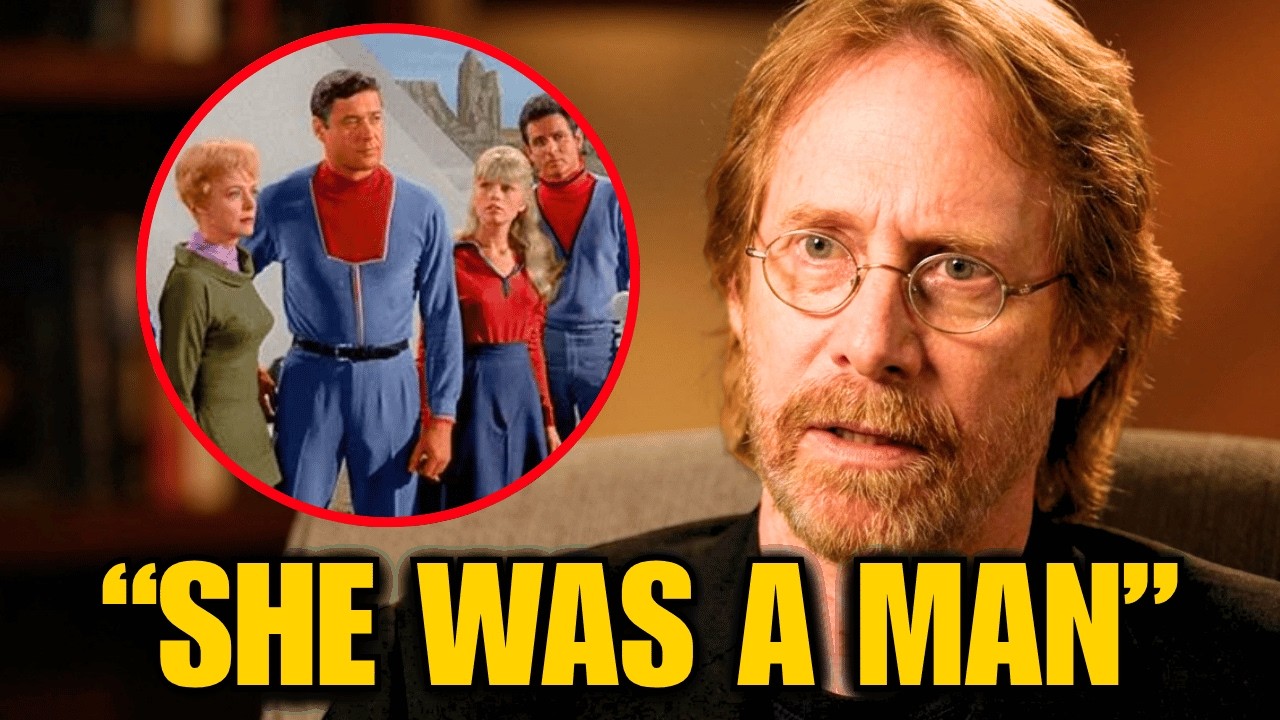
Before Jonathan Harris changed the entire direction of Lost in Space, the show belonged to Guy Williams. He was the face audiences were supposed to follow. He was already famous before stepping onto the Jupiter 2, having become a household name through Zorro. He had the looks, the experience, and the charisma of a classic television leading man.
John Robinson was supposed to be the hero.
The father.
The commander.
The person guiding the family through the dangers of space.
But slowly, almost invisibly at first, the balance changed.
In the first season, viewers could still see Williams as the central figure. But as Dr. Smith’s storylines expanded, the focus moved away from the Robinson family leader. By the later seasons, the man who had been hired to carry the show was often standing in the background while Dr. Smith, Will Robinson, and the Robot dominated the episodes.
The shift was painful because it was not caused by failure.
Guy Williams was not pushed aside because audiences disliked him.
He was pushed aside because another character became unexpectedly powerful.
Mark Goddard later acknowledged the tension, saying the show “started going more toward the robot and Smith,” and that there were “hard feelings from Guy, especially.”
Even Jonathan Harris understood the situation. He admitted that Williams had been hired as the star but eventually found himself with only occasional moments to shine. For an actor who had once been the center of attention, that had to be devastating.
Behind the scenes, the frustration eventually exploded.
During one argument, Williams reportedly became so angry that he shouted at Harris, “God damn it, I will kill you, Harris.”
Then came the pause.
The correction.
“I mean Smith.”
It was a joke.
But it also revealed something real.
The rivalry between John Robinson and Dr. Smith was not just happening on screen.
A version of it was happening behind the cameras too.
What makes Guy Williams’ story even more tragic is what happened after the show ended. Many actors leave a successful series and continue building their careers, but Williams discovered that Hollywood had moved on faster than he expected.
The role that made him famous had also trapped him.
After Lost in Space, his career never reached the level many expected.
But thousands of miles away from Hollywood, something completely different was happening.
Argentina still loved him.
His earlier success as Zorro had made him a cultural icon there. Fans remembered him. The government welcomed him. He was treated with a level of admiration that he never received again from the American television industry.
For years, he lived quietly in Buenos Aires.
Then, in 1989, police entered his apartment after friends became concerned about his disappearance.
They found him alone.
A ruptured brain aneurysm had taken his life.
He was 65 years old.
The man who had been chosen to lead a family into space had ended his life far away from Hollywood, in a country where fans remembered him more warmly than the industry that once promised him stardom.
While Guy Williams fought an invisible battle for recognition, another member of the cast was fighting a very physical one.
Bob May was the man inside the Robot.
To children watching at home, the Robot was one of the most beloved characters on television. It waved its arms, warned Will Robinson about danger, and became a symbol of the entire series.
But behind the costume was a reality almost nobody knew.
Bob May was suffering.
The robot suit weighed around 200 pounds. Under the studio lights, the temperature inside became unbearable. The costume was almost airtight, turning every filming day into a physical challenge.
There were moments when he reportedly passed out inside the suit because of heat and lack of oxygen.
But the show continued.
The cameras kept rolling.
The audience never knew.
The industry saw a robot.
They did not always see the person sacrificing his body to create it.
Even more painful, Bob May was not credited on screen during the original run of the series. Millions of people loved the Robot, but many had no idea who brought the character to life.
Years later, as the franchise became more valuable, May remained one of the overlooked figures behind its success.
But he never allowed bitterness to define him.
At conventions, he became famous for the opposite reason. He stayed with fans. He signed autographs. He made people feel important.
A man who had been overlooked by Hollywood made sure nobody who came to meet him felt invisible.
The biggest surprise about Lost in Space is that the show audiences remember almost never existed in that form.
Before Dr. Smith.
Before the Robot.
Before the colorful adventures.
There was a completely different vision.
The original pilot was a serious science fiction drama. It focused on a family trying to survive after being lost in space. There was no comedic villain. No exaggerated conflicts. No character designed to create weekly chaos.
Irwin Allen believed he had created something special.
But CBS wanted changes.
They wanted a villain.
They wanted a recurring source of conflict.
They wanted something audiences could return to every week.
So Dr. Smith was added.
The Robot was added.
The entire personality of the series changed.
What began as a serious exploration story became the colorful adventure that audiences remember today.
And the strange truth is that the changes that altered the original vision were also the things that made the show unforgettable.
The rivalry with Star Trek added another layer to the drama surrounding Lost in Space. Fans often imagined the two shows as enemies fighting for science fiction dominance, but the reality behind the scenes was much more complicated.
Both productions were working under impossible deadlines.
Both teams needed creative solutions.
And sometimes, they even helped each other.
One of the funniest examples came when Lost in Space needed alien ears for an episode and reportedly borrowed molds connected to Spock’s famous ears from Star Trek. Fans noticed the similarity and accused the show of copying.
But the truth was far less dramatic.
The makeup artists from both productions were professionals trying to survive the demands of television production.
The rivalry existed.
But so did respect.

Perhaps the greatest secret of Lost in Space is that despite all the conflict, disappointment, and behind-the-scenes struggles, the cast remained connected for decades.
The Robinson children — Bill Mumy, Angela Cartwright, and Marta Kristen — continued finding their way back to each other long after the Jupiter 2 disappeared.
They grew up together.
They shared childhood memories.
They experienced fame at an age when most people were still figuring out who they were.
Their fictional family never reached Alpha Centauri.
But their real friendship survived.
Even decades later, they continued appearing together, sharing stories, and celebrating the show that changed their lives.
That might be the most surprising ending of all.
Because behind the Hollywood battles, the lost opportunities, and the characters fighting for attention was something much more powerful.
A real connection.
Lost in Space was never just about a spaceship.
It was about the people inside it.
The actors who carried the memories.
The friendships that survived.
And the stories that remained long after the cameras stopped rolling.
Sixty years later, the Jupiter 2 may still be lost somewhere in television history.
But the people who built it never truly lost each other.