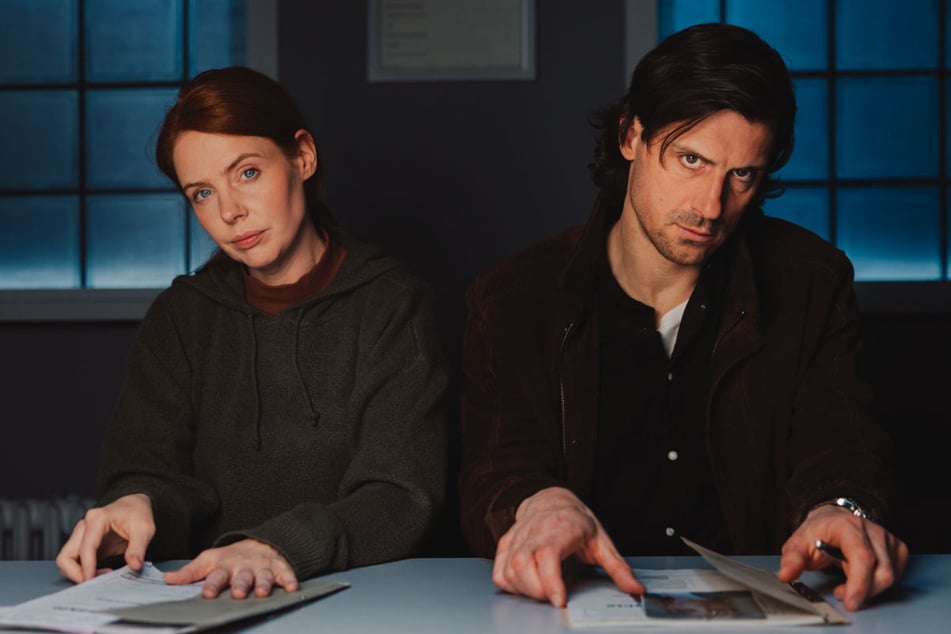
Monica leaned so close to my face that I could smell the bitterness on her breath. “I wish you were lying in that grave with Amelia,” she hissed, her eyes burning with hatred she didn’t bother to hide. “So I would never have to look at that disgusting old face of yours again. You live only to stand in our way.

”
She slapped the armrest of my wheelchair as if it had offended her by existing. Before I could steady my breath, Jared walked behind me and kicked the back wheel so hard my body jerked forward. “You should have died the day Amelia did,” he said. “Now you’re just a corpse waiting for the dirt, and you cling to this house like it means something.
”
His voice was low, sharp, and familiar in the most painful way. That resentment had been marinating for decades. I didn’t answer. I had learned that my silence poured gasoline on their rage, but speaking poured even more.
My tongue felt heavy with years of explanations Jared never wanted and truths Monica would twist for sport. Jared had hated me for a long time. He believed I loved his little sister more than I ever loved him. He believed I abandoned him during his childhood, that I worked myself to exhaustion not for him but against him.
He was six when Amelia’s heart began to fail. I took every shift I could find—cleaning offices at night, waitressing in the morning, sewing uniforms whenever my eyes could still stay open. I did all of it to keep both my children fed, clothed, and safe, but especially to keep Amelia alive. I carried guilt for years because I couldn’t save her longer than sixteen years, though I extended her life far beyond what doctors predicted.
Jared never understood that. In his memory, I walked out the door each night to leave him behind—never to hold him, never to sit beside him, never to pick him first. I never blamed him for misunderstanding. He was a child.
But he grew into a man who held onto that misunderstanding like a blade he could use against me forever. Monica sharpened that blade. She knew exactly how to turn his insecurities into weapons. “She destroyed your childhood, Jared,” she would whisper whenever she wanted the fire inside him to rise.
“Do you remember how she left you to go help Amelia? A good mother would not disappear like that. A good mother would not choose one child over the other. ”
She said these things with such certainty that Jared began to repeat them as if they were his own thoughts.
Their hatred was not born only from the past. It was fed by desperation. Jared had invested nearly all his savings—and some of mine without permission—into a cryptocurrency scheme pitched by a coworker. It crashed so fast he didn’t even have time to blink between losing thousands and owing seventy thousand dollars he had no means to repay.
His creditors threatened lawsuits. Monica’s dream of owning a large nail salon hung over their heads like a fading mirage. They needed collateral. And my house—my late husband’s house, a property protected under veteran special provisions—was the only asset valuable enough to rescue them.
They had convinced themselves that taking the house was justified, that I owed them, that my age erased my rights. Monica was the mastermind. She spoke of the house as if it were already hers. “We could finally move forward if she would stop being selfish,” she said whenever Jared hesitated.
“She’s old, Jared. Old women don’t need houses. They need to step aside. ”
Jared echoed her words.
“You should give us the house, Mother. You owe me that much after everything. ”
He said it like a man certain of his righteousness. I kept quiet, but my chest tightened with a feeling that was not quite fear.
It was grief—not for what they wanted to take, but for what they had lost long before this conversation: human decency, compassion, any trace of gratitude. I looked at Jared, then truly looked at him. I saw the boy he once was—small, hurt, confused—buried deep under resentment he never let go of. Monica’s hand on his shoulder steered him away from me, as if she were guiding a weapon she had polished herself.
I could not say it then, but I knew their cruelty toward me was the product of their past, their failures, their greed, and their hunger for someone to blame. And I, broken and aging in a wheelchair, was the easiest target. They did not know someone else was watching. The days after that confrontation melted together into one long stretch of humiliation and quiet endurance.
Their cruelty came in new forms every morning. They started by hiding my medication. At first, I thought my memory was failing, that maybe I had misplaced the bottles somehow. But then I heard Monica through the cracked doorway say to Jared, “Don’t put them back until tonight.
Old people don’t need that much anyway. ” She laughed as if she had told a harmless joke. Without the medication, my joints stiffened, my breathing grew shallow, and even small movements sent jolts up my back. When I asked where my pills were, Monica shrugged.
“How am I supposed to know what you do with your things? Maybe you ate them,” she said, rolling her eyes. I knew better than to accuse her. Accusations only hardened her cruelty.
My meals were the next thing to shrink. A half sandwich for the entire afternoon, sometimes just a small cup of broth poured from a can that had expired years ago. “You’re old,” Monica said. “Old people don’t need to eat like children.
You’re not going to grow anymore. ”
She kept the good food for herself and Jared, storing entire containers in the back of the fridge where she thought I couldn’t see them. I learned to sleep through hunger, the way I once learned to sleep through grief. Then came the bathroom rules.
They barred me from using the main bathroom—the one with the sturdy bars my late husband had installed for my safety. Monica said I made it smell funny, even though she was the only one who ever left messes behind. Instead, they forced me into the cold, cramped guest bathroom, where the sink didn’t drain properly. I washed myself with trembling hands, afraid to slip without anything to hold onto.
Every simple task became a reminder of my dependence and of the power they believed they had over me. But the worst came when Jared brought out the paperwork he had printed. He dropped the stack on my lap as though he were dropping trash onto the floor. “Sign it,” he said.
“Think of it as paying me back for the childhood you stole from me. ”
My voice trembled. “You don’t understand, Jared. I did everything.
”
He cut me off, shouting so loud I felt it inside my bones. “You did everything for Amelia, not for me. It was always her. It was always that girl.
”
He paced like a man possessed. “You think a child forgets being left behind every night? You think I don’t remember watching you walk out the door while she got all the attention? You made me a shadow.
”
I wanted to tell him that I had held him too, that I had loved him just as fiercely, but I had split myself in two trying to save a child who was fading away. There was no explaining that to a man who had grown his resentment into identity. “Jared,” I whispered, “I worked because I needed money for you. ”
“For Amelia,” he snapped.
“She died anyway, so what was the point? ”
His words struck deep. But even deeper was the realization that nothing I could say would remove the bitterness he clung to. It had rooted itself into the way he saw me, the way he saw the world.
And Monica, with her clever tongue and unending need for more, nurtured that bitterness like a farmer tending poisoned soil. The knock on the door that afternoon startled all of us. Monica walked to the entrance and opened it just a crack. “What?
” she barked. A man in a clean shirt and badge introduced himself calmly. “My name is Samuel Drayton. I’m here from the insurance company.
I received a request regarding a replacement wheelchair. ”
Monica stiffened. “The old one broke,” she said quickly. “Wear and tear, nothing unusual.
”
She tried to block the doorway, but Samuel stepped slightly to the side, peering in with a professional politeness she couldn’t reject without drawing suspicion. Jared came down the hallway, playing the part of the concerned son. “Yes, the wheelchair is getting old. It probably needs to be replaced before my mother gets hurt.
”
The lie rolled off his tongue with a practiced ease that made my stomach sink. Samuel asked to inspect the chair. Monica muttered under her breath and pointed him in my direction. I watched him kneel beside the wheel.
His fingers brushed the edges where the bolts had been loosened. His expression didn’t change much, but I saw a flicker—an almost imperceptible tightening around his eyes. Then he looked at the bruises on my arm. They were deep, inconsistent with a simple slip.
His gaze returned to the wheelchair, and I sensed his mind piecing things together. “Ma’am,” he said gently, “may I take a few photos for documentation? ”
Jared nodded too quickly. “Of course, procedure is procedure.
”
Samuel lifted a small company-issued camera. It was common for insurance assessments. Nothing unusual, nothing suspicious. He was allowed to do it.
But as he aimed the lens, I saw something else settle into his demeanor: a quiet alertness, a readiness I recognized from the years I lived with a husband who served in the Marine Corps. Samuel was not only assessing a wheelchair. He was assessing the truth. I first realized something was different when I heard the faint metallic click from behind my wheelchair.
It was subtle, almost careful, the kind of sound someone makes when they want to pretend nothing is happening. Monica crouched down beside the chair with a rag in her hand. Her movements were too precise, too deliberate. She was cleaning what didn’t need to be cleaned, wiping spots that hadn’t been dirty.
Her fingers grazed the brake bar and the bolts as if she were testing them. Then she said it, her voice light and sharp, like a needle sliding under the skin. “A little looseness here, a little rub there, and it looks just like old age wear. ”
She turned to Jared with a grin.
“All we need is one gentle push down the porch step, and everyone will believe she slipped. She’s old. Old people fall. ”
My breath caught.
She twisted the rag around the brake until she had wiped away any sign that she had tampered with it. She worked methodically, like someone who had practiced in her head a thousand times. She stood and brushed off her hands. “Almost there,” she said.
“Do it before she gets too nervous to move. ”
Jared stepped behind me. I could feel his hesitation like heat on the back of my neck. He pushed the chair forward inch by inch toward the edge of the porch.
The drop was not far, but it was far enough for an old woman with brittle bones. “Jared, please tell me you don’t mean to do this,” I whispered, feeling my chest tighten. He leaned down near my ear so Monica couldn’t hear him. His voice was quiet, trembling with something colder than rage.
“You should have died with Amelia. Then maybe I would have had a real childhood, a full family, not a mother who was never there. ”
He swallowed. “If you were gone, then maybe I would have mattered to someone.
”
The words pierced me with a pain I hadn’t felt since the day I buried my daughter. I felt tears sliding down my cheeks before I could stop them. “After everything, you believe that? ”
He didn’t look away.
“I’ve always believed it. You just never listened long enough to hear. ”
The truth in his eyes was more violent than any push he could give me. I realized then that nothing I had done—no night of lost sleep, no shift I had taken for the sake of his survival—had ever reached him.
He had built a story in his head and lived inside it for forty years. Monica clapped her hands once, impatient. “Enough talking. Do it.
One fall and she signs whatever we want after. Fear works better than begging. ”
I felt Jared’s hands tighten around the back handles. I felt the chair tilt ever so slightly.
The porch edge was only a foot away. My heart thudded once, then twice, like a warning. That was the moment Samuel appeared. He stood at the front gate, still wearing the same calm expression he had earlier.
But his jaw was set with an attention I recognized instantly. He had been watching long enough to understand everything. His camera hung at his chest, the red light blinking. “Don’t,” he said, his voice steady.
“Move her another inch. ”
Monica turned as if she had been stung. “Who are you? What are you doing here?
This is a family matter. Get out of here before we call the police. ”
Samuel stepped closer slowly, not raising his voice. “I’m already recording.
And I’m here because your husband requested insurance assistance for his mother’s wheelchair, which I now see was not damaged by age. ”
Jared froze. His hand slipped from the handles. The breath he drew was sharp and panicked.
Monica, however, stepped forward like a predator cornered. “Turn off that camera. You can’t film us. You have no right.
”
Samuel held her stare. “I have every right. And what I just saw is attempted harm against a dependent adult. You don’t want to know what the law calls that.
”
Her face twisted. “She’s lying. She probably put me up to this. Look at her.
She’s pathetic enough to play victim. ”
Samuel ignored her desperation. His eyes were fixed on me now, like someone making sure I was still alive. “Are you hurt, ma’am?
”
I couldn’t speak. I could only nod faintly, a thin thread of sound escaping my throat. “They were going to push me,” I managed. “I know,” he said.
Monica’s anger broke open completely. “You don’t understand anything. She owes us. That house should already be ours.
She’s old. She’s in the way, and she needs to stop. ”
Samuel snapped for the first time, letting steel enter his voice. “Nothing about this is a misunderstanding.
I saw exactly what you were about to do. ”
His camera kept recording, the little red light blinking like a silent witness. Jared backed away from the porch, shaking—not out of remorse, but out of fear of consequences. Monica glared at Samuel with a venom that should have melted the air.
Samuel stepped toward me, not them. “Ma’am,” he said. “I promise you this. They will not get away with this.
”
For the first time in a very long time, I believed someone. Samuel returned two days after the incident on the porch. He arrived with the same calm professionalism, but his eyes carried something sharper, more alert. He tapped lightly on the door frame before stepping into the living room, announcing that he needed to complete the equipment assessment for the final report.
Monica rolled her eyes, but she let him in. She thought she could control the narrative. She had no idea the narrative had shifted without her permission. I watched Samuel from my chair as he walked the same path he had inspected earlier.
He paused near the wheels, examining the bolts again. This time, when he knelt, he angled his body just slightly away from Monica and Jared, enough to discreetly activate a small second device clipped near his waist. He looked up at me just once with a subtle nod, letting me know he was collecting more than measurements. Monica, thinking she needed to put on a cooperative act, made loud remarks to seem helpful.
“Do whatever you need to do. We only want what’s best for her. ”
Her mouth twisted on the last word, unable to shape it without irony. Samuel continued inspecting, but his footsteps eventually led him down the hallway.
As he stepped away, Monica’s patience evaporated. She turned to me with her voice sharpened to a knife’s edge. “You think you can eat whenever you feel like it? You have to ask.
You drain everything in this house. ”
She leaned closer. “You are nothing but a parasite. ”
The words hit me hard, but what mattered more was that she didn’t know Samuel had stopped right outside the doorway.
His back stiffened as he listened. I could see the muscles in his shoulders tense under his shirt. He didn’t step in. He let her incriminate herself, all of it feeding directly into the evidence he needed.
I lowered my eyes, pretending not to notice him, pretending to be the helpless old woman she thought I was. Inside though, a quiet resolve began to grow. I was not alone anymore, even if they believed I was. When Samuel stepped back into view, Monica shifted instantly into a fake smile.
“We do everything we can for her. But she’s very demanding. ”
Samuel looked at her with a steady neutrality that must have terrified her if she paid attention. But she didn’t.
People like Monica rarely noticed danger unless it screamed at them. Jared joined us from the kitchen, wiping his hands nervously on his jeans. He looked at Samuel with a familiar desperation—the same expression he wore years ago when he wanted a toy or a new pair of shoes and didn’t want to hear no. But now it carried the weight of debt, failure, and fear.
“Hey,” Jared said, lowering his voice as he gestured Samuel aside. “Can I ask you something? Man to man? ”
Samuel nodded, but his expression remained unreadable.
Jared continued. “I need to know how this stuff works. You know, insurance, if things go bad. If someone like my mom, say, has an accident.
” He paused, then added, “We need money fast. If she fell and, you know, didn’t make it, the payout would go to us, right? ”
My heart felt as if it stopped. I searched Samuel’s face, not for reassurance, but for confirmation of what I already knew.
He looked at Jared with a controlled stillness, the kind a person uses when restraining instinct. Jared kept going, unaware of the iceberg he had just crashed into. “Look, I’m not saying we want that, but if it happened, we need to know the process. You must have seen things like that before.
You can help us file it correctly so the insurance doesn’t delay the payment. ”
Samuel’s jaw tightened so slightly that only someone watching him closely would notice. His voice, when he finally spoke, was calm enough to be frightening. “Insurance fraud is a federal crime,” he said quietly.
“And so is intentionally causing harm. ”
Jared laughed awkwardly, trying to backtrack. “No, no, that’s not what I meant. I’m just saying accidents happen, and if they do, we should be ready.
”
Samuel didn’t respond. Instead, he looked directly at me for the briefest moment. What I saw in his eyes made my breath steady. He believed me now entirely, and he did not intend to walk away.
Within the hour, after finishing his assessment, Samuel stepped outside and made a call from his car. I saw his silhouette through the window, the curve of his shoulders tight with urgency. His hands moved quickly as he outlined everything he had seen: the tampered wheelchair, the bruises on my arms, the threats, the financial motive, the conversation Jared had just exposed. By evening, he had filed the first report.
It included the videos from his camera, the audio clips of Monica screaming at me, the photos of the wheel assembly that didn’t match normal wear, and the recorded conversation in which Jared mentioned the possibility of my death and the insurance payout. The case was officially opened with the court. For the first time in years, someone had taken my suffering and carried it into a place where truth mattered. I knew something had changed the moment Jared slammed the front door so hard the walls shuddered.
He stormed into the living room with a paper trembling in his hand, his face pale with fury. Monica followed behind him, breathing sharply as if she had been screaming long before she reached me. She didn’t ease into her rage. She went straight for the jugular.
“You old witch,” she spat, thrusting her finger toward my face. “You called the police on us, did you? You want to die that badly? ”
She didn’t wait for an answer.
Her hand clamped around the handles of my chair as she screamed, “Do you think anyone will save you? You barely matter enough to keep alive. ”
I tried to speak, but the force of her anger pressed me into silence. She yanked the chair so violently that the wheel scraped against the floor.
Then she leaned close—so close I could see the veins pulsing in her neck. “You think you can ruin our lives? You think you can make us look like monsters? You’re the one who caused this.
You. ”
Before I could gather my thoughts, Monica grabbed the back of my chair and shoved me toward the narrow hallway. Jared opened the utility closet—the one with no windows, only shelves stuffed with paint cans and cleaning supplies. The air was stale, suffocating.
Monica pushed me inside, scraping my knuckles against the door frame. “You stay here,” she hissed. “No food, no water. You want to play victim?
Then you can rot in here until you learn your place. ”
The door slammed and the lock clicked. Darkness pressed against me as if the walls themselves wanted me gone. Hours crawled by, punctuated only by the sound of their arguing outside.
Whispers turning into shouts. Shouts turning into the unmistakable thud of Jared punching a wall. At one point, I heard Monica hiss, “I told you to be careful. You think they will let you keep the house after this?
You idiot. ”
Then Jared’s voice, breaking with panic. “Do you think I wanted this? I needed the money.
I needed a chance. And she had to make it difficult, like she always did. ”
I closed my eyes, wishing I could unhear it, wishing that his resentment hadn’t poisoned his soul so deeply. But the next thing I heard made my skin prickle with terror.
Footsteps approached the closet. The door swung open. Jared’s silhouette filled the doorway, the dim hall light outlining him like a shadow carved from something violent. He stepped toward me and grabbed my collar with both hands, pulling me forward so fast the chair lurched beneath me.
His eyes were wild—fear and desperation fused into something feral. “You will not ruin my future,” he growled. “You will not take the only chance I have left. You sign the deed transfer, or you will stay in this room until you do.
You hear me? I’m done waiting. ”
His fingers dug into my skin as he shook me once—hard enough to rattle my teeth. “I will not let you destroy everything just because you want revenge for something that happened forty years ago.
You owe me that house. You owe me everything. You should have given it to me years ago. ”
I could barely breathe.
But I whispered, “Jared, please stop. You don’t have to. ”
“Shut up,” he shouted. “You always have something to say.
You always have excuses. Not this time. Not anymore. ”
Then he shoved me back into the closet and slammed the door again.
I heard the lock click, followed by his footsteps storming away. Minutes passed, or maybe hours. Time feels strange when fear tightens around your ribs. I pressed my ear against the door, listening for anything—an argument, footsteps, something to anchor me.
But the house had fallen into a dangerous quiet. Quiet is the most frightening sound when you know cruelty is simmering just outside your reach. Then faintly I heard it—a knock at the front door. A steady, deliberate knock.
My heart leapt, but I swallowed the hope quickly. Hope had betrayed me too many times. I heard the door open. A calm voice followed.
“Is Mrs. Loretta Miles here? ”
I heard shouting. “Samuel.
”
Even in my fear, my eyes filled with tears. I could picture him on the porch, jaw tightened, scanning the house with that silent readiness I had seen before. Monica’s voice came next, sharp and cold. “There’s no one here by that name.
Leave. ”
Samuel’s footsteps shifted. I imagined him glancing toward the hallway, the way his instincts must have sharpened after years of seeing what others preferred to ignore. “Ma’am,” he said more firmly, “I heard her.
I know she’s here. Step aside. ”
“I told you to leave. ” Monica snapped, but her voice cracked.
Samuel didn’t wait for permission. He signaled something, something I couldn’t see, and in the next second, heavy footsteps rushed in. The unmistakable sound of boots—police. Doors swung open, drawers were searched, the house filled with shouts, commands, orders, the shuffle of people trained to find what others tried to hide.
Then the closet door burst open. Light spilled in like salvation, and Samuel stood there, breath tight with fury and relief. “Mrs. Miles,” he said, kneeling beside me.
“You’re safe now. ”
For the first time in my life, safety felt like a person—a person who came back for me, a person who refused to let them bury me in the dark. The trial began three months after the day Samuel and the officers pulled me out of that dark closet. By then, my bruises had faded, but the memory of them had not.
I had moved into a protected elder residence where a nurse checked on me every morning and evening. Samuel visited often, always with the same gentle steadiness, always making sure that I had everything I needed. He never spoke of the trial unless I asked, and I rarely did. Some wounds feel deeper when spoken aloud.
But the day the trial began, I felt every part of myself trembling—not with fear, but with something closer to release. When I entered the courtroom, Jared and Monica were already seated with their attorneys. Monica sat stiff, her hair pulled back so tightly it seemed she wanted to stretch her face into innocence. Jared slumped beside her, his eyes swollen—not from remorse, but from sleepless panic.
When he saw me, he looked away quickly, as if the sight of me reminded him of everything he hoped would stay buried. But the truth does not stay buried. Not when someone like Samuel is determined to unearth it. The judge called the room to order, and the prosecution began with the video Samuel had recorded.
I braced myself, but nothing could have prepared me for seeing it through the eyes of strangers. The screen lit up with the porch scene—the moment Monica bent over my wheelchair and loosened the brake bolts. The camera caught the exact angle of her hands, the rag wiping away fingerprints, the smirk on her face when she whispered, “A little looseness here, a little rub there, and it looks just like old age wear. ”
The courtroom murmured.
I heard someone gasp. Then came the part where Jared leaned down behind me, his voice cold and low as he said, “You should have died with Amelia. ”
Hearing it again made my chest tighten as if the breath trapped inside me wanted to crawl back into my throat. The courtroom fell silent.
Every eye fixed on Jared, who now sat with his head bowed and his fists clenched. The video showed the moment the wheelchair rolled toward the porch edge—how close one more inch would have been to ending my life. The judge paused the video just before Samuel appeared at the gate. He looked at the defense table.
“Would you like to explain this? ” he asked. Monica’s attorney stood and stammered something about misunderstandings, about context, about stress. It did not matter.
The video resumed, displaying their words with merciless clarity. Then came the moment the prosecution had repeated for emphasis. The moment Monica screamed, “I wish you were lying in the grave with Amelia so I never have to see your disgusting face again. ”
Even the stenographer looked up from her machine.
The judge froze the frame with Monica’s face twisted in hatred. “If this is a misunderstanding,” he said slowly, “I am not seeing it. ”
Monica shifted, her jaw tight, her eyes glistening with rage rather than regret. The courtroom had barely recovered from that shock when the prosecution presented photographs Samuel had taken: the bruising along my arms, the unnatural torque of the wheelchair brakes, the close-up images of scraped bolts that only tools could have loosened.
Each detail layered truth upon truth until even the most skeptical observer could not deny what had happened. The judge leaned back, his brow furrowed. “This evidence,” he said, “is not subtle. ”
I breathed for what felt like the first time since arriving.
The prosecution rested, and then the judge asked Samuel to take the stand. He walked up with a quiet composure that commanded attention without demanding it. When asked to identify himself, he did so plainly. “Insurance field investigator specializing in fraud prevention and elder safety review.
”
His voice never wavered. They questioned him about the video, his assessment of the wheelchair, his reasoning for returning to the house—everything. He answered each question directly, carefully, and with the kind of moral steadiness that left little room for argument. Then the prosecutor asked, “Mr.
Drayton, why did you choose to go back a second time? ”
He hesitated only a fraction of a second. “Because I recognized signs I had seen before,” he said. “Signs that in the past I did not act on quickly enough.
”
The room shifted—a collective inhale. “Are you referring to your mother’s case? ” the prosecutor asked. Samuel nodded once.
“Yes. ”
A quiet hush spread across the courtroom like a gentle tide. He continued, “My mother died from injuries inflicted by someone she trusted. I did not reach her in time.
When I saw the bruises on Mrs. Miles and the tampered wheelchair, I knew I could not make the same mistake twice. ”
He didn’t cry. He didn’t falter.
But the weight of his grief moved through the room like a truth older than the walls that held us. The judge cleared his throat. “You may step down. ”
Then my name was called.
I made my way to the stand, my palms damp, my heart pounding. I told my story—not with drama, not with embellishment, but with the simplicity that truth carries when one has nothing left to protect. I described the medication withheld, the meals denied, the threats whispered in the hallways, and the final moment when Jared grabbed my collar and said I would never leave the closet unless I signed away my home. Jared refused to look at me.
Monica glared at me as if my existence offended her. When I finished, the judge nodded solemnly. “Thank you, Mrs. Miles.
”
The courtroom fell still. Then Samuel rose from his seat once more. “Your Honor,” he said. “Before the prosecution rests, I have something I believe Mrs.
Miles should receive. ”
He walked to the evidence table and lifted a delicate envelope worn by time. He handed it to the bailiff, who delivered it to me. When I opened it, the handwriting inside struck me like a forgotten melody.
It was Mary’s handwriting. My breath quivered as I read. “I know Loretta always does everything for her children. If one day I am not here, please take care of each other.
”
My vision blurred. I pressed the letter to my chest as a sob escaped me—not from weakness, but from recognition of a love I had thought lost. Across the room, Jared stared at me, frozen, as if the letter unraveled the story he had told himself for decades. A story where I was the villain, where Amelia was the favored child, where he was the abandoned one.
But Mary knew the truth. So did Samuel. And now the court did too. The judge lifted his gavel slightly.
“I believe we are ready for sentencing. ”
My pulse hammered as he listed the penalties. “Monica Miles: six to ten years in state prison for elder abuse, attempted harm, and coercion. ”
Monica’s scream tore through the courtroom, unrestrained and wild.
“Jared Miles: five years in prison, mandatory restitution payments, and a lifelong no-contact order with Mrs. Miles. ”
Jared’s legs gave out as he slumped back in his seat. “The property in question shall remain under the protected status of veteran family housing.
Mrs. Miles retains full rights. Additionally, she will receive ongoing support under the elder abuse victim program. ”
The gavel fell.
For a moment, there was only silence. Then something else—a collective exhale, a sense of justice settling into the room. I felt it too, deep in my bones. A weight finally lifted.
Not joy, not triumph, but peace. A peace I had earned through survival and through the courage of someone who once could not save his own mother but had saved me. The day the trial ended, the world felt strangely quiet, like the air itself was trying to relearn how to breathe with me. I returned to my home—my home, still mine—guided gently into the living room with Samuel steadying my wheelchair.
He refused to let me move alone. Even though I told him I could manage, he said nothing to argue. He simply walked beside me, the way a person walks when they are exactly where they intend to be. When he set my small overnight bag down, he reached into his coat pocket and pulled out a photograph I had not seen in decades.
It was the picture of the three young women—me, Mary, and our friend Laya—standing shoulder to shoulder, laughing as if our futures were limitless. His fingers brushed the edge of the photo reverently. “You were the last person my mother spoke about,” he said. “The last friend she mentioned by name.
”
My breath trembled. I reached out for the picture, my hands shaking the way old hands do when holding a memory that feels too alive. “Mary,” I whispered. “She was my second family.
”
I pressed the photo against my chest. I could almost hear Mary laughing again, teasing me about the way I tucked my hair behind my ear whenever I was nervous. I could see her eyes—warm, bright, always ready to protect someone she loved. Grief pulled inside me, but so did gratitude.
I had missed her in silence for so many years, never imagining that her son would walk into my life just when I needed someone most. Samuel knelt beside my chair so we were at eye level. He rested one hand gently over mine. “I lost her once,” he said quietly.
“I couldn’t save her. I couldn’t undo what happened to her. I don’t want to lose another mother. ”
The words wrapped around my heart in a way nothing else had since the day Amelia died.
Not pity, not obligation—something deeper, something chosen. I smiled, though my eyes blurred with tears. “You saved me. Amelia must be smiling.
And Mary, too. ”
He lowered his head slightly, receiving those names like a blessing. From that day forward, Samuel became part of the rhythm of my life—not intruding, never overstepping, but always present. He visited after work, sometimes bringing groceries, sometimes bringing a new cushion for my chair, sometimes bringing nothing but company.
He insisted on rewiring the porch light, tightening the rails, replacing the flimsy lock on the back door. When I told him he didn’t need to do that, he said simply, “I want you safe. ”
And I believed him. He spoke of his mother often—not in sorrow, but in remembrance.
Together we pieced together memories: mine of the young woman I once knew, his of the mother who raised him with more love than she ever received in return. There were nights when he stayed late, fixing a cabinet or adjusting a handrail, and we talked until the sky darkened into the quiet blue of early evening. I no longer felt alone. I no longer felt invisible.
One afternoon, after he repaired the loose board on the porch where I had nearly fallen, he stood back and wiped his hands clean. “There,” he said. “It will hold you now. ”
I touched the newly secured railing—solid now, steady, just like Samuel.
Inside, on the small table by the window, I placed two framed photos: Amelia’s gentle smile beside Mary’s bright eyes. I lit a candle between them each night—a small flame telling them their love had finally come home to me through Samuel. When he visits, he always pauses before that table. He never speaks, but the reverence in his eyes says enough.
In protecting me, he honors them. And in his kindness, I see the echo of his mother. Life didn’t return to what it once was, but it became something peaceful, whole. That evening, the final paperwork confirmed my freedom.
Samuel sat beside me on the porch, golden light fading. For the first time in years, the world felt safe. I closed my eyes and breathed. People say evil wins when we stay silent.
But today, someone listened. Someone stood up. And I—after all these years—I finally get to live. Samuel placed his hand over mine, and in that small gesture, I felt the full weight of what had been returned to me.
Dignity, safety, family, life. It was, in every sense, a just ending and a new beginning.