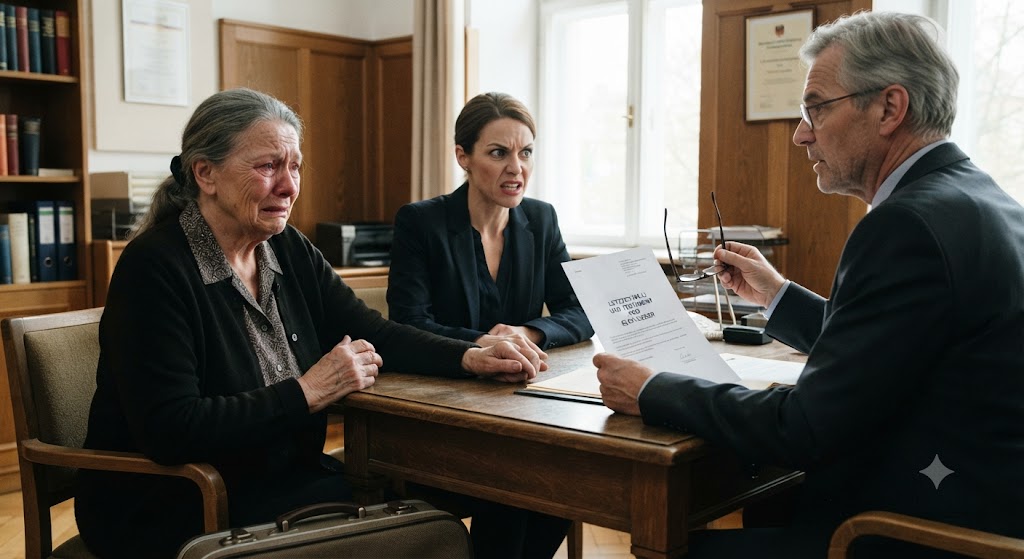
My sister-in-law laughed after stealing my work again. “My brother owns half this company. Who do you think they’ll believe, you or me? ” I just smiled.

That was two months ago. Today, she was exposed in front of our boss, her brother, and the entire family. I never thought I’d be the guy writing one of these posts, but here I am at two in the morning, sitting in my home office with a glass of bourbon I haven’t touched, staring at a folder on my desktop labeled “Insurance. ”
It doesn’t contain insurance documents.
It contains six months of proof that my sister-in-law has been stealing my work, inflating the numbers to make herself look like a genius, and feeding it directly to the two men who own the company where I’ve worked for six years. Let me back up. My name’s Steven. I’m thirty-two, married to my wife Jenna, and I work as a supply chain optimization analyst at Hardgrove Manufacturing.
It’s a mid-size operation, about two hundred employees, makes industrial fasteners and connectors. Not glamorous, but the work is genuinely interesting if you’re the kind of person who gets a dopamine hit from shaving three percent off a logistics cycle, which I am. I’ve been at Hardgrove for six years. Started as a junior analyst, worked my way up.
My direct supervisor is Rosa Vega, the operations manager, and she’s one of the best bosses I’ve ever had. Sharp, fair, doesn’t play politics. The company is co-owned by two partners. Mitch Hardgrove, the founder’s son, handles the business side and owns sixty percent.
Dale Kemper came on as a minority partner about twelve years ago and runs operations. They get along well enough, but Mitch owns the majority and Dale knows it. Here’s where it gets complicated. My older brother Craig married Dale Kemper’s daughter, Tori, about three years ago.
Big wedding, open bar, the whole production. Tori is socially smart. She knows how to work a room, how to make people feel important, how to position herself. What she is not is an analyst, a strategist, or someone who has ever opened a spreadsheet without immediately closing it.
About eighteen months ago, Tori got hired at Hardgrove in a marketing coordinator role. I want to be clear: Dale didn’t force it. He suggested it to Mitch, and Mitch said sure because it was a low-stakes position and keeping your business partner happy matters. I had no problem with it.
Tori in marketing, me in analytics. Different floors, different worlds. Except Tori got ambitious. It started small.
She’d swing by my desk and ask questions about projects I was working on. “Hey Steven, what’s that report about? ” Casual stuff. I didn’t think anything of it.
She’s family. Then one afternoon, about a year ago, I got an email from Dale Kemper thanking the team for Tori’s excellent analysis on vendor consolidation opportunities. I stared at that email for a solid minute. I had written that analysis.
Every word, every data point, every recommendation. I’d sent it to Rosa, who sent it up the chain. Somewhere between Rosa’s outbox and Dale’s inbox, it had become Tori’s work. I brought it up with Craig first.
Seemed like the reasonable thing to do. Talk to my brother, let him handle it with his wife. “Come on, Steve,” Craig said. We were in his backyard, and he was flipping burgers, barely looking at me.
“She probably just forwarded it with some context. You know how corporate emails work. It’s not like she put her name on a patent. ”
“She literally put her name on my report, Craig.
”
“It’s a family company. We’re all on the same team. Don’t make this into a thing. ”
I let it go.
Jenna told me to let it go too, though she was less dismissive about it. “Pick your battles,” she said. “You know your work speaks for itself. ”
And it did, for a while.
But the pattern didn’t stop. Over the next several months, I noticed three more of my reports surfacing in emails and meeting summaries attributed to Tori. She was cherry-picking my work, specifically the pieces that had clear, impressive outcomes. A procurement efficiency study I did that saved the company $87,000 annually?
Tori’s insight. A shipping route optimization that cut delivery times by fourteen percent? Tori’s initiative. I started keeping a quiet log.
Dates, file names, email timestamps. Not because I had a plan, just because I’m an analyst, and when numbers don’t add up, I track them. Then came the confrontation. It was a Tuesday.
I’d just finished a new report, a big one: a full audit of our warehouse fulfillment process with recommendations that could save the company somewhere around $200,000 over two years. I was proud of it. Sent it to Rosa, CC’d the analytics team, standard procedure. Three days later, I saw Tori in the break room.
She was on her phone, barely acknowledged me, which was normal. But something made me check my email. I pulled up the company’s shared drive and searched for my report title. There it was.
A copy, reformatted, with Tori’s name in the header, sitting in a folder labeled “marketing strategy contributions. ”
I walked back to the break room. She was still there, stirring her coffee. “Tori, we need to talk about the fulfillment audit.
”
She didn’t even flinch. “What about it? ”
“You copied my report. Again.
It’s in the shared drive under your name. ”
She set her coffee down and looked at me with this patient little smile, like I was a child who didn’t understand how the world worked. “Steven, I reformatted it and added context for the executive summary. That’s called collaboration.
You should be thanking me for making your data presentable. ”
“You changed the header to your name. ”
“My brother owns half this company. ” She said it slowly, like she was explaining something to someone very dense.
“Who do you think they’ll believe, you or me? ”
She picked up her coffee, patted me on the shoulder, and walked out. I just stood there. And honestly, I smiled.
Not because it was funny, but because something clicked in that moment. She’d just told me exactly who she was, and exactly what she believed protected her. That’s useful information. I went home that night and told Jenna everything.
Not just the latest incident. The full timeline. She sat on the couch, arms crossed, and when I finished, she said, “So, what are you going to do? ”
“I’m going to keep doing my job,” I said.
“But I’m going to do it a little differently. ”
That night, I pulled up the copy of my fulfillment audit that Tori had posted to the shared drive. I wanted to see exactly what she’d changed beyond the header. Most of it was cosmetic.
Different fonts, rearranged paragraphs, a few buzzwords sprinkled in. But then I got to the projected savings table. My original report estimated $195,000 to $210,000 in savings over twenty-four months, depending on implementation speed. Conservative, defensible numbers backed by vendor quotes and historical data.
Tori’s version said $340,000. She hadn’t just stolen my work. She’d inflated the numbers by over sixty percent. And those inflated numbers were now sitting in a folder that both Dale Kemper and Mitch Hardgrove had access to.
I leaned back in my chair and stared at the screen. This wasn’t just credit theft anymore. Mitch made budget decisions based on projected savings. If he allocated resources expecting $340,000 in returns and only got $200,000, someone was going to have to answer for that gap.
And I had a pretty good feeling I knew who they’d try to blame. I didn’t sleep well that night. Not because I was angry, though I was, but because my brain wouldn’t stop running scenarios. The inflated numbers changed everything.
Stealing credit is one thing. You can survive that. You can outlast it. But falsifying projected savings in reports that ownership uses for budget allocation?
That’s not office politics. That’s the kind of thing that gets people fired, and in the wrong circumstances, sued. The next morning I drove to work early and sat in the parking lot for ten minutes just thinking. I had two options.
Option one: go to Mitch or Dale immediately, show them the original report, show them Tori’s version, let the chips fall. Option two: slow down, think like an analyst, and figure out exactly how deep this goes before I make a move. I went with option two. Here’s why.
If I walked into Dale Kemper’s office and accused his daughter of falsifying data, what happens? Dale gets defensive. Tori cries. Craig calls me jealous.
They frame it as a formatting mistake or a misunderstanding. Maybe Tori even gets a slap on the wrist. And then I become the guy who tried to take down the boss’s daughter, and my career at Hardgrove is effectively over regardless of the outcome. I needed more than one report.
I needed a pattern. And I needed to make sure that the next time Tori stole from me, the evidence would be so clean that even Dale couldn’t explain it away. So I went to work and acted completely normal. That lasted about three hours before Rosa pulled me into her office.
“Close the door. ”
Rosa’s office was small, cluttered with binders and Post-it notes. She had this habit of talking while staring at her computer screen like she was multitasking even when she wasn’t. She turned to face me.
“I need to show you something. ”
She pulled up an email chain on her monitor. It was from two months earlier, a distribution logistics study I’d done on regional shipping partners. Standard work.
I recognized my formatting, my methodology, my conclusions. “This went to Dale and Mitch last month,” Rosa said, “attributed to Tori. I didn’t flag it at the time because I wasn’t sure. But then I saw this.
”
She pulled up another document. My warehouse fulfillment audit. But this was a third version I hadn’t seen. Not my original, not Tori’s inflated copy.
This one had been further modified and sent directly to Mitch as a standalone recommendation memo. Tori’s name was the only one on it. “I started pulling files,” Rosa said. “Steven, this is the fifth report in the last eight months that originated from your workstation and ended up attributed to her.
I can see the metadata. ”
I sat down across from her. “You’ve been tracking this. ”
“Not intentionally.
I noticed the first one and figured it was a one-off. Then the second, then the third. By the fourth, I started saving copies with timestamps. ” She paused.
“I’m your supervisor. If someone’s taking credit for work I approved and sent up the chain, that’s my problem too. It makes me look like I’m not producing anything. ”
I hadn’t even considered that angle.
Tori wasn’t just stealing from me. She was making Rosa’s entire department look unproductive while the marketing coordinator looked like a superstar. “There’s more,” Rosa said. “The numbers.
Have you looked at the numbers in the versions she’s submitting? ”
“The fulfillment audit. She inflated the projected savings by about sixty percent. ”
Rosa nodded slowly.
“It’s not just that one. The distribution study. Your original projected seven to nine percent efficiency gains. Her version says fifteen percent.
Steven, Mitch approved a $120,000 logistics restructuring based on those numbers. If those gains don’t materialize the way Tori’s version promised… ” She didn’t finish the sentence. She didn’t need to.
“What do you want to do? ” I asked. “What do you want to do? ”
“I want to make sure this is airtight before anyone takes it anywhere.
”
Rosa leaned back. “Then we do it right. I’ll preserve every original file with submission timestamps. You keep your version-controlled copies.
We don’t say a word until we have everything documented in a way that can’t be dismissed as a he-said-she-said. ”
This is why Rosa is a great boss. She didn’t panic. She didn’t go rogue.
She treated it like what it was: a data integrity problem that required a methodical solution. Over the next two weeks, I developed what I started calling watermarks. Not literal watermarks. Digital fingerprints.
Every report I produced going forward contained small, deliberate choices that could only trace back to me. I created custom metric names for internal use. Things like “DVR index” — distribution velocity ratio, a term I invented — and “CPF score,” cost per fulfillment, another original. I embedded specific rounding conventions and methodology notes in my analysis that were unique to my workflow.
If Tori copied the report, she’d copy the fingerprints too, because she had no idea what they meant and wouldn’t know to remove them. I also started version-controlling everything with triple redundancy. Local files with creation metadata, emails to myself with timestamps, and copies on a personal USB drive I kept at home. Paranoid?
Maybe. But I’d seen enough workplace disputes where the person with better records won. During those two weeks, something interesting happened at a family dinner. We were at Craig and Tori’s house.
They’d recently renovated the kitchen — granite countertops, the works — funded by what Craig vaguely described as “a good year. ”
Jenna squeezed my hand under the table when he said that. Tori was in rare form. She spent twenty minutes telling my parents about her growing role at Hardgrove and how Dale was talking about creating a new position for her, something like Director of Strategic Initiatives.
“It’s been amazing,” Tori said, refilling her wine glass. “I mean, I knew I had good instincts, but actually seeing the numbers back it up. Mitch told Dale that my last three reports were some of the most impressive analysis the company’s ever produced. ”
I took a sip of water.
Jenna’s grip on my hand tightened. My mother, bless her, said, “That’s wonderful, Tori. Steven, aren’t you in the same department? You two must make a great team.
”
“Different departments, Mom,” I said. “But yeah, Tori’s been doing impressive work. ”
Tori beamed. Craig looked satisfied.
Under the table, Jenna’s nails were leaving marks on my palm. On the drive home, Jenna was quiet for about five minutes before she said, “I take back everything I said about letting it go. ”
“Noted. ”
“She sat there and bragged about your work to your parents, Steven.
To your mom. ”
“I know. ”
“So, what’s the timeline? ”
“Quarterly review is in about six weeks.
Both Mitch and Dale attend. Rosa and I are presenting departmental results. That’s when everything gets laid out. Projections versus actuals, efficiency metrics, the whole picture.
”
“And Tori? ”
“Tori’s been invited to present her strategic initiatives to both owners for the first time. Dale arranged it. It’s supposed to be her big moment.
”
Jenna looked at me. “You’re going to let her walk into that meeting with stolen reports and fake numbers? ”
“I’m going to let her walk into that meeting with my reports and my fingerprints all over them. And then I’m going to present the originals.
”
She was quiet for another mile. Then she said, “You’re a little scary when you’re calm like this. ”
“I’m an analyst. This is just what we do.
”
The next few weeks were the hardest part. Not because the work was difficult, but because I had to keep producing quality reports knowing Tori would probably steal at least one more. And she did. Two weeks before the quarterly review, I finished a comprehensive cost-benefit analysis on switching raw material suppliers.
It was good work. Thorough, well-sourced, realistic projections. Four days later, it appeared on the shared drive under Tori’s name. Same fingerprints.
Same custom metrics. And the projected savings? I’d estimated $65,000 to $80,000 annually. Tori’s version said $145,000.
She almost doubled it. I saved everything. Then Rosa called me on a Friday afternoon. “I just got the quarterly review agenda from Mitch’s assistant,” she said.
“You’re presenting at ten. Tori’s presenting at ten forty-five. Same conference room. Both owners will be there.
”
I closed my office door. “Rosa, I think it’s time. ”
“Yeah,” she said. “I think it is too.
”
The two weeks before the quarterly review were some of the most focused of my career. During the day, I did my normal job. Fielding requests, running data, sitting in meetings where Tori occasionally made eye contact with me and smiled like we were on the same team. Evenings and weekends, I built the case.
Rosa and I met three times outside of work. Once at a coffee shop near her neighborhood, twice over the phone. We compiled everything into a single presentation file. Not a legal brief.
Not an accusation. Just a clean, factual comparison. Here’s what the file contained: every original report I’d authored over the past ten months, with file creation dates, metadata showing my workstation and user account, and submission emails to Rosa with timestamps. Beside each one, the corresponding version that appeared under Tori’s name on the shared drive.
Same structure, same analysis, same custom metrics, but with altered headers and inflated numbers. A side-by-side comparison of projected figures — my originals versus Tori’s modifications. And finally, a brief summary of the actual outcomes where enough time had passed to measure results, showing that the real-world numbers matched my conservative estimates, not Tori’s inflated ones. That last part was the piece that made it more than a credit dispute.
Mitch had approved budget allocations based on Tori’s numbers. When the savings didn’t materialize at the level she promised, someone was going to take the hit. And right now, because those reports had Tori’s name on them, the trail led to her. But if Tori ever decided to throw me under the bus — “Oh, Steven actually wrote those.
I just formatted them” — then suddenly I’m the one whose projections look wrong, because the inflated numbers are the only ones on record. She’d built a trap, probably without even realizing it. If things went well, she got credit. If things went badly, she had a scapegoat.
My coworker Phil deserves a brief introduction. Phil’s been in the analytics department for four years, sits two desks over from me, and has the social awareness of a golden retriever. Loyal, loud, zero filter. He’d noticed things too.
“Dude,” Phil said one afternoon, leaning against my cubicle wall with a bag of pretzels. “Did you see the agenda for the quarterly? Tori’s presenting a ‘strategic efficiency portfolio. ’ That’s literally your job title with different words.
”
“I saw. ”
“And you’re just cool with that? ”
“I’m presenting too, Phil. ”
He squinted at me.
“You’ve got that look. That scary analyst look where you’re about to ruin someone’s day with a spreadsheet. ”
“Go eat your pretzels. ”
“I’m just saying, if you need a witness for anything, I’ve seen things.
”
“What things? ”
“I watched her download your supplier analysis from the shared analytics folder three weeks ago. She didn’t know I was in the server room next door. I could hear her talking to herself.
She said, and I quote, ‘This is perfect. ’”
I stared at him. “Phil, why didn’t you tell me this earlier? ”
“Because I thought she was complimenting your work.
I didn’t realize she was literally stealing it until Rosa asked me some questions last week. ”
So Rosa had been doing her own quiet investigation. Smart. “Phil, if I asked you to write down exactly what you saw — date, time, what she said — would you do that?
”
“Brother, I will write it in calligraphy if you want. ”
I didn’t need calligraphy. I needed a signed, dated statement. Phil had it on my desk by end of business that day, written in his chicken-scratch handwriting on a legal pad.
It wasn’t going to hold up in court. But this wasn’t going to court. It was going to a conference room. Meanwhile, Tori was on a victory lap she didn’t know was actually a funeral procession.
The following Saturday, my parents hosted a barbecue. Craig and Tori were there. Jenna and I showed up with potato salad and carefully neutral expressions. Tori cornered my mother within the first fifteen minutes.
I was at the grill with my dad, close enough to hear every word through the kitchen window. “So, I have some exciting news,” Tori said, barely containing herself. “Dale talked to Mitch, and they’re thinking about creating a new Director of Strategic Initiatives role. And basically, it’s being built around my work.
”
My mother made an impressed noise. “Tori, that’s incredible. ”
“A director title? ”
“I know.
I mean, nothing’s official yet, but Dale said my quarterly presentation is basically the final audition. If Mitch sees what I’ve been producing, it’s a done deal. ”
“You must be so proud, honey. ”
“Honestly, June, I am.
It’s been a lot of late nights, a lot of sacrifice, but seeing the impact of my analysis on the company’s bottom line — it just makes it worth it. ”
I flipped a burger. My dad, who is not a man of many words, glanced at me sideways. “Your sister-in-law’s doing well?
” It was half statement, half question. “She’s doing something, Dad. ”
He grunted and went back to his beer. My father has a PhD in strategic non-involvement.
Later that evening, after Craig and Tori left, Jenna and I were helping my mom clean up. My mom pulled me aside in the hallway. “Steven, is everything okay at work? ”
“Why do you ask?
”
“Because every time Tori talks about her job, you get this look on your face — like you’re doing math in your head. ”
“I’m always doing math in my head, Mom. That’s my whole thing. ”
She gave me the look.
The one that says she raised me for thirty-two years and can spot deflection from across the room. “Mom, I promise you everything is going to be fine. Just give me about two weeks. ”
She searched my face, then patted my cheek.
“You’ve always been the patient one. Just don’t be so patient that you let people walk on you. ”
“That’s not what’s happening. Trust me.
”
The final week before the quarterly review, I put the finishing touches on my presentation. Here’s what I’d structured. Part one was my normal departmental overview. Standard stuff.
What the analytics team had produced, efficiency gains, cost savings. All legitimate, all accurate, all credited to the correct people. This would take about fifteen minutes and look completely routine. Part two was what I called the “data integrity audit.
” I framed it not as an accusation, but as a quality control concern. I’d noticed discrepancies between original reports and versions circulating on the shared drive. As a responsible analyst, I felt it was important to bring these discrepancies to leadership’s attention so the company could make decisions based on accurate data. See what I did there?
I didn’t say Tori’s name once in the presentation. I didn’t need to. The documents said it for me. Rosa reviewed everything and made one suggestion that was pure genius.
“Add a slide showing actual versus projected outcomes for the reports that have been in play long enough to measure. Let them see that the original projections were accurate and the modified ones weren’t. ”
Results don’t lie. And these results were going to speak very loudly.
The night before the quarterly review, I couldn’t eat dinner. Jenna made pasta and I moved it around my plate like a kid avoiding vegetables. “You ready? ” she asked.
“The presentation’s ready. I don’t know if I’m ready. ”
“Steven, you’ve spent six years building a reputation at that company. She spent eighteen months dismantling it and wearing it like a costume.
You’re not doing anything wrong. You’re correcting the record. ”
She was right. I knew she was right.
That night I checked my email one last time before bed. There was a message from Tori to the all-company distribution list, sent at 9:47 p. m. “Excited to share some of my strategic work with the full leadership team tomorrow.
Big things coming for Hardgrove Manufacturing. ”
She’d added a smiley-face emoji. I closed my laptop and went to bed. Tomorrow was going to be a long day.
I got to the office at 7:15. The quarterly review started at 9:30, but I wanted time to sit with the presentation one more time, make sure the projector setup worked, and frankly, just breathe. Phil was already there, which was unusual for a guy who routinely rolled in at 8:59. “Couldn’t sleep,” he said, handing me a coffee.
“You? ”
“Slept fine. ”
That was a lie. I’d been up since 4:30, lying in bed while Jenna snored softly beside me, running through every possible scenario.
What if Mitch sides with Dale? What if Tori somehow explains the numbers away? What if I present everything and nothing changes? But then I’d think about the data.
The data was clean. The data was right. And I’m an analyst. The data is all I’ve ever needed.
Rosa arrived at 8:00 and found me in the conference room running through the slides on the projector. She looked at me, looked at the screen, and nodded once. “You good? ”
“I’m good.
”
“Remember, you’re not attacking anyone. You’re presenting a data integrity concern. Keep it professional, keep it calm, and let the documents do the talking. ”
“That’s the plan.
”
“Good. Because if you go in there emotional, Dale will make it about your feelings instead of the facts. ”
She was right. Dale Kemper was a reasonable man in most contexts, but when it came to Tori, he had a blind spot you could park a truck in.
The only way through his bias was data so clear it couldn’t be reinterpreted. The conference room filled up starting around 9:15. Mitch came in first. Tall, silver-haired, the kind of guy who shakes your hand like he means it.
He set his coffee down and started reviewing the printed agenda. Dale arrived a few minutes later. Shorter, rounder, wearing a tie that was slightly too loud. He shook Mitch’s hand, sat down, and immediately checked his phone.
Rosa and I were seated at the presentation end of the table. Two other department heads — Kevin from sales and Maria from HR — filled in. The quarterly review was a standard leadership meeting. Nothing unusual about the attendees.
Tori was not there yet. At 9:30, Mitch called the meeting to order. Standard opening: revenue summary, production numbers, client acquisition. Kevin gave his sales report.
Maria covered staffing updates. Normal. Boring. Important.
At 10:05, it was my turn. I stood up, connected my laptop to the projector, and began part one of my presentation. Fifteen minutes of analytics department results. I walked through every major project we’d completed in the quarter.
Procurement studies, logistics optimizations, vendor analyses. I credited my team members by name. I showed original projections next to actual outcomes. Everything tracked.
Our department had saved the company approximately $310,000 in the past twelve months through various efficiency improvements. Mitch was nodding. Dale was half-listening, checking his phone, probably texting Tori to hurry up. I finished part one.
Rosa gave me the slightest nod from across the table. “Before I wrap up,” I said, keeping my voice steady, “I want to flag a data integrity concern I’ve identified. This falls under quality control, and I think it’s important for leadership to be aware. ”
Mitch leaned forward.
Dale looked up from his phone. “Over the past several months, I’ve noticed discrepancies between original analytical reports produced by our department and versions of those same reports that have appeared elsewhere on the shared drive. Specifically, the secondary versions contain altered projected savings figures. In some cases, increases of sixty percent or more above the original estimates.
”
The room got very quiet. “I want to be clear,” I continued. “I’m not here to assign blame. I’m here to make sure this company is making decisions based on accurate data.
So, I’ve prepared a side-by-side comparison. ”
I clicked to the first comparison slide. “On the left, my original vendor consolidation analysis. On the right, the version from the shared drive.
Same structure. Same custom metrics, including the DVR index — a term I’d invented, and which appears in both documents. The only differences are the header name and the numbers. My version projected savings of $87,000.
The other version, $148,000. ”
“The original report was authored on my workstation on March fourteenth,” I said. “The modified version appeared on the shared drive on March twenty-second. I have metadata logs and email timestamps for both.
”
Mitch’s jaw was set. Dale’s face was unreadable, but his phone was now face down on the table. I clicked through two more comparisons. Same pattern every time.
Original reports with conservative, accurate projections. Modified copies with inflated numbers and a different name in the header. Each comparison included file metadata, email timestamps, and, where applicable, actual outcomes that validated my original estimates. “To summarize the impact,” I said, advancing to a summary slide, “decisions based on the modified projections have led to approximately $120,000 in budget allocations that may not generate the expected returns.
The original projections, which reflect the actual methodology and data, are significantly more conservative. And as we can see from the reports that have had time to play out, they’ve been accurate. ”
I didn’t say Tori’s name. I didn’t need to.
Her name was right there on every modified document, projected ten feet tall on the conference room wall. Mitch spoke first. “Steven, whose name is on the modified reports? ”
“The documents speak for themselves, Mitch.
I’m presenting the data. ”
Dale spoke next, and his voice was tight. “Are you implying that someone in this company deliberately falsified projections? ”
“I’m showing that the original reports and the versions on the shared drive contain materially different numbers.
Whether that was deliberate or an error in reformatting, I think leadership needs to determine. ”
That was Rosa’s language. She’d coached me to frame it as a question for leadership to resolve, not an accusation for me to prosecute. The door opened.
Tori walked in, carrying a coffee and a laptop bag, wearing a blazer and what Jenna would later describe as “power earrings. ” She was smiling. “Sorry I’m late, everyone. Got stuck on a call with a vendor.
”
She started setting up at the opposite end of the table, not looking at the projector screen. “I know I’m up next, and I am so excited to walk you through what I’ve been working on. ”
Nobody said anything. Tori looked up.
She saw the projector. She saw the side-by-side comparison on the screen. Her name on the right. My name on the left.
The numbers glaring in bold columns. The smile didn’t disappear all at once. It kind of froze, like a browser window that stops responding. Her eyes moved from the screen to me, to Mitch, to her father.
Dale was staring at the table. Mitch was staring at Tori. “Ms. Kemper,” Mitch said.
The formality of it — he’d always called her Tori — landed like a gavel. “Have a seat. We need to discuss some discrepancies before your presentation. ”
Tori sat down.
Her laptop bag was still on her shoulder. Mitch turned to me. “Steven, go back to your summary slide. ”
I clicked back.
The numbers filled the screen. Original projections. Modified projections. Actual outcomes.
The story told itself. “I have some additional context,” Rosa said, speaking for the first time. “As Steven’s direct supervisor, I can confirm that every original report shown here was submitted to me first, reviewed, and forwarded through standard channels. The modified versions appeared separately on the shared drive without my knowledge or approval.
”
Mitch took off his glasses and set them on the table. Which is the business equivalent of a judge picking up the gavel. “Tori,” he said. “I’m going to ask you a very direct question, and I need a very direct answer.
Did you take reports authored by Steven, change the projected figures, and submit them under your name? ”
Every head in the room turned to Tori. Her mouth opened. Nothing came out.
She looked at her father. Dale was still staring at the table. For the first time in eighteen months, he had absolutely nothing to say. What happened next in that conference room will stay with me for a long time.
Tori tried three different strategies in about ninety seconds. First, the deflection. “Mitch, I think there’s been a misunderstanding. Steven and I have been collaborating on these reports.
I added context and marketing insights to make them more accessible for leadership. ”
“The projected savings numbers,” Mitch said very quietly. “Did you add those too? ”
Second strategy: minimization.
“I may have adjusted some numbers based on my own market research. I was trying to provide a more complete picture. If I was overly optimistic, I apologize, but that’s hardly —”
“Overly optimistic? ” Mitch held up the printed comparison I’d distributed.
“Your version of the fulfillment audit projected $340,000 in savings. Steven’s original said $195,000 to $210,000. The actual savings to date track at $198,000 — exactly in Steven’s range. You didn’t adjust numbers, Tori.
You fabricated them. ”
Third strategy: the appeal to family. Tori turned to Dale. “Dad, you know my work.
You’ve seen what I’ve contributed. This is Tori. ”
Dale’s voice was flat and tired. He still hadn’t looked up.
“Stop talking. ”
The room went completely silent. Maria from HR shifted uncomfortably in her seat. Kevin from sales looked like he wished he’d called in sick.
Mitch took a slow breath. “Here’s what’s going to happen. This meeting is paused. Tori, you will not be presenting today.
Dale, you and I need to discuss this privately. Steven and Rosa, thank you for bringing this forward. Please send me the full documentation package by end of business today. ”
He stood up.
The meeting was over. I gathered my laptop and walked out. Rosa fell into step beside me in the hallway. “You okay?
” she asked. “I don’t know yet. Ask me tomorrow. ”
“You did great in there.
Professional, clean, no emotion. That’s exactly what it needed to be. ”
Phil was waiting at my desk like an anxious puppy. “Well?
How did it go? I saw Tori walk past my desk looking like she’d seen a ghost. ”
“It went. ”
“Did you use the slides?
Did you show the numbers? Did Mitch do the thing where he takes his glasses off? ”
“Phil, I need about twenty minutes of quiet. ”
“Say no more.
I’ll be at my desk with celebratory pretzels. ”
I sat down and stared at my screen. My hands were shaking, which surprised me. I’d been so controlled in the meeting that I hadn’t realized how much adrenaline I’d been running on.
Jenna texted me at noon. I typed back: “It’s done. Tell you everything tonight. ”
“Are you okay?
”
“I think so. Yeah. ”
The rest of the day was eerily quiet. Tori’s desk was empty by lunchtime.
She’d left the building. Dale and Mitch were behind closed doors for over two hours. Rosa kept checking on me, which I appreciated. Phil kept making excuses to walk past my desk and give me a thumbs up, which I tolerated.
The fallout came in stages over the next two weeks. The professional fallout was swift. Mitch launched an internal review of every report and budget decision that had been influenced by Tori’s modified documents. The total exposure wasn’t catastrophic — about $120,000 in budget allocations based on inflated projections — but it was enough to be serious.
Tori was removed from all analytical responsibilities immediately. She wasn’t fired outright. Dale’s partnership stake made that politically complicated. But she was placed on a performance improvement plan that stripped her role down to basic administrative tasks.
No more access to the shared analytics drive. No more presentations to leadership. No more Director of Strategic Initiatives. The proposed new title quietly disappeared from every conversation.
Dale’s position at the company shifted too. Mitch didn’t push him out, but their dynamic changed. Dale had been personally forwarding Tori’s reports to Mitch with endorsements, which meant his judgment was now compromised in Mitch’s eyes. Their partnership meetings, which used to be informal and friendly, became structured and documented.
Dale started showing up to work looking ten years older. The family fallout was slower and messier. Craig called me the night after the quarterly review. I was on the back porch, and Jenna handed me the phone with a look that said she’d already screened the call and it wasn’t going to be pleasant.
“What did you do? ” Craig said, no greeting. “I presented accurate data at a company meeting. ”
“You humiliated my wife in front of her father and the entire leadership team.
”
“Craig, she stole my work. Repeatedly. And she changed the numbers. She inflated savings projections that the company used to make real financial decisions.
That’s not a personality conflict. That’s a serious problem. ”
“She was trying to help. She was making your boring reports actually presentable.
”
“She doubled the projected savings on one of them. Craig. Doubled. That’s not formatting.
”
Silence. Then: “You could have handled this privately. ”
“I tried. You told me not to make it into a thing.
Tori told me nobody would believe me because her father owns half the company. So I let the data speak for itself. ”
More silence. I could hear Tori in the background, and it sounded like she was crying.
“This is going to change things, Steven. ”
“It already has. ”
He hung up. My parents found out through the family grapevine about a week later.
My mom called me, and I could tell she’d been putting pieces together. “This is what you meant when you said give you two weeks, isn’t it? ”
“Yeah, Mom. ”
“I’m proud of you.
But I wish it hadn’t come to this. ”
“Me too. ”
My dad called separately, which he almost never does. He said four words: “You did the right thing.
”
Coming from him, that was a full speech. Three months later, here’s where things stand. Tori technically still works at Hardgrove, but she’s a ghost. Her role is a shell of what it was, and everyone knows why.
She does basic coordination tasks and leaves by 4:30 every day. There’s a quiet consensus that she’ll be gone within six months. Either she’ll resign, or the performance improvement plan will run its course. Dale hasn’t pushed back.
I think he’s embarrassed. And I think part of him knew something was off but didn’t want to see it. Mitch promoted me to senior analyst and gave me a raise that reflected, as he put it, “the actual value you’ve been providing that we weren’t properly recognizing. ”
Rosa got a departmental budget increase and the authority to hire two more analysts.
Phil was the first hire. He celebrated by buying a pretzel maker for the office kitchen. Craig and I are civil but distant. We see each other at family events.
We shake hands. We talk about sports and the weather. We don’t talk about work, and we don’t talk about Tori. Jenna thinks the relationship might heal with time.
I think it might too, but it’ll never be what it was. He chose to look the other way when his wife was taking from me. That’s hard to un-know. Jenna and I are good.
Better than good, actually. Going through something like this together — the late nights, the strategy sessions, her sitting across from me at family dinners knowing what we knew — it built something. She told me last week that she’d never been more attracted to me than the night I explained data fingerprinting over leftover Chinese food. I told her she has very specific tastes.
She said she knew what she married. I want to wrap this up with some big, profound observation about family and loyalty and justice. But I don’t have one. The truth is simpler than that.
I had a problem. I documented it. I presented the facts in a setting where they couldn’t be dismissed. And then I let the facts do what facts do.
Tori told me nobody would believe me over her. She was wrong. She was wrong because she confused authority with evidence. Her father’s name on the building didn’t change what was in the spreadsheets.
It didn’t change the metadata. It didn’t change the actual versus projected outcomes. She bet everything on the assumption that connections trump competence. And for eighteen months, she was right.
Until she wasn’t. I’m still at Hardgrove. I still love the work, and I still get a dopamine hit from shaving three percent off a logistics cycle. Some things don’t change.
Thanks for reading, everyone. I know this was long. And to anyone dealing with something similar at work: document everything. Not because you’re paranoid, but because you’re the analyst of your own life.
Good data never lies.