Prepare for a journey through time as we uncover the captivating truths behind the myths of the Old West. In this video, we talk about seven silly myths that have become part of the way we think about this era. Let us find out the truth about these long-held myths and the real stories that shaped one of the most famous times in history.
Myth number one is the belief that settlers and Indians fought all the time. The reality is that Native Americans and average American pioneers traveling in covered wagons did not often fight with each other. Even though many pioneers, in the hundreds of thousands, made the difficult trip through Nebraska and beyond, only a small number, about a few hundred, died in fights with Native American villages.
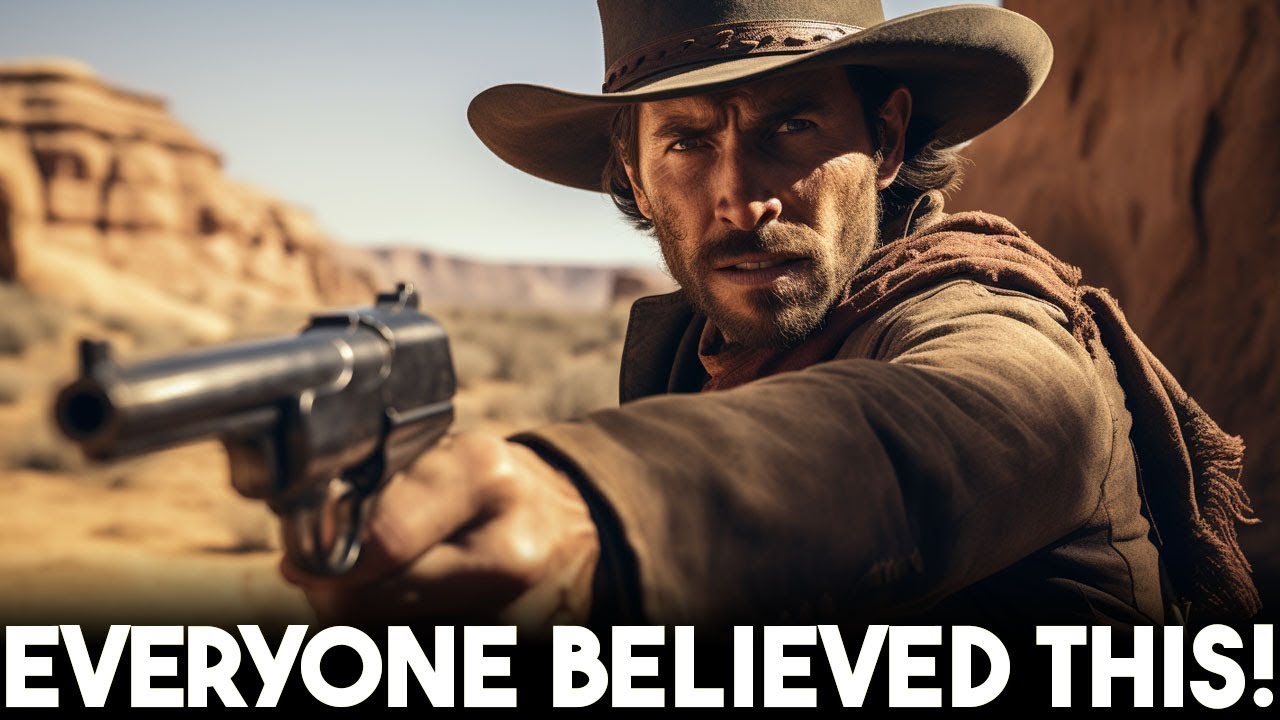 It is important to point out that this number is very different from what most people think. The real number of people who died because of these wars was not in the tens of thousands or even in the thousands. Instead, it was between three and four hundred.
To give you a bigger picture, the overall number of recorded deaths of pioneers along the Oregon Trail, including deaths from disease and other causes, was between ten thousand and thirty thousand. So Native Americans were only responsible for one to four percent of all trail deaths.
Interestingly, it is worth considering that more lives may have been lost due to unfortunate accidents, such as accidental encounters with their own cattle. On the other hand, during the same time period, over four hundred Native Americans died because of the actions of newcomers. Even though this is true, it shows that most pioneers did not fight with Native groups on a regular basis.
The conflicts that did occur were often isolated incidents rather than a constant state of warfare.
Myth number two is that cowboys are an American invention. Contrary to what most people think, the idea of cowboys did not start in the United States. In fact, they were around more than twenty years before the Pilgrims landed on Plymouth Rock.
This means they are older than the United States itself. Vaqueros, who were Mexican horse herders, were the real people who started the cowboy way of life.
Vaqueros were the ones who came up with all the cowboy words like bronco, lariat, and stampede. They were the perfect example of what people think of when they think of cowboys. They drove cattle for long distances along rough trails, and it is possible that their unique sombreros were the first cowboy hats.
They also wore chaps, put on rodeos, and lived the lifestyle to the fullest.
While vaqueros were cowboys for nearly two centuries, their legacy often remains overshadowed by history. When Americans moved west, these vaqueros knew enough about the land and animals to help teach the new cowboys what they knew. But the newcomers took the cowboy way of life and ran with it, even changing the word vaqueros to buckaroos.
Even though Hollywood might make you think so, not all cowboys were white men. According to statistics, one of every three cowboys was a Mexican vaquero. One in four is thought to be a black man who was freed from slavery but could not get far away from his old masters.
 These men brought their own skills and traditions to the cattle drives, and their contributions were essential to the success of the industry.
Myth number three is that bandits who stole money from banks ran the Old West. Butch Cassidy, the Sundance Kid, and the Dalton Gang were known for their bold bank robberies in which they stole huge amounts of money. Surprisingly, there is only proof of about eight real bank robberies in fifteen states over the course of forty years.
This number is nothing compared to the 𝓈𝒽𝓸𝒸𝓀𝒾𝓃𝑔 five thousand six hundred bank crimes that happened in 2010. Such a number would be surprising even for people who do not know much about western movies.
First of all, the towns of the past were small, so important buildings like the sheriff’s office, saloon, general store, and bank were often close to each other for ease. This cluster of important businesses was usually the center of the settlement. Since the sheriff’s office was usually only a few doors away, you were probably pulling off your big robbery while the police could hear you.
Second, getting in and out of the banks was not easy. Most buildings in the Old West were made close to each other, so banks were often surrounded by other buildings. Also, the strengthened back walls made it hard for anyone to get in without permission.
When a thief left the bank with stolen money, the sheriff was waiting just outside.
The most famous bank robberies, like the ones Butch Cassidy and the Sundance Kid did, were based on real events. However, their accomplishments were truly exceptional for valid reasons. They did risky things that other people did not have the guts to do.
Their daring heists were the exception rather than the rule, and they stood out precisely because such crimes were so rare.
Myth number four is that people just played cards for fun. In many western movies, playing cards is often a matter of life and death. In the real Old West, though, not every Tom, Dick, or Harry would have played in big-time card games because gaming card games were even more of a big deal than people thought.
 Surprisingly, they were taken very seriously as jobs, and the best players became competitive athletes.
Throughout the Old West, establishments such as gambling halls, brothels, and saloons were dedicated to hosting professional card games and events. This is very different from how spontaneous games between experienced players and newcomers are often shown. Professional gamblers trained for years to perfect their skills, and they treated their craft with the same dedication that modern athletes bring to their sports.
The stakes could be incredibly high, and the pressure was intense. A single game could change a person’s fortune forever. These professional card players were respected and feared in equal measure, and their matches were major social events that drew crowds of spectators.
Myth number five is that cowboys wore cowboy hats. People did wear hats back then, that much is true, but they were not like the cowboy hats we think of today. For example, Billy the Kid wore a strange top hat, and Wild Bill Hickok wore a flat pancake hat for women.
But the bowler hat was the most popular style of hat at the time. It was famous because it could be worn in different social situations, which was important when men always wore hats. A famous western writer even called it the hat that won the West.
When you look at pictures from that time, it is clear that almost all important people in the West wore bowler hats, at least the ones with good taste. Even Stetson’s cowboy hats from the late 1800s were very different from what we think of as cowboy hats today. It was first called the Boss of the Plains, but it looked more like an Amish hat of today and may have just been a cap with a few changes.
The fancy curls and decorations came later, but this hat is the one that all current cowboy hats are based on. This idea is very different from what we usually think of cowboy hats. The iconic image of the cowboy with a wide-brimmed, high-crowned hat is largely a creation of Hollywood and later popular culture.
The real cowboys of the era favored practical headwear that could protect them from the elements while also being suitable for social occasions.
Myth number six is that most prostitutes were poor. While pursuing a profession as a prostitute in the Old West was challenging and often at odds with conventional notions of respect, it was a good way to make a lot of money, have a lot of freedom, and live comfortably. Brothel owners, who were often called madams, stood out as women who had a lot of freedom, education, and money.
 They were some of the richest women of their time.
In addition, they took good care of their female workers and sometimes even called the police to protect them. These madams were shrewd businesswomen who managed their establishments with skill and efficiency. They understood the value of their services and charged accordingly, and many of them accumulated significant wealth over their careers.
The women who worked in these establishments often had more economic independence than women in other professions. They could save money, own property, and make their own choices in ways that were rare for women in the nineteenth century. While the work was certainly difficult and carried social stigma, it also offered opportunities that were not available elsewhere.
Myth number seven is that the Old West was full of guns. Despite what most people think, gun control laws in the nineteenth and early twentieth centuries might have been stricter than they are now, especially in the West. In the beginning, there was gun violence because there were not any standardized rules or good ways to enforce them.
But the Wild West did not always stay wild. As towns grew and settlements got bigger, people started to need and like handguns less and less.
Around 1878, after moving west for a quarter of a century, steps were finally taken to regulate firearms. Even noisy places like Dodge City had signs like this one warning people to check their guns. The famous shooting at the OK Corral happened because a gang did not follow Tombstone’s law against carrying guns.
However, the six shooter of that era was in fact relatively safe to use. They used a simple cap and ball method to move a projectile that looked like a marble with black powder. The typical gun of the time, an Adams revolver, was effective at about fifty feet, but firing it could burn your hand, so you had to be sure you wanted to shoot.
So even among gun users, the six shooter was not a favorite. It was more of a last resort tool.
Shotguns and rifles were the best choices because they had enough power and range to 𝓀𝒾𝓁𝓁 a big bear. But picturing men fighting at noon with big shotguns in a western setting does not really grab people’s attention. The image of the quick-drawing gunslinger with a revolver is much more dramatic, even if it does not reflect the reality of the time.
What are your thoughts on the video? Feel free to share in the comments below. If you found this content engaging, don’t forget to show your support by liking and subscribing before you leave.
Thanks for watching.