For nearly a century, the world accepted that Butch Cassidy and the Sundance Kid died in a hail of gunfire in a remote Bolivian mining town in 1908. Then, in 1991, forensic anthropologist Clyde Snow traveled to San Vicente with researchers to test that famous story against the evidence buried in a local grave. The exhumation and subsequent DNA analysis did not confirm the legendary ending. Instead, the scientific evidence shattered it, raising a question that still haunts historians: if those bodies were not Butch and Sundance, whose graves were they?
By the time the two outlaws reached South America, they were already legends in the American West. Butch Cassidy, born Robert Leroy Parker in Utah in 1866, was known as a clever and charming robber. Sundance, born Harry Longabaugh in Pennsylvania, was quieter and widely feared as the better gunman. Together, they became the most famous faces of the Wild Bunch, robbing banks and trains so boldly that newspapers turned them into figures halfway between criminals and folk heroes.
Men like that are not supposed to disappear quietly; they are expected to go out in a blaze that history can point to. But the American West was changing. Railroads expanded, large companies tightened their grip, and the Pinkerton Detective Agency was brought in to hunt the Wild Bunch with resources that small law offices could not match. One by one, the old spaces where outlaws could hide began to close.
Butch and Sundance were not just running from the law; they were running from time itself. So they left for Argentina, where for a while it looked as if they might actually start over and live as ranchers instead of fugitives. With them was Etta Place, a mysterious woman tied to Sundance whose true identity remains debated among historians. That uncertainty matters more than it first appears, because from that point on the trail grows thinner.
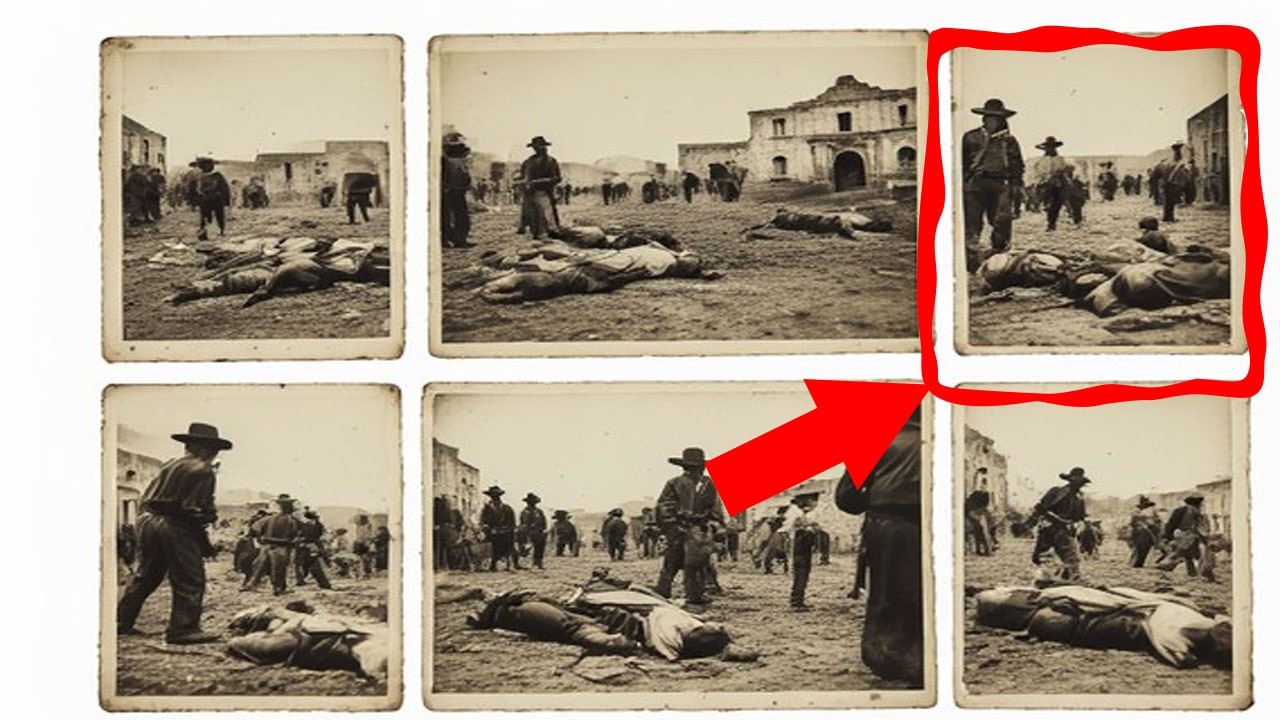
Names change, borders widen, and witnesses become less certain. According to the legend, the past caught up with them in November 1908. In the Bolivian mining town of San Vicente, two American bandits were said to have been cornered after a payroll robbery. The fugitives took shelter, soldiers closed in, and shots were fired through the night.
By morning, the two men inside were dead. One version claimed one of the men had been wounded, and the other ended his partner’s suffering before turning the gun on himself. It was brutal, tragic, and unforgettable. But unforgettable stories are not always true stories.
At the time, Bolivia was far from the world that had made Butch and Sundance famous. News moved slowly, and identities could be guessed, confused, or embellished. Local witnesses had no fingerprint databases, forensic labs, or DNA testing. They had rumor, appearance, hearsay, and the power of a good tale.
Two dead foreigners with guns could become two legendary American outlaws almost by narrative gravity alone. The official story did not win because it was proven beyond doubt. It won because it sounded like destiny. For years, then decades, then generations, the San Vicente story sat in place like a stone.
Many accepted that the case was closed. But something stubborn remained: gaps in the record, conflicting reports, lingering family doubts, and stories that Butch may have returned to the United States. Whispers suggested the final shootout might have involved other men entirely. The ending was famous, but it was never as solid as people wanted it to be.
What happens when a legend built on gunfire is dragged into the cold light of a laboratory? By the late 20th century, modern forensics had changed the way old mysteries could be tested. Graves were no longer sealed by time alone; a burial site could become a crime scene a century late. That is what drew Clyde Snow into the case.
Snow was a scientist known for applying forensic methods to difficult human identifications, including work on mass graves and historical remains. In 1991, he traveled to Bolivia with researchers Dan Buck and others to test the story that had survived for more than 80 years. The team focused on a burial believed to contain the remains of the two American outlaws. The plan was straightforward in theory: exhume the remains, study the bones, and compare biological evidence to living relatives.
It was not straightforward in practice. Exhuming old graves is difficult, identifying century-old remains is difficult, and working in a remote location with fragmentary records is difficult. DNA testing depends on preservation, comparison samples, and careful interpretation. The case did not move toward certainty in the way many expected.
It moved toward discomfort. The biological clues did not line up cleanly with the identities people had attached to that grave for generations. The remains did not deliver the triumphant confirmation that believers in the San Vicente story wanted. The DNA comparisons were especially damaging to the accepted tale.
The available genetic work did not support the idea that the exhumed remains belonged to Butch Cassidy or the Sundance Kid. That result did not magically answer every question, but it did something far more dramatic: it destroyed the confidence people had placed in the old version of events. Investigators had gone looking for proof of death in Bolivia. What they found was proof that the most famous evidence in the case could not carry the weight people had placed on it.
The official ending suddenly looked less like a solved mystery and more like a story that had survived because no one had the tools to challenge it. Science did not give the audience the comfort of a neat answer. It gave them something far more haunting: the possibility that history had buried the wrong men in the wrong story under the wrong names. Once the grave in Bolivia failed to confirm the legend, the entire story changed shape.
The mystery was no longer a narrow question about whether two outlaws died in San Vicente in 1908. It became a much larger question about why that story had survived for so long in the first place. For years, there had been whispers that Butch Cassidy may have survived Bolivia. Some family members believed he came back to the United States under another name.
Some stories claimed he lived quietly for years after the supposed shootout. Others insisted that the two men killed in San Vicente were never Butch and Sundance at all, just strangers who fit the shape of a useful tale. Most people brushed those theories aside because the Bolivian grave seemed to settle the matter. But once science shook that foundation, those buried rumors began crawling back into the light.
Usually, science narrows a mystery. It trims away fantasy and locks doors. Here, it did the opposite. It opened a door that had been closed for almost a century.
The grave that was supposed to silence the speculation had given the mystery fresh oxygen. Science did not prove that Butch Cassidy escaped. It proved something more frustrating and more exciting: that one of the strongest pieces of the accepted story could not be trusted. Historians were forced into a much harder position, unable to lean comfortably on a neat ending.
Maybe the truth was not grand at all. Maybe it was not a perfectly staged final gun battle between two world-famous outlaws and their pursuers. Maybe the real ending was smaller, murkier, and less theatrical. Maybe paperwork failed, witnesses guessed, or local rumor attached famous names to unknown dead men.
Human beings are very good at filling gaps, especially when the version they create feels dramatic enough to satisfy them. A final shootout in a remote mountain town is the kind of ending people remember. A slow disappearance, a false report, confused identities, and decades of uncertainty is the kind of ending people tend to ignore. The case leaves the public in the most uncomfortable place of all: between myth and proof, with neither side able to claim total victory.
The mystery is both solved and unsolved. Solved because science dealt a devastating blow to the old certainty, showing that the famous grave in Bolivia could not simply be accepted as the final resting place of Butch Cassidy and the Sundance Kid. But unsolved because destroying a wrong answer is not the same as finding the right one. The legend said the outlaws died in a blaze of gunfire together in one last doomed stand.
Science stepped in and said not so fast. The grave does not prove that ending, and the bones do not close the case. The names attached to that burial may have belonged to the story, not the dead. The deeper investigators dig, the less the old ending survives.
What began as a tale of outlaws and gunfire becomes something more haunting in the end: a warning that even the most famous version of history can rest in the wrong grave, and that sometimes the truth does not die in a shootout.