
Bat Masterson, the man who would become one of the most feared and respected figures in the American Old West, built his legend not through reckless violence but through a calculated blend of courage, timing, and an uncanny ability to survive the deadliest confrontations of the frontier era. From the bloody buffalo plains of Texas to the lawless streets of Dodge City, Masterson’s journey was marked by gunfire, political intrigue, and a carefully crafted public image that would outlive him by more than a century.
Born Bartholomew William Barclay Masterson on November 26, 1853, in Henryville, Canada East, he was the son of Irish immigrants Thomas Masterson and Catherine McGurk, who had fled famine and hardship in search of a better life. The family moved constantly across Quebec, New York, Illinois, and Missouri before finally settling near Wichita, Kansas, where young Bat learned the brutal realities of frontier survival. As a teenager, he left the family farm alongside his brothers Ed and Jim to hunt buffalo across the Great Plains, a trade that demanded endurance, marksmanship, and a willingness to face danger without hesitation.
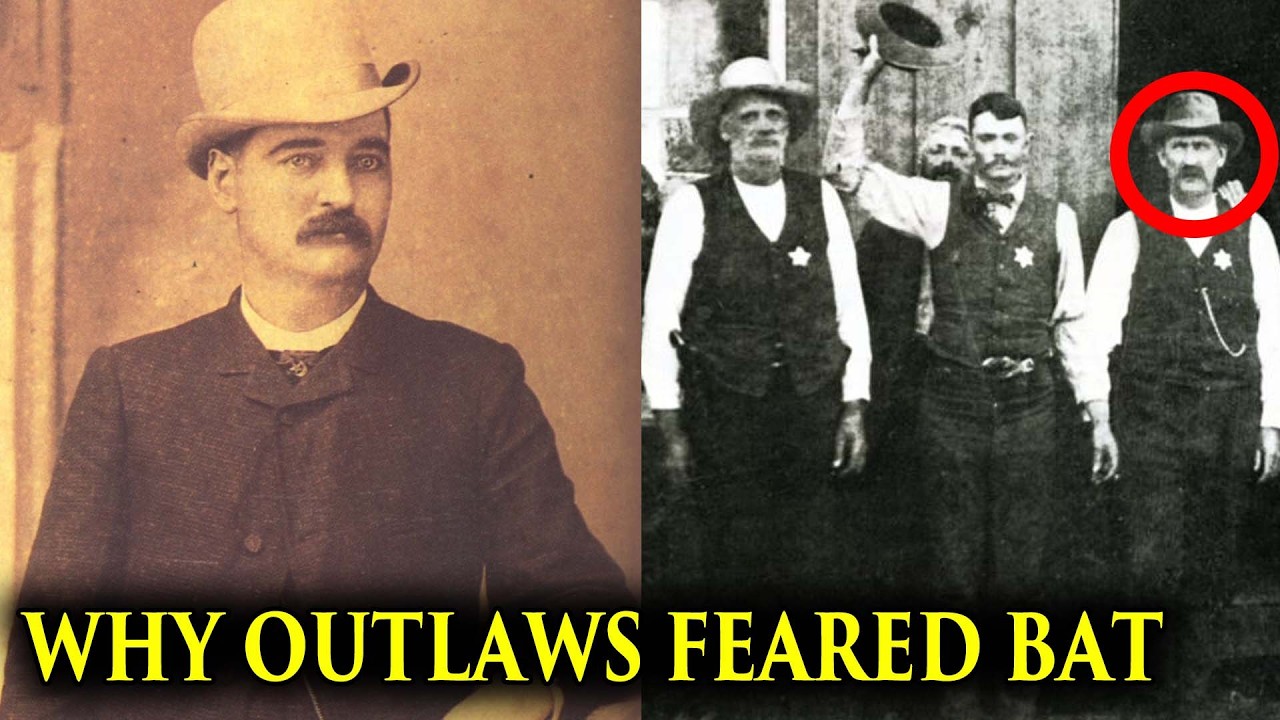 Historians note that this period forged Masterson’s toughness and independence, traits that would define his later career as a lawman and gunfighter.
The buffalo trade was not merely a test of physical skill but a brutal economic battlefield where disputes over money often escalated into violence. In July 1872, Bat and his brother Ed accepted railroad grading work from a subcontractor named Raymond Ritter, helping lay track for the Atchison, Topeka, and Santa Fe Railway. When Ritter vanished without paying the workers their hard-earned wages, Masterson spent months tracking him down, refusing to let the injustice stand.
On April 15, 1873, Masterson confronted Ritter publicly aboard a Santa Fe train in Dodge City, demanding payment for himself, his brother, and their associate Theodore Raymond. Ritter, facing the determined young man’s unwavering stare, handed over the $300 that had long been overdue, and witnesses erupted in applause. This incident, though relatively minor in the grand scheme of frontier history, established Masterson’s reputation as a man who would not back down when treated unfairly, a quality that would become his trademark in the years ahead
Just over a year later, Masterson found himself thrust into one of the most famous conflicts of the Old West, the Battle of Adobe Walls. On June 27, 1874, while working as a buffalo hunter at a small trading post in the Texas Panhandle, several hundred Comanche, Kiowa, and Cheyenne warriors, including followers of the legendary Quanah Parker, surrounded the outpost. Only 28 defenders, including Masterson, held their position against overwhelming odds for five days.
The defenders, armed with powerful buffalo rifles, inflicted heavy casualties on the attacking forces, though exact numbers remain disputed among historians. Eventually, Quanah Parker and his warriors withdrew, and the battle became a defining moment of the Red River War, symbolizing the violent collision between westward expansion and the native tribes of the Southern Plains. Masterson’s role in this desperate defense cemented his status as a fearless frontier fighter, capable of standing firm when survival seemed impossible
Following the battle, Masterson accepted work as a scout for the US Army under Colonel Nelson A. Miles, who was leading military operations against Comanche and Apache groups during the Red River War campaign. Frontier scouts like Masterson were invaluable due to their intimate knowledge of the plains, trails, and native customs, often serving as the eyes and ears of the military.
During this period, Miles’ force also became involved in efforts to recover four young sisters, ages 9 to 15, who had been taken captive after an attack on a migrant family near Ellis, Kansas, on September 11, 1874. Over the course of roughly six months, all four sisters were eventually recovered alive through continued military operations and negotiations, a case that historians often cite as one of the better-known recovery efforts of the era. Masterson’s service as a scout further burnished his credentials as a man of action, willing to risk his life in the service of order amid the chaos of the frontier
Masterson’s first major armed confrontation as a gunfighter occurred on January 24, 1876, in Sweetwater, Texas, later known as Mobetie. The incident reportedly began after a dispute involving a US Army corporal named Melvin A. King, whose real name may have been Anthony Cook, and a woman named Molly Brennan.
During the confrontation, Brennan was fatally wounded, likely unintentionally, while King later died from injuries he sustained. Masterson himself suffered a serious wound to the pelvis, a injury that would leave him with a permanent limp and force him to rely on a cane for the rest of his life. Over time, that cane became one of his most recognizable trademarks, a symbol of both his vulnerability and his resilience.
Although many stories about Masterson were later exaggerated by newspapers and frontier legends, records confirmed that this event marked an important turning point in his early reputation, establishing him as a man who had faced death and emerged scarred but alive
Not long afterward, Masterson settled in Dodge City, Kansas, one of the most active cattle towns of the American West, a place where violence was a daily occurrence and law enforcement was often a matter of personal survival. On June 6, 1877, he became involved in a public dispute while attempting to interfere with the arrest of Robert Gilmore, commonly known as Bobby Gill. During the incident, Masterson briefly restrained City Marshal Larry Deger, allowing Gill to escape, an act that landed him in legal trouble but also demonstrated his willingness to challenge authority when he believed it was unjust.
Despite the controversy, Masterson’s influence in Dodge City continued to grow, and in July 1877, he was appointed undersheriff under Charles E. Bassett, a respected local sheriff who could not seek another consecutive term because of Kansas law. Seeing an opportunity, Masterson entered the race to become sheriff of Ford County, with Larry Deger emerging as his primary opponent.
The election, held on November 6, 1877, was extremely close, but Masterson won by just three votes, a victory that marked the beginning of his rise as one of the best-known lawmen of the frontier era
Only a month later, on December 6, 1877, his brother Ed Masterson replaced Deger as City Marshal of Dodge City, giving the Masterson brothers control over both county and city law enforcement, a concentration of power that made them formidable figures in one of the most turbulent periods in the town’s history. On February 1, 1878, Bat Masterson strengthened his growing reputation as sheriff of Ford County when he helped capture the well-known frontier outlaw Dave Rudabaugh and an associate named Ed West, who were wanted in connection with an attempted train robbery. A few weeks later, on March 15, Bat and his brother Ed arrested two additional suspects connected to the same robbery attempt, further increasing the brothers’ standing in Dodge City.
The partnership between the Masterson brothers, however, came to a tragic end on April 9, 1878, when Ed Masterson was seriously wounded while performing his duties as city marshal. The confrontation involved a cowboy named Jack Wagner, who reportedly did not realize Bat Masterson was nearby at the time. As the situation unfolded, Bat intervened from across the street and fired at Wagner and another man, Alf Walker, who was also involved in the dispute.
Wagner later died from his injuries, while Walker recovered after returning to Texas. Newspaper coverage of the incident varied considerably, and some reports were unclear about who had actually fired the decisive shots, leading later historians to debate Bat Masterson’s exact role in the confrontation. However, researchers later uncovered court testimony in which Masterson stated under oath that he had fired at both men, leading many historians to conclude that Bat personally responded during the incident that claimed his brother’s life
 Another highly publicized case followed later that year, further cementing Masterson’s reputation as a relentless pursuer of justice. On October 4, 1878, a stage performer known professionally as Dora Hand, whose real name was Fannie Keenan, was accidentally killed in Dodge City by James Kennedy, the son of wealthy Texas rancher Mifflin Kennedy. In response, Masterson organized a posse that included future frontier legends Wyatt Earp and Bill Tilghman.
The group pursued Kennedy and captured him the following day after a brief chasein which Masterson wounded him in the arm, bringing the pursuit to an end. This incident demonstrated Masterson’s ability to mobilize men and resources quickly, as well as his willingness to use deadly force when necessary, traits that made him both respected and feared throughout the region
In 1879, Masterson’s reputation caught the attention of corporate powers when officials from the Atchison, Topeka, and Santa Fe Railway contacted him and asked him to recruit armed supporters during the intense railroad conflict known as the Royal Gorge Railroad War. The dispute centered on control of valuable rail routes through the Royal Gorge near Cañon City, Colorado, where the Santa Fe Railroad and the Denver and Rio Grande Western Railroad were competing for access. Although Masterson officially held authority only in Kansas, he nevertheless assembled a sizable group of frontier figures to support the Santa Fe side, including well-known Western personalities such as Ben Thompson, Mysterious Dave Mather, John Joshua Webb, and possibly Doc Holliday.
Historians generally view the Royal Gorge conflict as an example of how railroad companies during the late 19th century often relied on private groups and influential frontier figures to protect their economic interests. Masterson’s participation ended on June 12, 1879, when he surrendered a railroad roundhouse in Pueblo that his men had been guarding. Soon afterward, the railroad dispute was resolved through legal and financial agreements rather than continued confrontation.
However, Masterson’s activities in Colorado damaged his political standing back in Ford County, and in the sheriff election held on November 4, 1879, he lost his bid for re-election to bartender George T. Hinkel by a wide margin, as many local voters viewed his extended involvement in Colorado as a distraction from his responsibilities in Kansas
The 1880 census records from Dodge City show that Masterson was living with a 19-year-old woman named Annie Ladue, described using terminology common to that era, while his younger brother James was also listed living with a young woman named Minnie Roberts. These records provide historians with a glimpse into the personal lives of the Masterson brothers during their years in Dodge City, revealing that even the most feared lawmen of the frontier maintained private relationships that were often overlooked in the sensationalized newspaper accounts of their exploits. Shortly afterward, Masterson received a telegram from Ben Thompson requesting assistance for his younger brother, Billy Thompson, who was facing serious legal trouble in Ogallala, Nebraska, after a shooting incident involving a man named Tucker.
Despite being injured himself during the encounter, Billy Thompson managed to survive, and Masterson quietly escorted him out of Ogallala aboard a late-night train heading toward North Platte. Once they arrived in North Platte, the pair reportedly received assistance from the famous frontier showman Buffalo Bill Cody, who welcomed them warmly and arranged safe accommodations while helping prepare them for the journey back to Dodge City. Newspaper reports from the period later confirmed Masterson’s return from Nebraska and noted that Billy Thompson had largely recovered from his injuries, further demonstrating Masterson’s loyalty to his friends and willingness to risk his own safety to protect them
During the final months of 1880, Bat Masterson divided his time between Kansas City and Dodge City, and on February 8, 1881, he traveled to Tombstone, Arizona Territory, where he reunited with Wyatt Earp and met Luke Short for the first time. In Tombstone, the three men worked at the famous Oriental Saloon as faro dealers and security lookouts during one of the busiest periods in the mining town’s history, a place where violence was never far from the surface. Masterson’s stay in Tombstone lasted only a few months before he received an urgent telegram calling him back to Dodge City, where his brother Jim had become involved in a serious dispute connected to the Lady Gay Saloon and dance hall, which he partly operated with Alfred James Peacock.
Tensions had grown between Jim and Peacock over Peacock’s brother-in-law and bartender Albert Updegraff, whom Jim believed to be unreliable and dishonest. As arguments escalated and threats were reportedly exchanged, Bat quickly returned to Kansas to support his brother. When Masterson arrived in Dodge City on April 16, 1881, the confrontation rapidly intensified near the local jail, with accounts from the period disagreeing about exactly how the incident began.
The disturbance caused panic among nearby citizens as shots struck buildings along Front Street, including the well-known Long Branch Saloon, and several other individuals joined the conflict on both sides before Updegraff was wounded and the situation finally ended. Mayor A. B.
Webster later placed Masterson under arrest, but after learning that his brother Jim had not actually been in immediate danger, Masterson was eventually fined $8 and released. Although warrants were later issued amid public outrage, both Bat and Jim Masterson were allowed to leave Dodge City without further punishment, a outcome that reflected the complex web of loyalties and political connections that defined frontier justice
Masterson’s national reputation expanded dramatically later that same year because of an exaggerated newspaper story that circulated across the country. In August 1881, a reporter visiting Gunnison, Colorado, asked Dr. W.
S. Cockrell about dangerous frontier figures. As a joke, Cockrell pointed to a nearby man and falsely identified him as Bat Masterson, claiming he had been responsible for dozens of killings.
The doctor then recounted dramatic stories about Ed Masterson’s death and Bat’s response afterward. The tale appeared in the New York Sun on November 7, 1881, and was soon reprinted nationwide, helping create the larger-than-life legend that followed Masterson for the rest of his life. Cockrell later apologized after Masterson insisted he had not even been present in Gunnison at the time, but the damage was done, and the myth of Bat Masterson as a cold-blooded killer had taken root in the public imagination.
Historians generally agree that many of the stories surrounding Masterson’s reputation were heavily exaggerated by newspapers and frontier folklore, noting that although he owned several . 45 caliber revolvers and cultivated the image of a seasoned frontier figure, the number of confirmed armed confrontations directly involving Masterson was far smaller than legend suggested, with researchers today usually identifying only a handful of documented incidents connected to him outside his years as a buffalo hunter and army scout on the plains
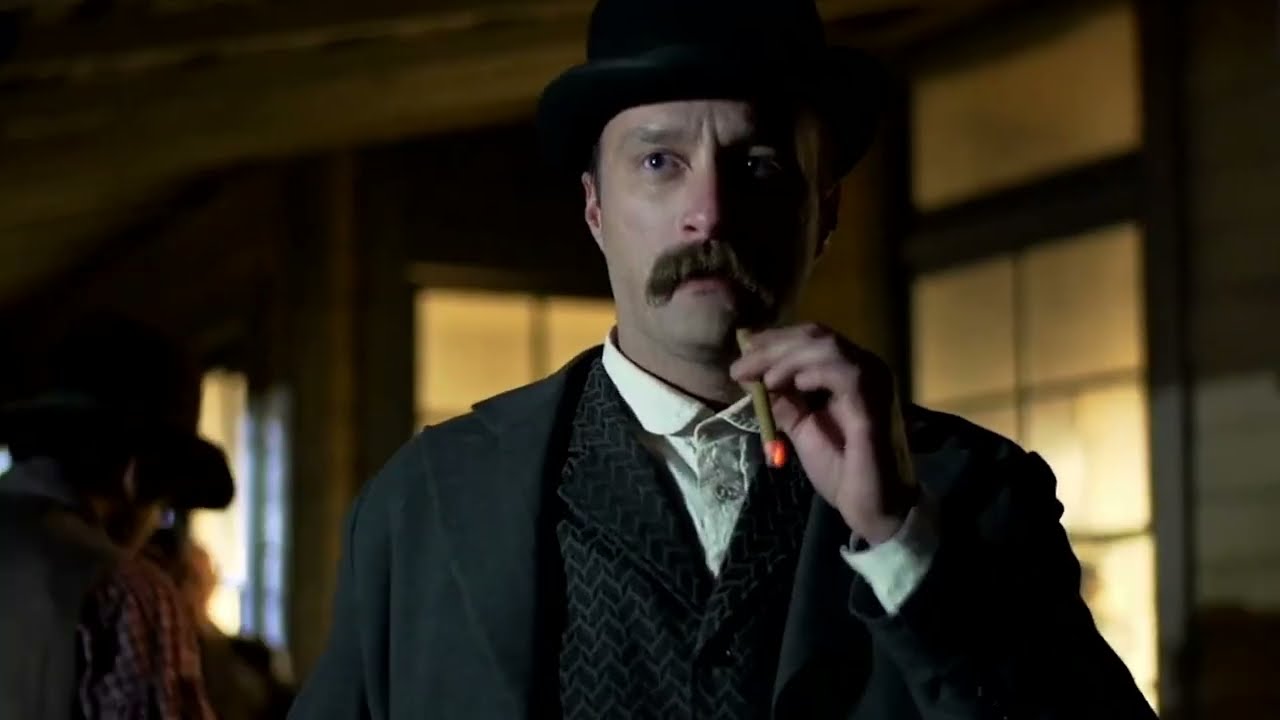 In 1882, Masterson accepted the position of city marshal of Trinidad, Colorado, on April 17, a role that paid $75 per month, a respectable salary for a frontier law officer during that era. Soon after taking office, however, Masterson became involved in one of the most famous legal controversies of the Old West when Wyatt Earp asked for his assistance in preventing the extradition of Doc Holliday from Colorado back to Arizona Territory, where Holliday faced murder charges connected to the infamous Gunfight at the O. K.
Corral. Masterson personally appealed to Colorado Governor Frederick Walker Pitkinon Holliday’s behalf, and after considering the case, Pitkin ultimately declined to approve the extradition request, allowing Holliday to remain free. Historians often point to this event as evidence of the strong loyalty that existed among several well-known frontier figures of the period, who were willing to risk their own reputations and careers to protect their friends.
However, Masterson’s public support for Holliday, combined with his continued work as a faro dealer during evenings, damaged his political standing in Trinidad and created criticism among local residents. By March 1883, local newspapers had begun openly mocking Masterson’s connection to gambling while he held public office, and during the following city election, voters overwhelmingly rejected him, with Masterson losing his re-election campaign by a wide margin on April 3, 1883, bringing his brief tenure as city marshal to an official end
Not long afterward, Masterson became involved in another major frontier dispute connected to his long-time friend Luke Short, who had been forced out of Dodge City by political opponents led by Mayor Webster and Masterson’s long-time rival Larry Deger. In response, Masterson and Wyatt Earp gathered a group of well-known frontier figures and traveled to Dodge City to support Short during what later became known as the Dodge City War. Although the situation created national attention, the conflict ended without major bloodshed, and Luke Short was eventually allowed to return to Dodge City.
Before the group separated on June 10, 1883, Masterson, Earp, Short, and several other frontier personalities posed together for a famous photograph later known as the Dodge City Peace Commission, an image that historians today consider one of the most iconic surviving photographs of the American Old West, capturing a moment when the most feared men of the frontier stood together in a rare display of unity
After leaving Dodge City behind, Bat Masterson made Denver his new home and center of business activity during the late 1880s, when the city was rapidly growing into one of the most important urban centers in the West, attracting gamblers, businessmen, entertainers, and political figures. It was there that Masterson became involved in a widely discussed personal 𝒔𝒄𝒂𝓃𝒹𝒶𝓁 that received heavy newspaper attention. The controversy began on September 18, 1886, inside a Denver theater where comedian Lou Spencer was performing, when Spencer reportedly noticed his wife, Nellie, sitting closely with Mastersonin the audience.
The performance abruptly stopped as tensions rose between the two men, eventually leading to a public altercation that ended with both being arrested. Newspapers across Denver eagerly covered the story, with the Rocky Mountain News describing Masterson as a popular and fashionable frontier celebrity while also praising Nellie Spencer’s beauty and stage presence. Only a few days later, Nellie Spencer filed for divorce, and local newspapers quickly fueled rumors that she had left with Masterson, although historians have found no evidence that Bat and Nellie ever officially married, and she soon disappeared from the public record connected to him.
The episode nevertheless added to Masterson’s growing reputation as a colorful and controversial Western personality whose private life often attracted as much attention as his frontier career
During his years in Denver, Masterson worked extensively in gambling houses and entertainment venues, dealing faro at the Arcade Gambling Hall for businessman Big Ed Chase and later becoming involved with the Palace Variety Theater, eventually managing and purchasing the establishment. Around this time, he likely met Emma Moulton, a performer known for singing in Indian club exhibitions, a popular form of stage entertainmentin the 19th century. Bat and Emma later lived together and were widely believed to have married in Denver, although historians continue to debate the exact date because surviving records are incomplete and sometimes contradictory.
One commonly cited date, November 21, 1891, came from a statement made years later by Bat’s brother Thomas Masterson, yet official records show that Emma was not legally divorced from her first husband, Edwin Moulton, until November 9, 1893. Census records from 1910 suggest Bat and Emma considered themselves married around 1893, leading some biographers to conclude that a formal marriage likely occurred shortly after Emma’s divorce, although no surviving certificate has ever been located. While living in Denver, Masterson also formed a long friendship with Soapy Smith, one of the city’s most notorious political operators and con artists, and in 1889, both men became linked to allegations involving election fraud and questionable voter registrations, reflecting the ways in which Masterson’s later life blended politics, gambling, journalism, and frontier celebrity status in ways that mirrored the rapidly changing society of the post-frontier American West
Throughout the later years of his life, Bat Masterson remained deeply involved in the world of professional boxing and sporting events, regularly attending major prize fights across the United States and becoming well-known within boxing circles as both a better and an experienced observer of the sport. In addition to wagering on matches, Masterson occasionally worked officially as a second or timekeeper during important championship bouts, developing personal relationships with many of the era’s greatest heavyweight champions, including John L. Sullivan, James J.
Corbett, Jack Johnson, and Jack Dempsey. Historians often note that Masterson’s transition from frontier lawman to respected sports authority reflected the changing culture of the American West as entertainment and professional athletics became increasingly popular during the late 19th century. Masterson attended the famous heavyweight championship match between John L.
Sullivan and Jake Kilrain in Richburg, Mississippi, on July 8, 1889, serving as the official timekeeper for Kilrain, although some newspapers later criticized aspects of his performancein that role. Reports from the time also claimed that Masterson positioned trusted associates, including Luke Short and Johnny Murphy, around the ring to help maintain order in case the large crowd became unruly, demonstrating his ability to apply his frontier experience to the world of professional sports
In early 1892, Masterson relocated to the booming silver mining town of Creede, Colorado, where he managed the Denver Exchange Gambling Club, but like many Western boomtowns of the era, Creede experienced rapid growth followed by sudden disaster, and much of the town was destroyed by a major fire on June 5, 1892, a common occurrence in frontier communities where buildings were constructed quickly from wood and stood close together. Later that same year, on September 7, 1892, Masterson traveled to New Orleans alongside Luke Short and Charlie Bassett to attend the heavyweight championship fight between Sullivan and Corbett, with newspaper reports from Dodge City indicating that Masterson placed his wageron Corbett, who ultimately won the match, while Bassett supported Sullivan. The fight marked a major turning point in boxing history, symbolizing the decline of the older bare-knuckle era and the rise of modern gloved boxing.
Masterson continued to stay closely connected to the sport during the following years, appearing in Jacksonville, Florida, on January 25, 1894, as part of the support team for British boxer Charlie Mitchell during Mitchell’s championship fight against James J. Corbett, a contest that ended quickly with Corbett successfully defending his heavyweight title after only three rounds
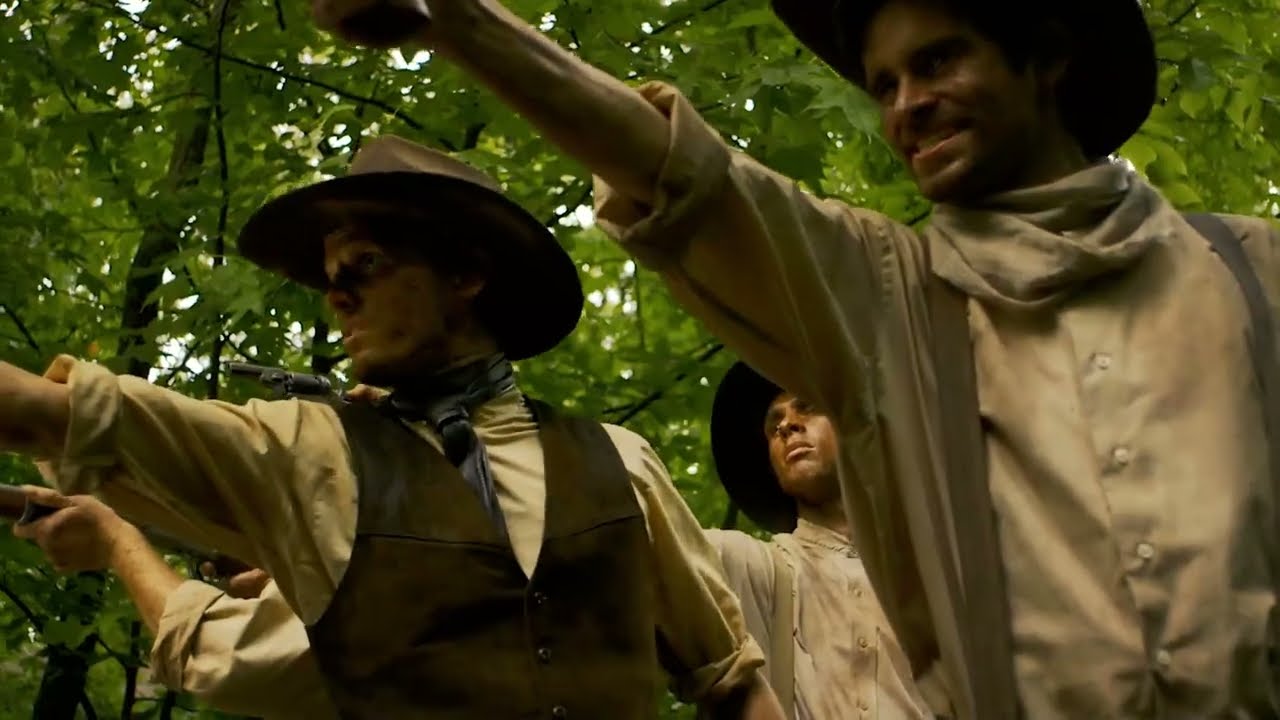 In 1895, Bat Masterson traveled to New York City, where he briefly worked as a bodyguard for wealthy businessman George J. Gould, writing enthusiastic letters to friends in Denver describing fishing excursions and social outings with the Gould family aboard their yacht, even suggesting that he intended to remain in New York permanently, leading some acquaintances to believe he had finally found a far more comfortable lifestyle than the rough frontier life of his earlier years. Despite those plans, Masterson eventually returned to Denver and continued participating in local politics, sports, and law enforcement activities.
On April 6, 1897, while serving as a deputy sheriff in Arapahoe County, he became involved in a dispute during an election day disturbance with a man named Tim Connors, and during the struggle, a firearm accidentally discharged, injuring a bystander named C. C. Lauterbachin the wrist, an incident that reflected the tense and often chaotic atmosphere surrounding frontier era elections and political rivalries.
By 1899, Masterson had once again turned much of his attention toward boxing and athletics, becoming part owner of a sports organization called the Colorado Athletic Association on April 9 of that year, but disagreements with his business partners quickly emerged, and he was removed from the organization only days later. Masterson responded by establishing a competing club known as the Olympic Athletic Club, where he served as president, and during this period, he also gained favorable publicity through his work as sports editor for the Denver publication George’s Weekly, which helped strengthen his reputation as an authority on boxing and sporting events
In September 1900, Masterson sold his interest in the Olympic Athletic Club and made another extended trip to New York City, but although he initially intended to settle there permanently, he unexpectedly returned to Denver soon afterward, with the circumstances surrounding his final departure from Colorado remaining uncertain because contemporary accounts differ sharply. According to Masterson’s own version of events, a woman confronted him during a local election on May 2, 1902, and struck him with an umbrella after objecting to his participation in the voting process, while other accounts from the time painted a far less flattering picture, claiming that Masterson’s behavior and drinking had damaged his public standing in Denver. Historians continue to debate which version is more accurate, but what is certain is that Masterson left Denver shortly afterward and never again made the city his home.
Bat Masterson and Emma Moulton relocated permanently to New York City on June 5, 1902, and almost immediately after arriving, Masterson found himself caught up in a highly publicized police incident. While having his shoes polished at a public stand, officers arrested a gambler named James A. Sullivan nearby and also detained Masterson, claiming the two men were connected to an alleged confidence scheme involving a wealthy Mormon elder named George H.
Snow. Authorities additionally discovered that Masterson was carrying a concealed revolver, and although the fraud accusation was eventually dismissed, Masterson paid a small fine related to the weapon charge. Never shy about criticizing authority, he later complained to reporters that some police officers became overly self-important once given political power, an incident that reflected the rough and tumble atmosphere of New York politics and law enforcement during the early 20th century, where former frontier figures such as Masterson often attracted intense media attention
Masterson’s fortunes soon improved thanks to journalist Alfred Henry Lewis, who persuaded his brother William Lewis to hire Mastersonas a columnist for the New York Morning Telegraph. Beginning in 1903, Masterson wrote a regular column titled Masterson’s Views on Timely Topics, which focused heavily on boxing, sports, and public affairs, appearing three times each week until his death in 1921, helping transform him from a frontier celebrity into a respected sports journalist. In 1905, Alfred Henry Lewis published The Sunset Trail, a fictionalized biography inspired by Masterson’s life and adventures, and Lewis also encouraged him to contribute personal recollections and historical sketches to Human Life Magazine, allowing Masterson to shape his own legend while providing readers with first-hand accounts of famous Western personalities and frontier culture.
In 1907, Masterson published biographical profiles of several well-known frontier figures, including Ben Thompson, Wyatt Earp, Luke Short, Doc Holliday, and Bill Tilghman, explaining what he believed were the defining traits of successful frontier gunmen, often emphasizing confidence, composure, and reputation over simple speed or aggression. The series, titled Famous Gunfighters of the Western Frontier, was expected to continue, but Masterson contributed only one additional article afterward, focusing on Buffalo Bill Cody, with editor Alfred Henry Lewis later joking publiclythat Masterson’s failure to continue the series resulted more from laziness and summer distractions than from any lack of material. Even so, the surviving articles remain important historical sources because they helped shape the popular image of many legendary Old West figures during the early 20th century
At the same time, Masterson remained deeply connected to professional boxing, frequently serving as an official timekeeper for major championship matches and continuing to attend important fights throughout the country. One of his most notable appearances came on April 5, 1915, in Havana, Cuba, during the heavyweight title fight between Jack Johnson and Jess Willard, with footage of the 61-year-old Masterson performing his dutiesat ringside later appearing in the documentary Legendary Champions 1882 to 1929, preserving one of the few moving images connected to the famous frontier lawman. Journalist Alfred Henry Lewis eventually introduced Bat Masterson to Theodore Roosevelt, beginning a friendshipthat became one of the most important relationships of Masterson’s later life, as Roosevelt admired many frontier figures of the American West and Masterson soon became a regular visitorat the White House.
The two men also exchanged letters frequently, reflecting Roosevelt’s fascination with Western history and larger than life frontier personalities, and because of their friendship, President Roosevelt arranged for Masterson to receive an appointment as Deputy US Marshal for the Southern District of New York. Before the appointment became official, Roosevelt personally warned Masterson to avoid gambling or any behavior that critics could use to question the decision, in a letter dated February 2, 1905, advising him to act carefully while serving in public office, showing that even the president understood Masterson’s controversial reputation could attract political criticism. Masterson held the federal position until 1909 and reportedly earned an annual salary of $2,000, a respectable income at the time, with historians often viewing the appointment as an example of Roosevelt’s tendency to reward Western lawmen and frontier veterans whom he admired personally.
However, the political climate changed after Roosevelt left office, and when William Howard Taft became presidentin 1909, he did not share Roosevelt’s enthusiasm for frontier celebrities serving in government positions, with Taft’s administration ordering an investigation into Masterson’s role as deputy marshal, and the inquiry ultimately resulted in his dismissal on August 1, 1909
Despite losing the federal position, Masterson had already established himself as a successful newspaper columnist and sports writer in New York, and for the final 12 years of his life, he focused largely on journalism and continued coveringthe major boxing events of the early 20th century for the New York Morning Telegraph. His deep connections within the boxing world gave him access to many of the sports’ most famous athletes and championship matches, with one of Masterson’s most memorable public appearances occurring on April 5, 1915, in Havana during the heavyweight championship fight between Jack Johnson and Jess Willard, when as he arrived at the arena, newsreel cameras captured the 61-year-old Masterson smiling, tipping his hat, and greeting the crowd, with later footage from the official fight film also showing him entering the ring area as part of Jess Willard’s support team shortly before the championship bout began. On July 2, 1921, Bat Masterson attended what would become the final heavyweight championship fight of his life, an event promoted by famed boxing entrepreneur Tex Rickard, known as the million-dollar gate because of its enormous financial successand record-breaking attendance, during which Jack Dempsey successfully defended his world heavyweight title, further cementing his place as one of boxing’s biggest stars.
Only a few months later, on October 7, 1921, silent film Western actor William S. Hart visited Mastersonat the offices of the New York Morning Telegraph, and the two men posed together for photographs on the roof of the newspaper building before returning to Masterson’s office for additional pictures, with Hart later recalling sitting in Masterson’s chairat Bat’s request while they completed the photo session, noting that Masterson would still be sitting in that same chair only 18 days later when his life unexpectedly came to an end
Masterson died on October 25, 1921, at the age of 67, after suffering a severe heart attack while working at his desk, remarkably having been writing what became his final newspaper column for the Morning Telegraph only moments earlier. His last published words reflected his characteristic mixture of humor, scepticism, and commentary on social inequality, themes that had often appeared in his writing during his years as a columnist. Approximately 500 people attended Masterson’s funeral serviceat Frank E.
Campbell’s Funeral Churchin New York City, with honorary pallbearers including Damon Runyon, Tex Rickard, and William Lewis, all prominent figures in journalism and sports, and Damon Runyon, who had become one of Masterson’s closest friends, delivered an emotional tribute describing him as loyal, generous, humorous, and deeply supportive of struggling friends and acquaintances, helping preserve the image of Mastersonas more than simply a frontier lawman, portraying him instead as a memorable personality whose friendships and storytelling abilities left a lasting impression on those around him. Masterson was buried at Woodlawn Cemetery in the Bronx, and interestingly, his gravestone does not include the name Bartholomew, the first name given to him at birth, instead reading, William Barclay Masterson, above a simple epitaph stating that he was loved by everyone
Bat Masterson became one of the most feared and respected men of the American frontier, not simply because of his reputation, but because he survived some of the most dangerous and unpredictable years of the Old West, emerging from buffalo hunts, gunfights, outlaw chases, and political battles with his life intact. Yet behind the stories and newspaper headlines was a man whose real life was often far more complex than the myths that surrounded him, a figure who transitioned from frontier lawman to respected journalist, from gunfighter to sports authority, and from feared enforcer to beloved friend, leaving behind a legacy that continues to fascinate historians and enthusiasts alike, raising the enduring question of whether Bat Masterson truly earned his fearsome reputation or whether the legends made him larger than life


