The clinking of whiskey glasses and the low murmur of a high-stakes poker game were the last sounds James Butler Hickok ever heard, abruptly silenced by a single, point-blank gunshot that echoed through the saloon and into the annals of American mythology. The man who died at that card table in Deadwood, Dakota Territory, on August 2, 1876, was not the invincible demigod of dime novels, but a complex, self-mythologizing frontier figure whose real-life story is far richer—and far more complicated—than the polished Hollywood legend that would follow. As the smoke cleared from Jack McCall’s revolver, the final, tragic note was struck in the life of a man who was part lawman, part gambler, and part product of the sensational press.
The immediate narrative that emerged cast Hickok as the fearless gunfighter who could outdraw any man, a master of the face-to-face showdown that became the signature of Western cinema. Yet, this cinematic hero, frozen in a moment of high noon confrontation, is a catalog of exaggerations and carefully crafted fabrications. While it is true that Hickok was involved in a documented face-to-face gunfight in Springfield, Missouri, in 1865, it was an anomaly rather than a standard practice.
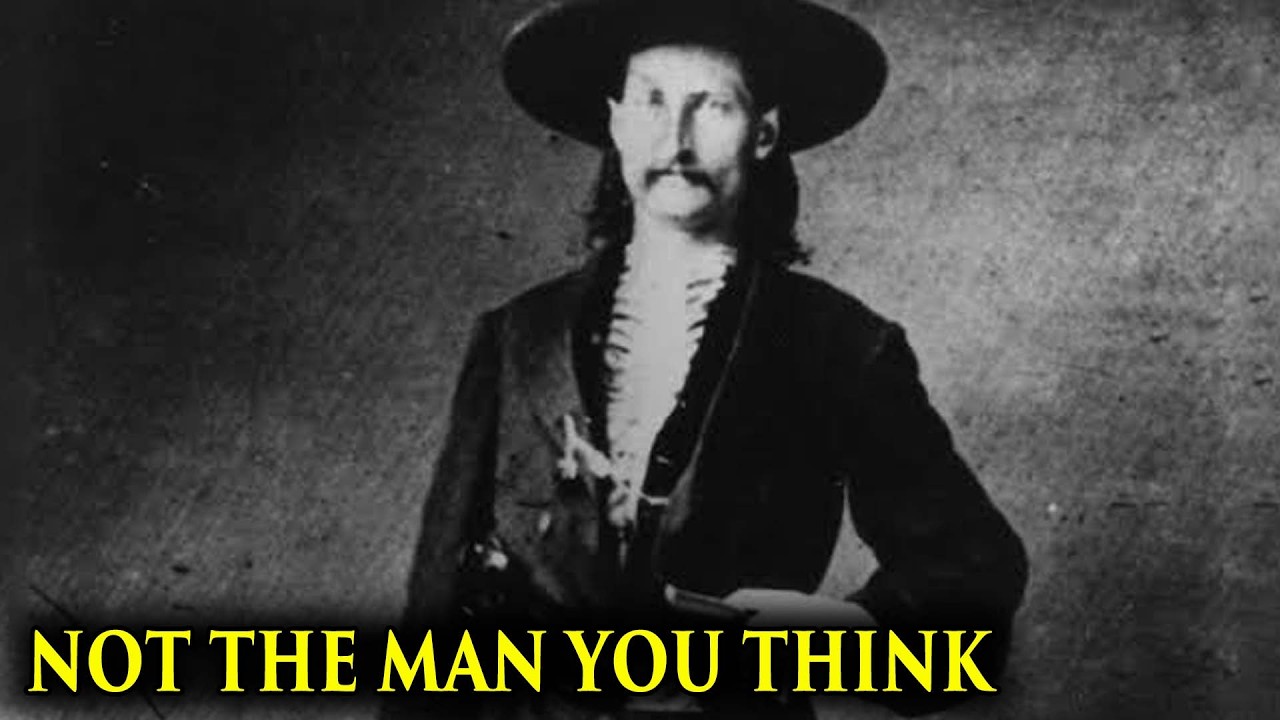 The deadly encounter with David Tutt, which erupted from a dispute over a gambling debt and a stolen pocket watch, was less a contest of skill than a mutual agreement to fire a single shot across a public square. This event, sensationalized and simplified, became the template for every movie duel that followed, even though Hickok’s real career involved far less glamorous work as a scout, stage driver, and occasional lawman than the myth suggests.
Hickok’s reputation was not merely built by his actions but was actively constructed through the emerging mass media of the 1860s. A nationally ignored profile in Harper’s New Monthly Magazine in 1867, written by George Ward Nichols, transformed the regional scout into a national sensation, detailing unlikely feats and portraying him as the quintessential figure of frontier manhood. This profile, alongside later dime novels, cemented the image of the quick-drawing, high-flying hero.
Yet, these documents frequently took liberties with the truth, describing events that local newspapers were quick to discredit. The Missouri Weekly Patriot, for instance, directly challenged Nichols’ claims about Hickok’s legendary horse, Black Nell, pointing out far creative fiction that was a practical mare, blind in one eye, rather than the trained stunt animal of the magazine’s story. This fierce battle between local verification and sensational national storytelling underscores the complex ecosystem in which Hickok’s fame genuinely was built.
The man behind the legend was far more intricate than the simple archetype of an invincible enforcer. Growing up in Kansas engulfed in the dangerous “Bleeding Kansas” era, he acquired the nickname “Duck Bill” or “Shakespeare Bill” before ever being called “Wild Bill,” a name that wasn’t his alone, as it was a title used by numerous frontier figures. In his early twenties, before he walked the streets of Abilene as marshal, he worked as a stable hand and wagon driver for Russell, Majors, and Waddell—the same company that ran the Pony and set the supply lines for westward expansion.
He was a practical, working man who understand the economic realities of the frontier. When the Civil War broke out, he served as a teamster and a wagon master for the Union, and periodically as a scout and a national intelligence provider, far from the open battlefields where a legendary statused figure would have reappeared.
The reality of his life was marked by uncertainty, illness, and physical decay, a stark contrast to the impeccable image of the Western hero. During his final years, he struggled with his eyesight, suffering from trachoma, a bacterial infection that caused severe, progressive vision loss. The man who was famous for being able to outdraw any opponent and take aim with deadly accuracy evolved into a figure increasingly struggling to see the cards on the table.
 This condition would have contributed to his demotion to a simple gambler and much more vulnerable frontiersman. His time as Marshal of Abilene and his period as constable in Monticello were successes, but not the constant gun-fire power fantasy of his portrayals; his primary role was keeping the peace in rowdy cattle towns, often through persuasion and brute presence, rather than through killing his opponent.
Hickok was also a master of the tall tale, himself perpetuating the myths that surrounded him. He enjoyed spinning elaborate frontier stories, some of which were obviously theatrical and disproportionate in scale. He famously said he escaped danger by being killed, demonstrating a confidence and a playful awareness of his own image that he was building.
This willingness to engage in broad misconstructions of his past, alongside the credulity of eager journalists, allowed a fictional character to be superimposed over the book. It was a facade erected for survival against the boring realities of a dangerous life that was deeply filled with the complexities of that challenge.
The legend’s final act, when he took a seat at a poker table in Saloon No. 10 in Deadwood, was overshadowed by the very same fate that saw him stand by his own person. He entered the saloon to escape the mundane, and saw a game in progress among a group of men.
He was tired and weary, possibly due to his severe vision problems, and what occurred next was strangely anti-climatic for the ultimate “gunfighter.” John McCall approached him from behind, unarmed, and shot him in the back. This was not a face-to-face duel, not a moment of divine skill, but a tragic, pathetic murder of a man whom the legend had made a sitting duck.
 The violent end testifies to the fact that the real world was not a Western movie; it was chaotic, driven by hidden motives, personal grudges, and a profound vulnerability to something as mundane as a back-alley assassination.
The popular final act stresses the “Dead Man’s Hand”—the combination of blacks and eights—but even this is part of the shrouded layers of storytelling. The hold of the final card is disputed, a perfect metaphor for a narrative that has been so heavily edited and romanticized that it is almost impossible to unearth the total truth. The decades after his death saw a succession of grave markers erected in his honor, each one chipped and broken by souvenir hunters eager to own a piece of the myth.
It is perhaps the most fitting coda to his life. The relentless destruction of his physical memorials by adoring fans, seeking to possess the story, did more to render the true Wild Bill invisible than any era of Hollywood could have done. They tore the real man apart to build the legend.
The real legacy of Wild Bill Hickok is not a list of men he might have killed, but his instrumental role in the creation of a national archetype. He did not invent the actions of the type he was carrying; he became famous at a particular moment in time, a new national celebrity of the West due to the press, and then proved to be so magnetic a presence, literally dressing the part with his long hair and complementary revolvers, that he became the template for the frontier American hero. Writers like Handra, and eventually Hollywood, took the complex, exhausting, weary man and smoothed his edges into a perfect canvas.
The result is that when we think of Wild Bill, we see a figure who is more a representation of the ideal of rugged individualism than a historical hero.
 Separating the reality from the film—that image of the slender, graceful man with striking posture, the polished lawman, the fearless gunslinger—leaves behind a figure with great ambition and an ability to navigate chaotic environments, who was also plagued by health issues, and who leaned into the exaggeration of his own story. He was in a sense, both the creator and the creation, trapped in a cycle of his own making. The legend is a testament to his success in building a persona that has become so pervasive that you search for a real man behind a carefully curated gallery of portraits—a man who was in a constant struggle with his own mortality, ultimately undone by the very grit that made him appealing.
The myth of Wild Bill, however, is not just a lie; it is a story about what Americans wished to believe about themselves and their history. It speaks to a public desire for heroes in an open landscape filled with moral certainty. Yet, the truth remains more compelling because it is not a simple tale of good versus evil.
The real story of James Butler Hickok is a story of a very human man, born in the grinding uncertainties of the frontier, whose own survival instinct, charisma, and manipulation of public perception created a legend that overshadowed his genuine contributions. The world remembers the quick draw, but the man was a stage coach driver, a spy, a constable, a gambler, and a victim of this buildup. The real Wild Bill didn’t draw first in that saloon.
He simply stood up, and changed the fate of history, but not in a way that even a dime novelist could have truly imagined.
The truth about his legacy is that he was, perhaps, more of a modern figure than we dare to acknowledge—the inaugural celebrity, a recreator of a self, who in a way, was ultimately killed by his own story, unable to escape the demands of the wild, impenetrable frontier that gave him life. Our enduring fascination with him isn’t about the number of his opponents, but a profound obsession with the theatricality of identity and the blurred line between reality and representation. And as we dust off the melodrama of his final days, we realize that the invincible hero had always been a fragile, vulnerable soul, leaving behind a legacy that true West was never really a stage, and the final curtain was delivered to those who claimed a fortune.