The screaming had stopped hours ago.
Now there was only silence.
A man sat alone inside a concrete cell barely five feet wide.
Steel bed.
Thin mattress.
Cold sink.
Toilet with no seat.
Nothing else.
He had already been counted.
Then counted again.
And before the night was over—
guards would count him again.
Outside his door, footsteps echoed down the corridor.
He wanted to speak.
He couldn’t.
For years, Alcatraz enforced a rule that made ordinary conversation itself a privilege.
In the worst cells, silence could last almost twenty-four hours a day.
No radio.
No letters.
No visitors.
No one to talk to.
Just concrete.
Darkness.
And time.
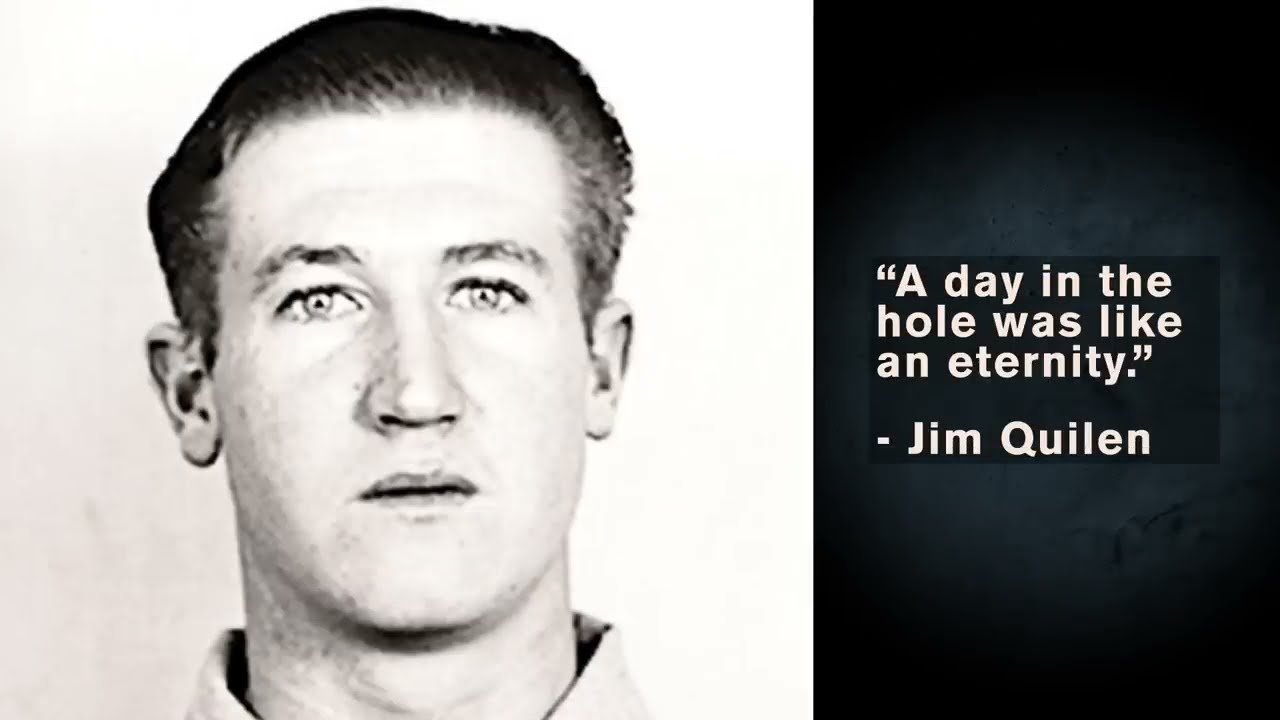
Former prisoner Jim Quillen later described a day in solitary as feeling like an eternity.
And some men discovered something even worse.
You could survive the cold.
Survive the food.
Survive the work.
Even survive years behind steel bars.
But surviving your own mind—
that was different.
This was Alcatraz.
Before the gift shop.
Before the ferry full of tourists.
Before families paid to photograph themselves behind the bars.
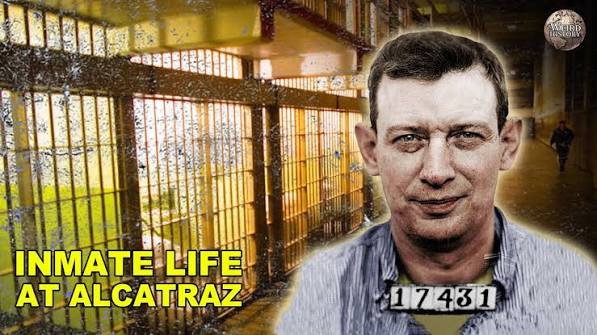
From 1934 to 1963, Alcatraz operated as one of America’s most notorious federal prisons.
Its inmates included famous gangsters, kidnappers, robbers and men the government considered particularly difficult to control.
Al Capone.
George “Machine Gun” Kelly.
Robert Stroud.
And hundreds of others.
But Alcatraz was not terrifying because every prisoner was chained to a wall.
In fact, some aspects of life on the island were better than conditions in many other prisons.
Food could be surprisingly good.
Every inmate had his own cell.
Medical care existed.
A library contained thousands of books.
Musicians could join a prison band.
Some inmates studied languages or took correspondence courses.
That sounds almost comfortable.
Until you understand the rule underlying everything.
Almost none of it belonged to you.
Food.
Clothing.
Shelter.
Medical care.
Those were guaranteed.
Almost everything else—
you had to earn.
And anything you earned—
could be taken away.
That was the psychological machine of Alcatraz.
Not simply confinement.
Control.
When a new prisoner arrived, the process began immediately.
Personal clothes came off.
Prison uniform went on.
Search.
Shower.
Medical examination.
Then the cell.
Most inmates lived in B or C Block.
The standard cell measured approximately five feet by nine feet.
Picture it.
Stretch your arms.
You can almost touch both walls.
Inside:
A bed.
A washbasin.
A toilet.
Maybe a small table or shelf depending on the period.
That was your personal world.
Alcatraz usually held around 260 to 330 prisoners, although the cell blocks could physically accommodate more.
And unlike many overcrowded prisons—
Alcatraz generally assigned one man to one cell.
That gave prisoners something unusual.
Privacy.
But privacy becomes strange when the door cannot be opened from your side.
You can be alone whenever the institution decides.
For ordinary prisoners, the cell was small.
For men sent to D Block—
it became something else.
D Block housed segregation and solitary confinement.
Some cells were larger.
The life inside them was smaller.
A prisoner might spend nearly the entire day alone.
One limited period of recreation each week.
Otherwise—
the walls.
Days could become weeks.
Quillen spent nineteen days in isolation and later remembered silence and darkness as his constant companions.
That punishment did not need to touch the body.
It attacked time.
And Alcatraz was obsessed with time.
Wake.
Count.
Eat.
Count.
Work.
Count.
Return.
Count.
Eat again.
Count.
Lights out.
Count.
Again.
Again.
Again.
Prisoners could be counted more than a dozen times in a day.
Former prisoner Bryan Conway exaggerated the experience by saying it seemed to happen every thirty minutes.
That was not literally true.
But psychologically—
it tells you how it felt.
You never stopped being inventory.
The first major count came early.
Breakfast followed.
Around 6:45 in the morning.
Prisoners moved under strict supervision into the dining hall.
And here Alcatraz produced one of its strangest contradictions.
The food was often considered unusually good for a prison.
Why?
Control.
Hungry prisoners become angry prisoners.
Warden James A. Johnston understood that decent food could reduce unrest.
Menus included cereal, bread, milk and coffee.
Lunch might include soup, meat, vegetables and dessert.
Roast pork.
Beef pot pie.
Apple pie.
Cake.
Jell-O.
For men locked inside one of America’s most feared prisons—
the dining hall could serve meals better than those in many other correctional institutions.
But do not mistake decent food for freedom.
Hundreds of men sat together—
surrounded by armed guards.
The dining hall reportedly contained tear-gas mechanisms that could be activated if a major disturbance erupted.
At the end of the meal—
the men stood.

Moved.
Counted again.
Then work.
Work was one of the few things that broke the monotony.
Laundry.
Kitchen.
Dock.
Maintenance.
Woodworking.
Industrial jobs.
Pay could be only a few cents an hour.
Five cents.
Twelve cents.
Tiny money.
But certain work could help reduce a sentence through good-time allowances.
That made a job valuable for another reason.
Time.
Everything inside Alcatraz was really about time.
How slowly it moved.
How much remained.
How much good behavior might remove.
And how easily the prison could make time feel longer.
One of Johnston’s earliest policies demonstrated that perfectly.
Silence.
For the first years of Alcatraz’s operation, conversation was heavily restricted.
Meals.
Recreation.
Certain approved situations.
Otherwise—
quiet.
Imagine living only a few feet from hundreds of other people—
and being forbidden to speak normally to them.
You hear coughing.
Toilets flushing.
Metal doors.
Footsteps.
Someone crying at night.
But conversation itself is controlled.
Prisoners adapted.
They spoke through plumbing.
Tapped.
Passed messages.
Used pipes almost like crude telephones.
Human beings will create communication wherever communication is forbidden.
Eventually the broad silence rule was abandoned in 1937 because it was difficult to enforce and psychologically harsh.
But solitary confinement kept the silence alive.
And silence was only one privilege the prison controlled.
Reading was another.
Alcatraz had a surprisingly extensive library.
But inmates did not simply walk between shelves.
There was no casual browsing.
A prisoner with library privileges consulted a catalog.
Filled out a request.
Books were delivered to the cell.
Crime-related material was restricted.
That detail is almost darkly funny.
Some of the men inside had spent entire careers committing crimes—
yet the prison worried that reading about crime might be inappropriate.
But inmates used the library seriously.
History.
Literature.
Languages.
Law.
Correspondence courses.
Some took university classes by mail through institutions including the University of California.
Imagine studying law while living in a prison famous for making escape almost impossible.
Some inmates read constantly because books allowed the only form of escape the guards could not stop.
Mentally—
you could leave the island.
But even that could be taken away.
Break rules—
lose the library.
Lose recreation.
Lose visits.
Lose correspondence.
Lose music.
The institution did not merely punish misconduct.
It withdrew pieces of normal human life.
Music became one of the most coveted privileges.
Alcatraz had an inmate band.
The Rock Islanders.
Even Al Capone wanted in.
Capone reportedly learned several stringed instruments while imprisoned and wrote enthusiastically about music to his son.
For a man once associated with enormous wealth and power—
imagine the transformation.
Outside:
Nightclubs.
Money.
Cars.
Armed men.
Influence.
Inside:
Practice time scheduled by prison regulations.
Play outside the permitted hours—
instrument confiscated.
The king of Chicago’s underworld could not decide when to play his own banjo.
That is Alcatraz in one image.
The prison did not simply remove freedom of movement.
It removed decision-making itself.
When you eat.
When you sleep.
When you speak.
When you practice music.
When you see your family.
And even what your family is allowed to say.
Letters were tightly controlled.
Inmates could not simply write whoever they wanted.
Correspondence was usually restricted to approved relatives.
Prison officials read mail.
In some periods, handwritten letters could be retyped before delivery so hidden messages could not be smuggled through handwriting, markings or paper.
Think about how intimate that invasion was.
You write to your mother.
A guard reads it.
Your wife writes to you.
A guard reads that too.
The words belong to your family.
The institution stands between you.
Visits were even more restricted.
A well-behaved prisoner might receive approximately one visit a month.
Often around ninety minutes.
Visitor on one side.
Prisoner on the other.
Glass between them.
Telephone.
Conversation monitored.
Mention another prisoner?
The visit could end.
Discuss something officials considered improper?
Finished.
No hug.
No handshake.
No child climbing into his father’s lap.
You could see the person you loved—
without touching them.
Then the ninety minutes ended.
The visitor left by boat.
The prisoner remained.
That boat ride may have been one of the cruelest features of Alcatraz.
San Francisco was visible from the island.
Close enough to see.
At times close enough, prisoners claimed, to hear sounds of ordinary life drifting across the bay.
New Year’s celebrations.
Music.
Voices.
The city was not some distant place hundreds of miles away.
It was right there.
Across the water.
Freedom visible—
but unreachable.
And that geography created the obsession everyone associates with Alcatraz.
Escape.
The federal prison operated for twenty-nine years.
During that period, thirty-six prisoners were involved in fourteen known escape attempts.
Some were impulsive.
Some ingenious.
Some ended almost immediately.
Others remain mysteries.
The island itself was part of the security system.
Cold water.
Strong currents.
Distance to shore.
Even if you defeated the locks—
you still had the bay.
In 1936, Joe Bowers attempted to climb a fence.
A guard fired.
Bowers fell and died.
The following year, Theodore Cole and Ralph Roe disappeared into the water.
A storm complicated the search.
They were never found.
Officials concluded they likely drowned.
But no bodies were recovered.
That uncertainty helped create the mythology.
Did someone make it?
Was escape truly impossible?
Attempt followed attempt.
Most failed.
Then John Giles tried something almost cinematic.
He worked in the laundry.
The prison processed military clothing.
Piece by piece—
Giles accumulated parts of an Army uniform.
Eventually, he assembled enough to disguise himself.
Then he slipped aboard a military boat.
And actually reached Angel Island.
For a brief moment—
he had escaped Alcatraz.
Then authorities noticed the problem.
The uniform did not completely match.
His destination was wrong.
The disguise unraveled.
Giles was captured—
and returned to the Rock.
Close.
But not close enough.
Then came 1946.
And Alcatraz nearly tore itself apart.
It began as an escape plan.
Six inmates attacked guards and seized weapons.
Their objective depended on reaching the recreation yard and moving toward freedom.
Then they encountered one disastrous problem.
The key they needed was not where they expected it to be.
The escape became trapped inside the cell house.
Now armed prisoners controlled part of Alcatraz—
but could not get off Alcatraz.
Panic turned into siege.
Gunfire erupted.
Guards were shot.
The prison became a battlefield.
For nearly two days, fighting continued.
U.S. Marines eventually helped regain control.
Grenades were used against barricaded inmates.
When it ended—
three prisoners and two correctional officers were dead.
Others were wounded.
The event became known as the Battle of Alcatraz.
Imagine being an ordinary prisoner during those two days.
Locked in a cell.
Gunshots echoing through concrete.
Explosions.
Men shouting.
No idea whether the inmates are winning.
No idea whether guards are about to storm the block.
No escape.
The prison designed to keep violence outside individual cells had become a war zone around them.
Afterward, security tightened.
Alcatraz’s reputation hardened.
Escape seemed more impossible than ever.
Then, sixteen years later—
three men disappeared.
And nobody has ever been able to prove exactly what happened to them.
June 1962.
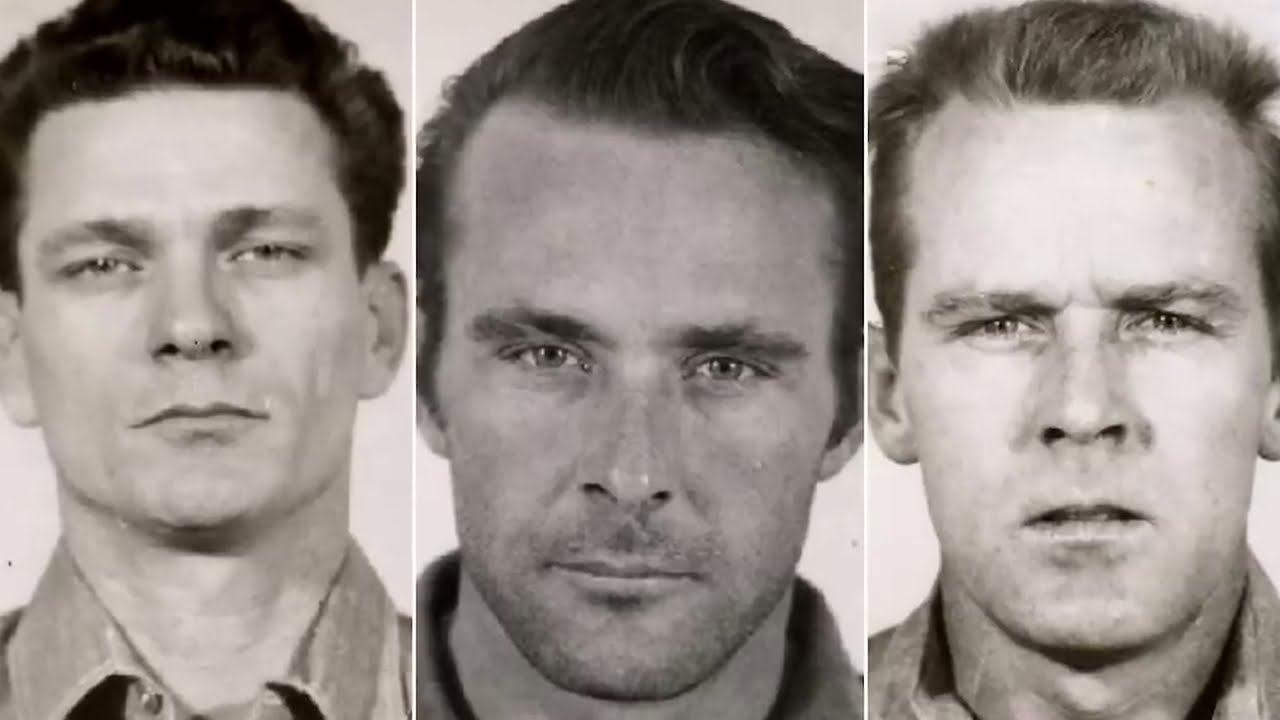
Frank Morris.
John Anglin.
Clarence Anglin.
Three inmates with cells near one another.
They had spent months preparing.
Slowly enlarging openings around ventilation grilles.
Hiding the damage.
Constructing dummy heads from materials available inside the prison.
Painting them.
Adding hair.
At night, the fake heads could rest on pillows—
giving guards the illusion that prisoners were sleeping.
They also constructed an improvised raft and flotation equipment from raincoats.
Then came the night.
The men placed the dummy heads in their beds.
Slipped through the openings behind their cells.
Climbed through utility spaces.
Reached the roof.
Made their way toward the water.
Then—
gone.
By morning, guards discovered the fake heads.
The alarm erupted.
Search teams spread across the bay.
Debris was found.
Personal items.
Pieces associated with the escape.
But no bodies.
No confirmed survivors.
Officially, authorities concluded the men most likely drowned.
The water was cold.
Currents dangerous.
But because the bodies were never recovered—
the mystery survived.
Sightings were reported.
Family rumors circulated.
Photographs were analyzed decades later.
Letters appeared.
None conclusively proved survival.
And that is exactly why the escape became legendary.
Every earlier escape attempt seemed to reinforce the island’s message:
You cannot leave.
Morris and the Anglins created one tiny crack in that certainty.
Maybe they died.
Probably.
But maybe—
just maybe—
someone actually escaped the Rock.
And prisoners spent years thinking about exactly that possibility.
Because mental survival at Alcatraz could be as important as physical survival.
Former inmates described the monotony as crushing.
Same walls.
Same bell.
Same count.
Same meal times.
Same faces.
Year after year.
Some prisoners developed serious psychiatric problems.
How many were genuinely ill and how many authorities dismissed as malingering is difficult to reconstruct.
But the prison environment was unquestionably psychologically harsh.
Joe Bowers is one revealing case.
He repeatedly resisted prison discipline.
Attacked guards.
Was punished with solitary confinement.
Officials debated whether he was psychotic or pretending.
At one point, professional assessment suggested genuine mental illness might be involved.
Yet officials remained suspicious that he had something to gain by appearing insane.
Then Bowers attempted suicide.
Later, in 1936, he died during what authorities classified as an escape attempt after climbing a fence and being shot.
Was he trying to escape?
Was he trying to die?
Nobody can ask him.
That ambiguity captures something ugly about prison psychology.
Once every action is interpreted through discipline—
even genuine breakdown can look like manipulation.
A prisoner says:
“I can’t take this anymore.”
The institution asks:
“Is he faking?”
Some men spent extended periods in the hospital.
Robert Stroud—the famous Birdman—spent much of his Alcatraz sentence there because of serious medical problems and because officials considered him dangerous enough to require isolation.
Ironically, the “Birdman of Alcatraz” was not allowed to keep birds at Alcatraz.
His bird work occurred earlier at Leavenworth.
At Alcatraz, he was mainly a sick, aging man under close control.
The mythology always looked more romantic from outside.
That is true of almost everything about the island.
Tourists see the view.
Prisoners saw distance.
Tourists see the cells.
Prisoners saw years.
Tourists hear escape stories.
Prisoners heard the doors close every night.
Tourists spend a few hours.
They knew exactly when the ferry was taking them back.
The prisoners did not.
And perhaps that is the simplest way to understand life on Alcatraz.
It was not constant torture.
That would almost be easier to explain.
The food could be good.
Books existed.
Music existed.
Work existed.
Medical care existed.
You could play chess.
Softball.
Study.
Write your mother.
But every ordinary pleasure existed only because someone else had allowed it.
That was the punishment.
Not simply deprivation.
Dependence.
You could read—
if they allowed you.
Play music—
if they allowed you.
See your wife—
if they allowed you.
Speak—
when they allowed you.
Step into the yard—
when they allowed you.
And at 9:30 at night—
the lights went out.
A guard walked past.
Looked into the cell.
Counted.
Moved on.
Then another count.
Another day.
Another year.
San Francisco still glowing across the water.
And for the men inside—
the most painful thing about freedom was that they could almost see it.