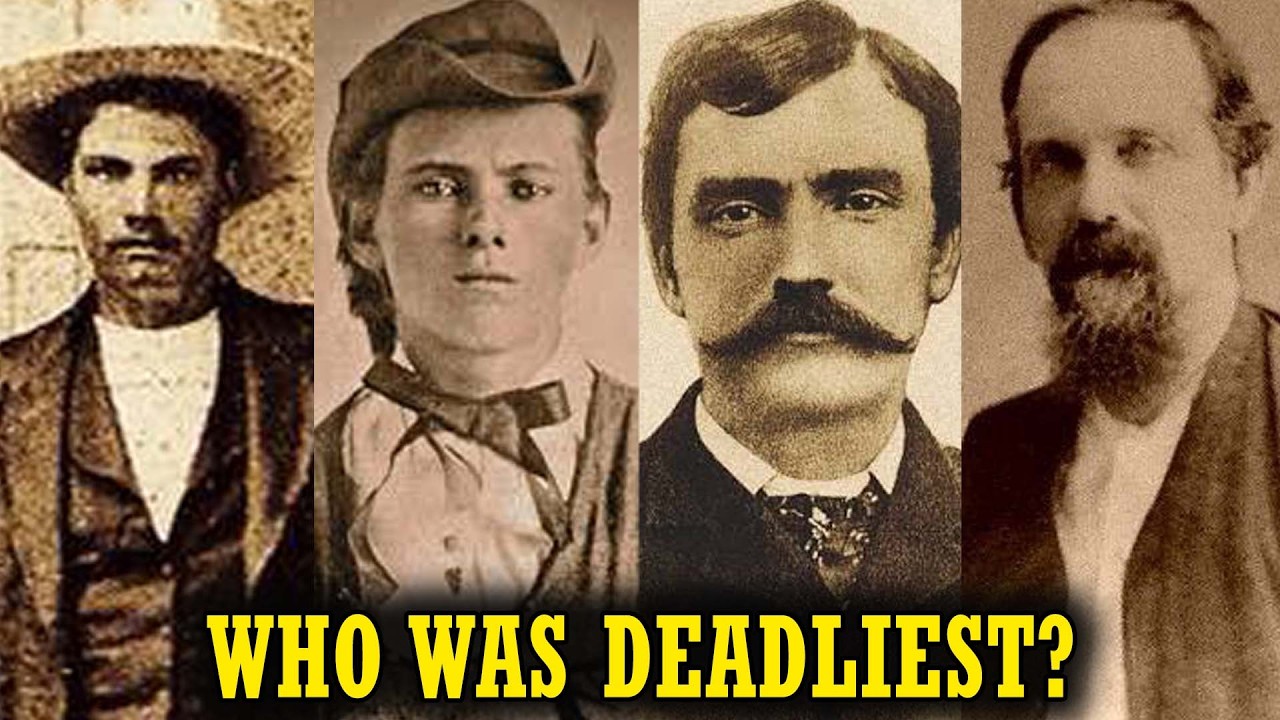
Charlie Bowdre rode with Billy the Kid, but he was never the fastest gun or the most feared outlaw in the Lincoln County War. His loyalty to the Kid would ultimately seal his fate at a desolate stone building in New Mexico, where his final mumbled words were reportedly, “I wish. I wish. ”
Born in 1848 in Wilkes County, Georgia, Bowdre was the first child of Albert and Lucy Bowdre.

When he was about three years old, the family moved to Tippah County, Mississippi, where he grew up alongside his six younger siblings. By the mid-1850s, young Charlie was already helping with chores on his father’s farm, developing into a skilled and dependable farmer. What happened to him between 1863 and around 1874 remains largely unknown, as historical records from that period are scarce. Historians believe Bowdre left the family farm around 1870 seeking a more adventurous life.
By 1874, records place him in Lincoln County, New Mexico, where he formed a close friendship with Doc Scurlock, another notable frontier figure. The two even partnered in an unusual business for the region: a small cheese-making operation along the Hila River. While building that enterprise, Bowdre also became involved in local law enforcement efforts, occasionally joining posses organized to recover stolen livestock. These pursuits sometimes ended without legal proceedings, reflecting the informal and often chaotic nature of frontier justice.
One of the most documented episodes occurred on July 18, 1876, when Bowdre, alongside Scurlock, Frank Coe, George Coe, and A. B. Saunders, intervened at the Lincoln jail to remove a captured cattle thief named Jesus Largo from custody. The group took matters into their own hands outside town, a decision that went unpunished by formal authorities.
Later, on August 5, 1877, Bowdre and an associate faced arrest after reportedly discharging their firearms recklessly while under the influence of alcohol. The conflict that sparked the Lincoln County War traced back to a financial dispute over an insurance policy belonging to Emil Fritz, a business partner of L. G. Murphy.
When Fritz died in 1874, the executors of his estate hired attorney Alexander McSween to collect the policy payout. After securing the funds, McSween refused to release the money to the executors, suspicious that the House, the powerful mercantile firm led by Murphy and James Dolan, would gain an advantage since they were his business rivals. In February 1878, legal proceedings were initiated, but the case was ultimately dismissed. Before that, however, the House managed to secure a court order to seize McSween’s assets, mistakenly including property belonging to John Tunstall, McSween’s ally and business partner.
Sheriff William Brady then assembled a posse to confiscate Tunstall’s remaining goods at his ranch about 70 miles from Lincoln. Meanwhile, Dolan brought in reinforcements, aligning with the John Kinney gang, the Seven Rivers Warriors, and the Jesse Evans gang to intimidate opponents and disrupt operations. On February 18, 1878, a posse under Sheriff Brady’s authority encountered John Tunstall and several of his ranch hands as they were moving his remaining horses toward Lincoln. Among the men riding with Tunstall were Richard “Dick” Brewer, Billy the Kid, John Middleton, Henry Newton Brown, Robert A.
Widenmann, and Fred Waite. Later investigations concluded that Tunstall was deliberately killed by Jesse Evans, William Morton, and Tom Hill. Several of Tunstall’s cowhands, including Brewer and Billy the Kid, saw the event from a distance but could do little to intervene. Tunstall’s death marked the beginning of the Lincoln County War.
Outraged by the killing and lacking faith in the territorial justice system, which they believed was influenced by Murphy and Dolan, Tunstall’s men organized a group that came to be called the Regulators. The core members, often referred to as the Ironclad, included Billy the Kid, Dick Brewer, Frank McNab, Doc Scurlock, Jim French, John Middleton, George and Frank Coe, José Chávez y Chávez, Charlie Bowdre, Tom O’Folliard, Fred Waite, and Henry Newton Brown. Initially, the Regulators sought to bring those responsible for Tunstall’s death to justice through legal means. They obtained warrants from the Lincoln County Justice of the Peace and acted under the authority of Constable Saturnino Martinez.
However, Sheriff Brady defied this effort by arresting Martinez and several Regulators, jailing them despite their legal authority. Eventually released, the Regulators resumed their search for the men implicated in Tunstall’s killing. They soon located Buck Morton, Frank Baker, and Dick Lloyd near the Rio Peñasco. After a prolonged chase, Morton agreed to surrender on the condition that he and Baker would be escorted safely back to Lincoln.
Dick Brewer, then serving as the Regulators’ leader, promised they would be returned alive. However, growing tensions within the group led to disagreement over the prisoners’ fate. William McCloskey, a Regulator and friend of Morton, strongly opposed any harm coming to them. On March 9, 1878, during the third day of the journey back toward Lincoln, a tragic incident occurred in the Capitan foothills near Blackwater Creek.
Morton, Baker, and McCloskey all lost their lives under circumstances that remain controversial. The official claim was that Morton shot McCloskey and then attempted to flee with Baker, forcing the group to act in self-defense. But this explanation raised doubts almost immediately. Both Morton and Baker were found with multiple gunshot wounds, with reports suggesting Morton was struck as many as ten times and Baker five times.
Historian Robert Utley noted that early accounts implied each Regulator may have fired at least once, casting serious doubt on the story of an attempted escape. That same day, two of the men involved in Tunstall’s killing, Tom Hill and Jesse Evans, were confronted near Tularosa during an attempted theft from a sheep herder. Hill did not survive the encounter, and Evans sustained serious injuries. Evans was later taken to Fort Stanton for medical treatment, where he was arrested on an outstanding federal warrant for livestock theft.
Sheriff William Brady, increasingly concerned about the lawlessness, sought help from the territorial attorney general. Governor Samuel B. Axtel soon issued rulings that dramatically altered the situation. He declared that John Wilson, the justice of the peace who had deputized the Regulators, had been appointed illegally, effectively invalidating the Regulators’ authority.
Axtel also revoked Robert Widenmann’s commission as a deputy U. S. marshal, leaving Brady and his deputies as the sole recognized law officers in Lincoln County. On April 1, 1878, several Regulators, including Billy the Kid, Jim French, Frank McNab, John Middleton, Fred Waite, and Henry Brown, waited in the corral behind Tunstall’s store.
When Sheriff Brady and his deputies moved along Lincoln’s Main Street, the Regulators opened fire. Brady was struck multiple times and died at the scene. Deputy George W. Hindman was also mortally wounded.
After the initial gunfire, Billy the Kid and Jim French rushed from cover toward Brady’s body. Historians debate their intent, with some believing they hoped to retrieve an arrest warrant and others suggesting they aimed to recover Billy’s rifle, which Brady had confiscated. During this attempt, both men were hit by the same bullet fired by Deputy Billy Matthews. Three days later, the Regulators traveled southwest to Blazers Mill, a sawmill and trading post that provided beef to the nearby Mescalero Apache community.
There, they encountered Buckshot Roberts, a rancher whose name appeared on their list of wanted men. What followed became one of the most memorable episodes of the war. Roberts sustained fatal injuries, but not before killing Dick Brewer and wounding John Middleton, Doc Scurlock, George Coe, and Billy the Kid. Following Brewer’s death, the Regulators chose Frank McNab as their new captain.
On April 29, 1878, Sheriff George Peppin led a posse that included members of the Jesse Evans gang and the Seven Rivers Warriors, confronting McNab, Ab Saunders, and Frank Coe at Fritz Ranch. McNab was killed, Saunders sustained severe injuries, and Frank Coe was taken prisoner. The following day, four men from the Seven Rivers faction were killed in Lincoln. Although the Regulators were widely suspected, concrete evidence was never produced.
The largest and most decisive clash of the Lincoln County War began on July 15, 1878, in the town of Lincoln. The Regulators divided into two main positions: some took refuge in the McSween home while others occupied the Ellis store. Inside the Ellis store were Doc Scurlock, Charlie Bowdre, John Middleton, Frank Coe, and several others. The McSween home held Alexander McSween, his wife Susan, Billy the Kid, Henry Brown, Jim French, Tom O’Folliard, José Chávez y Chávez, George Coe, and a number of Mexican vaqueros.
For three days, both sides exchanged gunfire. The deadlock continued until U. S. Army troops under Colonel Nathan Dudley arrived, bringing heavy firepower including cannons aimed at the Ellis store and other strongholds.
Faced with overwhelming force, the Regulators abandoned their positions, leaving those inside the McSween home increasingly isolated. On the afternoon of July 19, the Murphy-Dolan faction set the McSween house ablaze. Susan McSween, another woman, and five children were allowed to leave safely. By 9 p.
m. , Billy the Kid and Jim French devised a plan to break out. As they ran, Dolan’s men opened fire, killing Harvey Morris, McSween’s legal associate. In the confusion, Alexander McSween and Bob Beckwith of the Seven Rivers faction were both killed.
The Lincoln County War ultimately resolved little, leaving behind deep mistrust and lingering hostility. Billy the Kid remained active with a small circle that included Charlie Bowdre, Tom O’Folliard, Dave Rudabaugh, and a few others, engaging in cattle rustling and other outlaw activities across New Mexico. Their run eventually ended when Sheriff Pat Garrett took on the task of bringing them to justice. After the war, Bowdre divided his time between working as a cowboy on the ranches of Thomas Yerby and Pete Maxwell and remaining loosely connected to the conflict.
Sometime before his death, he married a young Mexican woman named Manuela Herrera, born April 20, 1866. The timing of the marriage, occurring only months before his death, has led some historians to suggest Bowdre may have been preparing to settle down and distance himself from Billy the Kid’s activities. By December 1880, Bowdre was reportedly ready to surrender and leave the gang, even considering turning himself in for his role in the killing of Buckshot Roberts. Despite those intentions, he agreed to ride with Billy the Kid on what would become one of their final missions: an attempt to ambush Sheriff Pat Garrett near Fort Sumner.
The plan failed, resulting in a skirmish, but Bowdre and most of the group managed to escape unharmed. Their reprieve was short-lived. On December 23, 1880, Garrett’s posse tracked the gang to an isolated stone building at Stinking Springs, New Mexico. During the night, the lawmen surrounded the hideout.
At dawn, Bowdre stepped outside to tend to the horses, unaware of the danger. Shots rang out, and he was struck multiple times before collapsing back toward the doorway. Billy the Kid urged him to make one last effort, but Bowdre, gravely wounded, could barely stand. He stumbled forward, unable to draw his revolver, and reportedly muttered his final words: “I wish.
I wish. ” His body was later returned to Manuela, and he was buried in the cemetery at Fort Sumner alongside his friend Tom O’Folliard. Less than a year later, Billy the Kid himself would join them after his death in July 1881.