The final shots fired in the Battle of Stalingrad did not echo across the frozen Volga on February 2, 1943. While history records that date as the official surrender of the German Sixth Army, a desperate and bloody coda to the deadliest battle in human history unfolded in the weeks that followed, a shadow war of survival and liquidation that has been almost entirely erased from the historical record. Soviet archival documents, long overlooked by Western historians, reveal that over 11,000 German soldiers refused to lay down their arms, choosing instead to vanish into the shattered skeleton of the city, forcing the Red Army to mount full-scale military operations to root them out and, in the official language of the NKVD, “liquidate counter-revolutionary elements.”
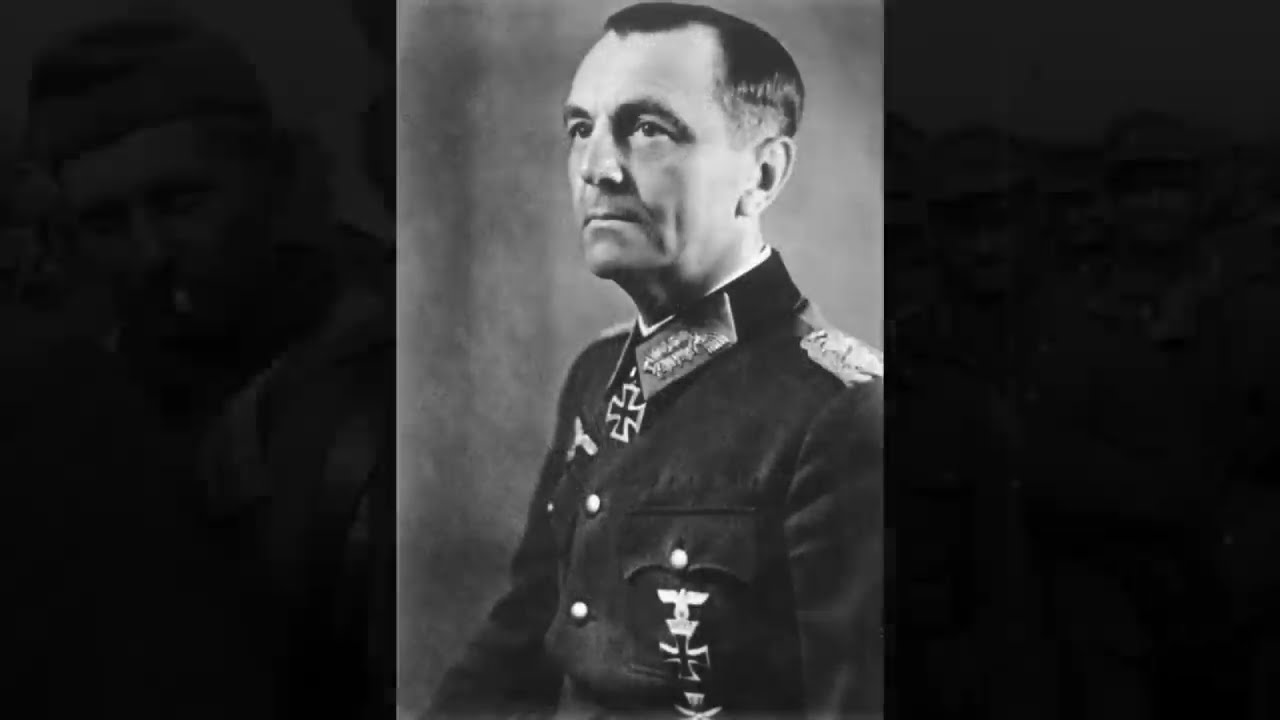
The scale of this post-surrender resistance is staggering, yet it remains a footnote in the vast literature of the Eastern Front. The official narrative of the battle’s end is simple: Field Marshal Friedrich Paulus, promoted to that rank by Hitler specifically to prevent his surrender, was captured on January 31st, and General Karl Strecker surrendered the northern pocket on February 2nd. But the reality on the ground was far more chaotic.
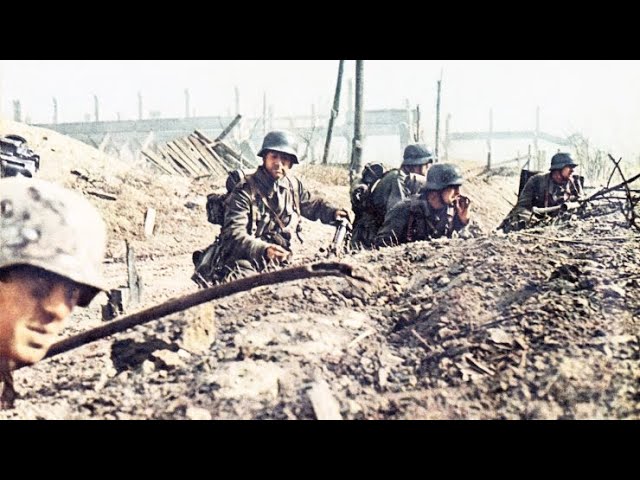 The Sixth Army, a force of nearly 300,000 men at its peak, had been shattered, but its remnants did not simply march into captivity. For thousands, the choice was not between surrender and death, but between a slow death in a Soviet labor camp and a desperate, violent fight for freedom in the ruins of the city they had been ordered to hold to the last bullet.
The conditions that drove these men to resist are rooted in the brutal calculus of the Eastern Front. The German invasion of the Soviet Union had been a war of annihilation from the outset. Soviet prisoners of war were treated with a contempt that bordered on industrial-scale murder, with millions left to starve, freeze, or be shot in the first two years of the war.
The men of the Sixth Army knew that the Red Army had little reason to show mercy. The fear of Soviet captivity was not abstract; it was a primal terror of the gulags, of forced marches in the dead of winter, and of summary execution. For many, the frozen, corpse-strewn ruins of Stalingrad, however hellish, were preferable to the almost certain death that awaited them in Soviet prisoner-of-war camps, a fear that proved tragically prophetic as only around 5,000 of the 91,000 official prisoners ever returned to Germany.
The final act of the battle began on February 2nd, but the fighting did not stop. As General Strecker’s 11th Corps finally capitulated, small units, isolated groups, and lone soldiers slipped away from the columns of prisoners or refused to emerge from their hiding places. They went to ground in the city’s vast network of sewers, in the basements of ruined apartment blocks, and within the skeletal frames of the tractor and steel factories that had become iconic battlegrounds.
These were not organized formations with a command structure; they were armed, desperate fugitives, scavenging for food and ammunition, living like rats in the frozen wreckage. They were dangerous, unpredictable, and determined to avoid capture at any cost.
The Soviet response was swift and ruthless. The task of clearing the city was given to the NKVD, the Soviet secret police, who viewed the holdouts not as soldiers but as criminals and “bandits.” The 10th NKVD Division, which had been operating in the Stalingrad region since the summer of 1942, was tasked with the grim work of hunting down these men.
 They were assisted by the veteran 252nd Rifle Division, a regular army unit that remained in the city until March 1st. The operations were brutal and systematic. Soviet troops, often accompanied by flamethrowers and demolition charges, combed through the ruins, flushing out the desperate defenders from their subterranean lairs.
The fighting was intense and often hand-to-hand. On February 5th, just three days after the official surrender, the Don Front headquarters reported that its 38th Motorized Rifle Brigade had cornered a group of 18 German soldiers in a basement. When they refused to surrender, a firefight erupted, and all 18 were killed.
The report identified them as “SS soldiers,” a designation that was almost certainly inaccurate, as no significant SS units were trapped in the Stalingrad pocket. This misidentification highlights the propaganda lens through which the Soviet command viewed the resistance, casting the holdouts as fanatical ideologues rather than the starving, terrified men they likely were.
The NKVD’s own records, now partially accessible in Russian archives, paint a stark picture of the scale of the operation. They reported that 2,418 Germans were “liquidated” by security forces in the weeks following the official surrender. This number represents only those killed in direct combat with NKVD and army units.
It does not include those who died of their wounds, starvation, or exposure while hiding, nor does it account for the many who may have been killed by other Germans for attempting to surrender. The number of prisoners taken during this mopping-up phase was significantly higher, with the NKVD reporting that up to March 1943, an additional 8,646 Germans had been captured, bringing the total of post-surrender holdouts to over 11,000.
 The hunt extended beyond the city limits. As the weeks dragged on, reports began to filter into Soviet headquarters of German soldiers attempting to escape the region entirely. A directive sent to the district department of the NKVD in the Stalingrad region in March 1943 detailed the problem: German officers and soldiers were hiding out in the countryside, attempting to cross the front lines and reach German-held territory.
The report noted that on their way, they were “engaged in robberies and murders,” and that some had “penetrated the villages where they acquire civilian or military clothing from the population and change clothes so that it is more convenient to hide.” The entire Stalingrad region was ordered to be combed to find these men, turning the vast, snow-covered steppe into a final hunting ground.
These men were not fighting for the Reich or for Hitler. The Nazi leadership had abandoned them. Hitler had refused to authorize a breakout, refused to allow a surrender, and had instead ordered the Sixth Army to fight to the last man and the last bullet, a sacrifice he deemed necessary for the symbolic value of the battle.
The Luftwaffe had failed to supply them, and the relief operation, Operation Winter Storm, had been crushed. By the end, the men in the ruins were fighting for a much simpler goal: to live. They were fighting against the certainty of a slow death in a Soviet camp, a fate that they had witnessed being inflicted on millions of their enemies.
The final chapter of the Battle of Stalingrad is a story of forgotten men. They were the last defenders of a cause that was already lost, soldiers who defied the orders of their own commanders and the demands of their enemies. They were not heroes in the traditional sense, but they were men driven by a desperate, primal instinct to survive.
 Their resistance was a final, futile gesture of defiance in a city that had become a synonym for hell on Earth. The Red Army’s mopping-up operations, which lasted well into March 1943, were a brutal and efficient conclusion to a battle that had already consumed hundreds of thousands of lives.
The historical omission of this post-surrender resistance is extraordinary. For decades, the story of Stalingrad has been told as a clean, decisive victory for the Soviets, a turning point that marked the beginning of the end for Nazi Germany. The idea that the battle continued for weeks after the official surrender, with thousands of Germans fighting and dying in a desperate guerrilla war, complicates that narrative.
It suggests that the battle’s end was not a moment of clean capitulation but a messy, violent, and protracted 𝒶𝒻𝒻𝒶𝒾𝓇. The 11,000 holdouts represent a significant number of men, a force larger than a full-strength division, and their story deserves to be told.
The Russian archives hold the key to fully understanding this forgotten chapter. The NKVD reports, the divisional histories, and the operational orders of the Red Army units involved in the mopping-up operations are all there, waiting to be examined. The work of historians like Mark Felton, who has brought this story to light, is crucial in piecing together the final days of the battle.
The story of the Stalingrad holdouts is a testament to the extreme limits of human endurance and the depths of despair that war can create. It is a story of men who, faced with the choice between certain death and a chance, however slim, of survival, chose to fight on in the ruins, long after their war should have been over. They are the ghosts of Stalingrad, the forgotten soldiers whose war did not end on February 2nd, but only when they were killed or dragged, starving and broken, from the rubble of the city they had been sent to conquer.


