The ghost of Peenemünde still whispers through the halls of military history, a specter of what might have been. As the Allied juggernaut closed in on a crumbling Reich in the spring of 1945, the world stood on the precipice of a terrifying technological leap, one that Nazi Germany had gambled its very existence on. The question that haunts historians and military strategists alike is not whether these weapons were real, but whether they could have rewritten the final chapter of the Second World War.
The answer, buried beneath the rubble of Berlin and the ashes of a thousand shattered dreams, is a complex tapestry of genius, madness, and the brutal arithmetic of industrial war.
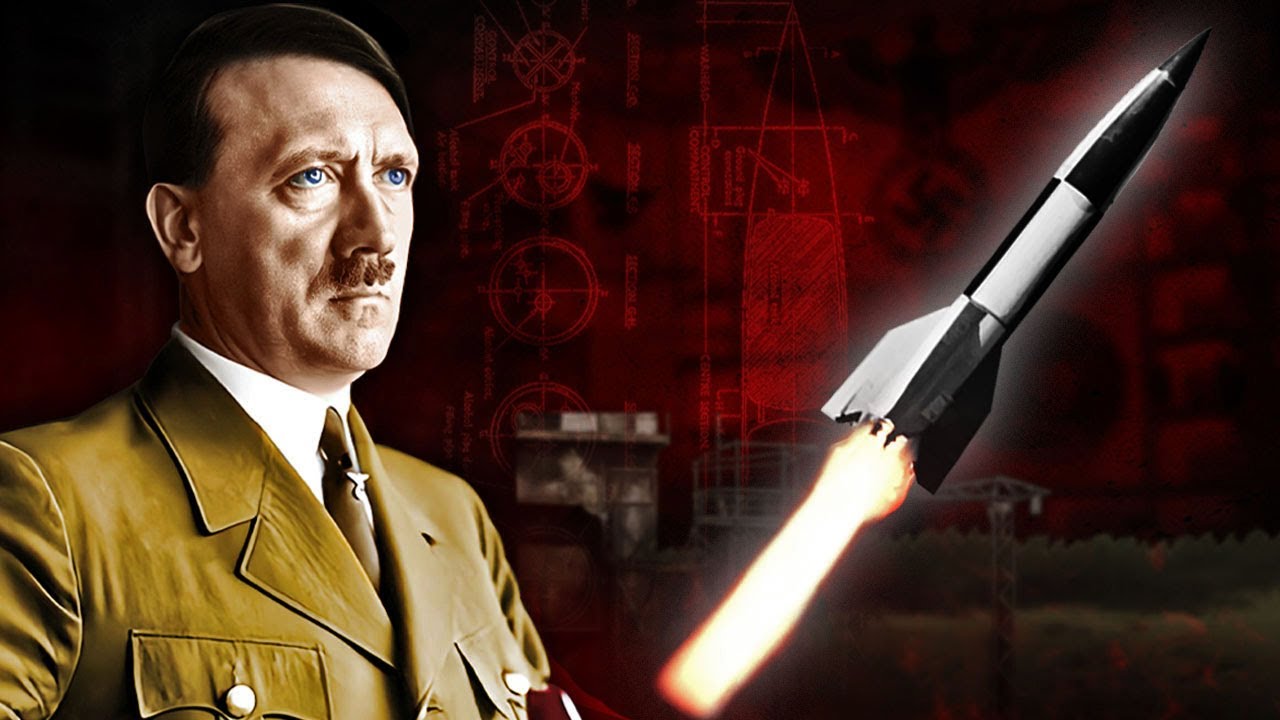 The narrative of the Vundavafan, the “wonder weapons,” was not born from a single moment of inspiration but from a deep-seated strategic anxiety that plagued the National Socialist regime from its inception. Adolf Hitler, having witnessed the horrors of the First World War, understood that Germany was a nation surrounded by enemies with vast colonial empires, abundant raw materials, and superior industrial capacity. To compensate for this structural disadvantage, the Führer and his inner circle concluded that technological innovation was not merely an option but an existential imperative.
The logic was seductive in its simplicity: a handful of revolutionary weapons could neutralize the numerical and material superiority of the Allies, delivering a knockout blow that would paralyze their will to fight.
This philosophy was built on three pillars. First, the Reich’s acute scarcity of critical resources like oil, rubber, and high-grade metals demanded technical solutions that could circumvent these supply lines. Second, the doctrine of Blitzkrieg, or lightning war, required weapons of such high impact that they could disorient and paralyze the enemy before they could mount an effective defense.
Third, and perhaps most importantly, Hitler’s personal vision favored grandiose, monumental projects. These were not just instruments of war; they were symbols of German power, designed to awe both adversaries and the German public. This dynamic transformed the armaments program into a propaganda showcase, absorbing vast resources that might have been better spent on mass-producing conventional weapons.
The figure of Joseph Goebbels, the Minister of Propaganda, was instrumental in weaponizing this technological ambition. After the catastrophic defeat at Stalingrad in 1943, Goebbels began to weave a narrative of a secret arsenal, an imminent force that would reverse the tide of war. The term Vergeltungswaffen, or “retaliation weapons,” was coined to describe the V-1 and V-2 rockets, framing them not just as military hardware but as instruments of revenge for the relentless Allied bombing of German cities.
This propaganda campaign served a dual purpose: it maintained morale on the home front and sowed uncertainty among the Allies. The projects were not mere fictions; real facilities existed, and functional prototypes were built. However, the distance between the propaganda’s promises and the practical results was a chasm that the regime worked tirelessly to conceal.
At the heart of this technological race was Wernher von Braun, a young engineer whose vision would outlive the Reich itself. As the director of the Peenemünde research center on the Baltic coast, he oversaw the development of the A4 rocket, later known as the V-2. This liquid-propelled missile was a marvel of engineering, with unprecedented altitude and speed capabilities that made it impossible to intercept in flight.
It was a weapon that could strike London in minutes, a terrifying prospect for the Allies. Yet, the program was built on a foundation of immense human suffering. Thousands of forced laborers, working in inhumane conditions, were used to construct the facilities and components, a dark stain on the project’s scientific achievements.
In a parallel realm of scientific inquiry, the physicist Werner Heisenberg, a Nobel laureate, led the “Uranverein,” or Uranium Club. Their mission was to explore the feasibility of nuclear fission, a discovery that had sent shockwaves through the scientific community in 1938. The initial goal was to understand if a controlled chain reaction was possible, a step that could lead to both energy generation and a weapon of unimaginable power.
The German nuclear program, however, never came close to achieving operational results. The reasons were manifold: a lack of dedicated resources, the expulsion of brilliant Jewish scientists like Albert Einstein and Enrico Fermi who would later prove crucial to the Manhattan Project, and a fundamental miscalculation of the scale and complexity required to build a bomb. The program remained a theoretical exercise, a source of Allied anxiety but never a practical threat.
Albert Speer, the Minister of Armaments, was acutely aware of the disparity between the regime’s promises and its industrial reality. While he privately acknowledged that German industry had achieved high production levels in 1944, he also warned Hitler that much of this effort was being squandered on experimental projects with no immediate application. The political pressure to present each innovation as a decisive breakthrough, however, was overwhelming.
The V-1 flying bomb, a pulse-jet-powered cruise missile, was the first of these “wonder weapons” to be deployed in earnest. Its distinctive buzzing sound became a harbinger of death for Londoners in the summer of 1944. The V-1 was crude and slow, and Allied defenses soon developed effective countermeasures, including fast fighters and barrage balloons.
Yet, the sheer volume of launches forced a significant diversion of Allied resources to counter the threat.
The V-2, however, was a different beast entirely. Its ballistic trajectory, reaching the edge of space, made it invulnerable to any interception technology of the era. There was no defense against it; the only recourse was to destroy its launch sites and production facilities.
The V-2 was a weapon of terror, designed to break the will of the British people. While it caused significant casualties and damage, it failed to achieve its strategic objective. The British people did not capitulate, and the Allied bombing campaign against Germany continued unabated.
The V-2 program, like so many others, was a testament to German ingenuity but also to its strategic folly. It consumed enormous resources and human lives to deliver a weapon that, while terrifying, had little impact on the overall course of the war.
 The armored battlefields of the Eastern Front presented a different kind of challenge. The German Wehrmacht, which had begun the war with a doctrine of mobility and concentration, was shocked to encounter the Soviet T-34 tank in 1941. This machine was a revelation, with sloped armor that offered superior protection, a powerful 76mm gun, and wide tracks that gave it excellent mobility on the muddy terrain.
It was simple to produce and repair, allowing the Soviets to field it in staggering numbers. The German response was to develop heavier, more powerfully armed tanks. The Tiger I, introduced in 1942, was a formidable beast, armed with an 88mm gun that could destroy any Allied tank from a great distance.
Its frontal armor was nearly invulnerable. But it was also heavy, fuel-hungry, and mechanically complex, requiring specialized maintenance that the German logistics system could not sustain. Only a little over a thousand were ever built, a paltry number compared to the tens of thousands of T-34s that rolled off Soviet assembly lines.
The Panther tank was a more balanced design, incorporating sloped armor and a high-velocity 75mm gun. It was intended to be a more practical and producible vehicle than the Tiger. However, its debut at the Battle of Kursk in 1943 was marred by a high rate of mechanical failures, particularly in its transmission and suspension.
While these issues were eventually corrected, the Panther remained a complex and expensive vehicle to manufacture. The ultimate expression of German armored gigantism was the Tiger II, or King Tiger. Weighing nearly 70 tons, it was a behemoth with exceptional frontal armor and a long 88mm gun.
But its weight made it slow and unreliable, and many were lost to mechanical breakdowns rather than enemy action. The most extreme project was the Maus, a super-heavy tank designed by Ferdinand Porsche. Weighing nearly 200 tons, it was a land battleship that was practically useless in real-world conditions.
Only two prototypes were built, and they were never used in combat.
This obsession with size and perfection extended to artillery. The Gustav railway gun, known as “Dora,” was a colossal piece with an 800mm caliber. It required over a thousand men to operate and could launch projectiles weighing several tons over 30 kilometers.
It was used in the siege of Sevastopol in 1942, where it destroyed underground fortifications. However, its practical utility was minimal. It took weeks to assemble, required specially reinforced tracks, and was an easy target for enemy aircraft once in place.
The resources consumed by such weapons were enormous, and they provided little tactical or strategic benefit. The proliferation of different tank models and variants created a logistical nightmare. Germany produced over a hundred different versions of armored vehicles, each requiring its own spare parts, manuals, and training.
This complexity crippled the maintenance and repair capabilities of the German army, leaving many units out of service for lack of parts or trained mechanics.
The Battle of Kursk was the ultimate demonstration of this strategic failure. While the Tigers and Panthers demonstrated their destructive power in isolated engagements, their insufficient numbers and mechanical unreliability reduced their strategic impact. The Soviet Union, in contrast, deployed tens of thousands of T-34s, which were easily repairable in the field.
The German philosophy of seeking technical perfection in each individual machine was fundamentally outmatched by the Allied philosophy of mass-producing equipment that was “good enough” to sustain prolonged operations. This divergence in industrial philosophy was the decisive factor on the land front. Punctual technical superiority could not substitute for the industrial capacity and practically unlimited resources of the United States and the Soviet Union.
In the skies, the Luftwaffe faced a similar dilemma. The Me 262 jet fighter was the most revolutionary aircraft of the war, a machine that exceeded the speed of any Allied fighter by a significant margin. Its four 30mm cannons were designed to shatter the tight defensive formations of American heavy bombers.
In theory, it could select the moment of combat, fire, and escape before the enemy could react. However, the technology that gave it its speed also imposed severe limitations. The Jumo 004 engines depended on heat-resistant alloys that were in short supply, and they had a very short service life.
 The scarcity of nickel and chromium, exacerbated by the Allied blockade and bombing of metallurgical plants, meant that replacement turbines were always in short supply. The transition to jet flight also required specific training, which was impossible to provide given the fuel shortages and the constant disruption of flight schools.
Hitler’s personal intervention further hampered the Me 262’s effectiveness. He insisted on converting it into a fighter-bomber, a role for which it was ill-suited, causing delays and modifications that postponed its use as a pure interceptor. By the time it was finally deployed in its intended role, the Allied air forces had overwhelming numerical superiority.
The result was a production of over a thousand airframes, but only a fraction was ever available for combat at any one time. The operational impact of the Me 262 was far lower than expected, a testament to the fact that even a revolutionary weapon cannot change the course of a war if it is not available in sufficient numbers and with the logistical support to sustain it.
The V-1 and V-2 rockets were the most visible manifestations of the “wonder weapons” program. The V-1 was a cruise missile with a simple pulse-jet engine, launched from ramps on the European coast. It was slow and vulnerable to interception, but the volume of launches forced the Allies to divert significant resources to counter it.
The V-2, however, was a true ballistic missile, with a liquid-propelled engine and an inertial guidance system. Its flight profile took it to the edge of space, making it impossible to stop. It was a weapon of terror, designed to demoralize the British population.
While it caused significant casualties and damage, it failed to achieve its strategic objective. The V-2 program consumed enormous resources, including the lives of thousands of forced laborers who died in the underground factories where the rockets were assembled.
The German Navy, or Kriegsmarine, also placed its bets on technological innovation. Admiral Karl Dönitz, who had long advocated for an unrestricted submarine campaign, believed that a force of 300 submarines could strangle the transatlantic supply lines and force Britain to sue for peace. During the early years of the war, the “Wolfpack” tactics of the U-boats were devastatingly effective.
However, the Allies responded with technological and tactical innovations. Centimetric radar could detect U-boats on the surface, even at night. Improved sonar and new weapons like the Hedgehog increased the effectiveness of anti-submarine warfare.
The introduction of escort carriers and long-range patrol aircraft closed the “Atlantic Gap,” forcing U-boats to remain submerged for longer periods and limiting their mobility.
The German response was to develop the Type XXI submarine, a revolutionary design that was truly submersible, capable of operating underwater for extended periods at high speed. It incorporated high-capacity batteries, silent electric motors, and a streamlined hull. It was a weapon that could have changed the course of the Battle of the Atlantic.
However, the program began too late. Little more than a hundred units were completed, and only a couple ever performed patrols, without sinking any enemy ships. The hurried modular construction introduced quality problems that further reduced their reliability.
The Type XXI arrived when Allied supremacy in the air and on the surface was already complete. The German gamble on advanced submarines, like so many other “wonder weapons,” was a case of too little, too late.
The scientific effort behind these weapons was a study in contradictions. Germany had some of the world’s finest physicists and engineers, but the regime’s ideology and its systematic exclusion of Jewish scientists crippled its potential. The Uranium Club, led by Heisenberg, understood the principles of nuclear fission but failed to grasp the scale of the effort required to build a weapon.
The program was underfunded and dispersed, and the scientists themselves were skeptical about the feasibility of a bomb in the time frame of the war. The Allied capture of the German nuclear facilities in Operation Alsos confirmed that Germany was far from producing a nuclear weapon. The interrogation of the German physicists at Farm Hall revealed that they were unaware of the magnitude of the American achievement, a clear sign that they had not come close to mastering the practical challenges of the atomic bomb.
Alongside the nuclear program, there were projects that bordered on science fiction. The so-called “ray weapons” explored the possibility of concentrating electromagnetic energy into destructive beams. Some studies used high-frequency radiation, while others attempted to create particle rays.
 None of these projects advanced beyond rudimentary prototypes. There were also attempts to design unconventional aircraft, including circular flying discs. Rudolf Schriever and Victor Schauberger, an Austrian inventor, worked on propulsion concepts based on implosion or centripetal suction.
None of these models ever worked in practice, and the subsequent legend of Nazi flying saucers was fed by these secret projects, but no evidence exists of any operational aircraft.
The Silbervogel, or “Silver Bird,” project by Eugen Sänger and Irene Bredt was a more solid ambition. This suborbital bomber was designed to ascend with auxiliary rockets to high atmospheric layers and then traverse intercontinental distances through successive bounces in the denser layers of the atmosphere. The calculations were detailed, and the project anticipated problems that would later confront space shuttle engineers.
However, the materials to withstand those extreme conditions did not exist in the 1940s, nor did the industrial capacity for such a program. The project never passed the planning stage.
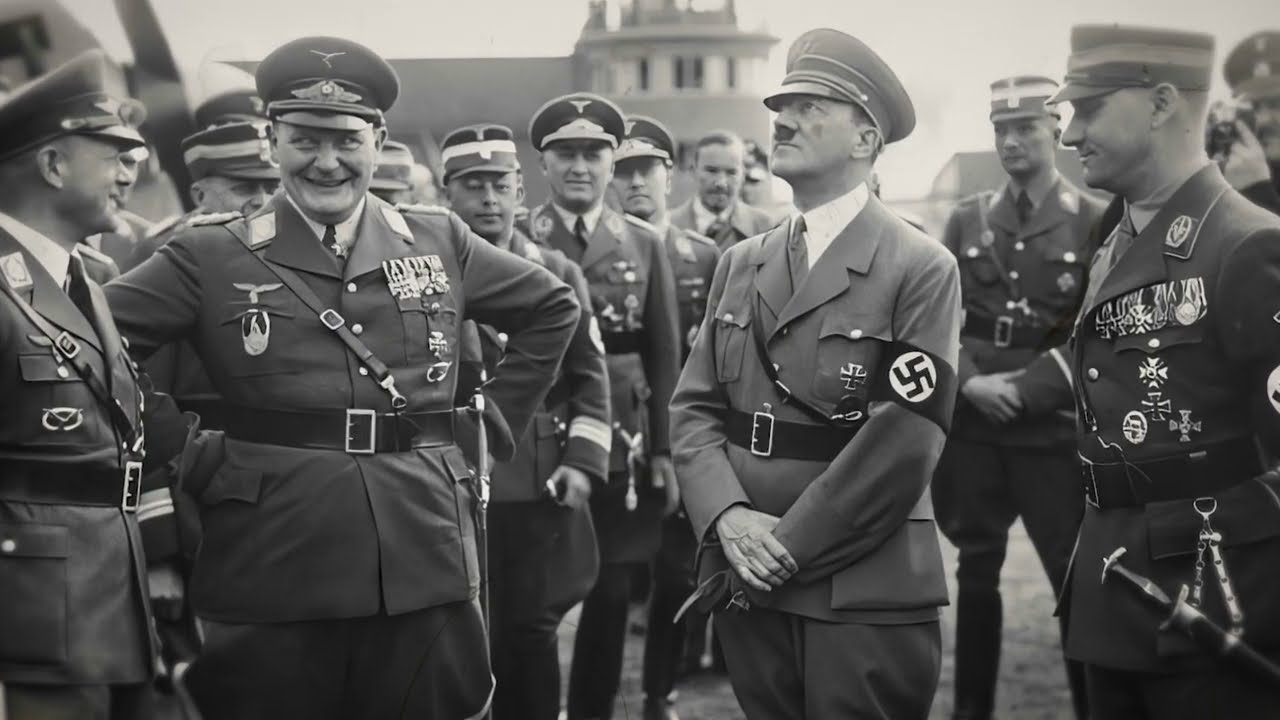
The political intervention in research was a constant theme. Hitler favored spectacular projects like the Maus tank or the Dora gun, which consumed strategic materials and work hours without generating equivalent operational benefits. Leaders competed to attract the Führer’s attention with flashy ideas, while more practical initiatives were relegated.
This politicization created an environment where science was subordinated to propaganda and ideology. Extreme secrecy further aggravated the limitations. Teams worked in isolation, without information exchange, which prevented collective advances.
Compartmentalization prevented related disciplines from collaborating and reaching synergistic results.
The Allied perception of German science was a significant factor in the war. The fear that Germany would produce revolutionary weapons motivated bombing raids like the one on Peenemünde in August 1943 and the systematic capture of scientists through programs like Operation Paperclip. This attention was due partly to real achievements in rocketry but also to the Nazi propaganda that inflated expectations about capabilities in development.
The contrast between real achievements and propagandistic perceptions explains the persistence of myths about the Reich’s secret weapons.
In the final analysis, the “wonder weapons” were a spectacular failure in terms of their strategic impact. They were a collection of revolutionary technologies that were deployed too late, in too few numbers, and with too little logistical support to alter the course of the war. The German industrial machine, despite its ingenuity, was simply not capable of mass-producing these complex weapons.
The Allied strategy of mass production, combined with their overwhelming material superiority, proved to be the decisive factor. The T-34 tank, the Sherman, and the Spitfire were not the best weapons of the war, but they were good enough and could be produced in quantities that overwhelmed the German defenses.
The legacy of the “wonder weapons,” however, extends far beyond the German defeat. The Allies captured the documentation, prototypes, and scientists who would feed their own programs. Operation Paperclip transferred Wernher von Braun and other specialists to the United States, where they were essential in the development of intercontinental ballistic missiles and the space program that culminated in the moon landing of 1969.
The Soviet Union made equivalent captures, incorporating German technologies into its own arsenal. The Type XXI submarine design directly influenced postwar diesel-electric submarines. The Horten brothers’ flying wings anticipated features of later stealth aircraft.
The V-2’s technical principles laid the foundations for space rockets.
The paradox of the “wonder weapons” is that their greatest impact occurred after the war they failed to decide. Germany was defeated before its projects reached operational maturity, but the victorious powers took advantage of those advances. In this way, the search for extraordinary solutions left a legacy that transcended the Third Reich, opening a new scenario in the post-war technological confrontation.
The question of whether they could have won the war is ultimately a counterfactual one. The answer, based on the evidence, is a resounding no. The structural limitations of the German war economy, its lack of resources, and the Allied industrial juggernaut were insurmountable obstacles.
The “wonder weapons” were a testament to German genius and a monument to its strategic folly, a story of what might have been that continues to fascinate and horrify in equal measure. They were visionary projects ahead of their time, but they were also impossible promises destined for failure, a final, desperate gamble that could not change the inevitable outcome of a war that Germany had already lost.