Bonnie and Clyde’s final ambush in May 1934 ended more than a criminal spree. When undertaker H. Dillard Darby prepared their bodies for burial, he was fulfilling a strange promise made under duress a year earlier. Darby had been kidnapped by the couple in Louisiana, and Bonnie reportedly asked him, with dark humor, whether he would handle her and Clyde’s final arrangements.
“Promise us you will,” she said. After their deaths, Darby assisted with the embalming, making good on the request. Clyde Barrow’s time in prison left a permanent mark beyond his criminal record. While serving at Eastham Prison Farm in Texas in 1932, he lost two toes.
Reports suggest he may have removed them himself, or with help from another inmate, hoping to avoid grueling labor assignments. The plan backfired when his release came just days later. He walked with a limp for the rest of his life and often drove barefoot or with modified footwear, a detail reportedly true on the day he died. Bonnie Parker also carried physical scars.
In the summer of 1933, a car crash near Wellington, Texas, left her badly injured. The vehicle’s battery was damaged, and acid spilled onto her leg. According to gang member W. D.
Jones, the burns stripped skin from her hip to her ankle, with bone visible in places. The group hid out at a farm, using home remedies like baking soda, and refused medical care out of fear of attracting law enforcement. The couple’s death on May 23, 1934, near Gibsland, Louisiana, came after weeks of tracking by officers from Texas and Louisiana. The posse planned a roadside ambush, intending to take the pair alive.
But when the car slowed, the situation escalated. Officers fired an estimated 150 to 160 rounds. Inside the car, both were found dead. Bonnie still had part of a sandwich in her hand, a remnant of a breakfast picked up from a cafe in Gibsland just miles earlier.
Deputy Ted Hinton described the aftermath grimly, saying the two were “nothing but a bunch of wet rags. ” Reports vary on the number of wounds, with estimates ranging from 25 to 26 entry wounds for Bonnie and 17 to 23 for Clyde. The damage was so extensive that embalming proved difficult, as fluid would not stay contained. Undertaker C.
F. “Boots” Bailey worked on the bodies at a funeral parlor in Arcadia, Louisiana, with Darby’s help. Thousands of onlookers gathered outside, and Bailey reportedly sprayed embalming fluid toward the crowd to keep them back. Despite her bond with Clyde, Bonnie was legally married to another man.
She wed Roy Thornton in September 1926 at age 15 or 16, and even had his name tattooed on her thigh. The marriage was unstable, and Thornton was sent to prison for robbery in 1929. Bonnie never divorced him. When news of her death reached Thornton, who was then incarcerated for murder, he reportedly said he was glad she and Clyde died together.
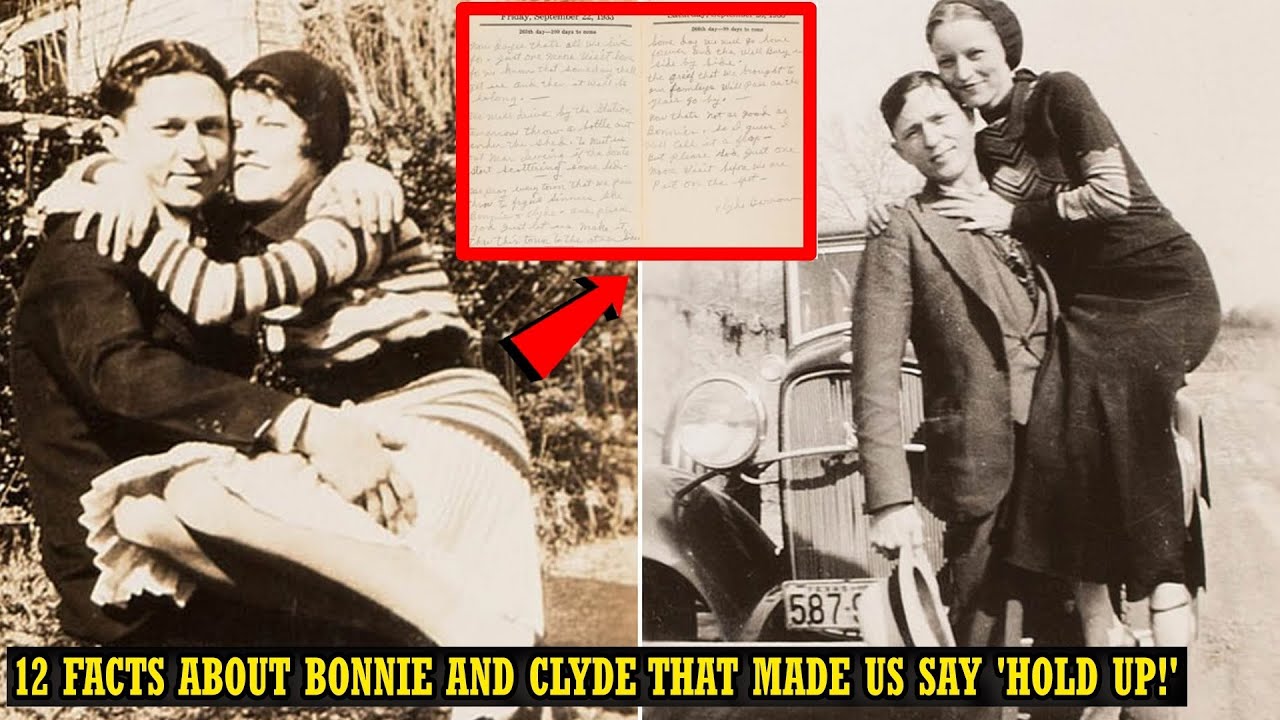
Thornton himself was fatally shot in 1937 during a prison escape attempt. Bonnie had creative ambitions that her criminal life overshadowed. She wrote poetry, including “Suicide Sal,” composed while jailed in Kaufman County, Texas, in 1932. Her better-known poem, “The Story of Bonnie and Clyde,” included lines that proved prophetic: “Someday they’ll go down together; they’ll bury them side by side.
” Clyde attempted a poem in response, closing with a plea for “just one more visit before we are put on the spot. ” He also played guitar and saxophone and had once dreamed of being a musician. The Barrow Gang operated partly as a family affair. Clyde’s brother Marvin “Buck” Barrow and his wife Blanche joined for about four months in 1933.
Blanche loaded guns but never fired one. Buck was fatally wounded in a shootout in Platte City, Missouri, in July 1933, dying days later. Clyde’s mother, Cumie Barrow, also played a role, campaigning for his parole from Eastham prison in 1932. One of the most famous images of Bonnie, posing with a cigar and gun, was misleading.
Bonnie was a cigarette smoker. The cigar belonged to W. D. Jones, who handed it to her for the photo.
The couple loved being photographed, and when police raided their Joplin, Missouri apartment in 1933, they found cameras and rolls of film. Those images ran in newspapers and newsreels, helping romanticize the pair. The public’s hunger for souvenirs after the ambush was intense. People took spent bullets from trees, and one person reportedly tried to take a piece of Clyde’s ear.
Another cut a lock of Bonnie’s hair and a piece of her dress. In Arcadia, crowds overwhelmed local vendors, who asked nearby towns for extra supplies. One onlooker, seeing Clyde’s body, reportedly remarked, “He was nothing but a little bitty fart. ”
Though they are remembered for the 1967 film line “We rob banks,” Bonnie and Clyde actually robbed fewer than 15 banks.
They more often targeted grocery stores, gas stations, and armories. At one armory in Enid, Oklahoma, Clyde reportedly found so many firearms that he was unsure what to do with them all. Bonnie and Clyde did not end up buried together. They had wanted to be laid side by side, but Bonnie’s mother, Emma, arranged for her daughter to be buried separately in Dallas.
Clyde was buried beside his brother Buck at Western Heights Cemetery, while Bonnie was first interred at Fishtrap Cemetery and later moved to Crown Hill Cemetery. Their graves are about nine miles apart. Bonnie’s last living relative, Rhea Leen Linder, has said, “I think that’s how it should be,” expressing support for reuniting them. A descendant of Clyde noted that a spot next to him was reserved for Bonnie and remains open.
The question of whether the couple will ever be buried together remains unresolved.