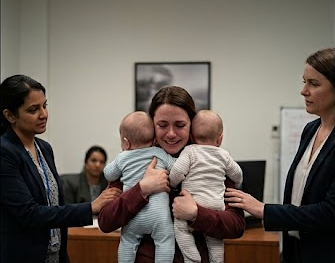
My ten-year-old went to a sleepover and never came home. The family who answered the door the next morning told me the boy who invited him had been dead for thirty years. Sam was ten. Before that fall, he mostly kept to himself, ate lunch alone, came home, and went straight to his room.
I used to tell myself he just needed more time to find his people. Then he had a new friend at school named Leo. Sam talked about him all week, Leo this and Leo that, until it felt like Leo lived in our house too. Sam smiled more in that one week than he had in the whole month before.
On Friday, Sam asked if he could sleep over. I said I wanted to talk to the parents first, and Sam gave me a number. A woman answered, kind and easy to like, and said she was Leo’s mom. She said a few boys were coming for pizza and a movie.
She gave me an address across town, an old house with a red door and a rusted swing set out front. I dropped Sam off at seven. The woman waved from the doorway. Sam ran in without looking back.
That was the last time I saw him look like my son. Saturday morning, I drove back for him and knocked. A different woman answered, older, confused by the sight of me. I said I was there for Sam.
She said there had been no children in that house last night, only her and her husband. I told her about the woman who waved from that same door. Her face went pale. “There is no Leo here,” she said.
“There has not been a Leo here in a very long time. ”
She let me search the whole house. It was clean and quiet and empty. No pizza boxes, no sign anyone had stayed the night.
The swing set, she said, had come with the house, already rusted when they moved in two years back. I called the number Sam had given me. Disconnected. I checked my call log.
Friday’s call was gone, like it had never happened. Officers came and wrote things down and told me maybe I had the wrong house. Maybe a stranger had used a fake name. Then one of them checked my phone and found nothing, no call, no texts, and started asking who else had seen me drop Sam off.
Nobody had. I went home that first night and searched Sam’s room like he might be hiding in it. His backpack sat by the closet. His shoes were lined up by the door the way he always left them.
But his bed had not been slept in, because he had never come home to sleep in it. I sat on the floor of his room until the sun came up, listening for a sound that never came. Monday, I went to Sam’s school. There was no student named Leo.
Not in his class, not anywhere. His teacher said Sam was quiet, mostly played alone, and had never once mentioned a friend by that name. I drove back to the house and sat outside it for a long time. An old man came out of the house next door, tapped on my window, and let himself into my car before I could stop him.
He said a boy named Leo had lived in that house once, thirty years back. A lonely kid with no friends who went to a sleepover down the street and never came home. When they searched for him, the house he had gone to was empty too. “That is how it works now,” he said.
“Leo finds a lonely kid at school. He makes friends with him. He invites him over. Then that kid is gone, and Leo has someone to play with for a while.
”
I told him he was crazy. He did not argue. I told him a dead boy could not answer a phone or wave from a doorway. He only asked quietly if the woman who waved to me had looked real, and something about the way he asked it stayed with me longer than I wanted it to.
I told myself he was a crazy old man and Sam was alive somewhere and I would find him. I put up flyers. I called the police every day. Three weeks in, a woman I had never met knocked on my door crying.
Her son had gone to a sleepover Friday and never come home. I asked the name of the boy who invited him. She wiped her eyes and said his name was Sam. Valentina stood shaking in my doorway, and every word out of her mouth was a mirror of my own.
I pulled her inside because I knew nobody else was going to fix this. Not the police, not the school. Zacharias, the old man next door, had tried to warn me, and I had called him crazy. I sat her down at the counter and got her water, because her hands shook too hard to hold the glass.
I sat across from her and waited, because I remembered what it felt like to have someone rush me before I was ready to talk. Her son had gone to a different school across town. A month ago, a new kid showed up. Quiet, kept to himself, and her son came home saying he finally had a real friend.
He talked about this boy the way Sam had talked about Leo. She pulled out her phone and showed me a photo of a crayon drawing her son had made, since the boy would never let anyone take a real picture of him. Messy hair, longer on one side, a gap between the front teeth, a backpack with a glow-in-the-dark planet patch, the same one I had bought Sam because he picked it out himself. That was my son.
Her son had drawn my son down to the crooked way he always wore his hair to hide the part he hated. I sat there staring at a stranger’s crayon lines until the room tilted a little under me. I told her everything. The red door.
The woman who waved. The woman who answered the next morning and said there had never been a Leo. The vanished phone records, the empty school files, Zacharias and his thirty years of watching from the house next door, keeping track of something nobody else believed was real. Leo had found Sam.
Leo had pretended to be his friend. And now Sam was doing to her son exactly what had been done to him. She said she was calling the police, and I told her what happened when I did. Officers who checked my phone found nothing and looked at me like I was losing my mind.
She checked her own call log. Gone. Her texts gone. Every trace of ever speaking to that woman erased, like it never happened.
We drove to Zacharias’s. He opened the door before we knocked. “There is another one, is there not? ” he said, not really asking, and let us in.
His living room was buried in newspapers and folders and notebooks, yellowed pages stacked on the coffee table, the couch, the floor around an old television. Thirty years of quiet recordkeeping nobody had ever asked to see, kept by a man who had no one left to show it to until we walked through his door. He pulled down a handwritten list. Six names, six children, spaced three to five years apart, all lonely, all invited to sleepovers, all gone without a trace.
“Every time one goes in, that child becomes the next lure,” he said. “Leo took your boy. Now your boy is taking hers. ”
Valentina broke down sobbing, the kind that shakes a whole body.
I asked Zacharias if anyone had ever gotten a child back. The clock ticked a long time before he answered. “No one has ever tried,” he said. “They give up.
The evidence disappears. Eventually they stop coming around. They move away. They forget.
The ones who do not forget end up like me, sitting in a house of old paper, watching that door, waiting. ”
I thought about Sam eating lunch alone. About the way he had run through that red door without looking back, because for once he had somewhere to go. I slammed my hand on the table hard enough to jump the newspapers.
“I am not giving up,” I said. Zacharias’s face changed, like he had been waiting thirty years for someone to say it. He spread his notes across the table and walked us through the pattern. The house had changed owners many times over the decades, but the disappearances always centered there, no matter who lived inside, no matter what they changed.
Paula and her husband bought it two years ago. “They are not part of it,” he said. “They are just living on top of it. ”
Every owner had complained about the same thing.
Children laughing inside the walls at night, faint, easy to explain away. Paula herself had mentioned it once over the fence. Said she figured it was the pipes. He reached for an older folder and pulled out a cracked newspaper photograph.
A family in front of the house, a man, a woman, a small boy with dark hair falling over his forehead. He tapped the woman. “That is Leo’s mother. Her name was Yuki.
”
I stared at the same soft smile, the same careful wave, fingers together, palm flat, that had sent my son through that door. Yuki had been dead twenty-five years. Grief had taken her slowly, he said, until she stopped eating and stopped leaving the house, and it finally killed her. But somehow, he said, she was still answering that door.
A dead woman had taken my phone call. A dead woman had waved goodbye to me while my son walked into whatever waited on the other side, and I had waved back. Valentina asked him why he had never done anything in thirty years. He told us about the one time he tried, fifteen years back.
Another missing girl, same pattern. A new friend at school, a sleepover invitation gone by morning. He had opened the red door at night and walked into a hallway that would not end. Wallpaper wrong.
Light wrong. The air smelling like a place wearing the shape of a house without being one. He heard children playing somewhere deep inside, laughing, running, the sound coming from everywhere at once. He called out, and a boy’s voice answered him directly, cheerful, easy, inviting him to come play.
He turned and ran back through that hallway and out the front door and did not stop until every lock in his own house was turned. He never went back. “I am an old man,” he said. “I was a coward.
But you are his mother. Maybe that matters in there. ”
He told us the house only changed at night. Adults saw what was real, and children saw what it wanted them to see.
No one could be dragged out. “Maybe they have to choose to leave,” he said. Zacharias said we had until dark. Whatever the house was, it only worked between sundown and sunrise.
And if we were still inside when the sun came up, he did not know what would happen to us. That afternoon, I went up to Sam’s room and sat on his unmade bed and held his pillow to my face just to breathe him in. Under a notebook on his desk, I found a crayon drawing. Two stick figures holding hands, one labeled “me” with his backward S, the other labeled “Leo,” and underneath, “my best friend.
” He had drawn it the week he could not stop talking about his new friend. The happiest week I had seen him in a long time. I folded it into my jacket pocket. At six, Valentina and I parked down the street from the red door.
Paula’s car sat in the driveway, lights on inside, and I knew we could not force our way into an occupied house. I got out and walked up before I could talk myself out of it. Paula opened the door already tensed, already ready to close it. “You again,” she said.
“I told you there is no Leo here. ”
I did not argue about Leo. I told her quietly that I knew she heard them at night in the walls, and that it was not the pipes. Her whole face changed.
A small change, the kind that happens when someone finally says the thing you hoped no one would ever say out loud. “How do you know that? ” she asked, her voice thinner now, less sure of itself. She had heard them every night for two years.
Always after midnight, coming from inside the walls, sometimes right under the floor. Her husband kept telling her it was pipes, even though pipes do not call your name. I told her everything. The six children, the pattern, the photograph, Yuki, all twenty-five years of a dead woman still answering her door.
When I finished, she was shaking. “That is insane,” she said. But her voice did not believe it, and I could see her working to hold on to the door frame like it was the only thing keeping her upright. She looked past me at Valentina crying in the car, and something in her gave way.
The way a person finally sets down something heavy they have been carrying for far too long without anyone offering to help. Her husband left for his night shift at seven-thirty. She would leave by eight. Door unlocked, and be gone until morning.
“I am not staying in this house for whatever you are about to do,” she said, and closed the door. At eight, the house sat dark and empty, its red door closed. We climbed the porch steps together. The air felt heavier than it should have, thick, like the house was holding its breath.
I reached for the handle and heard it. Laughter from somewhere deep inside, bright and real, bouncing like a ball off the walls. Then a second child’s laugh, higher. Then a third.
Valentina’s nails dug into my arm. “That is my son,” she whispered. I pushed the door open, and the laughter stopped all at once. The house went quiet the way a held breath goes quiet, like it had noticed us standing there and decided to wait us out.
We moved through the front rooms first, ordinary, lived-in. Paula’s family photos on the fridge, a dog bowl by the sink. Then we reached the hallway past the last bedroom, the one that should have ended in a wall, and it did not end. It stretched on, the wallpaper turning older with every step.
Faded flowers peeling at the edges, the carpet thinning to something worn flat by decades of small feet. The air smelled like birthday cake gone stale and old crayons, sweet and wrong. It opened into a child’s bedroom pulled straight out of another decade. Wooden blocks and a one-legged plastic horse scattered on the floor.
A faded stuffed animal propped against the pillow. A record spinning slowly on a little player in the corner with no sound coming out of it at all, just the needle turning against nothing. The walls were covered floor to ceiling in crayon drawings. Dozens of pairs of stick figures holding hands, a new name paired with Leo’s under each one.
Leo and Owen. Leo and Priya. Leo and a girl named D. The paper got newer the closer it was to the floor, the crayon brighter, the tape less brittle, as if the wall itself kept score of how recently the house had fed.
Near the bottom, newest and brightest, “Leo and Sam,” my son’s messy hair and backward S unmistakable. Below that, even fresher, Sam paired with a name I did not know, but Valentina clearly did, because she screamed her son’s name into that room, and her voice came back stretched and strange, like the walls went on far past what the house could hold. I called for Sam and got the same impossible echo back. Then, faint from some direction I could not point to, a small voice said, “Mom.
”
I ran. A doorway opened where I would have sworn a wall had been solid a second before. The hallway beyond it twisted. Sam’s voice always just ahead or just behind, never where I expected.
It opened into a room set up for a sleepover that had never really ended. Sleeping bags in a circle. A pizza box still steaming. A movie playing with no sound.
A boy sat cross-legged in the middle of it, patient, unhurried. Exactly the boy from the thirty-year-old photograph. Not a day older. “You must be Sam’s mom,” he said.
“Sam talks about you a lot. ”
I asked where my son was. Leo tilted his head to the side the way a dog does when it hears a sound it does not understand. “He is playing,” Leo said.
“He does not want to leave. None of them do. ”
He told me Sam had been lonely, had sat by himself at lunch, had been picked last or not at all, had gone home every day to an empty room and waited for someone to notice. And every word of it hit, because it was true.
I had told myself it was just a phase, that he would find his people eventually, that I had time. “They always want to leave at first,” he said. “The moms come and they yell and they cry. But the kids never want to go, because out there he was alone, and here he has friends.
He has me. ”
I pushed past him deeper into the house, through an empty classroom with tiny desks and rows of math problems chalked on the board, through an empty playground where a slide and monkey bars sat under a ceiling that went up into nothing. Past a sandbox with little shoes lined up at the edge, as if someone had just kicked them off to play. And then through an old school prep counter lined with pots and ladles set for dozens of children who were not there.
Plates and napkins and little cartons of juice laid out neat and waiting for kids who never came. Valentina stopped hard beside me at the entrance to a cafeteria, and there at a table eating cereal alone was her son. He looked up, confused more than afraid. “Why are you here?
” he asked. “Sam said you would not come. ”
She crossed the room in three steps and pulled him into her arms, holding him so tight I thought she might break him. He let her hold him without quite hugging back, his arms staying at his sides.
“Sam is my best friend,” he said, too calm for his age. He told us Sam was in Leo’s room, that he did not want to go home. I told Valentina to take her son and get out before dawn. She did not want to leave me, but the boy in her arms decided it for her, and she carried him back the way we had come.
I turned toward a narrower hallway, the ceiling dropping. The drawings on the walls growing older and more brittle with every step, layers of wallpaper peeling back through decades I could feel more than see. Laughter came from around the next corner, close and real. A tiny bedroom barely big enough for the bed inside it.
And on that bed sat two boys with cards spread between them. Leo on one side, on the other, my son. Same messy hair, same gap in his teeth, same clothes he had worn the night I dropped him off, but his eyes were wrong. Too still for a ten-year-old, like he had stopped looking for anything a long time ago.
“Hi, Mom,” he said. Easy, like I had just walked into his room at home. I did not grab him. I did not scream or cry, though every part of me wanted to.
I knelt at his level, slow, deliberate, and pulled the drawing from my pocket, soft at the creases from three weeks of opening and closing it. The two stick figures holding hands, the backward S, the words, “my best friend. ”
“You drew this the week before you disappeared,” I said. “You told me Leo was the best thing that ever happened to you.
”
Something moved behind his stillness. “I remember,” he said. “Do you remember what you told me that same night when I tucked you in? ” I asked.
“You said you wished Leo could come to our house instead. You wanted to show him your room, your comics, your rock collection, the flashlight that put stars on the ceiling. You wanted him to see your life, not this. ”
His eyes filled and did not spill.
For the first time since I had walked into that house, I saw my son again instead of whatever had been sitting in his place. Leo’s calm cracked at the edges. “Sam is happy here,” he said. But his voice had gone thin.
A kid convincing himself of something he no longer believed. “No, he is not,” I said. “And neither are you. ”
He flinched like I had raised a hand to him.
A full-body flinch, the kind a kid makes when a door slams somewhere in the house. I looked at this small, thin boy who had pulled six children, maybe dozens, through that door across thirty years. And I spoke to him like exactly what he was, a lonely, frightened ten-year-old. “Someone tricked you the same way you tricked Sam.
You thought you finally had a friend, and then you were stuck. And you have been pretending it is still fun, because the alternative is admitting nobody ever came back for you. Your mother, Yuki, she tried. She waited until it killed her, and she is still answering that door, still waving goodbye to mothers who dropped their kids off, because she never stopped looking for you either.
”
“Nobody came for me,” he whispered. “I knocked on the door and nobody let me out. ”
The tears ran freely now, his lip shaking, and whatever had been sitting behind his eyes for thirty years fell away until there was only a boy left. Small and thin and cold, who had been knocking on a door for three decades that nobody had ever opened.
Sam looked at him, then at me, and reached over and took Leo’s hand. “He has to come, too,” he said. I took Leo’s other hand. It was small and cold and shaking, like he had forgotten what it felt like to be held on purpose.
“Then let us all go home,” I said. The house shuddered under us, not a sound but a feeling in the floor. We stood and walked out together. Sam on my right, Leo on my left, and behind us, every room went dark the instant we left it.
The cafeteria, the prep counter, the playground, the house folding itself shut room by room as we moved forward through decades toward the front door. The wallpaper turning new again, the carpet turning clean. At the threshold, Leo stopped. His feet stayed planted on the old carpet, his hand still reaching for mine.
“I do not know if I can,” he said, his voice small and scared and young in a way it had not sounded once in that entire house. Sam turned back and took his other hand. “You can,” he said. “I am right here.
”
Leo looked at the pale light coming through the window beside the door, at the porch, at the rusted swing set in the yard, and stepped over the threshold. The red door swung shut on its own behind him and clicked into place, and the swing set gave one long low groan of old metal before going still. Zacharias stood frozen on his own porch next door, in the same flannel shirt he had worn every time I had seen him, gripping the railing like the sight of us might knock him over anyway. When he saw the three of us, his legs gave out from under him, and he folded down onto the top step with his hand over his mouth.
“My God,” he said, his voice breaking on the words. “You brought him out. ”
Sam pressed his face into my side, his tears soaking through my jacket. Leo stood stiff for a moment, like he did not know what a person was supposed to do with his hands, before leaning in too.
Behind the red door, the house sat with its lights off, its rooms empty, and no sound came from inside it at all.