On March 24, 1944, German forces executed 335 civilians and political prisoners inside the Ardeatine Caves on the outskirts of Rome—a massacre ordered in retaliation for a partisan bombing that killed 33 German soldiers. The atrocity became one of the most infamous symbols of Nazi brutality in Italy, and in the decades that followed, the perpetrators were hunted down, tried, and punished. The attack that triggered the reprisal took place on March 23, 1944. Around 3:00 p.
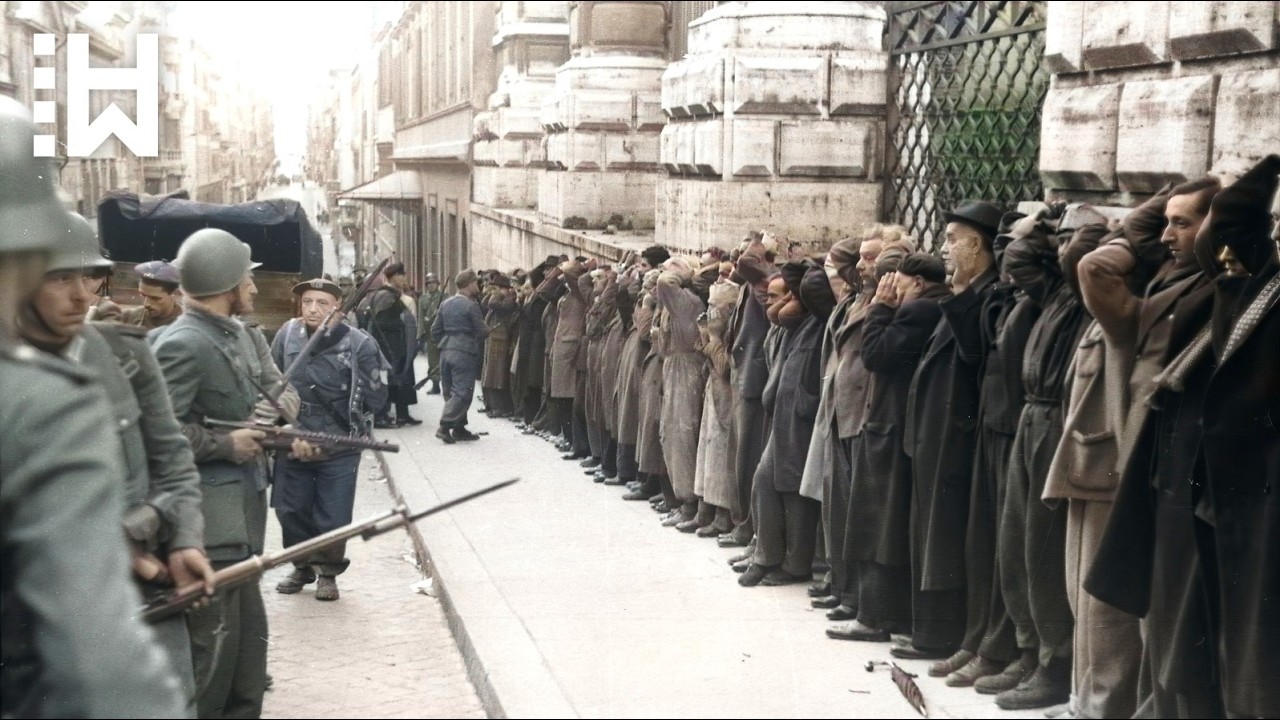
m. , a bomb exploded in Via Rasella, near the center of Rome. The explosion was carried out by members of the Italian Communist Resistance and struck a marching unit of the 11th Company of the SS Police Regiment Bozen, which was made up largely of South Tyroleans. Thirty-three Germans were killed and dozens more were wounded.
The symbolic date was not lost on observers: March 23 marked the anniversary of the founding of Mussolini’s Fascist Blackshirts in 1919. That same evening, senior German officers met to decide on a response. General Eberhard von Mackensen, commander of the 14th Army responsible for Rome’s defense; General Kurt Mälzer, the city commandant; and Herbert Kappler, the SS officer who led the security police in Rome, agreed on a brutal formula: ten Italians executed for every German killed. Field Marshal Albert Kesselring, commander of all Axis units in Italy, approved the proposal, and Adolf Hitler confirmed it later that night.
The order demanded speed and secrecy. General Alfred Jodl, chief of the German Armed Forces High Command, directed that the executions be carried out by the following evening. Initially, 330 victims were required. When one of the wounded German policemen later died, the number was raised to 335, and Kappler was tasked with organizing the killings.
Kappler drew names from prison lists, selecting Jews awaiting deportation, political prisoners, resistance members, and men who had simply been in the wrong place at the wrong time. Some had been imprisoned for months, others for only days. Many had never been formally charged or sentenced. The victims included teachers, workers, lawyers, officers, artists, priests, fathers, sons, and brothers.
Some families would later discover that more than one relative had been taken. On March 24, the prisoners were transported in trucks to the Ardeatine Caves. Their hands were bound with rope. Inside, they were led forward in groups of five, ordered to kneel, and shot in the back of the head.
SS officers Erich Priebke and Karl Schütz crossed names off lists as the killings proceeded. Kappler himself participated in the executions. As bodies piled up, later victims were forced to kneel on top of the dead. The killing went on for hours, and those waiting outside under guard could hear the gunfire.
After the final shots, explosives were detonated to seal the caves. Some victims may still have been alive when the rock collapsed on them. The massacre was announced the next day through an official German communiqué. It described the dead as criminals and communists and claimed the killings were lawful.
It did not mention Jewish hostages, innocent prisoners, or the secret nature of the executions. Across Rome, families searched prisons and hospitals for their loved ones, but silence was the only answer. After the liberation of Rome on June 4, 1944, the sealed caves were opened and the truth was revealed. Inside, officials found bodies buried under collapsed rock and dust, piled one on top of another exactly as they had fallen.
Many bodies were still bound with rope, and some were unrecognizable from injuries and decomposition. Personal items—scraps of clothing, documents, and rings—were carefully collected to help families identify their loved ones. In the years that followed, 326 of the 335 victims were identified. Among them were resistance leader Colonel Giuseppe Cordero Lanza di Montezemolo, philosopher and teacher Pilo Albertelli, and Jewish refugee Heinz Erich Dohmann.
Seventy-five of the murdered were Jews. The youngest victim was 15 years old; the oldest was 74. After the war, justice came for several of the perpetrators. Pietro Caruso, the fascist chief of police in Rome in 1944, had compiled hostage lists and facilitated the transfer of victims to the execution site alongside Kappler.
He was arrested after the liberation, tried by an Italian court, sentenced to death, and executed by firing squad at Forte Bravetta in Rome on September 22, 1944. General Alfred Jodl, who had confirmed the reprisal order, was sentenced to death at the International Military Tribunal in Nuremberg. His request to be executed by firing squad instead of hanging was denied because his acts were deemed criminal rather than military. He was executed by hanging on October 16, 1946.
The hanging was performed by American Army Sergeant John C. Woods, whose executions of ten Nazi war criminals that day were notoriously botched. Jodl’s death was slow and agonizing, lasting 18 minutes before he died. Field Marshal Albert Kesselring was sentenced to death in 1947, but his sentence was later reduced, and he was released in 1952.
General von Mackensen and General Mälzer were also sentenced to death, but their sentences were commuted. Mälzer died in prison in 1952. Herbert Kappler was tried in Rome in 1948 and sentenced to life imprisonment for the murder of all 335 victims. He remained in prison for decades.
In August 1977, suffering from cancer and weighing just 47 kilograms (103 pounds), he escaped from a military hospital with the help of his wife, who smuggled him out in a large suitcase. Kappler fled to Germany, where he died six months later. SS officer Erich Priebke fled to Argentina after the war and lived freely for 50 years. In 1996, he was extradited to Italy and, two years later, tried and sentenced to life imprisonment.
He died in 2013. Karl Schütz was also sentenced to life imprisonment in 1998. What remained after the trials and sentences was memory. The Ardeatine Caves did not speak, but they endured.
In the years after the war, the caves were transformed into a memorial, and each name carved in stone replaced the attempt to erase a life. The massacre had been meant to silence a city. Instead, it became one of the clearest testimonies of occupation and terror in Italy—a permanent reminder of the cost of violence and obedience, and a demand that what happened in Rome on March 24, 1944 would never be denied or forgotten.


