The desert wind carried the smell of burning metal and cordite across the Tunisian plateau, a bitter perfume that would define the American Army’s darkest hour of World War II. In the span of five catastrophic days in February 1943, the untested soldiers of the U. S.
II Corps were shattered at a dusty mountain pass, their tanks reduced to smoldering wrecks, their confidence annihilated by a German war machine that seemed invincible. The defeat at Kasserine Pass was not merely a tactical setback; it was a psychological implosion that threatened to unravel the entire Allied strategy in North Africa, exposing raw inexperience against a battle-hardened enemy. From the wreckage of that disaster, a desperate gamble emerged, one that would require the Supreme Allied Commander to swallow his pride, ignore his personal animosities, and place the fate of an entire army in the hands of a profane, flamboyant, and deeply controversial general who had been cooling his heels in Morocco.
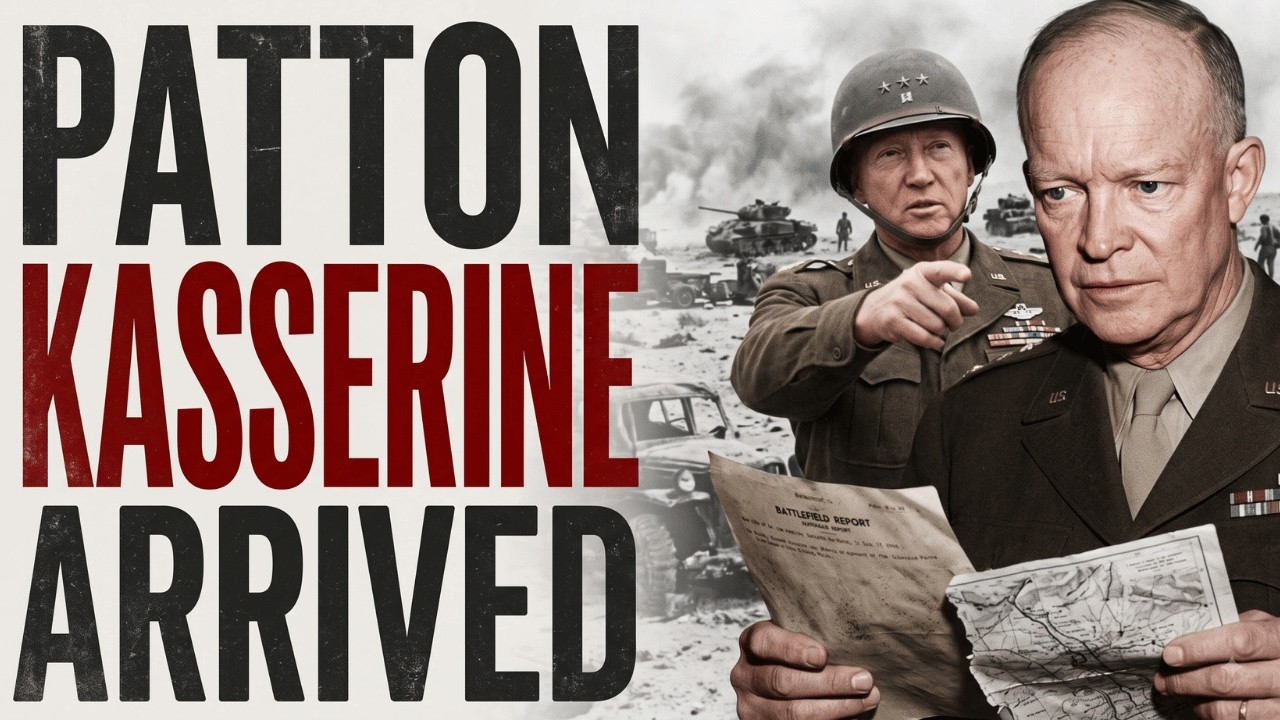 The man at the center of the crisis, Major General Lloyd Fredendall, had been a disaster waiting to happen. A career officer with a reputation for aggressive maneuvers in peacetime exercises, Fredendall proved utterly incapable of handling the chaos of real combat. He established his headquarters not near the front, but in a massive underground bunker carved into a ravine at Speedy Valley, a staggering seventy miles behind his own lines.
Two companies of combat engineers were diverted from vital frontline construction to pour concrete for his personal shelter, complete with deep tunnels and radio rooms, a monument to his own cowardice. From this safe haven, he issued bizarre, improvised code orders that his frontline officers could not decipher, phrases like “move so that the elephant will be at the arse of the walrus,” which left subordinates baffled and paralyzed. He ignored the desperate warnings of his own division commanders, particularly Orlando Ward of the 1st Armored Division, who begged him not to break up his tank formations into small, unsupported task forces that were easy prey for concentrated German armor.
On Valentine’s Day, February 14, 1943, the consequences of Fredendall’s incompetence came roaring out of the morning haze at Faïd Pass. The German 10th and 21st Panzer Divisions launched a coordinated assault on the American positions around Sidi Bou Zid, a dusty road junction guarded by two rocky hills. On one of those hills, Djebel Lessouda, stood Lieutenant Colonel John Knight Waters, a 36-year-old West Pointer and tank commander.
He was also the son-in-law of a certain Major General George S. Patton Jr. , a fact that would intertwine the fates of these men in ways none of them could yet imagine.
Waters’ task force was quickly surrounded and overrun by the advancing panzers. By nightfall, he was a prisoner of war, marched off into a captivity that would last for the next 25 months, leaving his wife Beatrice and two young sons waiting in Massachusetts, unaware of his fate.
The German attack was a masterclass in armored warfare. They bypassed strongpoints, severed supply lines, and struck with a speed and ferocity that the Americans had never experienced. The scattered American units, precisely as Ward had predicted, were hunted down and destroyed piecemeal.
Over the next three days, the 1st Armored Division lost the majority of its tanks, its formations shattered across the open desert. The front collapsed, and a flood of terrified, disorganized soldiers streamed westward, their spirit broken. The panic was so complete that the road to the vital supply depot at Tébessa lay wide open.
The German commander, Field Marshal Erwin Rommel, sensing a historic opportunity, ordered his forces to push through the Kasserine Pass, the western gate in the mountains, to sever the American rear and potentially drive the Allies out of North Africa entirely.
As the situation spiraled out of control, Fredendall remained in his bunker, drinking and issuing nonsensical orders. He did not visit the front. He did not speak to his division commanders.
He simply hid. With the line on the verge of total collapse, Eisenhower, in a desperate measure, ordered Major General Ernest Harmon, a gruff, profane cavalryman known as “Old Gravel Voice,” to take command of the tactical battle. Harmon arrived at Speedy Valley in the middle of the night to find Fredendall exhausted and unsteady, who promptly handed him a signed note authorizing him to take over and then went to bed.
Harmon drove into the chaos, rallied the remnants of units, and managed to stabilize a defensive line with the help of British armor at Thala and a heroic artillery brigade from the U. S. 9th Infantry Division that had marched over 700 miles to get there.
By February 23, Rommel, overextended and facing stiffening resistance, called off his attack and withdrew.
 The immediate crisis was over, but the damage was done. The Americans had suffered over 6,000 casualties, including 3,000 captured or missing. More than 180 tanks lay destroyed in the Tunisian desert.
It was the worst American defeat in the European theater of the war, a humiliating display of tactical ineptitude that confirmed British doubts about the fighting quality of the American soldier. The defeat was a political and military earthquake. In Washington, Chief of Staff George Marshall, who had personally selected Fredendall, faced intense pressure.
Eisenhower, who had written a letter just months earlier blessing Marshall’s choice of Fredendall, now had to confront the fact that his own judgment had been catastrophically wrong. The alliance itself was strained, with British commanders openly questioning whether the Americans could be trusted in a major fight.
Eisenhower knew that Fredendall had to go. He also knew that he needed a commander of such overwhelming force of personality that he could rebuild the shattered morale of the II Corps from the ground up. He needed a man who could instill discipline, inspire confidence, and project an image of invincibility that would erase the memory of Kasserine.
The choice was obvious, and it was a bitter pill to swallow. George S. Patton Jr.
was a man Eisenhower found personally distasteful. He was a theatrical, egotistical, and politically dangerous figure who wore ivory-handled revolvers and cursed with a fluency that shocked even hardened soldiers. Yet, he was also the most aggressive and successful combat commander the American army had, a man who had proven his mettle in the crucible of World War I and who had handled the Morocco landings with ruthless efficiency.
On March 4, 1943, a motorcycle courier flagged down Patton’s Cadillac in Casablanca with orders to report to Allied headquarters in Algiers immediately. Patton, who had been stewing in the relative inactivity of his governorship, was ecstatic. He drove 1,500 kilometers over three days, arriving at the Villa Dar el-Ouid to meet with Eisenhower.
The conversation between the two men, who had been friends since 1919, has been the subject of historical debate for eight decades. What is known from diaries and accounts is that Eisenhower gave Patton three clear orders: restore the morale of a broken corps, win a victory to raise the image of American troops in British eyes, and take care of himself. Then, according to historian Stephen Ambrose, Eisenhower delivered a final, crucial piece of guidance.
He told Patton he didn’t need to prove his courage; Ike already knew what Patton was. It was a release, a statement of trust that cut through their personal friction.
Patton’s response was characteristically succinct. He wrote in his diary that night, “Well, it is taking over rather a mess, but I will make a go of it.” On the morning of March 6, 1943, Patton arrived at the II Corps forward headquarters at Djebel Kouif in a command car with sirens screaming, a scene immortalized by cartoonist Bill Mauldin.
He found Fredendall still at breakfast. The handover was conducted with professional courtesy, but the change in command was immediately felt. Patton’s first act was to impose order.
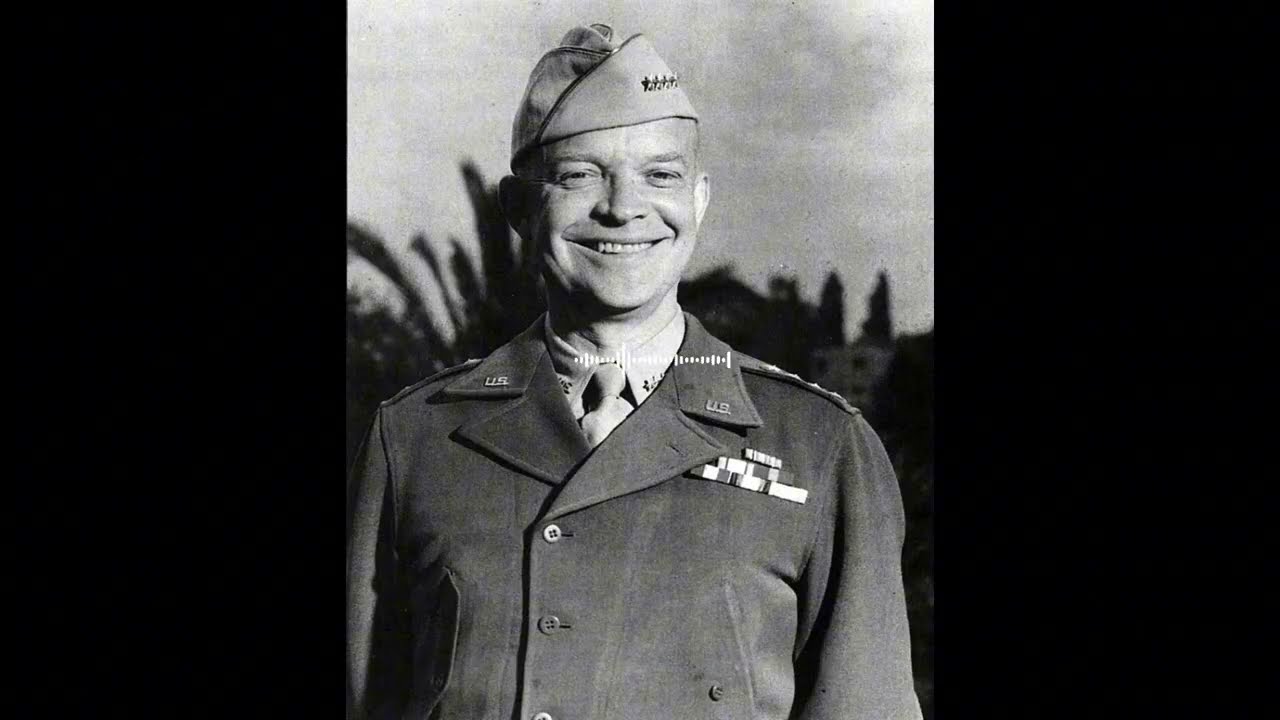 He closed the officers’ mess at 7:30 AM, forcing all officers to be at the front with their troops. He issued a general order mandating that every man in the corps wear steel helmets, neckties, and leggings at all times, even in the 100-degree heat. It seemed petty, but Patton understood that discipline is built on small things.
As Bradley later wrote, each time a soldier buckled on his heavy helmet, he was forcibly reminded that the pre-Kasserine days had ended and a tough new era had begun.
Patton drove his men relentlessly. He toured the front lines constantly, his presence a visible shock to the system. He replaced officers he deemed ineffective and instilled a sense of urgency that had been utterly absent.
He was a whirlwind of energy, profanity, and aggression, and slowly, the demoralized soldiers of the II Corps began to stand a little taller. They had a commander who was not hiding in a bunker but was with them, sharing their risk. Patton also had the quiet, steady presence of Omar Bradley as his deputy, a man sent by Marshall to be Eisenhower’s eyes and ears.
Patton knew Bradley was watching him, but he chose to keep him close, a calculated move to ensure his own success was witnessed and reported back to the top.
On March 17, 1943, just eleven days after taking command, Patton launched his first offensive. The 1st Infantry Division, under the fiery Terry Allen, moved on Gafsa. The town fell without a fight as the Germans had already withdrawn.
Patton pushed them east toward El Guettar, a small oasis town at the mouth of a broad valley. On March 23, the German 10th Panzer Division, the same unit that had overrun John Waters, launched a ferocious counterattack. This time, the Americans were ready.
Allen had positioned his infantry in depth, with centrally controlled artillery behind them. The 601st Tank Destroyer Battalion lay concealed in ambush positions. When the panzers advanced down the valley, they drove straight into a 𝓀𝒾𝓁𝓁 zone.
American artillery and tank destroyers opened fire with devastating effect, shattering the German formations. The attack was broken, and the 10th Panzer was forced to retreat, leaving its destroyed vehicles behind. It was the first time in the war that American ground forces had decisively defeated a German panzer attack in a set-piece battle.
The victory at El Guettar was a turning point. It proved that the American soldier could fight and win against the best the Wehrmacht could throw at them. Eisenhower, in Algiers, wrote of the 1st Infantry Division, “The Hun will soon learn to dislike that outfit.”
Patton wanted to exploit the victory, to push through the mountains and cut off Rommel’s retreat. But British Field Marshal Harold Alexander, the overall ground commander, still did not trust the Americans. He gave Patton a limited flanking role and kept the main thrust for the British Eighth Army.
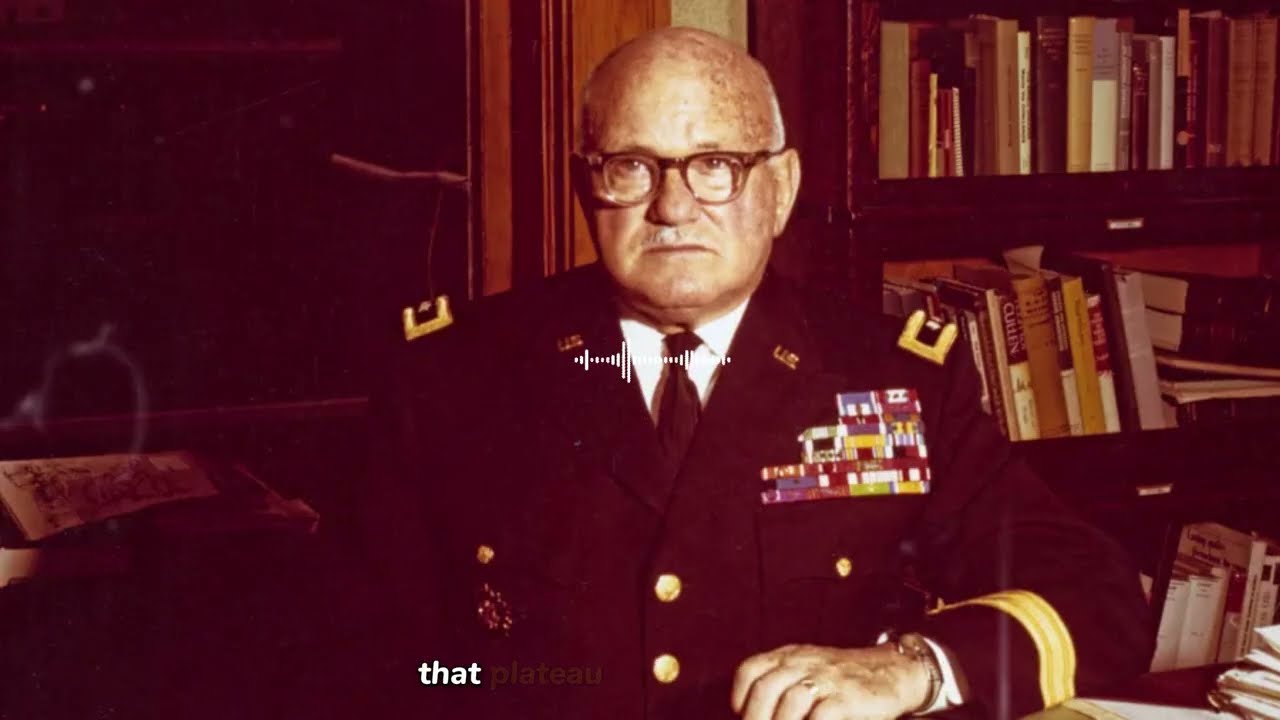 Patton was furious, writing in his diary that he had been made an “errand boy” for the British. This anger, born in the aftermath of his greatest American victory, would fester and poison his relationships with the British for the rest of the war.
Patton’s time with the II Corps was brief but transformative. On April 15, he was ordered to hand over command to Bradley and return to Morocco to plan the invasion of Sicily. He had done his job.
He had taken a broken, demoralized army and forged it into a fighting force that had proven its mettle. The proof of his work came on May 13, 1943, when over 250,000 German and Italian troops surrendered in Tunisia, a strategic disaster for the Axis larger than Stalingrad. The American army that had been shattered at Kasserine had helped seal the fate of a quarter of a million enemy soldiers.
The distance from the humiliation of Sidi Bou Zid to the triumph of Tunis was only three months, and it was a distance that had been crossed on the strength of one decision made by Dwight Eisenhower in the first week of March.
The aftermath of the North African campaign was a complex web of personal destinies. Fredendall, remarkably, was not disgraced. Marshall, protecting his own judgment, promoted him to lieutenant general and gave him a training command in the United States, where he was welcomed as a hero.
He never held a combat command again. Patton went on to conquer Sicily, where he was nearly destroyed by his own temper in the slapping incidents. Eisenhower saved him, and he was later unleashed on Europe with the Third Army, driving across France and famously relieving Bastogne during the Battle of the Bulge.
He died in December 1945, a legend, but a man who never publicly thanked the general who had given him his second chance. John Waters survived his 25 months of captivity, liberated by American forces in April 1945. He would go on to a distinguished career, rising to the rank of four-star general, a testament to the resilience that Patton had fought to restore in the American army.
In the end, the story of Kasserine is not just a story of a battle lost and won. It is a story about the brutal calculus of command, where a supreme commander had to set aside personal feelings to make a decision that would save an army and, ultimately, an alliance. Eisenhower’s decision to send Patton was a gamble, but it was a gamble born of a clear-eyed assessment of what was needed.
He needed a hammer, and he sent a hammer. The words he spoke to Patton that day in Algiers were not a grand speech, but a quiet, profound statement of trust that allowed a brilliant, flawed, and necessary warrior to do what he did best. The record shows that Eisenhower told Patton to restore morale, win a victory, and that he didn’t need to prove his courage.
It was permission to be himself, and that was enough to change the course of the war.


