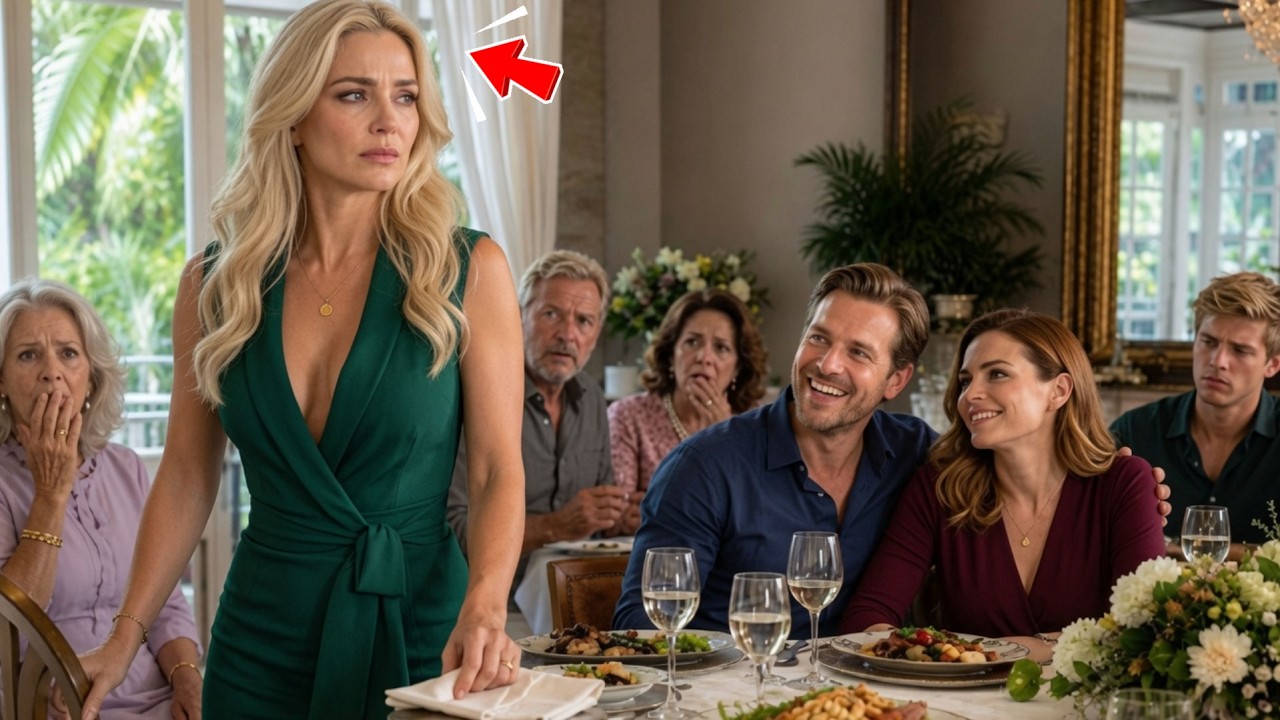
“You live beyond your means, Mom. You need to learn to cut your expenses. ” Elton said it looking at me the way you look at someone who has messed up their accounts. He didn’t raise his voice; he didn’t need to.

That quiet confidence hurt more than any shout ever could. I didn’t answer. I didn’t remind him about the car payment, the insurance, the phone, the two credit cards I had been paying every month without anyone ever asking me to. I just looked at him and let the silence do its work.
That evening, I opened my banking app and cancelled twenty-four recurring payments. Twenty-four entries that had been leaving my account for years, sustaining his life, one after another, with the same precise gesture you use to pull a plug. My name is Priscilla. I’m fifty-five years old.
I live in Taos, New Mexico. I’ve worked with glass for thirty years, and I have a small gallery where I display what I create with my hands. Three years ago, Elton’s business failed. A loan, a partner who vanished, a warehouse full of merchandise nobody wanted anymore.
I told him I would help him for a few months, just until he got back on his feet. The months became years, and the expenses became habit. I kept paying, and he kept calling me Mom with the same voice he had when he was ten and had skinned his knee. Then came Nicole.
Elegant, precise, the daughter of a real estate developer named Graham. The first time she came to the gallery, she looked at my blown glass pieces and tilted her head, the way you look at something pretty but out of fashion. “It’s beautiful work,” she said. “A little out of time, though, isn’t it?
People buy differently today. ”
I stayed quiet, arranging a vase on the shelf without looking at her. In the weeks that followed, she started dropping remarks, always light, always tucked into some ordinary conversation: that Elton needed to learn to take care of himself, that certain mothers, without meaning to, kept their children from growing up, that easy money created unhealthy bonds. Once, over coffee, she looked me straight in the eye and said that maybe I, too, needed to learn to control my spending better, given everything that moved around this family.
I didn’t understand what she meant at first. I changed the subject. But Elton started using the same words. At first, I thought it was just maturity, a young man finally looking at himself in the mirror.
I wanted him to be happy, and that desire kept me blind longer than I should have admitted. There’s an evening I remember well. I had gone to their place for dinner. While she was setting the table, Nicole asked me, without looking up, if I had ever thought of modernizing the gallery, maybe selling online, so that I wouldn’t depend only on passersby.
Elton nodded and added, with naturalness, that it was the only sensible thing to do, as if I were the last one to arrive at a conversation already finished. I stood still for a moment, glass in hand, understanding that that evening I wasn’t sitting at the center of my family, but at the edge of something that belonged to the two of them. That night, after cancelling the twenty-four payments, I thought back to Elton’s sentence: “You live beyond your means. ” It wasn’t his way of speaking.
It wasn’t the rhythm of his words, nor the logic he used to build them. I had already heard that logic coming from another mouth, at another moment, with the same gentle and cutting tone, and I knew exactly whose it was. There’s an afternoon that keeps coming back to me, even before the twenty-four payments. Elton called to say he had booked the car service, and at the end, almost distractedly, he added: “Send the payment as usual.
” He didn’t ask. He assumed it, the way you assume it rains in April. I hung up and stared at the phone, realizing that something had already changed long before that evening he told me to cut expenses. Three years earlier, Elton’s shop had collapsed in a few weeks.
A partner who disappeared with the cash, a warehouse full of boxes nobody wanted to buy, and my son, sitting on my living room couch, with the eyes of a little boy who doesn’t understand what just happened to him. His father had been dead for two years. Before leaving, he had asked me one thing only: that I never let Elton face a fall completely alone. I had promised him, holding his hand.
That promise, more than anything else, kept me awake the night I decided to cover the first back rent. At first, Elton thanked me. He wrote me little notes, hugged me longer than usual. Then he started asking with naturalness, the way you ask a favor between friends.
Then he started informing me, not asking. “The insurance renewal is due Friday. It’s four hundred dollars. ” Finally, he stopped even informing me.
I remember the day I understood how far things had gone. He was sitting on my porch, on the phone with a furniture dealer, and I heard him say, calmly: “Yes, we’ll take the big couch, the twelve-hundred-dollar one. Have it delivered. The payment will arrive Friday.
” He hadn’t checked his own account. He didn’t need to. He simply knew that amount would come out of mine, as if it were a line item already planned in a budget nobody had ever discussed with me. Nicole understood all this long before I did.
She never attacked Elton for his dependence. She was smart. She started saying that he would never feel like a real man, as long as I kept paying for everything. One evening, while I was washing a glass in their apartment, I heard her tell Elton, in an almost affectionate tone: “Your mother maybe needs to feel indispensable?
Helping too much is sometimes a way of keeping someone tied to you. ”
She didn’t say it to me. She said it to him, knowing perfectly well it would reach me. And it did.
A few days later, Elton looked at me with a new expression, almost therapeutic, and said: “Maybe you like me depending on you, Mom. Maybe it makes you feel useful. ”
I stood there with the spoon frozen mid-air, feeling something tighten in my chest. I preferred to believe Nicole just wanted to help him grow, because the other explanation hurt too much.
One afternoon, Nicole came to the gallery alone, something she had never done before. She walked slowly among my glass pieces, taking her time, examining the walls, the ceiling, the entrance. “How long have you worked here? ” she asked, running a finger along the edge of a shelf.
“Eighteen years. ”
“Is the building yours? ” she asked, as if the question had just occurred to her. I nodded, without understanding where she was going, and told her it used to be a small warehouse before I transformed it myself, brick by brick, with a lifetime of savings.
She looked around for another moment, then said, with a gentle smile that didn’t reach her eyes: “At a certain age, keeping a place like this open all alone every day must be exhausting. ”
It wasn’t a question. It was a judgment disguised as concern. Then she came up to the counter, sat down on my work chair, the one where I spend hours shaping hot glass, and stayed there while she talked, with the naturalness of someone taking a place they already consider partly theirs.
She looked at a vase near the window, one of my favorites, and touched it with just two fingers, the way you touch something you’re already imagining somewhere else. Then she left, kissing me lightly on the cheek. I stood alone in the middle of the gallery, the chair still warm from her weight, and I understood that something in that woman had just started moving toward me. “The service is two-ten plus the brake pads,” said the mechanic, looking at Elton, waiting for an answer.
Elton nodded, distracted, and said: “Fine, send the invoice, as usual—” He stopped mid-sentence. The mechanic stared at him, confused. “To whom should I send it, sir? ” “To me,” Elton answered, after a pause too long.
He paid with his own card, in silence, while the mechanic explained a payment plan nobody had ever needed to explain to him before. I didn’t see it with my own eyes. He told me himself, days later, with barely contained anger, as if the culprit were the garage and not the fact that for years he had never known how much it cost to maintain his own car. The next day, the parking attendant asked him for the monthly renewal I had been paying for two years without him knowing the exact amount.
He stood there for a moment, staring at the payment machine, then pulled out his wallet. The third thing was worse than the first two. At the end of the month, the monthly help he was expecting, the one that always arrived, without him ever having to ask, simply didn’t come. Nicole noticed before he did, looking at their joint account.
She was the one who pointed out the gap. That evening at dinner, she asked him, almost playfully: “How much do you spend a month in total, between car, parking, everything? ” Elton hesitated. He tried to do the math out loud, got it wrong twice, said one number, then corrected it down, then up again.
He didn’t know. He had never known. Nicole looked at him with an expression that was no longer tenderness. “She’s doing it on purpose,” she said, decided.
“To make you come back to her like a child. ” “I’m the one who told her to cut expenses,” Elton replied, irritated. “And she cut yours,” Nicole shot back, in a tone that left no doubt about what she was really worried about. Elton looked at her for a second too long, as if, for the first time, he were asking himself whether she was angry for him or for the joint account they were planning.
He came looking for me the next day, outside the gallery, while I was closing the shutter. “What did you do? ” he asked, without greeting. “You told me to cut expenses,” I answered, turning the key in the lock.
“I had to start somewhere. ” “You can’t cancel everything without warning me. ” “How many of those expenses were you paying? ” Elton didn’t answer right away.
He opened his mouth, closed it, counted mentally, and I saw the number melt between his fingers before he even said it out loud. “That’s not the point,” he said finally. “Then what is the point? ” “The point is you did it to punish me, to make me feel small.
You like controlling everything, don’t you? Even now with this story. ”
I looked at him. I didn’t raise my voice.
I didn’t remind him of the installments, the renewals, the nights I opened my laptop instead of going to sleep. “I did what you asked,” I said only. And I got into my car. In the rearview mirror, I saw him standing still on the sidewalk, phone already at his ear.
Nicole, probably. I learned later, from him, what she told him that evening: that I had no right to treat him like that, that he and she had a life to build, a future to decide. “I have to go talk to her,” he said to Nicole, his voice hard. “I have to make her understand what family really means before she decides something else without asking anyone.
”
I carried that phrase with me all evening. It wasn’t only about bills, gym memberships, renewals. There was something else inside those words. Something I couldn’t name yet.
“We need to clarify something,” Elton said, entering the gallery without greeting, Nicole a few steps behind him. I set down the vase I was cleaning. “I’m listening. ” “You’re fifty-five, Mom.
Sooner or later you have to start thinking about how to arrange things. ” “What things, Elton? ” “Everything. This place.
Savings. The house. You can’t keep everything locked in your name forever. I’m your only son.
One day it will be mine anyway. ”
I looked at him for a moment before answering. “Since when do you decide what I do with what is mine? ” “Nobody wants to decide anything,” Nicole intervened, with that calm voice she used to make anything sound reasonable.
“We just want to protect the family, simplify, maybe do it now calmly, while we can talk about it without rushing. ” “Protect it from what? ” “From chaos. From surprises.
One day these things have to be organized anyway. Better to do it together while there’s still time to do things well. ”
I stayed silent for a moment, letting the silence weigh more than my words. “We thought,” Elton said, more confident now, “that the gallery could stay in the family.
It would be natural, wouldn’t it? I watched it grow. One day I would manage it, maybe with Nicole. ” I felt something tighten inside, not at the idea itself, but at the way he said it, as if it had already been discussed, measured, decided, as if I were the last person invited to a conversation already concluded.
“Have you two already talked about this? ” I said. It wasn’t a question. Neither of them answered right away, and their silence answered for them.
“It’s not a conspiracy, Mom,” Elton said with an exasperated sigh, as if I were the unreasonable one. “It’s common sense. ” “You won’t live here forever shaping glass,” Nicole added, gentle, almost maternal, without taking her eyes off me, with a calm that seemed rehearsed to look natural. I waited for Elton to correct her, to say something meaning his mother wasn’t a closed chapter yet.
He didn’t. He nodded slowly, agreeing with her. That gesture hurt more than any sentence spoken that evening. “And the payments?
” I asked, changing direction on purpose, to see where he would land. “It’s no longer about the payments,” Elton answered, almost annoyed, as if that subject were now small, outdated. “It’s about the future, everyone’s security. You yourself should want it for the family.
” “What family, Elton? Me and you, or you and Nicole? ”
He hesitated, just barely, but enough for me to notice. “Don’t be like that,” he said finally.
“Don’t turn everything into a personal attack. We’re just trying to think ahead, while you can still calmly decide how you want things to go. ” “The way she wants things to go? ” I repeated softly, looking at Nicole.
She smiled without denying it. I didn’t answer further. I walked them to the door, locked it behind them, and stayed for a moment leaning against the cold glass of the display window, watching them walk away together, already talking closely to each other, as if the conversation with me had been just a stop on a road already mapped out elsewhere. I thought back to how many times, in recent weeks, Nicole had used words like protect, simplify, family.
Words too precise to be improvised. Words that seemed to come from someone used to using them to convince, not to love. That evening, I stopped asking myself whether Nicole was influencing my son. I started asking myself what she really wanted from us.
Elton called me in the early afternoon, with a voice trying to sound calm. “The battery is dead. I’m in the parking lot behind the bank. Nicole is out of town and I have no one else to call.
” I didn’t ask why he didn’t call a tow truck. I took the jumper cables I still kept in my trunk from when he was sixteen and went. I found him leaning against the hood, the passenger window open a few inches. I connected the cables, turned the key in my car, the engine coughed twice, then started.
Elton stepped out immediately to help the parking attendant move a cone blocking the exit, leaving me alone near the open door. I noticed a transparent plastic folder on the seat, half open. At the top of a clearly visible sheet was an address I knew by heart: the address of my gallery. I picked up the folder.
Inside was a draft, a few pages, on the letterhead of a law firm I didn’t know. It spoke of an early transfer of a commercial property, described with the gallery’s address, presented as a gift on the occasion of the wedding, from a parent to the future family unit. My name didn’t appear yet as the signatory, but everything else did. Elton’s name, the expected wedding date, the word donation underlined twice.
With the phone still in my pocket, I took it out and quickly photographed the first two pages, the ones with the address and the letterhead. I heard Elton’s footsteps approaching and put the phone away. I put the folder back exactly where it was. The door cracked open the same way.
The window at the same height. In the corner of the first page, in pen, in my son’s messy handwriting, there was a note: “Ask Mom if she can transfer the gallery to me before the wedding. ” He was no longer wondering whether one day I would give it to him. He was only wondering when was the right moment to ask.
“All good? ” Elton asked, getting into his car. “All good,” I answered, handing him back the cables. “Thanks for coming,” he said.
But he said it the way you thank someone for a favor owed, not for a gesture of love. Then he added, almost immediately, in that tone I now recognized: “See, when you need to, you can still be there. Too bad for the rest you’ve forgotten how. ”
I didn’t answer.
I closed the door and walked toward my car, feeling his words slide off me without leaving a mark, the way they would have a week before. The whole way home, I thought about that note written in pen. I wanted to go back, confront him, ask him since when that document existed, who had prepared it, why my name appeared on a paper I had never seen. But I knew what would happen.
They would deny, defend themselves, hide the rest even better. I decided to say nothing, to keep acting as if I had seen nothing, while inside me something had already shifted forever. That night, alone in my studio, I opened the two photos on my phone and looked at them line by line. The law firm’s name at the top, the words gift and wedding.
At the bottom of the page, under the contact section, appeared a name I recognized immediately: Graham. Nicole’s father wasn’t just an elegant man who smiled politely at family dinners. He was already in it, his name written in black and white on a document concerning my gallery. I found Marian in her weaving studio, her hands still stained with indigo dye.
I didn’t tell her the whole story. I only showed her the name. “Graham,” she said, setting down the shuttle. “Why are you asking me?
” “He’s the father of my son’s future wife. He seems interested in my gallery’s area. ” Marian wiped her hands on a cloth slowly, as if deciding what to tell me. “He’s been buying on that street for a year.
One building here, a plot there, always through different people. Your gallery is almost at the center of everything he’s already acquired. ”
I didn’t ask for details. I didn’t need numbers or urban plans.
It was enough to know that my gallery wasn’t just any piece, but something someone was interested in having. As I walked home, I thought back to Nicole’s visit to the gallery, the questions about the building, the way she sat on my chair, as if she were already trying out the space. I thought back to her words about leaving room for what comes next. Every word, seen in this light, changed weight.
I met her two days later, for a detail about the engagement party. She found me, not the other way around. “Have you thought more about how to arrange the gallery? ” she asked, stirring her coffee with a spoon that served no purpose.
“I’m thinking about it,” I answered, without adding anything else. She nodded, then said, almost distractedly: “That area will change a lot in the next few years, you know? Better to move before prices rise even more. ”
I stopped for a moment.
I had never talked to her about prices, about changes on the street, about any project for that area. No one, except someone who had already seen documents, could have known that. She noticed my silence and tried to correct course, returning to a lighter tone. “I mean, in general, you know, cities change.
”
I didn’t respond. I let her keep talking, because every extra word was a piece added to the whole. “You’ve already had your time, Priscilla,” she said, with a sharp gentleness I had never heard her use before. “Elton deserves to start from something of his own.
Sometimes keeping everything to yourself isn’t protecting the family. It’s just fear of letting go. ”
I felt those words hit a precise spot, but I didn’t move a muscle. I drank my coffee, gave her a small smile, and changed the subject to the flowers for the reception.
I didn’t tell her I knew about Graham. I didn’t tell her about the folder, the photos, the note written in pen by Elton. I understood that as long as they believed I was still in the dark, they would keep talking too much. And every extra word was mine.
That evening, I called Marian again, for one last question. I asked if she knew anything about other Graham projects before Taos. “There was a story a few years ago in Santa Fe. He bought through intermediaries, never in his own name.
In the end, the owners discovered who was really behind the offer only after they had signed. Many felt cheated, even if technically everything was legal. ”
I stayed silent, phone against my ear, while a thought took shape, still uncertain but already painful. Graham never appeared in person.
He always used someone else to get where he wanted. For the first time, I asked myself whether Elton was just my son in that story, or also the easiest way to get to me. The worst thought wasn’t that Graham wanted something from me. It was that he might have understood before I did from whom he could obtain it.
The florist I had chosen for the engagement arrived at the gallery to measure the space where the tables would go. With him was an assistant, a young woman I recognized right away. She had worked for a few months at the graphic design studio where Nicole had been a freelancer, before she even met Elton. While she unrolled a measuring tape along the wall, she said, without thinking too much: “So nice that Nicole finally found a home here in Taos.
She was already talking about it a year ago, you know? She always said her father had his eye on this area and that sooner or later she would move here. ”
I stood still, the order book still in my hand. “A year ago?
” I asked, in a tone I hoped sounded natural. “More or less. Before she even met your son, I think. ” She laughed without malice.
“Destiny,” she said. I counted the months in my head. Nicole had met Elton at an exhibition in this very gallery, eleven months earlier. If she was already talking about Taos and this area a year ago, time left little room for coincidence.
I thought back to that first evening, Elton telling me, excited, that he had met a girl different from all the others, intelligent, curious about everything, who had asked him a lot of questions about my business, about the building, about how attached I was to that place. At the time, it had seemed like interest in my son. Now it seemed like something else. I didn’t come to an easy conclusion.
Maybe Nicole had really felt something for him that evening. Or maybe, with the same speed her father used to evaluate a plot of land, she had simply noticed that Elton carried with him something more precious than himself. Elton came looking for me in the afternoon, while I was tidying the shelves after the florist’s visit. “I need to talk to you,” he said, entering without knocking, as he always did now.
“The deposit for the reception is twelve hundred dollars, and Nicole expects me to cover it, but with everything that’s happened lately, I don’t have it. ” “I can’t help you, Elton. ” “You won’t or you don’t want to? ” His voice hardened.
“With everything you have, helping me with twelve hundred dollars costs you nothing. I don’t understand why it suddenly became a problem. ”
I looked at him, searching his eyes for something that resembled shame. I didn’t find it.
“What I have, I built myself. It’s not a joint account between us. Not everything I own is owed to you. ” “You’re my mother.
That’s why you helped me for years, without me even having to ask. ” He shook his head, exasperated, as if I were the unreasonable one. “Sometimes I think you like this, seeing me beg. ”
I didn’t answer.
I let him leave, the door slamming harder than necessary. I stood alone among my glass pieces with two thoughts I could no longer separate. Nicole knew about this area before she ever met my son. And my son, facing my refusal, hadn’t spoken once about me.
He had only spoken about what he believed was owed to him. For the first time, the question was no longer how much Nicole was using my son. It was how willing my son was to be used, if the prize appealed to him enough. “I’ve thought more about the gallery,” Elton said, entering without greeting, in a tone that allowed no discussion.
“I think it’s right that you do something concrete before the wedding. ” I set down the shaping iron. “Concrete in what sense? ” “In the sense that it’s time, Mom.
I spent years tied to you, depending on what you decided to give or take away. The gallery would be a way to close that chapter, to let me start with something secure. ” “Do you really think I owe you this gallery? ” He hesitated, but only for a moment.
“Yes,” he said. “I think so. You had your whole life to build it. I’m just asking to start mine with something in hand, instead of from scratch, the way you had to.
”
It was no longer Nicole speaking through him. Those were his words, thought, decided, pronounced without shame. Nicole entered just then, as if she had been waiting outside for the right moment. “If you really want what’s best for Elton,” she said, setting her bag on an empty shelf, “why hold him back?
We’re not asking for a gift. We’re asking you not to stand in the way of what’s already logical. ” “Logical for whom? ” I asked.
“For everyone,” she answered, without smiling this time. I stayed silent for a moment, letting that silence weigh on them instead of on me. “About the party,” Nicole said, changing tone with a speed that unsettled me. “I was thinking of a small special moment near the end.
A few words from you, maybe a surprise for Elton in front of everyone. ”
I understood what they had in mind, even without her saying it openly. A public announcement. A signature turned into a ceremony before witnesses who would never dare interrupt it.
“I’ll think about it,” I said only. “Better before the party than after,” she added. “After, with the wedding so close, everything would be more complicated. ” I noticed the urgency behind that sentence.
It wasn’t patience. It was fear that I would have time to change my mind. In the following days, while organizing the details of the reception, I began to choose carefully who to invite. I didn’t think about flowers or courses.
I thought about names. I called Marian and asked her to come, not just as a friend, but as someone who knew certain stories of the city well. I also contacted an old customer of the gallery, a man who sat on the city council, someone Graham, I was certain, would prefer not to meet in a room full of people. I told no one the real reason.
I only said it would be nice to have familiar faces that evening. The last pressure came from Nicole two days later, while we were finishing the menu. “It would be perfect if you brought your answer that very evening, like a practical detail, not a request. That way everyone could celebrate together.
” “Fine,” I answered. “I’ll bring my answer to the party. ” Elton looked at me with a relief he didn’t even try to hide. I let both of them believe they had already won.
What they didn’t know was that that evening, in that same room, I wouldn’t be the only one listening. Graham arrived for the catering tasting with the confidence of someone entering a place that is already his. He kissed my cheek, complimented the gallery as if he were already imagining it transformed into something else. “Taos is changing fast,” he said, biting into a canapé.
“There are those who adapt and those who get left behind. ” “Like in Santa Fe? ” I asked, almost distractedly, pouring wine into the glasses. Graham’s smile stiffened for a fraction of a second, just the time I needed to know I had hit something true.
“Santa Fe was a complex experience,” he said, recovering his tone. “Big projects always bring misunderstandings. ”
I didn’t add anything. I didn’t need to.
Douglas, the former city councilman I had invited to take a look at the space, raised his eyes from his glass. “Misunderstandings with whom, exactly? I heard something a while ago from a colleague who followed those cases. ” Graham laughed.
A laugh too ready. “Rumors, mostly. Real estate always attracts jealousy. ” “Curious,” Douglas said, not letting it drop.
“My colleague talked about people who discovered only after signing who they were really dealing with. ”
Graham changed the subject, talking about flowers, lights, how beautiful the party would be. But for the rest of the tasting, he no longer looked anyone in the eye with the same ease as before. Before leaving, Douglas approached me.
“I had promised Graham to introduce him next week to a couple of property owners in the area, people who could open many doors for him here. After tonight, I prefer to wait. I want to understand better what happened in Santa Fe before I put my name next to his. ” I didn’t ask for anything else.
A small gear had just jammed. And Graham felt it before he even knew it for certain. I saw him watch Douglas walk toward his car, phone already in hand. He found me alone near the entrance while the others finished loading their cars.
“You’ve taken an interest in my old business? ” he said, without the smile from before. “I’m interested in whoever enters my family,” I answered. “I don’t know what you think you’ve found out.
” “I don’t know what you think you’ve found out either,” I said, and left him there with that sentence for company. Nicole joined him a few minutes later. I didn’t hear everything, but I heard enough. She asked him, in a tense voice, if he had said something wrong.
He answered that someone had talked too much, that they needed to close the gallery matter before the party, not after. Elton, who was carrying chairs toward the van, stopped halfway. “Why the rush? ” he asked, looking first at Nicole, then at Graham.
“If it’s a gift for us, what difference does it make when it arrives? ” Nicole answered too quickly. “My father is just trying to help us, Elton. Don’t complicate things.
” “I’m not complicating anything,” he said, with a new shadow in his voice. “I’m just asking why it matters so much to him that I should get something that should be mine. ”
Nicole didn’t answer right away. And that silence weighed more than any sentence.
I watched from a distance, without intervening. For weeks, they had pushed on me together, like a well-trained team. That evening, for the first time, I saw the same pressure turning back toward those who had created it. The party had already begun when I saw Nicole move one of my largest pieces, a blown amber vase that had stood near the entrance for years, to make room for a table of white flowers.
She didn’t ask me. She did it with the naturalness of someone tidying their own home. “It looks better this way, doesn’t it? ” she said, without waiting for an answer, to a supplier.
I said nothing. I let her keep moving through my spaces as if she already owned them. Midway through the evening, Nicole picked up a glass and asked for silence, her eyes already shining with a prepared emotion. “Priscilla has promised us an answer tonight,” she said, looking at the guests.
“A kind of gift, to give continuity to this family, for Elton’s future. ” She paused, deliberately. “So Elton will finally have something of his own. ”
A brief silence followed that sentence, inside walls I had built with my own hands.
“I did bring an answer,” I said, stepping toward the center of the room. Nicole smiled, certain of victory. Elton stiffened, waiting. Graham, at the back of the room, raised his glass as if for an early toast.
I took out two folded sheets and placed them on the counter where I displayed my most delicate pieces. “I found this in Elton’s car a few weeks ago,” I said, without raising my voice. “The gallery’s address, his name, the word donation, and this note, written in his own hand. ” Elton came closer and read his own handwriting: “Ask Mom if she can transfer the gallery to me before the wedding.
” “You knew about the plan. You don’t need to pretend otherwise. ”
He didn’t deny it. He kept staring at the sheet.
But the real blow came a second later, when his eyes found a name in the contact field. “Why does your father appear here? ” he asked Nicole, his voice already cracking. “It doesn’t mean anything,” she said, too fast.
“It means your father was already involved in a proposal concerning my gallery,” I said. “And that Nicole knew about his search in this area long before she met you. ”
Elton turned to her. “Is that true?
” Nicole opened her mouth, closed it, didn’t answer. Graham stepped forward, trying to regain control of the room. “Priscilla is turning an opportunity into a family scandal. It was just an operation to simplify everyone’s future.
”
The word hung in the air. Operation. Not a gift. Not a gesture of love.
Douglas, near the door, set down his glass. “After what I heard tonight, the introduction we talked about is on hold. And I think some of my colleagues will want to understand better what you’re doing in this area. ” Another woman, owner of a shop two doors down, moved away from Graham without a word, her face closed.
“You’re ruining everything,” Nicole said, turning to me, her voice finally cracking. “You’re humiliating your son in front of everyone out of selfishness. Nobody forced you to plan the future of something that doesn’t belong to you. ” I answered: “And nobody forced you to plan the future of something that doesn’t belong to you.
” I added nothing more. Elton stood still in the middle of the room, between the two sheets on the counter and Nicole, who no longer looked him in the eye. “When we met, did you already know your father wanted this area? ” he asked.
Nicole finally said: “But that has nothing to do with us, Elton. ” “Then why does your father appear in a document about my mother’s gallery? ” he asked, without giving ground. Nicole turned to Graham.
“You tell him. You were the one who said it was worth trying when I told you about her. ” Graham raised his hands, as if defending himself from an unfair accusation. “You’re the one who brought the subject to the family, Nicole.
I just evaluated an opportunity you put in front of me. ” “Why did you ask me whether her family owned anything on that street then? ” she shot back, with real anger now. “From the very beginning.
”
They stood there, father and daughter, each trying to unload that evening onto the other. Elton looked at them both, and I saw something switch off permanently in his eyes. “It’s over,” he said to Nicole, quietly, without drama. She turned to him with one last cruelty.
“Without your mother, you would never have gotten anywhere, Elton. You know that, don’t you? You’re exactly as dependent as I said. ”
He didn’t answer.
He let her leave, together with Graham, who walked out of my gallery with the same confident step with which he had entered, except that Douglas, near the door, said to him, loud enough to be heard: “There will be a lot to clarify in the coming weeks about what you’re doing in this area. ”
The room emptied slowly. I stayed with Elton, among my glass pieces, the two sheets still on the counter. “They used me,” he said, his voice broken.
“They used you. But you gave them something to use. ” He looked at me without understanding at first. “You wanted to believe them,” I continued.
“You wrote that note. You said I owed you the gallery. You pressured me along with them, because you liked the idea of receiving something without building it. ”
He didn’t deny it.
He lowered his eyes to the sheets, to his own handwriting. “I got used to receiving,” he said, almost whispering. “So much, for so long, that I started to think it was owed to me. I liked the idea of the gallery, not only because they put it in my head, but also because I wanted something without effort.
”
It was the first true thing I had heard him say in months. “I’m sorry, Mom,” he added, his eyes wet. “For how I treated you. For the things I said.
” “I heard you,” I answered. “But it’s not enough,” he said, understanding on his own. “It isn’t enough tonight,” I said. “The twenty-four payments won’t come back.
Your life is yours now to manage. If you want to rebuild something between us, it will take time. Not an apology offered at the end of an evening like this. ”
He nodded, without arguing.
“Can I still come see you sometimes? ” he asked, with a voice I hadn’t heard in years, the voice of a real young man, not a man who assumes. “You can try,” I answered. I watched him walk out alone into the night, without Nicole, without Graham, without the certainty that this gallery would ever be his.
For the first time in years, he would have to discover who he was without my bank account holding him up. Four months later, Elton entered the gallery near closing time, still wearing the work coveralls from the construction site where he had found a job. Outside, parked crookedly as always, was a used compact car, the one he had bought himself after selling the bigger car he could no longer afford. “I brought you this,” he said, setting a box of brass hooks on the counter.
“I saw them at a hardware store. I thought you might need them for the new panels. ”
He had paid for them. I could tell from the receipt still attached to the bottom of the box, which he hadn’t bothered to remove.
We stayed and arranged two display units together. When we finished, I offered him a coffee at the café below my apartment. He took out his wallet before I even opened my bag. “I’ll pay,” he said, without making a speech.
It wasn’t the first time in those months. One evening, I had asked him if he wanted a little help with the rent, out of habit more than real need. He had shaken his head. “I’ve got it,” he had said.
And in those two words there was more change than I had seen in years of missed apologies. Meanwhile, life around us had shifted in ways none of us fully controlled. Douglas told me, a few weeks after the party, that two property owners in the north of town had refused to meet Graham without first speaking with someone who knew his history in Santa Fe. Word had spread fast, the way word always spreads in a small town.
An architect who was supposed to collaborate on one of his projects pulled out. Another gallery on the street that was about to sell chose a different buyer after asking a few more questions than usual. Graham didn’t disappear. He kept buying elsewhere, with less discretion than before, but the doors that once opened by themselves now required one phone call, then another, then an explanation no one had ever asked him for before.
Of Nicole, I heard little. And that little was enough. She had left Taos a few months after the party, gone back to work at a graphic design studio in another city. She didn’t seek out Elton again.
She didn’t seek me out either. She lost the engagement, the family she had tried to build around herself, and the easiest road to this gallery. One morning, an old regular customer, Mrs. Álvarez, came in and bought one of my simplest bowls, the kind that usually stays on the shelf for months.
“I just wanted you to know I’m glad this place is still yours,” she said, paying in cash, without adding anything else. I didn’t need it. But that sentence stayed with me all day. One evening, while we were closing up together, Elton said something I hadn’t expected.
“For years I thought being your son meant having a right to what you had built,” he said, looking at the shelves. “Now I think it means respecting it. Those are different things. ” I didn’t answer right away.
I put away the last vase, turned off the light above the counter. “Do you want to stay and close with me on Saturday? ” I asked. “I need a hand with the inventory.
” He accepted, without questions, without expecting any payment. The twenty-four payments never came back. I didn’t reactivate the gym, the insurance, the installments I once paid without him even knowing. My son, slowly, did come back.
For years, I had confused protecting him with removing every consequence. I thought loving him meant never letting him fall. I hadn’t understood that in doing so, I was only teaching him never to learn to stand on his own. When I cancelled those payments, I thought I was just cutting expenses.
In reality, I was cutting a relationship built on dependence, to make room for a real one. Smaller, perhaps. Slower to rebuild. But real.
Nicole and her father had looked at this gallery and seen a deal to close. Graham had used my son as the easiest road to me. Nicole had chosen to walk it with him. But neither of them had counted on one simple thing.
I had never been willing to sell what I had built with my own hands, not even for love of my son, not even when that love was being used against me. In the end, justice wasn’t watching them destroyed. It was watching them face, one by one, the price of their choices. Graham losing doors he thought were already his.
Nicole losing access to a family that was never truly hers. And Elton, losing the easy money, but slowly finding something more solid in its place. I didn’t lose my son. I only lost his dependence.
And discovering the difference, after so many years, was the greatest gift I could have given myself.