The smoke had barely cleared over the ruins of the Reich Chancellery when the argument began, and it has not ended since. On May 8, 1945, the world learned that Germany had surrendered unconditionally, but the question of who actually broke the back of the Third Reich remains the most contentious historical debate of the twentieth century. The answer, buried under millions of graves and decades of national myth-making, is not a matter of patriotic pride but of cold, hard arithmetic.
The Soviet Union destroyed the bulk of the German military machine, but it did so with a transfusion of Allied blood and steel that made the final victory possible.
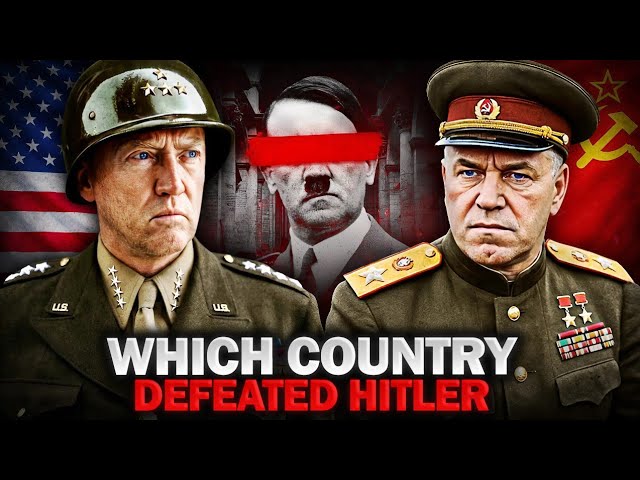 The sheer scale of the Eastern Front defies comprehension. Between June 22, 1941, and May 9, 1945, the Soviet Union absorbed a level of violence that no other nation in history has survived. The cost was approximately 33 million casualties—military, civilian, and prisoners of war—a figure that represents nearly 15 percent of the pre-war Soviet population.
To understand the weight of this sacrifice, one must look at the distribution of German forces. From the first day of Operation Barbarossa until December 1941, more than 3 million German soldiers and 650,000 Axis allies were fighting exclusively in the East. Meanwhile, fewer than 1 million Germans were deployed across all other fronts combined—North Africa, the Mediterranean, the occupied territories, and the Atlantic coast.
The Eastern Front was not merely one theater among many; it was the theater where Germany staked its entire existence.
The German invasion itself was a gamble built on a foundation of logistical fantasy. Operation Barbarossa involved 152 divisions, including 19 Panzer divisions and 14 motorized divisions, supported by approximately 3,350 tanks, more than 7,000 artillery pieces, and 2,770 aircraft. Yet the German quartermaster general, Major General Eduard Wagner, had already calculated the fatal flaw.
The army had enough fuel to advance between 500 and 800 kilometers, with ammunition and food for only 20 days of operations. Beyond that, the campaign would collapse unless the Soviet rail network—built to a wider gauge than the European standard—could be converted and exploited. The maximum effective range of truck transport was 300 kilometers round trip; beyond that, the trucks consumed more fuel than they could carry.
Hitler knew these numbers. He had instructed his general staff to reintegrate skilled workers into industry between June and September 1941, expecting the Soviet Union to be defeated before winter. The war was designed to be short because it could not be long.
What the German planners failed to anticipate was the sheer mass of the Red Army. When the invasion began, the Soviet Union had 5 million men in active service and 14 million trained reservists. German intelligence had calculated the existence of about 200 Soviet divisions at the start of the campaign.
By August 1941, they had counted 360, and the number kept growing. General Franz Halder, chief of the German general staff, wrote in his diary on August 11, 1941: “The Russian colossus… has been underestimated by us.
When we began the war, we counted on some 200 enemy divisions. Now we have already counted 360. When a dozen of them are destroyed, the Russians put up another dozen.”
This was not a tactical miscalculation; it was a catastrophic strategic blindness that sealed the fate of the Wehrmacht.
The early victories were spectacular but hollow. By July 3, 1941, Halder had prematurely declared that “the Russian campaign has been won in the space of two weeks.” The encirclement pockets at Minsk and Bialystok yielded hundreds of thousands of prisoners.
But beneath those numbers, the Red Army was not collapsing; it was resisting. The Battle of Smolensk in July 1941 illustrated this perfectly. General Heinz Guderian’s Second Panzer Group crossed the Dnieper and reached the Yelnya heights, only to run out of fuel and ammunition exactly at the logistical limit Wagner had predicted.
General Konstantin Rokossovsky, a man who had been tortured during Stalin’s purges and released just months before the war, gathered shattered fragments of units and halted the advance of the 7th Panzer Division at the Vop River. It was one of the first times in the war that a German formation was cleanly stopped in open field. The 18th Panzer Division, which had entered the campaign with 218 tanks, was reduced to a fraction of that strength by late July.
Guderian’s entire group had fallen from 953 operational tanks to 286, and there were still four months left before winter.
The German army was a machine designed for short, decisive wars over short distances. When the war became neither short nor decisive, the machine began to consume itself. The Soviet Union had only 64,375 kilometers of paved roads across the entirety of European Russia—less than 10 percent of the road network of Western Europe.
The German columns, composed of more than 2,000 different types of vehicles, many of them captured from France and Belgium, began to mechanically fall apart. The Wehrmacht had entered the Soviet Union with 73 different tank models and 170 artillery variants, none of which shared interchangeable parts. When the autumn rains turned the roads to swamps and the winter cold froze the lubricants in their weapons, the German army was not just fighting the Red Army; it was fighting the geography of Russia itself.
The turning point came in December 1941. Operation Typhoon, the final assault on Moscow, had brought German forces within 20 kilometers of the Kremlin. But the Panzer divisions that had set out from Poland in June were operating at 35 to 40 percent of their original strength.
 The 18th Panzer Division had 12 operational tanks. The Second Panzer Group had dropped to 150 functional tanks out of 953. And then the Siberian counter-armies arrived.
Soviet intelligence, fed by Richard Sorge, the spy embedded in Japanese diplomatic circles, had confirmed that Japan would not attack Siberia. That freed up divisions perfectly equipped and trained for winter combat. On December 5 and 6, 1941, the Red Army launched its first organized strategic counteroffensive.
Twenty armies struck Army Group Center along a 900-kilometer front. Temperatures fell to minus 40 degrees Celsius. German soldiers, who had been told they would be demobilized before winter, fought in summer uniforms.
Hitler forbade withdrawal, a decision that probably saved Army Group Center from total destruction but cost the Wehrmacht an enormous price in men and equipment. December 1941 was the moment when the plan to destroy the Red Army in a single lightning campaign became forever impossible.
The economic reality of the Third Reich makes the German defeat even more inevitable. Germany never had the industrial might that popular history attributes to it. When Hitler took power in 1933, Germany had a population of approximately 67 million, compared to the Soviet Union’s 165 million and the United States’ 130 million.
The Reichsbank operated with foreign currency reserves equivalent to less than a week of imports. Germany depended on imported copper, rubber, oil, and iron ore—more than half of its steel production relied on Swedish ore. The decision to rearm quickly created a vicious circle: to sustain weapons production, Germany needed foreign currency to buy raw materials; to get foreign currency, it needed to export; but rearmament consumed the very resources that could have been exported.
Finance Minister Lutz Graf Schwerin von Krosigk estimated in September 1938 that the Reichsbank was already on the verge of inflation and that the financial system could not sustain a long conflict. Hitler knew this. He attacked anyway because waiting would only make his adversaries stronger.
The war was not a product of German strength; it was a product of the awareness of its relative weakness.
Stalingrad was the point of no return. Operation Blue, launched in June 1942, was an attempt to capture the oil fields of the Caucasus. Hitler split Army Group South in two, sending Army Group A toward the oil and Army Group B, with General Friedrich Paulus’s Sixth Army, to cover the northern flank and capture Stalingrad.
What should have been a covering movement became the suicide of the Wehrmacht. The Stavka, the Soviet high command, planned Operation Uranus in absolute secrecy. They concentrated entire formations on the flanks of the German salient, which were held by weaker Romanian and Italian units.
On November 19, 1942, some 3,500 Soviet artillery pieces opened fire on the Romanian positions. In less than four days, the two Soviet pincers closed near Kalach, trapping 330,000 Axis soldiers in a pocket of 1,500 square kilometers of steppe. Field Marshal Erich von Manstein attempted to break the encirclement with Operation Winter Storm, coming within 50 kilometers of the pocket’s perimeter.
But by December 18, the Soviet Second Guards Army halted the advance. Paulus had no fuel to attempt a breakout, and Hitler would not give him permission to try. The Sixth Army died in the pocket through January and the first days of February 1943.
When the interior temperature of the underground shelters fell below minus 30 degrees, soldiers who slept alone did not wake up. Rations were reduced to between 50 and 100 grams of bread daily. 147,000 soldiers died inside the pocket.
On January 31, 1943, Paulus, whom Hitler had promoted to field marshal the night before, surrendered. Of the 91,000 prisoners who marched off to Soviet camps, fewer than 6,000 would ever see Germany again. Soviet casualties in the complete Stalingrad operation totaled nearly 486,000 dead, wounded, and missing.
It was not a cheap victory, but it was a decisive one. The Axis’s capacity for strategic attack on the Eastern Front was destroyed.
While the Red Army and the Wehrmacht destroyed each other in the east, something equally decisive was happening in the factories. Albert Speer, appointed Minister of Armaments in February 1942, performed what has been called the “armaments miracle.” He streamlined German industrial production and significantly increased weapons output even as Allied bombing intensified.
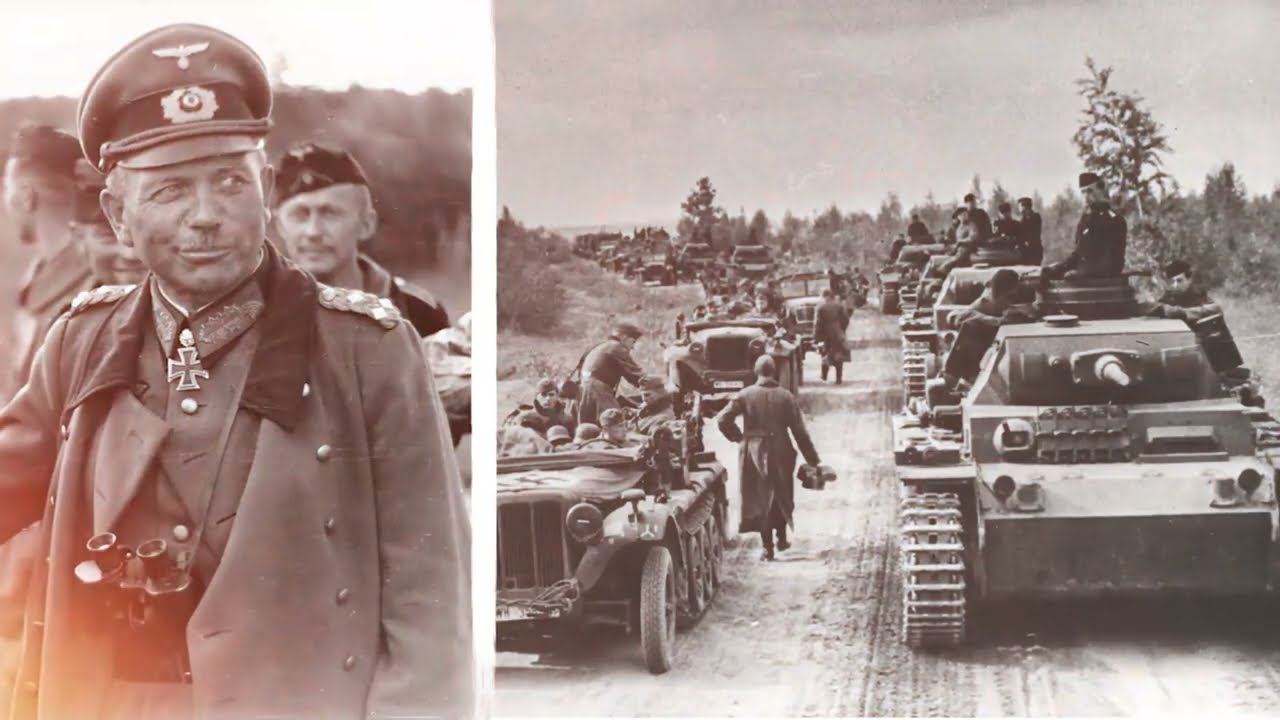 But the miracle had limits. In 1944, the year of peak production, Germany manufactured 5,976 Panther tanks—less than three months of Soviet T-34 production. The Soviet Union produced more than 70,000 T-34s over the course of the war.
In aircraft, the disparity was even greater: Soviet industry manufactured more than 150,000 aircraft; German industry did not reach half that figure. The Soviet economy had been completely converted into a war machine from the first day of the invasion, allocating between 55 and 60 percent of its gross domestic product to war production in 1942. Germany that same year was still below 30 percent.
The image of the Third Reich as a fully militarized economy is false. It was an economy that produced cannons but also produced butter, and that duality limited it at the decisive moment.
The Kursk salient in the summer of 1943 was the last time the Wehrmacht attempted to regain the strategic initiative. Operation Citadel was planned as a pincer movement to cut off a Soviet salient that pushed 150 kilometers into German-controlled territory. But the postponements from April to July 1943 were fatal.
Every delay allowed the Soviets to reinforce their defenses. Soviet intelligence, fed by the Lucy network operating from Switzerland, provided detailed information about the German plans. Zhukov and Vasilevsky recommended something no Soviet commander would have dared propose in 1941: let the Germans attack first, absorb the blow with almost unimaginable defense in depth, and then launch the counteroffensive.
What Soviet engineers built at Kursk has no precedent in military history. Approximately 53,000 mines were laid in the northern sector alone, at a density of 2,400 anti-tank mines and 2,700 anti-personnel mines per kilometer of the expected attack front. More than 9,000 kilometers of trenches were dug, arranged in eight successive defensive lines to a depth of 300 kilometers.
When Operation Citadel began on July 5, 1943, the German attack was met with a wall of fire. The new Panther tanks, which Hitler had waited for, proved mechanically unreliable. Of the 200 operational Panthers when the offensive began, only 38 remained functional nine days later, at least 46 lost to mechanical failure rather than enemy destruction.
North of the salient, Model’s Ninth Army never broke through. To the south, the Second SS Panzer Corps penetrated 35 kilometers before being stopped at Prokhorovka on July 12, where Soviet T-34s fought at close range to neutralize the German cannon’s range advantage. On July 13, Hitler suspended the operation.
The Battle of Kursk marked the end of German offensive power in the east. After July 1943, the Wehrmacht never again took the strategic initiative on the Soviet front.
The Western Allies’ contribution cannot be reduced to D-Day and the months that followed. Britain had imposed a naval blockade on Germany that strangled the supply of essential raw materials. The Royal Air Force began bombing German industrial targets from 1940 onward.
The early years of the strategic bombing campaign were a tactical disaster, but the effect was real: it forced Germany to allocate between 30 and 40 percent of its anti-aircraft artillery production and a significant fraction of its interceptor fighters to defending the Reich’s airspace, pulling them out of the Eastern Front. The most revealing figure is this: in July 1943, the same month as the Battle of Kursk, the Luftwaffe lost 335 fighters over Germany fighting against Allied bombers and only 201 on the Eastern Front. The American bombing campaign of 1944, with the arrival of the P-51 Mustang escort fighter, destroyed the Luftwaffe as an effective fighting force.
The Red Army owed part of its success between 1943 and 1945 to the courage of the British and American bomber crews who died over the skies of the Rhineland.
The Lend-Lease program was equally decisive. American aid began arriving in the Soviet Union in significant volumes from the second half of 1942 onward. The total figures are well-known: close to 15,000 aircraft, 7,000 tanks, 376,000 trucks, 51,000 jeeps, more than 4.
5 million tons of food, and approximately 11,800 locomotives and rail cars. At the height of 1944, American aid accounted for up to 12 percent of Soviet gross national product. But the most revealing numbers are those for trucks and railways.
The Red Army in 1945 had 665,000 vehicles in service. Of these, 427,000 were of American manufacture. Marshal Anastas Mikoyan, Commissar for Foreign Trade, stated after the war that without American trucks, large-scale Soviet offensives would have been logistically impossible.
Every deep penetration into German territory would have exhausted its supplies long before reaching its objectives. Stalin himself, at a dinner with Churchill and Roosevelt in Tehran in November 1943, acknowledged that without American Lend-Lease the war would have been impossible. He was one of the men least inclined to give credit to his allies.
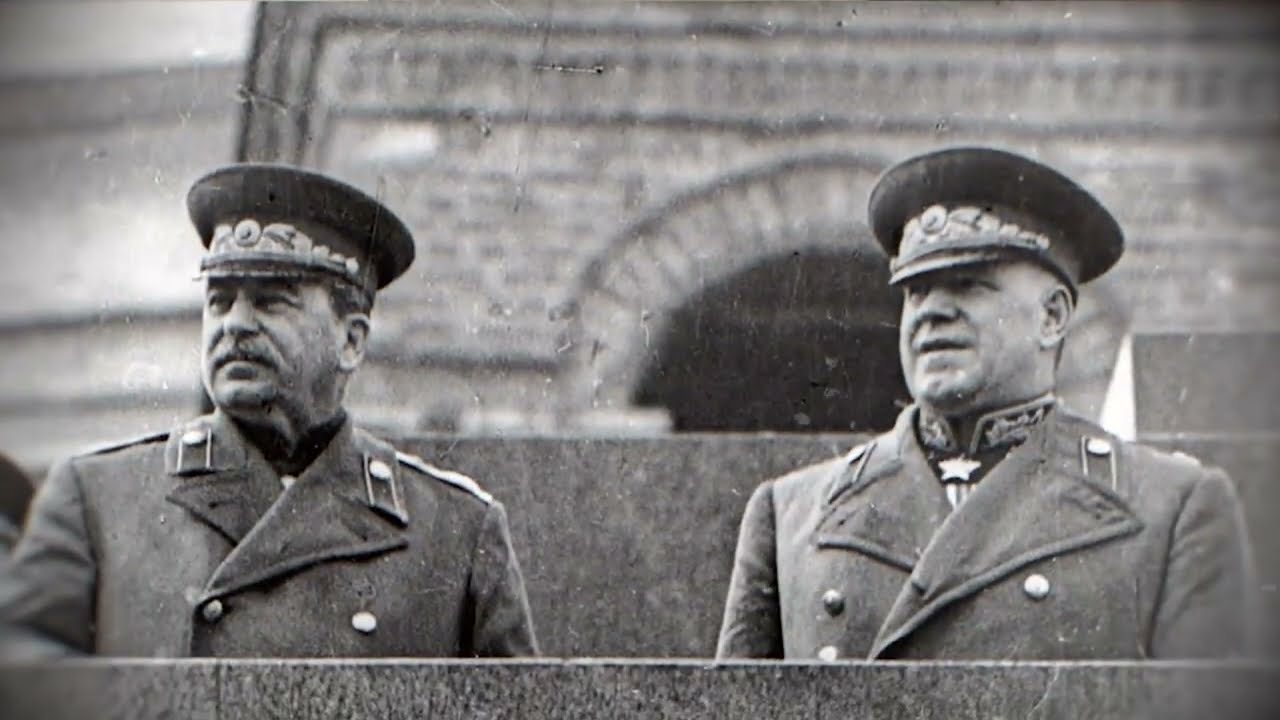 Operation Bagration, launched on June 22, 1944—exactly three years after the beginning of Barbarossa—was the greatest destruction of German forces in the entire war. Four Soviet fronts were secretly concentrated with a total strength of approximately 2. 4 million soldiers, 5,800 tanks, more than 33,000 artillery pieces, and 7,800 aircraft.
Facing them, the German Army Group Center had about 800,000 soldiers, 500 tanks, and barely 600 aircraft. The Soviets had convinced the Germans that the main attack would come from the south in the Ukraine sector. When the offensive began, it caught German commanders completely off guard.
Soviet tank corps advanced 40 to 50 kilometers a day. On July 3, Minsk was liberated. A massive pocket east of the city trapped more than 100,000 German soldiers.
By the end of the operation in late August 1944, 17 German divisions had been completely destroyed, and more than 50 suffered losses so severe they had to be rebuilt from scratch. Total German casualties exceeded 300,000 dead and captured. To stabilize the front, OKH had to transfer 46 divisions from other sectors, taking pressure off the Western Allies fighting in Normandy at exactly the moment they needed it lifted.
Bagration and Normandy were the two jaws of the same trap closing over Germany.
The final assault on Berlin began on April 16, 1945. Three Soviet fronts attacked simultaneously. The fighting at the Seelow Heights proved more costly than Zhukov had anticipated, but by April 19 the advance was unstoppable.
On April 25, elements of the Soviet Fifth Shock Army met soldiers of the American First Army at Torgau on the Elbe. On April 30, Adolf Hitler committed suicide in the Reich bunker. Soviet casualties in the Berlin operation alone totaled 361,367 dead and wounded, 81,116 of them killed or missing.
The cost of capturing the capital of a state that was already militarily defeated remained enormous until the very last day.
The mathematics of destruction are unambiguous. Of the total Wehrmacht casualties of 11,135,500, nearly 9 million fell on the Eastern Front, including prisoners of war. Germans captured or killed in the east add up to 75 percent of the total forces Germany mobilized.
The German war memorials in the cemeteries of Europe bear the inscription “fallen in the east” with overwhelming frequency. Soviet military casualties across the entire war add up to at least 29 million, with some revised estimates suggesting figures approaching 50 million when counting civilians. The Western Allies also paid a real price: the United States lost about 400,000 soldiers across all fronts, Britain nearly 400,000.
But putting those figures alongside the Soviet ones is not meant to diminish any sacrifice; it is meant to make the proportion understood.
The uncomfortable answer to the question of who defeated Germany is that the Soviet Union militarily destroyed the bulk of the German army. But that answer requires nuance. The Western Allies kept Britain in the war when it stood alone against Germany between the fall of France in June 1940 and the invasion of the USSR in June 1941.
They won the Battle of the Atlantic, which was the necessary condition for everything else. They supplied the Red Army with material that accelerated every Soviet offensive from 1943 onward. They bombed Germany until they destroyed the Luftwaffe as an effective fighting force, which protected the Soviet armies in their final great operations.
And they opened the Western Front in June 1944, forcing Germany to split its forces at the exact moment it could no longer afford to. Historians David Glantz and Jonathan House concluded their analysis with a line that contains the most honest answer available: “Had the Western Allies not supplied equipment and invaded northwestern Europe, Stalin and his commanders might have taken 12 to 18 months longer to finish off the Wehrmacht. The outcome would probably have been the same, except that Soviet soldiers would have reached the beaches of the Atlantic instead of meeting the Allies at the Elbe.”
The deadliest war in history was not won by a single hero. It was won by a coalition of countries that destroyed themselves in different proportions in order to destroy a regime that would have destroyed them all. The cost was catastrophic for everyone involved.
The 30 million Soviet dead leave no room for abstract debates about who won the war. They won it with the blood they had left to spare. But they did not win it alone.
The question of who did more is not meant to establish hierarchies of glory, but to understand the reality of what happened in all its magnitude and all its weight. The answer is that the Soviet Union bore the heaviest burden, but the Western Allies provided the means and the time that made the final victory possible. History does not offer simple heroes.
It offers a complex web of sacrifice, calculation, and survival. And in that web, the truth is that Germany was defeated by a coalition that paid for victory in the currency of millions of lives. The debate will continue, but the numbers do not lie.


