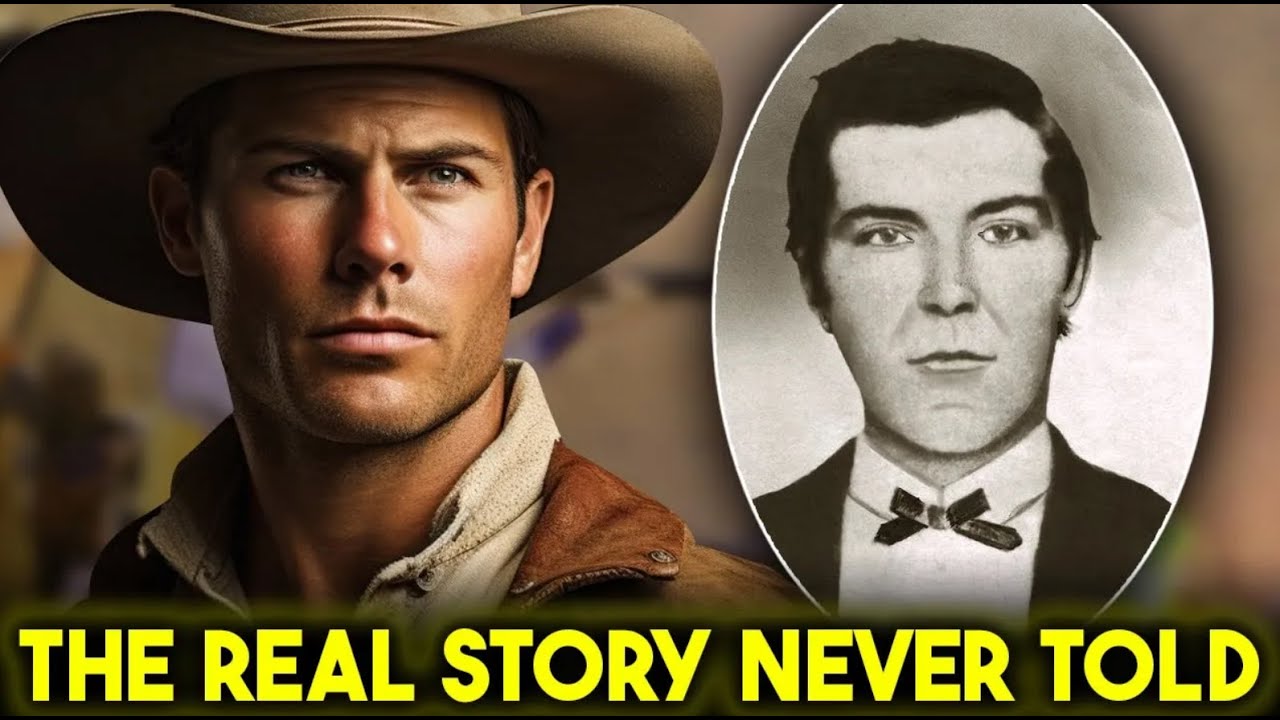
Prince William of Gloucester was born fourth in line to the British throne, but he spent much of his life trying to escape the constraints of his title. He rejected the comforts of royal protocol in favor of diplomatic work, academic study, and flying planes. On August 28, 1972, he died at age 30 when his aircraft crashed during an air race in Staffordshire. William Henry Andrew Frederick was born on December 18, 1941, in Hertfordshire during World War II.

His father, Prince Henry, Duke of Gloucester, was the third son of King George V and Queen Mary, a man remembered more for his love of horses and hunting than for intellectual distinction. His mother, Princess Alice, was widely described as warm, perceptive, and highly practical. From 1945 to 1947, the family lived in Australia, where the Duke of Gloucester served as Governor-General. Young William appeared regularly at public events and parades, and the local press covered his every move.
The family’s return to England brought a relatively isolated childhood at the Gloucestershire estate, with his father frequently away on official duties. At age five, William played a ceremonial role at the wedding of his cousin Princess Elizabeth to Philip, Duke of Edinburgh, on November 20, 1947, carrying the train of the bride’s gown. Six years later, he attended Elizabeth’s coronation in formal dress and received his first coronation medal. On his 21st birthday in 1962, he was appointed a Counsellor of State, joining the select group authorized to handle official duties when the monarch was abroad.
After attending Eton College, William studied history at Magdalene College, Cambridge, where his tutor described him as one of the most intellectually engaged students he had taught. He then moved to Stanford University in California to study political science, a choice that puzzled royal circles. At Stanford in the mid-1960s, William was confronted with the civil rights movement and the growing divisions over the Vietnam War. The experience changed his outlook.
He decided he no longer wanted to be merely a symbol in the royal family’s records and set out to build a genuine career. William joined the Foreign and Commonwealth Office after passing a demanding selection process. He became only the second British royal in history, after his uncle the Duke of Kent, to work as a salaried civil servant. In 1965, he was posted to Lagos, Nigeria, as a third secretary.
In 1968, he moved to Tokyo as a second commercial secretary, where he worked in the embassy’s trade section during Japan’s postwar economic boom. In Japan, William visibly enjoyed his freedom from royal protocol. He rented a private house, drove a sports car, and introduced himself as a professional civil servant rather than a member of the royal family. He did, however, continue to represent the Crown at official state receptions when duty required.
His personal life in Tokyo became a source of concern for the palace. William fell in love with Susie Starkloff, an American-Hungarian former model and flight attendant who was older than him, twice divorced, and a mother. By the strict standards of the court, she was considered an impossible match for a royal prince. The relationship was deep and mutual, and court officials watched with rising unease.
Queen Elizabeth II even reportedly sent the young Prince Charles to Tokyo to assess the seriousness of William’s intentions, as William was already considering marriage. The relationship did not end because of a royal decree but because of family crisis and illness. William was diagnosed with porphyria, a rare hereditary metabolic disorder believed to have affected his ancestor King George III. Around the same time, in 1970, his father suffered a severe stroke that left him fully paralyzed.
As the eldest son, William could not abandon his duty. He resigned from the Foreign Office and returned permanently to England to manage the family estates and take over his father’s responsibilities. Starkloff visited him in the United Kingdom and they remained in contact, but the distance and the sudden burden of caring for his ill father gradually cooled the romance. They stayed close friends for the rest of his life.
From 1970 to 1972, William transformed into a professional royal, a role he had long avoided but now embraced with maturity. In June 1970, during his journey from Tokyo to London, he carried out an important diplomatic mission on behalf of Queen Elizabeth II, representing the monarchy at official celebrations in the Kingdom of Tonga marking the end of British protection. After returning home, he took over the management of Barnwell Manor in Northamptonshire. William built his own network of interests.
In 1971, he visited the town of Oundle, where he officially opened a new comprehensive school. He spent considerable time talking with students and left a deep positive impression. After his death a year later, the school successfully campaigned to rename the institution in his honor, and it is still known as Prince William School today. Aviation remained his greatest passion.
He obtained a commercial pilot’s license, logged hundreds of flying hours, and personally ferried light aircraft between continents. From 1971 to 1972, he served as president of the British Light Aviation Centre, using his royal position to support flying clubs, promote aviation safety, and secure financial backing. He regularly took part in air races. On August 28, 1972, William took off in a Piper Cherokee Arrow from Halfpenny Green airfield in Staffordshire with his co-pilot, Lieutenant Vyrell Mitchell.
They were competing in the Goodyear International Air Trophy race. The aircraft lifted off at 12:22 p. m. Moments later, at low altitude, it made a sharp left turn, lost control, stalled, clipped trees, cartwheeled, and exploded in front of hundreds of spectators.
The official investigation could not establish a definitive cause. The leading theories were a sudden bird strike after takeoff or an immediate mechanical failure of a flap that gave the pilots no time to correct the error during the low-altitude turn. Princess Alice received the news at Barnwell. She was 71 years old, and her husband was already close to death.
She lived for more than three decades afterward, dedicating herself to preserving William’s memory. William’s younger brother, Richard, was building a successful career as an architect at the time. He had graduated from Cambridge, established his own practice, and planned an ordinary professional life away from the burdens of fame. His brother’s death erased those plans in an instant.
Richard became the direct heir to the title and, after his father’s death, became the second Duke of Gloucester. He abandoned his architectural ambitions and accepted the royal role his brother was born to carry. He still holds it today. William of Gloucester did not seek power.
He sought a life of his own. His story remains a reminder that behind every title is a fragile human destiny, and that the real difficulty is not achieving success but staying true to oneself under the weight of the world’s expectations.