
The legend of Cullen Baker, the man history remembers as the inventor of the fast draw, came to a bloody and undignified end not with a blaze of glory, but riddled with bullets and strychnine poisoning in a remote cabin in southwest Arkansas. The man who terrorized northeast Texas and the river bottoms of Arkansas for years, a figure so shrouded in myth and bloodshed that he inspired Louis L’Amour novels, was finally brought down on January 6, 1869, not by a federal posse, but by a schoolteacher he had once tried to lynch and a father-in-law who had grown tired of his madness. The death of the man known as the “Swamp Fox of the Sulphur” brings a close to one of the most violent and chaotic chapters of the Reconstruction era in the South.
Baker, a former Confederate deserter and leader of the “Independent Rangers,” was a man who seemingly killed without conscience, targeting freedmen, federal soldiers, and any civilian who crossed his path. His death, a brutal and ignominious end to a life of brutality, has left a complex and troubling legacy in the piney woods of East Texas. Was he a rebel hero defending his homeland against the tyranny of Northern occupation, as his posthumous legend suggests, or a remorseless psychopath whose only allegiance was to his own violent impulses?
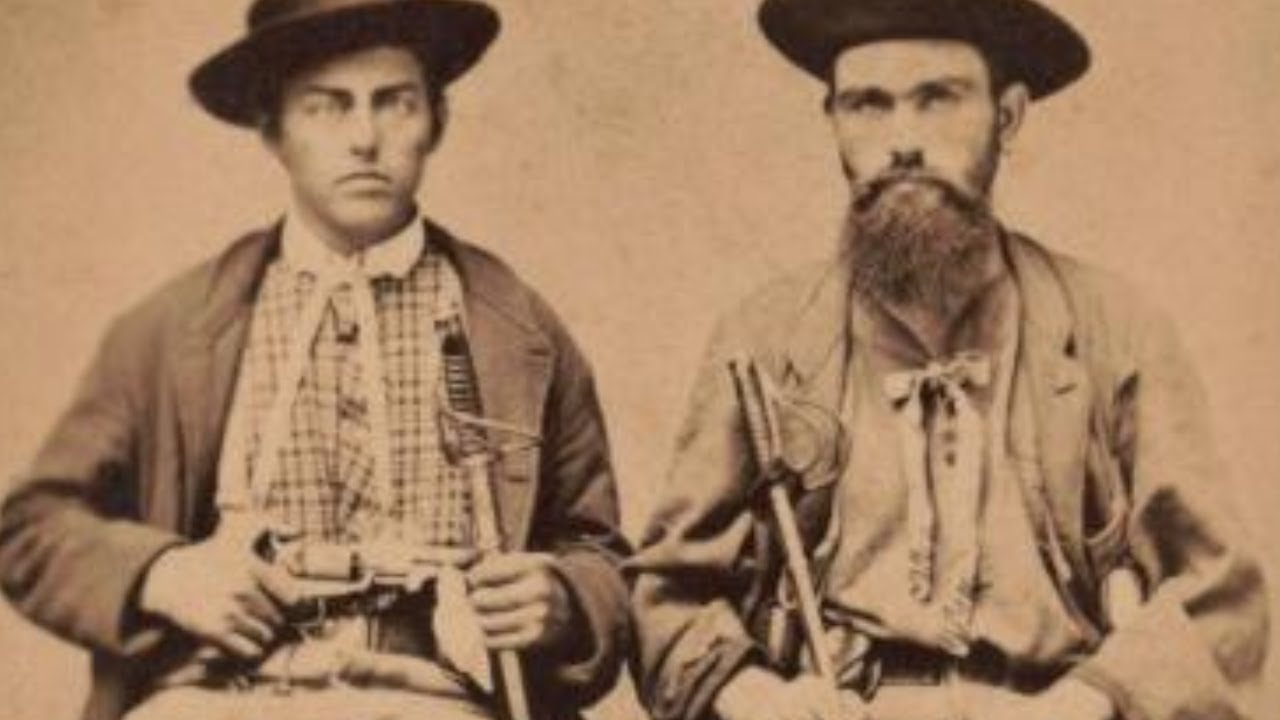 The evidence, scattered across court records, military telegrams, and oral histories, paints a far darker picture than the romanticized gunslinger of popular culture.
The final act of Baker’s life began in the small community of Bright Star, Arkansas, where his obsession with a young woman named Belle Foster had curdled into a murderous vendetta. Baker, whose second wife Martha had recently died, had set his sights on Belle, his deceased wife’s 16-year-old sister. When Belle rejected his advances and instead married Thomas Orr, a local schoolteacher, Baker’s fragile grip on sanity snapped completely.
He launched a campaign of terror against the newlywed couple, harassing Orr publicly, striking him with branches, and threatening his life on numerous occasions. The harassment was relentless, culminating in a horrifying incident where Baker and his one remaining accomplice, Matthew “Dummy” Kirby, stormed the Orr home, tied up the couple, and attempted to hang the schoolteacher from a tree. The rope was faulty, and Orr survived, escaping into the night with a noose still around his neck, a fact that would seal Baker’s fate.
For weeks, Orr lived in terror, knowing that the madman who had tried to 𝓀𝒾𝓁𝓁 him was still at large and would likely try again. Baker, for his part, seemed to revel in the fear he instilled. He was a creature of the swamp, moving silently through the dense thickets and river bottoms that defined the border region, a ghost who appeared only to 𝓀𝒾𝓁𝓁.
His reputation was so fearsome that lawmen and soldiers alike were hesitant to pursue him into his own territory. But Thomas Orr was not a lawman; he was a man with nothing left to lose, and he began to plan. He knew Baker’s habits, his arrogance, and his fatal flaw: his belief that he was untouchable.
Orr would wait for the perfect moment, and he would use Baker’s own monstrous nature against him.
The moment came in early January 1869. Baker, perhaps believing that the heat had died down, arrived at the home of William “Billy” Foster, his former father-in-law, ostensibly to settle a land dispute. He was accompanied by Dummy Kirby, his loyal and silent partner in crime.
The two men were welcomed into the home, a common occurrence as locals often fed the outlaw out of fear or misguided loyalty. Baker and Kirby ate and drank heavily, their guard lowered by the comfort of a familiar home and the belief that Orr was too cowardly to return. They had no idea that Orr had been watching the road, and that he had seen them arrive.
Orr quickly gathered a group of determined neighbors and a deadly plan was set in motion. They would not face Baker in a fair fight, knowing that to do so was suicide. Instead, they would use guile, and they would ensure the demon was dead before he even knew he was under attack.
Accounts of the actual killing vary wildly, a testament to the chaos of the event. The most accepted version states that Foster, under duress or perhaps acting of his own accord, laced the outlaws’ whiskey and food with strychnine, a common poison of the era. As the poison took hold, convulsing the bodies of the two desperadoes, the armed party, led by Thomas Orr, burst into the cabin.
They were met with a ghastly sight: Cullen Baker, the man who could draw faster than lightning, was on the floor, helpless and poisoning. Despite his condition, he reportedly attempted to raise his pistol, but the poison had robbed him of his legendary speed and coordination. The posse, not willing to take any chances, filled both Baker and Kirby with lead.
 Another version of the tale suggests the men were shot while they slept, drugged by the poisoned liquor into a stupor from which they would never wake. A third account, told by a former slave named Doc Quinn, claimed that Baker and Kirby were standing outside the cabin, smoking, when Orr and his men rode up and shot them down in a surprise attack, leaving their bodies riddled with bullets.
Regardless of the exact method, the result was the same. The reign of Cullen Baker was over. The man who was said to have killed hundreds, who had terrorized entire counties, who had murdered federal soldiers with impunity, was dead at the age of 33 or 34.
His body, along with Kirby’s, was strapped to a wagon and paraded through the streets of nearby Bloomburg, Texas, as a spectacle for the citizens who had lived in fear of him. The coroner’s report listed the cause of death as gunshot wounds, and the bodies were put on public display in Jefferson, Texas, where they drew crowds of morbid onlookers. For many, it was the final proof that the bogeyman of the Sulphur River was gone for good, and a collective sigh of relief swept through the region.
The death of Cullen Baker, however, did not put an end to the violence that had defined his life. In fact, the manner of his death—a poisoning and a shotgun blast rather than a quick draw duel—underscored the grim reality of the era. This was not the stuff of dime novels; it was a dirty, desperate fight for survival in a land still reeling from the devastation of the Civil War.
Baker was a product of this environment, a man whose innate cruelty was magnified by the lawlessness of the Reconstruction period. He was a proud Confederate who refused to accept the outcome of the war, and he transferred his hatred for the Union onto the freedmen and the federal authorities who represented the new order. His legacy, however, is a complicated mix of fact and fiction, with his biographer being the very man who orchestrated his death, ensuring a heavily biased and often contradictory historical record.
Thomas Orr, the mild-mannered schoolteacher who became a killer to save his own life, would later write a biography of Baker titled “The Life of the Notorious Desperado Cullen Baker.” In it, Orr painted a picture of a cold-blooded murderer, an account that, while self-serving, aligns with the many reports of Baker’s unprovoked attacks on innocent people. The book details Baker’s alleged role in the Saline Massacre of November 1864, where he and his Independent Rangers intercepted a group of civilians, mostly women and children, trying to flee the war-torn region.
According to eyewitness accounts, Baker murdered their leader and then ordered his men to open fire on the unarmed group, killing nine more, mostly elderly men. The rangers then looted the wagons, turning a brutal act of violence into a simple robbery. This event, along with the numerous murders of freedmen, paints a picture of a man who was less a soldier and more a warlord, preying on the weak and defenseless.
Baker’s murderous career was not confined to the battlefield or the plantation. He was a wanted man long before the war ended. His first known murder occurred in 1854, when he shot and killed a man named Wesley Bailey in a dispute that began with Baker harassing a young orphan with a bullwhip.
He fled to Arkansas, where he continued his violent ways, killing a farmer named David Wartham in a knife fight. By the time the Civil War broke out, Baker was already a fugitive with blood on his hands. He enlisted in the Confederate cavalry, but found the military life too restrictive and soon deserted.
He then formed a band of guerrillas under the banner of the Confederacy, but in reality, they were little more than a gang of outlaws who used the chaos of the war as a cover for their plunder and murder.
 The end of the war did not bring an end to Baker’s rampage. It only broadened his list of targets. He killed federal soldiers stationed in the region, often ambushing them from cover.
He murdered William Kirkman, an agent for the Freedmen’s Bureau, in broad daylight near Boston, Texas. He killed John Salmons and George Baron, two men who had either crossed him or aided his enemies. His hatred for Black people was particularly virulent, and he is credited with murdering dozens of freedmen in what can only be described as race-based terrorism.
He would lure them to their deaths by pretending to organize a Black militia, a despicable trick that resulted in the deaths of many men who were simply looking for work and protection in the volatile post-war environment. The sheer volume of bodies attributed to him, which some historians place in the hundreds, is likely an exaggeration, but even a conservative estimate of several dozen murders makes him one of the most prolific killers of the Old West.
The legend of the quick draw is perhaps the greatest myth of all. While he may have been a quick and accurate shot, there is no credible evidence that he invented the technique or was its most skilled practitioner. The notion of a fast-draw duel on a dusty main street is a Hollywood invention.
Baker, by all accounts, was not a fair fighter. He preferred ambushes, his double-barreled shotgun, and overwhelming force. He didn’t bow to his enemies to draw; he mowed them down with buckshot from a hiding spot or shot them in the back as they fled.
His deadliness came not from a technique, but from an absolute willingness to 𝓀𝒾𝓁𝓁 without hesitation or remorse, a trait that unnerved even hardened fellow outlaws. This fearlessness, or perhaps more accurately, this complete disregard for human life, was his true legacy.
In the years following his death, Baker was transformed into a folk hero by some who wished to romanticize the “Lost Cause” of the Confederacy. They saw him as a symbol of resistance against the “carpetbaggers” and the oppressive federal military presence. This narrative conveniently ignores his crimes: the murders of innocent civilians, the massacres of Black men and women, and the simple fact that he was a deserter and a thief who used the Confederate flag as a shield for his villainy.
The members of his own gang, men like Ben Bickerstaff and Bob Lee, met similarly violent ends, their lives a testament to the brutal and lawless nature of the post-war South. The romanticized view of Baker as a noble rebel is a dangerous distortion of history, a whitewashing of a murderer that does a disservice to his victims and the truth.
The immediate aftermath of Baker’s death saw a period of relative calm in the border region, though the threat of violence remained ever-present. His death was a major victory for local authorities and federal officials, who had been unable to capture him for years. The reward for his capture, which had been raised to $1,000 by order of General J.
J. Reynolds, was claimed by no one, as he was dead, not captured. The manner of his demise, however, was a sign of the times.
 It showed that the local populace, who had tolerated Baker for years due to fear or sympathy for his rebel cause, had finally turned against him. His obsession with Belle Foster and his relentless persecution of Thomas Orr had crossed a line. He had threatened the social order of the white community, and in doing so, he had signed his own death warrant.
The schoolteacher, the very symbol of the new, post-war order, had become his executioner.
Cullen Baker’s grave can still be visited today in the Oakwood Cemetery in Jefferson, Texas. It is a final, ironic twist for a man who spent his life in the swamps and thickets, that he should rest in a manicured city cemetery. A marker commemorates him, but it is a place of mixed emotions.
For some, it is a site of pilgrimage for those interested in outlaw history. For others, it is a grim reminder of a dark period in American history, a time when the rule of law was tenuous and men like Baker could terrorize entire communities with the barrel of a gun. The story of Cullen Baker is a story of the American frontier, but it is not the story of a heroic gunslinger.
It is the story of a brutal killer, a man who embodied the racism and violence that plagued the Reconstruction era, and a legend that needs to be re-examined in the harsh light of historical fact.
As the 19th century gave way to the 20th, the legend of Cullen Baker continued to evolve, primarily through the lens of pulp fiction and Western novels. The most famous of these is Louis L’Amour’s “The First Fast Draw,” a work that the author himself acknowledged as a “highly fictionalized account” of Baker. In L’Amour’s novel, Baker is a tragic hero, a wronged man forced into violence by corrupt Union officials.
This narrative, which has persisted in popular culture, is the polar opposite of the historical record. Baker was not a victim; he was a predator. He was not forced into violence; he embraced it.
The fictionalized version of Baker serves a cultural purpose, allowing audiences to engage with the violence of the Old West in a palatable, romanticized way, but it obscures the ugly reality of men who used the chaos of the era to satisfy their darkest impulses. The truth, as the old saying goes, is often stranger and much bloodier than fiction.
The final chapter of Baker’s life, his death at the hands of Thomas Orr, is a story filled with poetic justice. The man who was known for his incredible speed and his deadliness with a gun was killed by a man who likely was neither a fast draw nor a skilled marksman. Orr survived the encounter with Baker and lived for another 35 years, a quiet life as a husband and a writer.
He had faced his tormentor and prevailed not through skill, but through courage and desperation. The death of Cullen Baker is a reminder that the line between lawman and outlaw was often blurred in the Old West, and that justice, when it did come, was often swift, brutal, and private. The legacy of Cullen Baker is a cautionary tale about the price of violence and the enduring allure of a good story, even when that story is a lie.
The real Baker has been lost to history, buried beneath the myths of a gunfighter he never truly was, leaving behind only the echoes of the shots that ended his reign of terror.


