
The thunder of the guns had barely faded across the rubble of a continent, but the fate of the men who had worn the blackest uniform in history was already being decided. As the Third Reich convulsed and died in May 1945, the Waffen-SS, once the spearhead of Hitler’s terror, did not simply evaporate into the smoke of Berlin. Instead, its hundreds of thousands of soldiers, hardened by years of brutal combat and complicit in unimaginable crimes, scattered across a shattered Europe, embarking on a far more complex and insidious war: a war for survival, for redemption, and ultimately, for the very narrative of history itself.
The unqualified military surrender of Nazi Germany on May 8, 1945, was the formal end, but for the SS, it was a frantic scramble into chaos. The Allies, having fought this implacable enemy for years, moved with swift and absolute determination to extinguish the organization. British, American, and Soviet forces, acting on explicit orders for the total dissolution of the SS, swept across the occupied territories in a massive dragnet.
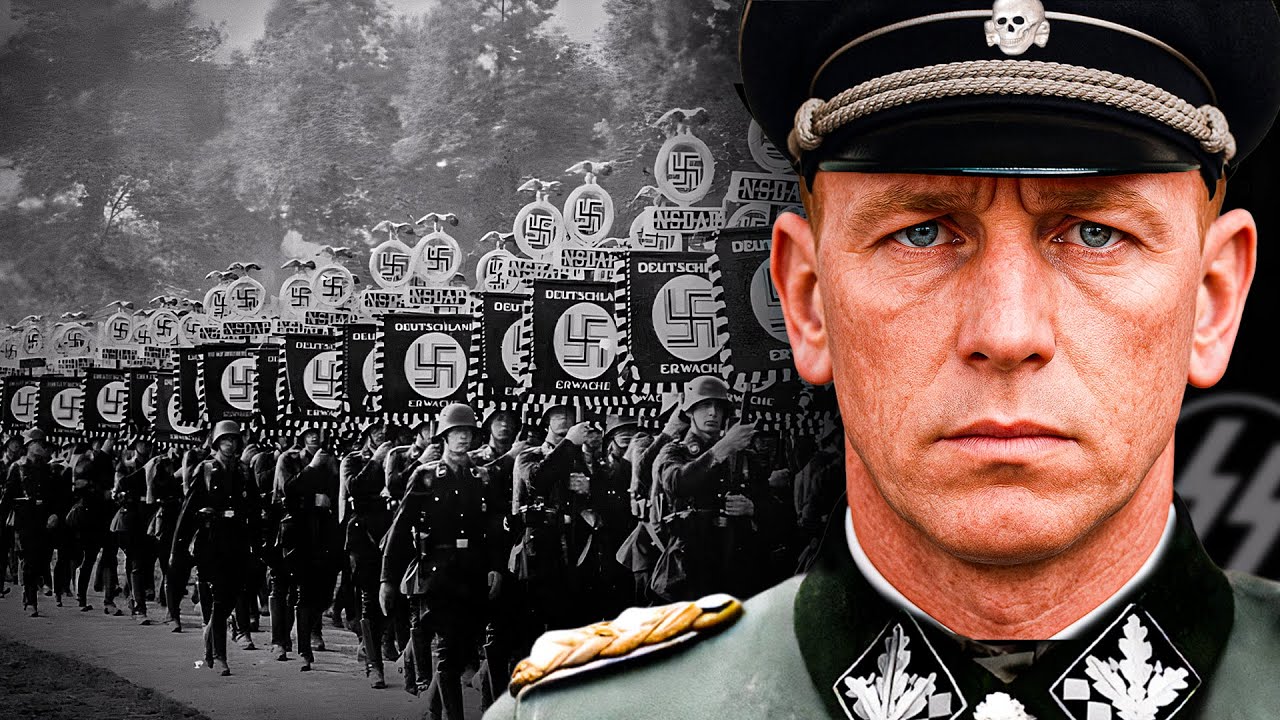 They rounded up entire divisions, from the vaunted Leibstandarte SS Adolf Hitler to the Das Reich and Totenkopf divisions, herding these prisoners of war into vast, open-air internment camps that stretched along the Rhine and deep into the conquered lands. The hated black uniforms, once a symbol of terror and conquest, were now stripped from tens of thousands of men, replaced by the drab and faded clothing of the defeated. For the lower-ranking soldiers, the immediate future was a grim void, filled with hunger, dysentery, and the gnawing uncertainty of an existence that had been violently upended.
They were not just prisoners; they were the personification of a collapsed ideology, and they were treated with a mixture of contempt and wary vigilance by their captors. The sheer number of detainees—in the millions when including all branches of the armed forces—created a logistical nightmare for the Allied military governments, forcing them to prioritize the capture of high-ranking officers and notorious war criminals while the rank and file languished in the squalor of the sprawling prisoner-of-war camps.
The first formal reckoning came in the courtroom of Nuremberg, a trial that would indelibly etch the Waffen-SS into the annals of criminal history. From November 1945 to October 1946, the International Military Tribunal heard the overwhelming evidence of the SS’s central role in the machinery of Nazi atrocity. The prosecution’s case was meticulous, building a legal edifice that proved the Waffen-SS was not an independent military force, but rather an integral cog in the vast apparatus of genocide and political terror.
On September 30, 1946, the tribunal delivered its historic verdict, formally declaring the SS, including the Waffen-SS, to be a criminal organization. This was a watershed moment. The verdict meant that the act of membership itself could be prosecuted as a war crime, though the court allowed for the possibility of mitigation for those conscripted after 1943 or those who could prove they were not personally involved in atrocities.
This judicial declaration sent shockwaves through the captured ranks. It transformed their status from defeated soldiers to members of a criminal conspiracy, violating the very essence of the soldier’s code they professed to uphold. Subsequent denazification courts, established across the occupied zones, began the herculean task of sorting millions of former Nazis into categories of culpability.
For the men of the Waffen-SS, these verdicts were capricious. A prominent figure like SS-Brigadeführer Kurt Meyer, commander of the 12th SS Panzer Division, faced a life sentence for the murder of Canadian prisoners in Normandy, while countless others, particularly those who had served on the grinding, genocidal Eastern Front, were processed and released within months. The vast machinery of justice, however, was slow and often overwhelmed.
While the leaders were hanged and the architects of genocide held to account, for every Meyer tried for a specific war crime, there were thousands upon thousands of lower-ranking men who were quietly processed, categorized as ‘followers’ rather than ‘major offenders,’ and released into the ruins of their homeland.
For those Waffen-SS veterans who managed to escape the immediate dragnet, or those who were released from the overcrowded camps, the shattered landscape of post-war Europe offered no easy paths. The initial years immediately following the surrender saw a desperate struggle for mere existence. The Allied occupation authorities had frozen the assets of all former Nazi Party members and SS personnel.
Veterans were denied employment in the public sector, stripped of their rights to civil service pensions, and ostracized from the official commemorations for fallen soldiers. They were pariahs in a nation that was itself a pariah to the world. Some, particularly those from the Baltic states or Eastern European territories, found a horrifying return to their homelands impossible, as they faced immediate execution from Soviet authorities for collaboration.
These men drifted into the vast network of displaced persons camps scattered across the Allied zones, often hiding their true identities among the millions of refugees seeking new lives. Others, driven by a combination of guilt, fear, and unwavering ideology, chose a more radical path. The infamous ‘ratlines’ became a lifeline for these fugitives.
Through a murky web of sympathetic clergy, nationalist networks, and the nascent intelligence agencies of the emerging Cold War, a thin but persistent stream of high-ranking SS officers escaped to lists across the Atlantic and into South America.
The case of Carl Nicolucci-Lech, a former panzer commander, who used forged papers and a forged identity to sail to Argentina in 1948, was the archetypal story of this flight. Argentina, under the sympathetic regime of Juan Perón, become a haven for these men, offering them new identities and a quiet, sheltered retirement. They were able to rebuild their lives, opening businesses and starting families, shielded by a compliant government and a local population that either ignored or welcomed their presence.
 This escape route also led to Spain, where Franco’s dictatorship offered unconditional refuge, and to the Middle East, where the nascent nations of Egypt and Syria were eager for their military expertise. The post-war period, therefore, created a permanent diaspora of Waffen-SS veterans. Their collective reputation was sealed in the courtroom at Nuremberg, a verdict that branded them as war criminals for all time.
But their individual fates were now splintered across the globe, ranging from the high-profile trials in Europe to the silent, prosperous obscurity of South American exile.
Within the borders of what would become West Germany, the political landscape of the late 1940s and 1950s began to shift the ground under their feet. The creation of the Federal Republic of Germany in May 1949 was a pivotal moment. The new state faced a monumental challenge: to rebuild a functioning democracy from the ashes of the totalitarian regime.
The Cold War was freezing over Europe, and the Western Allies, led by the United States, realized that a stable, anti-communist Germany was more crucial than a thoroughly punished one. The initial hard-line stance of the Allies, which had branded the Waffen-SS as a criminal outfit and excluded its veterans from many national benefits, began to soften under the weight of political pragmatism. The immense cost of the occupation and the growing threat from the Soviet Union made West Germany a vital ally, and the need to integrate the millions of demobilized soldiers, including the most toxic among them, into the fabric of society became paramount.
This integration was aided by the political calculations of West Germany’s first Chancellor, Konrad Adenauer. His government, seeking to build a broad electoral coalition, recognized the potential political power of veterans’ associations. The debate over the Federal War Victims’ Relief Act of 1950 was a flashpoint.
Should the men of the Waffen-SS receive the same welfare and pension benefits as the men of the regular army, the Wehrmacht? Chancellor Adenauer, in a statement that would have profound and lasting consequences, publicly declared in 1953 that the men of the Waffen-SS had fought as soldiers, just like any others. This was a masterstroke of political reconciliation, but a catastrophic distortion of history.
It legitimized the Waffen-SS as a conventional military force, ignoring its role in the Holocaust and its ideological fanaticism. It was a direct victory for the growing movement of former SS officers who were lobbying the new government. As the Cold War deepened and West Germany was compelled to rearm as a crucial NATO partner in the mid-1950s, the question of former SS men serving in the new Bundeswehr became unavoidable.
In theory, they were eligible. In practice, only a small, careful fraction were accepted. The Allied intelligence officers, fearing the resurrection of a tainted military ethos, screened the applicants rigorously.
Yet, the very fact that a former SS man could even apply for a commission in the new army signaled a profound shift in the nation’s moral standards. The pragmatic needs of the Cold War had completely eclipsed the stern principles of justice established at Nuremberg. For the veterans who had remained in Germany, these developments had a tangible impact.
They were given back their civil rights, and many could claim pensions, especially those who could successfully argue that they had been conscripted late in the war rather than having volunteered for the SS. They began to be reinstated into the broader national community, not as criminals, but as part of the massive pool of manpower that had fought for the fatherland.
This reintegration would not exist without a powerful organizational voice. That voice was HIAG, the Hilfsgemeinschaft auf Gegenseitigkeit der Angehörigen der ehemaligen Waffen-SS, or the Mutual Aid Association of Former Waffen-SS Members. Founded in 1951 by a cadre of influential former SS generals, including Paul Hausser, Felix Steiner, and Otto Kumm, HIAG was initially conceived as a welfare organization to provide legal aid and financial support to veterans who were being denied state pensions.
 But it quickly morphed into a potent political lobby whose central mission was not just welfare, but the historical rehabilitation of the Waffen-SS. The generals behind HIAG were articulate, disciplined, and politically savvy. They were not ashamed of their service; they were angry at being branded criminals.
Their core argument was a brilliant piece of myth-making. They insisted that the Waffen-SS was an apolitical, elite fighting force, indistinguishable in its soldierly conduct from the regular army. They manufactured a narrative of an honorable, front-line combat army, completely divorced from the murderous activities of the Einsatzgruppen and the concentration camp system.
They claimed to have fought with chivalry, and cast themselves and their men as the victims of a historical injustice. This narrative, pushed with relentless energy, began to take root in the fertile soil of West German post-war conservatism. Chancellor Adenauer’s public pronouncements were partly fed by HIAG’s lobbying.
HIAG published a magazine, Die Freiwillige (The Volunteer), which romanticized the “comradeship” of the front and whitewashed the criminal nature of the organization. They organized reunions and commemorative events, with veterans wearing their medals, a sight that would become deeply problematic with the younger generations in later decades.
HIAG’s influence peaked in the late 1950s and 1960s. They were a well-funded, highly organized group with tens of thousands of members. They successfully pressured local governments to allow memorial plaques for fallen SS soldiers, and they worked to ensure that the stories of their war heroes were not entirely erased from local narratives.
However, as the 1960s and 1970s unfolded, the social and cultural climate of West Germany began to change. The student protests of 1968 demanded a confrontation with the Nazi past, which the ‘Adenauer era’ had largely silenced. A new generation of journalists and historians began to challenge the HIAG’s clean Wehrmacht myth.
In 1978, a major investigation by the German magazine Der Spiegel revealed the deep political ties of HIAG and its attempts to pressure the government on pension reform. More importantly, it 𝓮𝔁𝓹𝓸𝓼𝓮𝓭 the hypocrisy of their “clean” narrative. The media began to highlight the criminal history of the divisions, and public sympathy began to dwindle.
HIAG found itself increasingly isolated, seen not as a representative of honorable veterans, but as a faction of unrepentant right-wing idealogues. Despite this, the organization continued to function, sustained by an aging membership that was determined to defend the last days of their honor. But by the 1980s, the curve of history had turned decisively against them.
The federal government, under increasing pressure from Holocaust survivors and critical historians, began to distance itself. The process of Vergangenheitsbewältigung, or “coming to terms with the past,” became a central pillar of West German national identity. In 1992, with membership dwindling and public opinion firmly opposed, HIAG officially dissolved, its final declaration still attempting to protest the “indignities” heaped upon its members by an ungrateful nation.
The dissolution of HIAG in 1992 did not lay the issue to rest. Instead, it opened a new and more complex phase. The legacy of the Waffen-SS had become a global battleground, fought not in courtrooms or on the field, but in the culture wars of history and memory.
After the fall of the Iron Curtain in 1989, a new wave of historical research was possible. The release of documents from Eastern Bloc archives proved beyond any doubt the deep integration of the Waffen-SS with the apparatus of genocide. Scholars meticulously documented their participation in the shooting of civilians, the suppression of uprisings, and the logistical support of the Einsatzgruppen.
 The long-held myth of an apolitical, clean fighting force, so carefully cultivated by HIAG, was dismantled by a new generation of historians. The work of scholars in the 1990s and 2000s definitively linked the Camarades of the front to the barracks of the concentration camps, showing how the SS was a single, cohesive system. Consequently, a significant public and political controversy erupted when it was revealed that some former SS members were still receiving pensions under the old war victims’ relief act.
Reports in outlets such as Der Spiegel and The New York Times triggered a storm of outrage, particularly because many Holocaust survivors were still struggling to obtain comparable national welfare benefits. The German government faced an impossible dilemma, as the legal framework established in the 1950s made it difficult to revoke these rights without opening a Pandora’s box of other claims.
Beyond the borders of Germany, the legacy of the Waffen-SS took on a tragic and dangerous new dimension during the 1990s and 2000s. In the Baltic states and Ukraine, where locals had frequently formed or joined Waffen-SS divisions to fight against the Soviet Union, or to pursue a vision of national liberation, veterans were re-framed by nationalist groups not as Nazis, but as national heroes. They were re-imagined as resistance fighters against Soviet communism, their wartime role as part of Hitler’s genocidal force deliberately obscured.
Annual commemorations in Riga, Latvia, honoring the Latvian Legion of the Waffen-SS, or marches in towns in Ukraine, celebrating the Ukrainian 14th Waffen-SS Grenadier Division, have become flashpoints of international tension. These events are sharply condemned by Jewish organizations and the European Parliament, which see them as a blatant glorification of Nazi collaboration. They illustrate how the post-Soviet politics of national identity in Eastern Europe has often clashed violently with the European consensus on the memory of the Holocaust.
In this new context, the Waffen-SS is used as a symbol of anti-Soviet struggle, a wild irony given that the SS was the primary instrument of the Nazi campaign to annihilate the Slavic peoples and colonize the East.
Inside modern Germany, the attitude towards the Waffen-SS is one of total condemnation, but the forces of extremism remain a concern. The open display of Waffen-SS symbols is a criminal offense, banned under Section 86a of the German Criminal Code. The state rigorously prosecutes any attempt to glorify the organization.
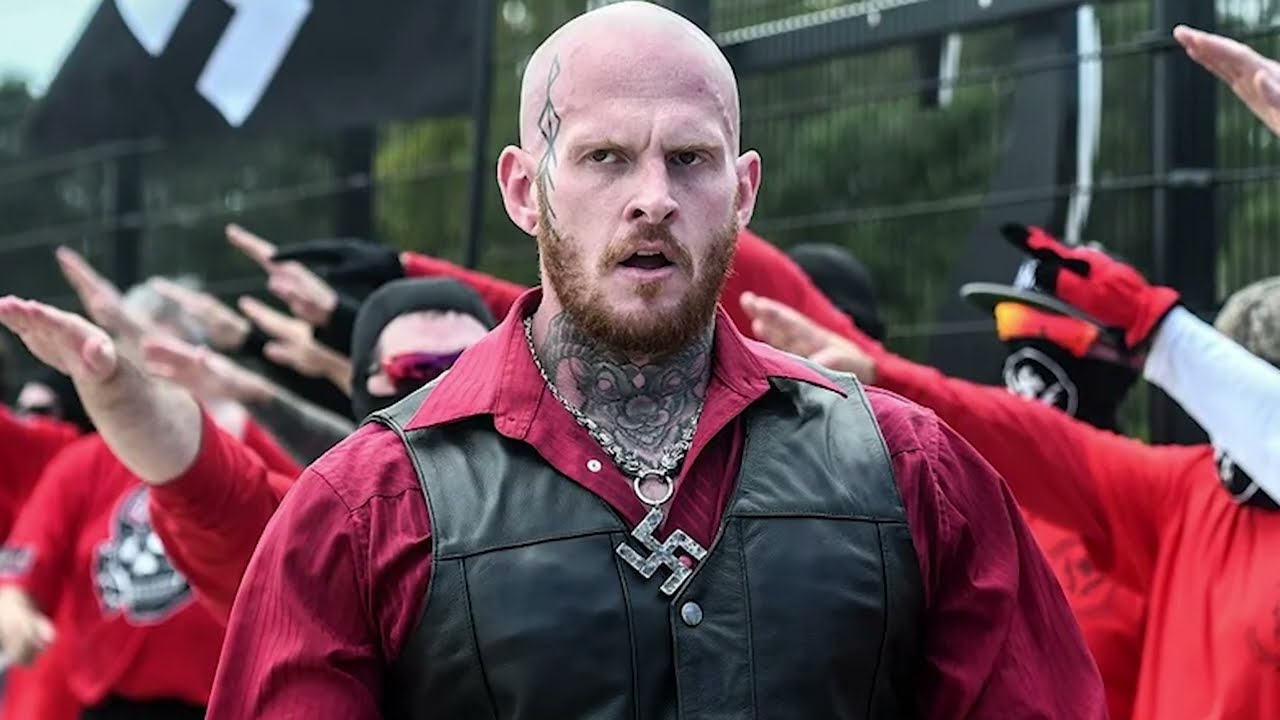
Yet, in the shadows of the internet, far-right groups continue to mythologize the Waffen-SS, using its imagery as a shorthand for a romanticized, masculine, European warrior ideal, stripped of its historical context of mass murder. German authorities have repeatedly cracked down on such online communities, recognizing them as a threat to democratic principles. The academic discourse on the Waffen-SS is now firmly in the hands of the world’s leading historians, such as Sönke Neitzel and Peter Longerich, whose research profoundly demonstrates that the Waffen-SS was a political soldier, an ideological fighter whose very identity was fused with the Nazi project.
They underline that the organization was never separate from Nazi politics; it was its armed extension, its very structure designed for both conventional warfare and systematic terror.
Today, the war is over, the veterans are nearly all gone, and the vast associations like HIAG have crumbled into dust. But the battle over their memory has not. The story of where the Waffen-SS went after 1945 is not just a story of escape or reintegration.
It is a cautionary tale about the malleability of history, the seductive power of political myth, and the lengths to which societies will go to avoid confronting the most brutal chapters of their own past. The post-war journey of the Waffen-SS, from a condemned criminal organization to a politically reintegrated veterans’ movement, and finally to a contested symbol of national identity in a globalized world, serves as a stark and permanent warning about the fragility of justice and the enduring resonance of a dark history. The echoes of their deeds, and the lies that were told to obscure them, continue to shape the debate over what it means to be a soldier, a nation, and a society that is still struggling to reckon with the ghosts of its past.
The legal judgment of Nuremberg was clear, but the moral battle for memory remains an open, unfinished scar on the conscience of the modern world.


