
# Execution of Auschwitz Nazi Guard Who Burned Children Alive: Otto Moll
On the 2nd of February 1943, the tide of World War II turned decisively at Stalingrad. The Soviet Union had encircled the German Sixth Army after five months of fierce fighting and heavy casualties. Having exhausted their ammunition and food supplies, the German forces finally capitulated, making it the first of Hitler’s field armies to surrender during World War II.
 The battle for the city proved to be a decisive psychological turning point, ending a string of German victories that had stretched back to the summer of 1942 and beginning the long retreat westward that would ultimately lead to the fall of the Third Reich.
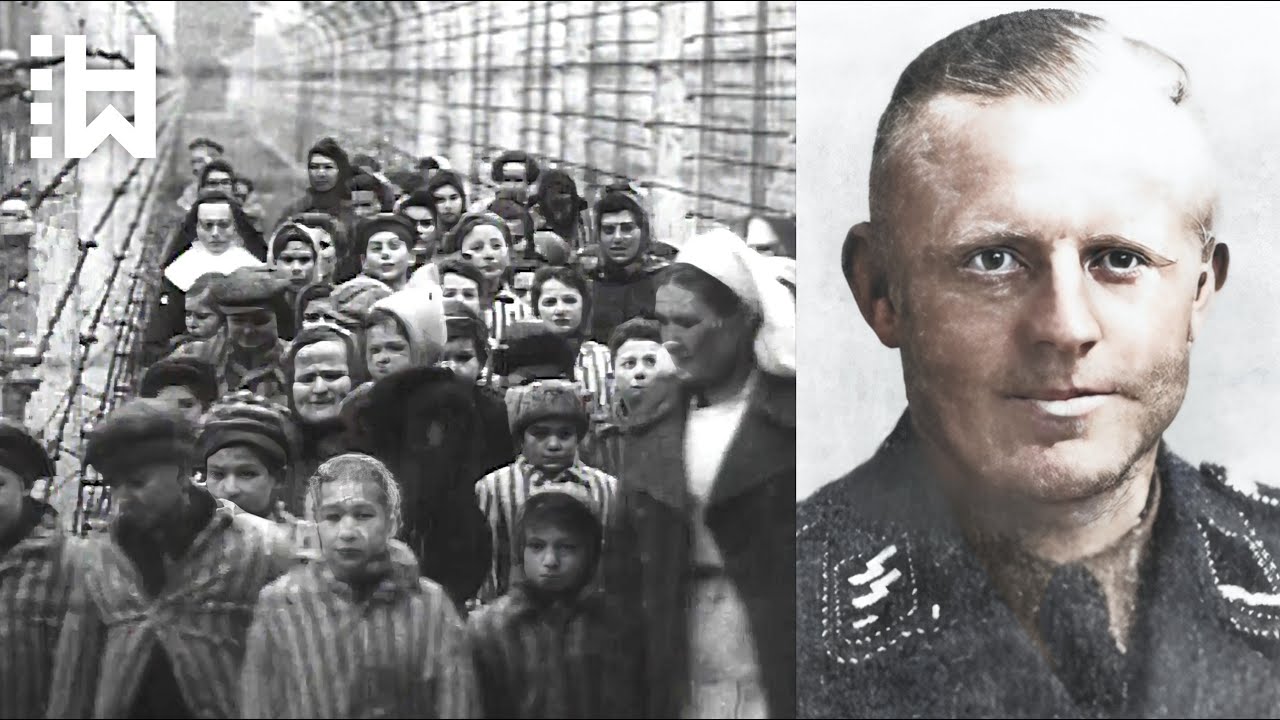
The Soviet Army remained on the offensive following its triumph at Stalingrad, pushing relentlessly westward through occupied territory. On the 27th of January 1945, Soviet forces entered Auschwitz, the largest of the extermination centers established by the Nazi regime. When they arrived, they liberated more than 7,000 remaining prisoners who were mostly ill and dying.
The scale of the horror they discovered there was almost incomprehensible. It is estimated that a minimum of 1. 3 million people were deported to Auschwitz between 1940 and 1945, and of these, at least 1.
1 million were murdered within the camp’s sprawling complex.
One of the main perpetrators responsible for these atrocities was Otto Moll. His name would become synonymous with the most extreme cruelty and sadism practiced within the Auschwitz system, earning him a place among the most despised figures in the history of the Holocaust.
## Early Life and the Rise of Nazism
Otto Moll was born on the 4th of March 1915 in Hohenschönhausen, a locality that was then part of the German Empire and would later become a district of Berlin. He came of age during one of the most turbulent periods in German history. Following World War I, which ended on the 11th of November 1918, a number of right-wing extremist political groups emerged in Germany.
One of them was the Nazi Party, which claimed that the Jews had done much to spread defeatism and thus destroy the German army from within. They interpreted the terms of the Versailles Peace Treaty and the steep compensation payments that it entailed as revenge by the victors and a glaring injustice inflicted upon the German people.
Beginning with the onset of the Great Depression, the Nazi Party rose rapidly from obscurity to political prominence. The economic devastation of the early 1930s created widespread desperation and resentment among the German population, and the Nazis skillfully exploited these conditions to advance their political agenda. In 1932, the party became the largest in the German Parliament, winning 33.
1 percent of the vote. The Communists, however, gained votes as well, winning 16. 9 percent.
As a result, the small circle around President Paul von Hindenburg came to believe that the Nazi Party was Germany’s only hope to forestall political chaos ending in a Communist takeover. Nazi negotiators and propagandists did much to enhance this impression, painting themselves as the only bulwark against the specter of Bolshevik revolution.
When on the 30th of January 1933, President von Hindenburg appointed Adolf Hitler chancellor of Germany, Otto Moll was 17 years old. The young man was about to come of age in a nation that was rapidly transforming into a brutal dictatorship. Three years later, in 1936, Moll joined the SS after having graduated from the professional gardening school.
The SS, which stood for Schutzstaffel or protection squads, was originally established in April 1925 to protect Adolf Hitler and other Nazi leaders and speakers and provide security for political meetings. SS members were subject to strict military discipline and swore an oath of complete loyalty to Hitler and those appointed by him.
In January 1929, Heinrich Himmler became the head of the SS, and the organization greatly expanded in size and strength. By the time Hitler came to power in 1933, Himmler had made the SS the dominant organization within the Reich. From the beginning of the Nazi regime, Hitler entrusted the SS first and foremost with the removal and eventual murder of political and so-called racial enemies of the regime.
The SS became a virtual state within a state in Nazi Germany and was staffed by SS men who perceived themselves as the racial elite of the Nazi future.
From 1939, the SS assumed responsibility for solving the so-called Jewish question, which then culminated in 1941 when the leadership planned, coordinated, and directed the so-called Final Solution. This solution, in which Otto Moll would play a crucial role, was the genocide of European Jews during World War II, also known as the Holocaust. SS officers were directly responsible for the management of concentration camps where millions of Jews were murdered by poison gas.
## Accident and Transformation
Otto Moll was musically active and became a member of the SS marching band. His life took a dramatic turn during a journey with his marching band from Bernau. The SS truck collided with a car in an accident that would forever change the course of his life and the lives of countless others.
One SS man was killed in the collision, and Moll was critically injured. He was treated in the Baraust hospital for several months, suffering from a fractured skull and losing one eye. It has been suggested that his brain was damaged too, and as a result, he became a physically and mentally ill person who was deliberately exploited as a murderer by the criminal Nazi regime.
The man who emerged from that hospital would be described by many who encountered him as someone who had lost whatever humanity he might once have possessed, replaced by a cold and sadistic cruelty that would make him notorious even among his fellow SS men.
From 1938, Moll was employed at the Sachsenhausen concentration camp, which was located north of Berlin. The camp held Jews, homosexuals, Jehovah’s Witnesses, Roma and Sinti people, and later Soviet civilians. At Sachsenhausen, Otto Moll worked as the head of the gardener work detail and was protected by Rudolf Höss, who belonged to the camp’s leadership.
This connection with Höss would prove to be of immense significance, as Höss would later become the commandant of Auschwitz and would bring Moll with him to serve in the largest extermination center of the Nazi regime.
## The Outbreak of War and the Establishment of Auschwitz
The Second World War began on the 1st of September 1939 when Nazi Germany invaded Poland. The last operational Polish unit surrendered on the 6th of October. The German occupation of Poland was exceptionally brutal.
The Nazis considered Poles to be racially inferior, and they launched a campaign of terror intended to destroy the Polish nation and culture and to reduce the Poles to a servile population of peasants and workers laboring for German masters. The brutality of the occupation was unprecedented, with mass executions, forced labor, and the systematic destruction of Polish intellectual and cultural life.
In May 1940, around 60 kilometers west of Kraków, the Germans established Auschwitz concentration camp. The direct reason for the establishment of the camp was the fact that the mass arrests of Poles were increasing beyond the capacity of existing local prisons. The camp’s commandant became Rudolf Höss, and the first 30 prisoners, German criminals with green badges, arrived in Auschwitz on the 20th of May 1940 from the Sachsenhausen camp.
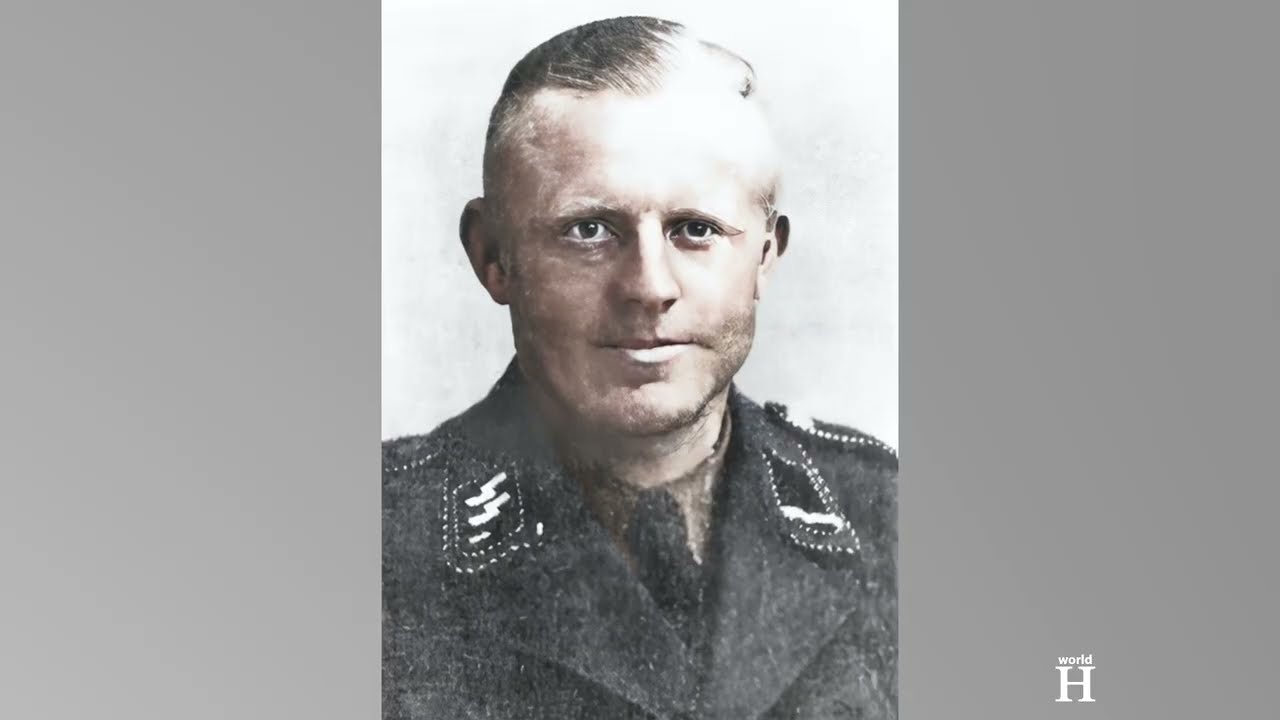 The Greens, as these 30 German prisoners were called, did much to establish the sadism of early camp life, which was directed particularly at Polish inmates. The first transport of Polish male prisoners, including Catholic priests and Jews, arrived in Auschwitz on the 14th of June 1940 from Tarnów in Poland. They were given serial numbers 31 to 758.
On the 2nd of May 1941, Höss brought to Auschwitz Otto Moll, who lived in the camp with his wife and two daughters. His first wife Ellie had also worked in the concentration camp but died of blood poisoning in 1940. Moll remarried only a few weeks after her death, a haste that some found striking given the circumstances.
Many former Auschwitz prisoners described Otto Moll as the worst SS man in the entire camp. He distinguished himself with a particular sadism towards the prisoners, and because he had a glass eye to replace the one he had lost in the accident, he was given the nickname Cyclops.
## Rise Within the Camp System
At Auschwitz, Moll first supervised the agricultural commando. Thanks to his drive and toughness, in June 1942, he became the leader of the notorious penal company to which prisoners were assigned for various reasons, including escape attempts, contact with civilians, or the illegal possession of food, money, and additional clothing. Assignment to the penal company, situated in the infamous Block 11, lasted from one month to one year.
Prisoners in the penal company were not only completely isolated from the other prisoners but had to perform the hardest labor and were continually beaten by the SS men and prisoner functionaries. Block 11 was already known throughout the camp as a place of horror, where prisoners faced torture and summary execution, and Moll’s appointment as its overseer only intensified its reputation for terror.
After the expansion of Auschwitz into an extermination camp ordered by the head of the SS, Heinrich Himmler, Moll devoted himself primarily to the killing of people. Before the large crematoria and gas chambers were set up in Birkenau, which was the largest of the more than 40 camps and subcamps that made up the Auschwitz complex, Moll and his deputy comrade Franz Hössler had directed the mass killings in Crematorium 1 and the gas chambers of the so-called Bunkers 1 and 2. Mass graves were dug in their immediate vicinity in which several hundred corpses were buried.
This method of disposal continued until September 1942, when some deaths among the SS men and their relatives occurred as a result of the contaminated groundwater. The mass graves were then opened, and the corpses were burned from September to November of the same year.
## The Process of Extermination
In 1943, the four large crematoria and gas chambers in Auschwitz-Birkenau went into operation. The process of selection and murder was carefully planned and organized. When a train stopped on the platform, the arrivals were lined up into two columns: men and boys in one, women and girls in the other.
The SS physicians, such as Josef Mengele, performed a selection. The only criterion was the appearance of the prisoners, whose fate for labor or for death was determined at will. Those deemed fit for work were sent to the camp, while those considered unfit, including the elderly, the sick, children, and pregnant women, were sent directly to the gas chambers.
The veteran prisoners gathered the belongings of the new arrivals in an area known as Canada, which consisted of several barracks that were used to store the stolen belongings of the prisoners.
Trucks carried those too infirm to walk, and the rest marched. Before entering the gas chambers, people were ordered to disrobe. The SS men kept the people fated to die unaware of what awaited them and made the new arrivals believe that they were being sent to the camp where work was waiting for them.
But first, they were told, they had to undergo disinfection and bathe. However, they were taken into the gas chambers, and after the doors were shut, SS men dropped Zyklon B pellets through the vents in the roof or holes in the side of the chamber. The poison gas would quickly fill the room, and death would come within twenty minutes, though the suffering of the victims during that time was unimaginable.
## Acts of Unimaginable Cruelty
On one occasion, a truck full of prisoners was being driven to a gas chamber but turned so suddenly that a woman’s child, about 3 years old, fell out. Otto Moll, who was driving behind the truck, took the child by the neck and then by the leg and smashed his head against the guard house wall, killing him on the spot. Moll then drove up to the truck and threw the child’s lifeless corpse to his mother.
This act of casual, brutal violence against an innocent child exemplified the depths of Moll’s depravity. Such actions were not merely tolerated by the camp administration but were apparently rewarded.
For his merit in killing innocent men, women, and children, Hitler decorated Moll with a War Merit Cross First Class with Swords on the 20th of April 1943. This cast significant light on his importance in the extermination of Jews. In addition to him, only Commandant Höss and Josef Klehr, the head of the SS disinfection commando, were decorated with this medal among the Auschwitz personnel.
The award of this decoration demonstrated that the Nazi leadership not only knew of Moll’s activities but actively celebrated them as exemplary service to the Reich.
## Command of Subcamps and the Hungarian Jews
From September 1943 to May 1944, Moll was the first commandant of the Fürstengrube and Gleiwitz 1 subcamps, which were labor camps within the Auschwitz system. In these positions, he continued to demonstrate the same brutality that had marked his service in the main camp, overseeing the forced labor of prisoners under conditions of extreme deprivation and violence.
In May 1944, he returned to the Auschwitz-Birkenau camp, where he was appointed the head of all crematoria by the camp’s commandant Rudolf Höss. During this period, the extermination of Hungarian Jews was to take place. This operation, known as Operation Höss after the commandant who was recalled specifically to oversee it, was to be the largest single wave of mass murder in the history of the Holocaust.
Moll was aware of the fact that the plan to 𝓀𝒾𝓁𝓁 10,000 to 15,000 corpses per day would overwhelm the crematoria ovens. So just before the arrival of the Hungarian transports, Moll ordered fire pits to be dug alongside the crematoria, which he provided with a gutter system of his own design. People from the incoming transports were to be shot and then burned in these fire pits.
In this way, fat from the burning corpses would be drained off, collected, picked up by the inmates with buckets, and tipped into the flames to burn. This grotesque efficiency demonstrated Moll’s complete commitment to the murderous work and his willingness to innovate new methods of mass killing.
Speeches to the new arrivals who were unaware of what awaited them were a standard part of the process. Moll repeated that they were being sent to the camp where work was waiting for them, but first they had to undergo disinfection and bathe. Moll told them politely to hang their clothing on hooks, take a shower, and even promised they would be provided with soup and tea or coffee.
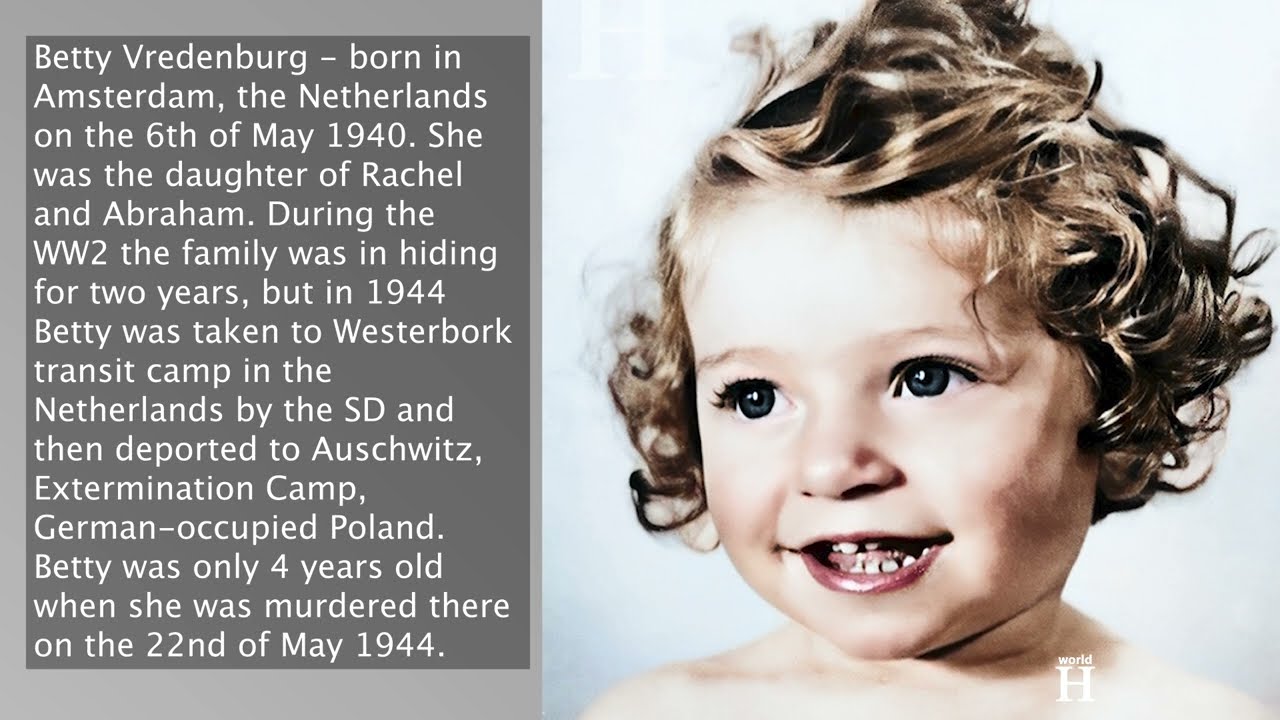 The deception was carefully maintained until the very last moment. However, they were taken into the gas chambers, locked in, and killed with Zyklon B gas. The victims were dead within 20 minutes, though witnesses described terrible scenes of struggle and desperation in those final moments.
Johann Kremer, the SS doctor who oversaw the gassings, testified that the shouting and screaming of the victims could be heard through the opening, and it was clear that they fought for their lives.
## Sadistic Specialties
Moll often strolled through the crowd of arrivals scheduled for gassing, observed them undressing, and led small children away from their mothers with sweets in order to throw them outside into the boiling fat of the fire pits. The use of candy to lure children to their deaths was one of Moll’s most despicable techniques, exploiting the natural trust of young children who could not comprehend the danger they faced. On a few occasions, he was seen picking children up by their hair and then holding them suspended while he shot them.
The casual cruelty of these acts, performed without any visible emotion, horrified even fellow SS men who witnessed them.
When there were so many incoming transports that the gas chambers in crematoria were incapable of containing all the new arrivals, Moll’s fire pits to burn the corpses were used. The exhausted people were generally shot one at a time, often by Moll himself or by other men, especially SS man Erich Mühsfeldt. When some people asked Moll to spare their life, he replied, “An order is an order,” and then killed them without any remorse.
The Jews were shot in the back of their head and dropped into the fire. It sometimes happened that some prisoners put up a fight or children cried. As a punishment, Moll would throw them into the burning pits alive.
This act of throwing living human beings, including children, into flames was perhaps the most extreme of Moll’s many atrocities, surpassing even the systematic murder of the gas chambers in its deliberate cruelty.
Even among the SS men, Moll was notorious for his cruelty and hatred towards the Jews, especially women and children. When he did not throw the children into the fire alive with a smile on his face, he would kick them to death. The prisoners did not consider him human and would call him “Szczota,” which meant pig butcher.
One Holocaust survivor later testified, “Moll was called a pig butcher because he was not a human being but a butcher who threw children alive into the fire.”
## Terror Against Women
Moll often led attractive Jewish women to the edge of the fire pits to enjoy their fear. He would whisper lewd words into their ears, then shoot them in the back of the head and drop them into the fire. This combination of sexual sadism and murder demonstrated the depths of his depravity, as he derived pleasure not only from killing but from the psychological torment of his victims before their deaths.
Another of Moll’s specialties was setting his dog on naked women. The dog would bound towards them in rage, chasing them towards the fire pits while biting and snapping at their legs and buttocks. Moll would then shoot the poor women in their stomachs so that they would fall over, and he would watch them burn alive.
The use of his dog as a tool of terror was yet another way in which Moll demonstrated his complete lack of humanity, transforming even the most basic elements of daily life into instruments of torture.
## The Fire Pits and the Hungarian Deportations
The fire pits were also used for smaller groups of victims consisting of up to 200 people. The reason was that using Zyklon B gas for such a small number of people was considered to be uneconomical and therefore wasteful. As a result, the Germans drove the Hungarian children as well as the sick, old, and disabled people by truck to the fire pits, where Moll and his colleagues, who had been instructed to shoot them by hand or throw them alive into the flames, were waiting for them.
This cold calculation of the economics of murder demonstrated the complete dehumanization that characterized the Nazi extermination system.
During 8 weeks, from the 15th of May to the 9th of July 1944, Hungarian gendarmerie officials under the guidance of German SS officials deported around 424,000 Jews from Hungary to Auschwitz-Birkenau, where upon arrival and after selection, SS functionaries killed the majority of them in gas chambers. This was the fastest and most intensive killing operation of the entire Holocaust, and Moll was at its center as the head of all crematoria, directing the machinery of death with ruthless efficiency.
## The Sonderkommando
As the head of all crematoria, Moll also directed the work of the Jewish Sonderkommando, which was a unit of camp prisoners forced to help with the disposal of gas chamber victims. Those who refused to do the terrible work of the Sonderkommando, Moll would personally throw alive into the burning furnaces. The Sonderkommando prisoners faced an impossible choice: participate in the murder of their own people or face immediate death themselves.
Moll exploited this terrible situation with particular cruelty, showing no mercy to those who could not bear the psychological burden of their work.
On one occasion, when he found jewelry in the possession of one of the members of the Jewish Sonderkommando, he poured gasoline over him and set him on fire. This act of torture and murder was performed in full view of the other prisoners, serving as a warning to anyone who might attempt to conceal valuables from their murderers.
Moll was also known for being an excellent marksman, and when he felt that the prisoners from the Sonderkommando were not working properly, he would shoot them from considerable distances. His skill with firearms, combined with his willingness to use them at any provocation, made him a constant threat to the prisoners who worked under his supervision.
One of the very few survivors of the Sonderkommando, a Slovak prisoner named Filip Müller, described Moll’s atrocities in the greatest detail. Among other things, Müller reported on the sadistic death torture of frog swimming practiced by Otto Moll. Moll chased selected prisoners into one of the extinguishing ponds next to the crematoria and forced them at gunpoint to swim there, croaking constantly until they died of exhaustion.
This grotesque parody of a childhood game was typical of Moll’s cruel sense of humor and his enjoyment of the suffering of others.
 Müller also recalled how Otto Moll had invented camp games such as brick bashing, in which two groups of prisoners had to smash as many bricks as possible for a certain amount of time, and the losing team was then shot on the spot by Moll. These “games” were yet another demonstration of Moll’s sadistic creativity, transforming even the most mundane activities into opportunities for murder.
Among Moll’s many sadistic specialties also belonged beating people with clubs and iron bars or throwing them against the electric fences. The electric fences surrounding the camp were normally a means of preventing escape, but Moll used them as instruments of execution, hurling prisoners against them and watching as they were electrocuted.
## The Death Marches and Kaufering
After the end of the extermination of Hungarian Jews, Moll returned to the position of head of the Gleiwitz 1 subcamp. In mid-January 1945, as Soviet forces approached the Auschwitz Concentration Camp complex, the SS began evacuating Auschwitz and its subcamps. SS units forced nearly 60,000 prisoners to march west from the Auschwitz camp system.
These forced marches of concentration camp prisoners became known as death marches. The prisoners had to march over long distances under guard and in extremely harsh conditions. Inmates suffered from the cold weather, starvation, and exposure on these marches.
Those who could not keep up were shot on the spot and left by the side of the road.
Otto Moll led one such death march, and in February 1945, he arrived in Kaufering, which was the common name of a system of 11 subcamps of the Dachau Concentration Camp system. The conditions in Kaufering were horrible. The prisoners deported to each of the 11 subcamps had to construct the accommodation themselves.
The resulting huts, partially buried for camouflage from aerial reconnaissance, were completely inadequate for the weather conditions. Rain and snow 𝓵𝓮𝓪𝓴𝓮𝓭 through the earthen roofs, and vermin infested the huts. Prisoners had to sleep on straw that had been spread on the floor.
What little food the prisoners did have was taken by the SS guards, and those who were sick were fed even less. There were even incidents of cannibalism, and some prisoners were so desperate to escape their horrible reality that they would try to commit suicide by throwing themselves into the electrical fencing at Kaufering.
Moll abused and killed prisoners as well as willfully neglecting their care. During the Kaufering camp’s existence between June 1944 and April 1945, 15,000 out of the 30,000 prisoners died from hunger, disease, execution, or during the death marches. The mortality rate of 50 percent was among the highest of any camp system in the Reich, a testament to the brutal conditions and the cruelty of the men who oversaw them.
## Final Atrocities and Liberation
A few days before the subcamps of Kaufering were liberated between the 25th and 27th of April 1945 by the 7th United States Army, Otto Moll had forced prisoners on a death march to the Dachau Concentration Camp. During this death march, he was involved in the shooting of at least 120 Russian prisoners who were too weak or sick to continue marching any further. Moll himself shot 26 of them.
Even in the final days of the war, with Germany’s defeat imminent and inevitable, Moll continued to murder with the same cold efficiency that had characterized his entire career in the concentration camp system.
On the 28th of April 1945, Otto Moll arrived at Dachau. The camp was liberated on the following day by the US 7th Army’s 45th Infantry Division. The soldiers could smell not only human excrement but also decaying bodies long before they reached the camp gates.
Many of these soldiers cried or vomited as they found dozens of railroad cars filled with thousands of dead bodies and 30,000 survivors who looked like walking skeletons. Many inmates were sick and dying from typhus epidemics and starvation. The liberation of Dachau revealed to the American public for the first time the full extent of Nazi atrocities, and the scenes witnessed there would be etched forever in the memories of those who saw them.
## Trial and Execution
Otto Moll was arrested at the beginning of May 1945 and finally had to face justice and pay for his crimes. From the 15th of November 1945, he was tried at the first Dachau trial, which was held within the compound of the former Dachau concentration camp. The trial was conducted by a US Military Tribunal, and the proceedings attracted international attention as one of the first major war crimes trials following the end of the war.
On the 13th of December 1945, the US Military Tribunal found Otto Moll guilty of fatally shooting 26 prisoners who had collapsed from exhaustion during the death march from Kaufering and sentenced him to death by hanging. Moll’s crimes at Auschwitz were not part of the indictment, and he was never prosecuted for them. The tribunal focused only on the murders he had committed on the death march, which were the most easily proven charges against him.
Half a year after his death sentence, he was confronted by his former superior Rudolf Höss during the Nuremberg trials. Höss, who was himself being tried for his crimes as commandant of Auschwitz, testified against his former subordinate. Even though Moll admitted to some of his crimes, he largely denied his involvement in the killing of Jews.
He claimed that he had only followed orders and that he had not personally participated in the mass murder operations at Auschwitz. However, if he hoped that his lies would help him escape justice, he was wrong.
On the 28th of May 1946, Otto Moll, then 31 years old, was executed in the courtyard of the Landsberg prison. There were no tears shed for Otto Moll. His execution marked the end of a life that had been dedicated to the most extreme cruelty and murder.
The man who had thrown children into fires alive, who had shot women and men without mercy, who had invented new forms of torture and death, was finally brought to justice. But the thousands of victims he had killed could not be brought back, and the families he had destroyed could never be restored. His name would live on, however, as a warning of the depths of depravity to which human beings can sink when they abandon all moral restraint in service of an evil ideology.
The story of Otto Moll serves as a chilling reminder of the banality of evil and the capacity of ordinary individuals to commit extraordinary atrocities when they are placed in positions of power over others and encouraged to exercise their cruelty without limit. His transformation from a gardener into one of the most feared killers of the Holocaust demonstrates how the Nazi system was able to identify and cultivate individuals who would carry out its murderous policies with enthusiasm and initiative. Moll was not merely a follower of orders; he was an innovator in cruelty, a man who derived evident pleasure from the suffering of his victims and who constantly sought new ways to inflict pain and death.
In this sense, he represents the darkest possibilities of human nature when all constraints of morality and empathy are removed.


