The global television phenomenon “Diriliş: Ertuğrul” presented viewers with a heroic Muslim warrior who prioritized prayer and justice, offering rare representation for audiences often marginalized in Western media. Yet the historical figure behind the fictional hero remains largely a mystery, with historians describing the 13th century as a “black hole” for Ottoman origins. No diaries, books, or royal decrees from Ertuğrul’s actual lifetime survive to confirm his deeds. The only physical evidence of his existence is a single 13th century coin bearing an Arabic inscription reading “Osman bin Ertuğrul,” confirming he was the biological father of Osman I, the founder of the Ottoman state.
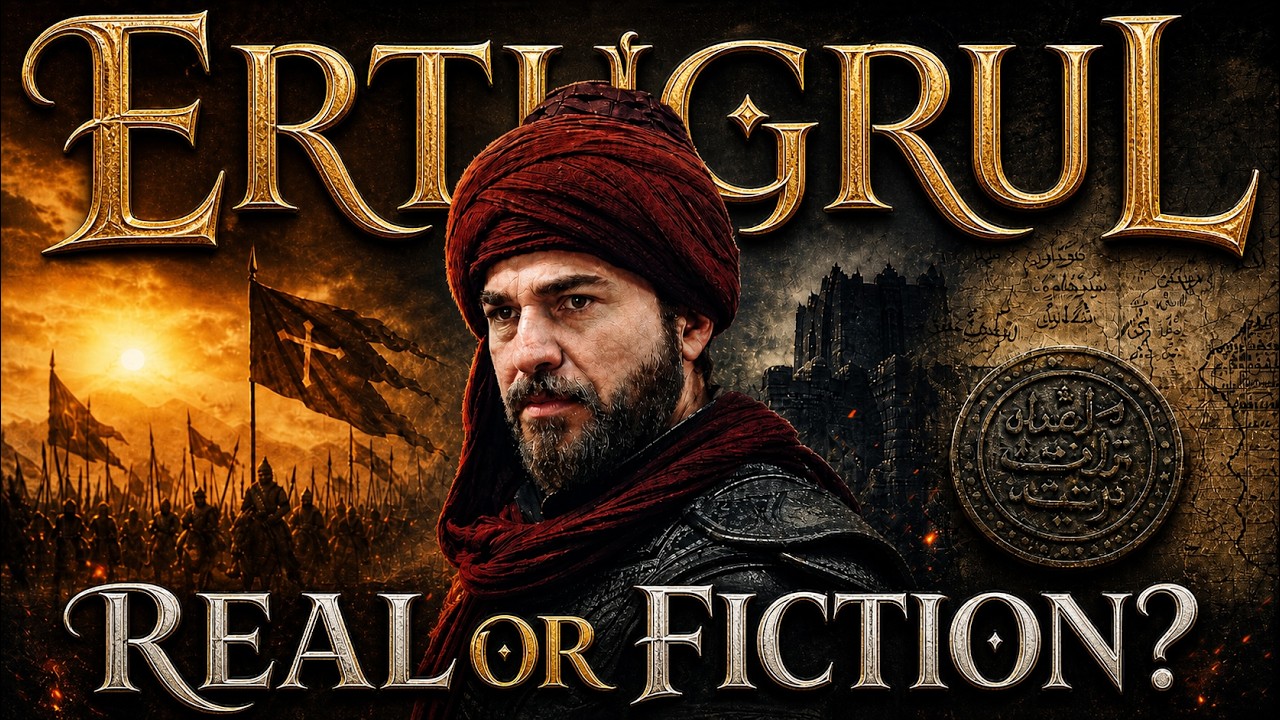
The series functioned as a significant tool of soft power for Turkey, allowing the nation to rebrand its international identity through the prestige of its imperial history. The show’s popularity in Pakistan was amplified when former Prime Minister Imran Khan personally ordered its broadcast on national television, framing the fictionalized narrative as essential cultural education. The fandom eventually evolved into a political force, with social media users viewing contemporary politics through the lens of the drama and labeling real-life political rivals as traitors and schemers cast in the roles of the show’s villains. Historians note that many fan-favorite subplots are entire fabrications.
There is no historical record of a grand love story with Halime Sultan, no evidence that Ibn Arabi served as Ertuğrul’s personal mentor, and no documentation of specific clashes with Templar knights. The real Ertuğrul lived during an era defined by Mongol invasions that devastated central Asia, destroying great centers of civilization including Baghdad, Samarkand, and Bukhara. Millions were slaughtered as the Mongols dismantled the existing order across the Muslim world. Among those fleeing this destruction was the Kayı tribe, a desperate caravan of just 400 families with no standing army, no wealth, and no permanent sanctuary.
Pushed westward by the Mongol horde, the tribe was squeezed into the volatile borders of the collapsing Byzantine and Crusader empires. Ertuğrul was not leading a glorious crusade for a throne. He was a desperate chief whose primary objective was the survival of his people in a landscape of total collapse. While most tribes fled south toward Syria, Ertuğrul moved northwest, settling directly on the Byzantine border.
The Seljuk Sultan granted him this small zone on the edge of the imperial map, designating him an “uç bey” or frontier guardian. Söğüt was not a peaceful estate but a military assignment in a death zone intended to serve as the first line of defense for the Seljuk Sultanate. Rather than constant dueling, Ertuğrul focused on building a durable system. He spent 50 years administering justice to local Christian populations, securing trade routes, and transforming a temporary encampment into a permanent home.
Because Söğüt sat directly on the border, it became a focal point for warriors across Anatolia who wanted to challenge the Crusaders. As he aged, Ertuğrul broke tribal custom by selecting his youngest son, Osman, as his successor, a decision based on merit and statesmanship rather than the traditional right of the eldest. While a guest of the Sufi leader Sheikh Edebali, Osman reportedly dreamed of a magnificent tree growing from his chest to shade the entire world. The interpretation of this dream provided the state with ideological legitimacy.
By marrying the sheikh’s daughter, Osman united the military force of the warriors with the spiritual authority of the Sufis—the sword and the pen. By 1566, the Ottoman Empire’s borders at its height illustrated the unimaginable scale of what eventually grew from the small territory Ertuğrul secured in Söğüt. He was never the sovereign of an empire but the vital root beneath the ground—patient and hidden, allowing the tree above to eventually dominate the world. The modern obsession with this fictionalized hero often stems from a need for catharsis, according to observers.
Many viewers live in a modern reality defined by systemic economic, scientific, and geopolitical decline, seeing persistent struggles in places like Palestine and Kashmir without a clear hero to intervene. When systemic real-world success feels impossible, the on-screen triumph of an idealized ancestor offers a temporary reprieve, substituting the arduous work of social and economic progress for the catharsis of a well-timed battle cry. The drama often relies on romanticized images of military conquest to suggest that complex geopolitical problems can be solved through courage alone. Yet the empire’s true strength lay in its bureaucratic organization, economic stability, and scientific output—a sophisticated civilization that extended far beyond the battlefield.
Ertuğrul’s real-life lesson is one of grueling, silent persistence. He spent 50 years in a single settlement, focusing on the slow work of building a foundation he knew he would never see completed. The choice offered by his legacy remains between the emotional high of a fictional superhero and the patient work that historically transformed a small settlement into the base of an empire.