
The hunt for one of the most historically significant and valuable weapons ever forged has entered a critical new phase, as researchers and historians intensify their decades-long search for the Honjo Masamune, a 700-year-old samurai sword valued at an estimated $20 million that vanished from official records in the chaotic aftermath of World War II. The blade, a National Treasure of Japan and considered the pinnacle of the swordsmith’s art, was surrendered to Allied forces in December 1945 and has not been seen in public since, sparking a global mystery that has captivated collectors, historians, and military investigators for 79 years.
The sword’s disappearance represents a profound cultural loss for Japan, where it is revered not merely as a weapon but as a masterpiece of metallurgy and a symbol of the nation’s feudal heritage. Forged by the legendary master Goro Masamune, who died in 1343, the blade is part of a select group of weapons that are today rated as the finest samurai swords ever created. Its craftsmanship, characterized by a unique wave pattern along the cutting edge, is considered a fingerprint of the master’s work, making it theoretically identifiable if it were to surface.
 The sword’s journey through history is a chronicle of Japanese power, having passed through the hands of the nation’s most influential leaders before becoming the property of the Tokugawa shogunate, the dynasty that ruled Japan for over 250 years.
The current urgency surrounding the search stems from new investigative efforts that have traced the sword’s likely path through the American occupation forces, specifically pointing to a U. S. Army technician from rural Georgia who may have been the last person to officially handle the weapon.
According to historical records, Prince Tokugawa Yoshimasa, the head of the former shogunal branch of the Tokugawa clan, dutifully complied with Allied disarmament orders in December 1945, personally delivering 14 prized swords to the Mejiro police station in Tokyo. Among these was the Honjo Masamune, which had been officially designated a Japanese National Treasure in 1939, a status that should have afforded it special protection under international law and cultural preservation agreements.
The chain of custody broke down in January 1946, when a U. S. non-commissioned officer from the Foreign Liquidations Commission arrived at the police station to collect the surrendered weapons.
Japanese police records from the time phonetically recorded the soldier’s name as “Sergeant C. I. Beore,” a name that has since been determined to be a mishearing of “D.
B. Moore,” a Technician Fourth Grade from Wilcox County, Georgia. The phonetic similarity between “C.
I. Beore” and “D. B.
 Moore” is striking, and researchers believe that the Japanese officer recording the name likely misheard the American’s statement, “I’m called D. B. Moore,” as a foreign-sounding name that was then transcribed into the official log.
This theory has gained significant traction in recent years, as archival research has confirmed that a soldier named D. B. Moore was indeed attached to the Foreign Liquidations Commission in Japan during the exact period the swords went missing.
The investigation into Moore’s involvement has been complicated by the destruction of his military service records in a devastating fire at the National Personnel Records Center in St. Louis in 1973, which destroyed millions of files and erased the definitive paper trail that could confirm his exact duties and movements. However, researchers have pieced together his biography through census data, local records, and genealogical research, revealing that Moore was a farmer before the war, served in the Pacific theater, and returned to Georgia after his discharge in April 1946, just four months after the Tokugawa swords vanished.
He lived the rest of his life in obscurity, dying in 1979 at the age of 65, and is buried in the small town of Pitts, Georgia, where his children and grandchildren still reside to this day.
Attempts to contact Moore’s descendants have been met with silence, as a researcher investigating the Honjo Masamune reached out to one of his children via social media with questions about the sword but received no response. This lack of communication has fueled speculation that the family may be aware of the sword’s existence and its immense value, or that they are simply uninterested in engaging with the historical inquiry. The possibility that the sword remains in the possession of Moore’s family, hanging on a wall or stored in a closet as a war souvenir, is considered by experts to be the most plausible explanation for its continued absence.
During the occupation, tens of thousands of Japanese swords were taken home by American servicemen as trophies, with many families completely unaware of the historical and monetary significance of the blades they possessed.
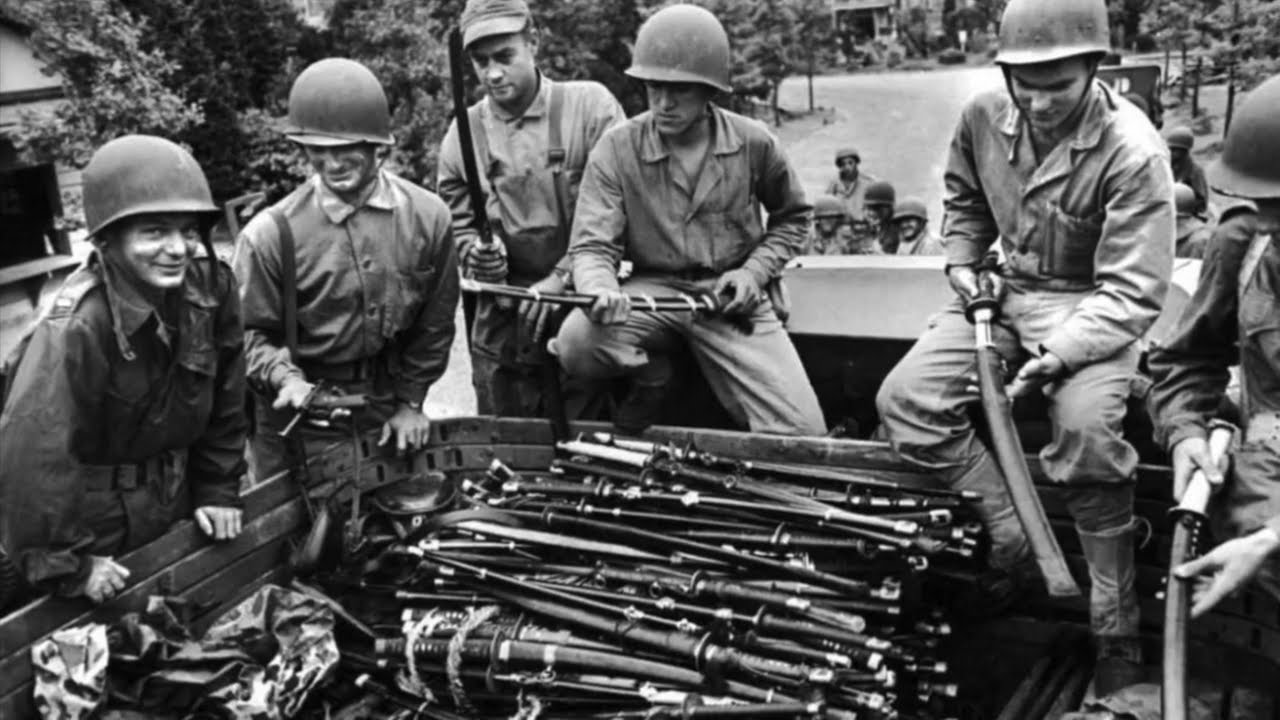 The scale of the post-war sword confiscation was immense and chaotic, driven by the Allied desire to fully disarm the Japanese population and prevent any potential resistance to the occupation. The United States enacted strict laws ordering the surrender of all firearms and swords, viewing the samurai blade as a potent symbol of Japanese militarism that had to be eradicated. For many Allied soldiers, the Japanese sword was the ultimate souvenir, a tangible trophy of victory in the brutal Pacific War, much like the Luger pistol was prized by troops in Europe.
However, the vast majority of these soldiers had no knowledge of Japanese sword craftsmanship, and many valuable, centuries-old blades were treated with the same disregard as mass-produced wartime weapons.
The Foreign Liquidations Commission, tasked with collecting and disposing of the surrendered swords, operated with little oversight and even less cultural sensitivity, leading to a free-for-all where the most aesthetically pleasing blades were often given to senior officers as gifts or taken by junior personnel for personal gain. While some Japanese experts were eventually appointed to help identify historically important swords for preservation in museums, the reality was that the process was disorganized and often corrupt. The Honjo Masamune, despite its National Treasure status, was swept up in this bureaucratic chaos, its unique value lost on the soldiers who handled it.
The sword’s distinctive wave pattern, which could have been used to identify it, was only known to a handful of Japanese experts who were not consulted during the initial collection phase.
Alternative theories for the sword’s disappearance persist, with some suggesting that it never left Japan at all. In the bombed-out ruins of post-war Tokyo, a thriving black market existed, and it is conceivable that police officers at the Mejiro station, struggling to survive in a devastated economy, kept the swords and sold them on the black market, fabricating the American soldier’s name to cover their tracks. Another theory posits that the police secretly returned the swords to the Tokugawa family, who have maintained a discreet silence about their whereabouts for nearly eight decades, perhaps fearing confiscation or the political ramifications of possessing a weapon that was supposed to have been surrendered.
The Tokugawa family, once the most powerful in Japan, retained significant wealth and influence even after the Meiji Restoration, and it is not inconceivable that they would have sought to protect their ancestral heirlooms from foreign confiscation.
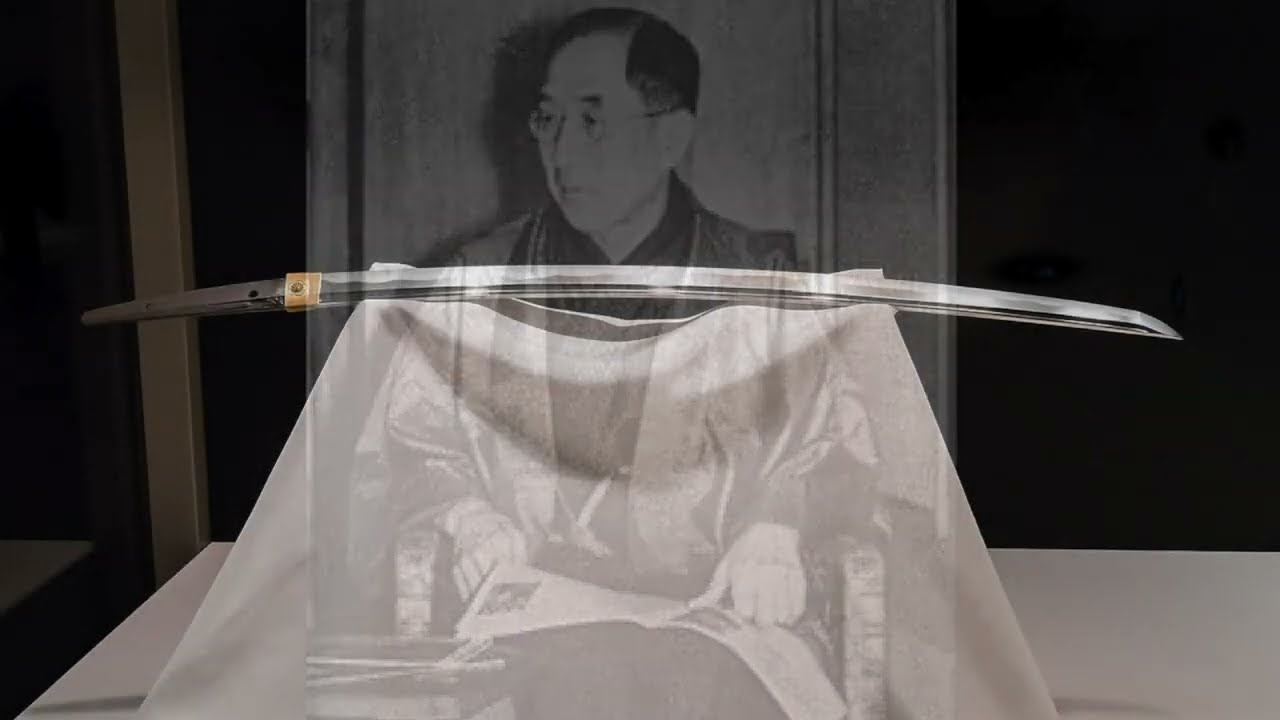 The financial value of the Honjo Masamune is almost incalculable, with experts estimating that if it were to be found and properly authenticated, it could fetch upwards of $20 million at auction, and potentially much more given its unique historical pedigree. However, the practical reality of selling such a famous object is fraught with difficulty, as any attempt to bring it to market would generate immediate international attention and a flood of uncomfortable questions. The Japanese government has made it clear that it would be extremely interested in repatriating the sword, and it is widely believed that they would pursue legal action to secure its return, potentially leading to a complex international legal battle over ownership and cultural heritage.
For the current possessor, if one exists, the sword is a burden as much as a treasure, a fact that may explain why it has remained hidden for so long.
The search for the Honjo Masamune is not merely a quest for a valuable artifact, but a journey into the murky history of the post-war occupation, a period marked by chaos, looting, and the erasure of cultural identity. The sword represents a tangible link to a feudal past that was forcibly severed by the Allied victory, and its recovery would be a symbolic act of restitution for a nation still grappling with the legacy of the war. Researchers continue to pursue every lead, from examining military archives to reaching out to veteran families, in the hope that a single piece of information will unlock the mystery.
The sword’s unique wave pattern, its “fingerprint,” remains the key to its identification, and experts are confident that if it were to be examined by a qualified appraiser, its authenticity would be immediately recognized.
As the 80th anniversary of its disappearance approaches, the international community of historians and collectors remains vigilant, urging anyone with information about the sword or the activities of the Foreign Liquidations Commission to come forward. The story of the Honjo Masamune is a cautionary tale about the unintended consequences of war and the fragility of cultural heritage in times of conflict. It is also a story of hope, that even after nearly a century, a masterpiece of human craftsmanship can still be recovered and restored to its rightful place in history.
The hunt continues, driven by the unwavering belief that the sword has survived, waiting to be rediscovered and reunited with the nation that created it.


