May Capone spent her life in silence while her husband, Al Capone, built one of the most infamous criminal empires in American history. Yet the world remembers the gangster, not the woman who stood beside him through wealth, scandal, imprisonment, and illness. Her story, largely unrecorded, was one of endurance shaped by loyalty, faith, and an unwavering devotion to her son. Born Mary Josephine Coughlin in 1897 in Brooklyn, New York, she was the daughter of Irish immigrants.
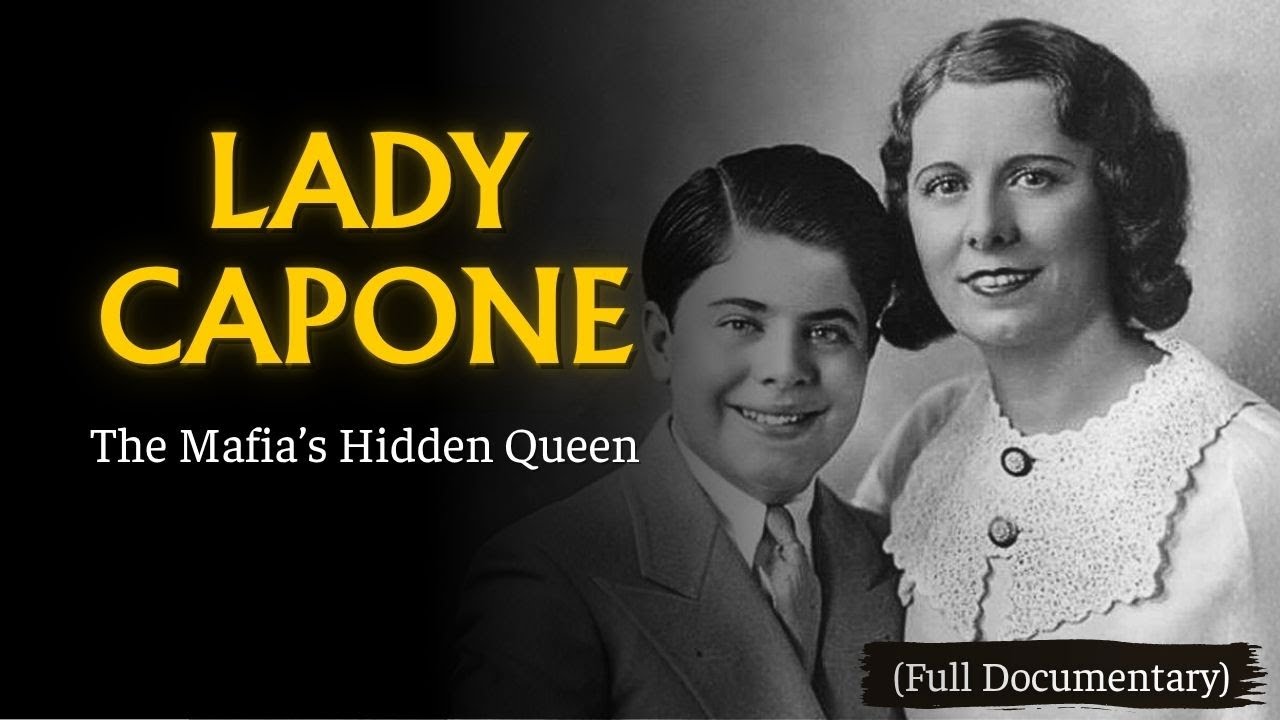
Her childhood was defined by the rituals of the Catholic Church and the modest routines of tenement life. In that close-knit neighborhood, she crossed paths with Alphonse Capone, a brash young man of Neapolitan descent whose restless energy contrasted with her quiet demeanor. His laughter was loud; her presence was still. Despite whispers from neighbors about the proper match, she remained within his orbit.
Their union was bound by circumstances rather than careful planning. In late 1918, their son Albert Francis, called “Sunny,” was born. The couple married weeks later, a hurried ceremony in a Brooklyn parish that allowed their child to carry his father’s name without stigma. Sunny’s health was fragile from the start, and his partial deafness became a lifelong challenge.
For Mary, motherhood became her anchor, a purpose that sustained her through the turbulence ahead. As Prohibition transformed America, Al’s ambitions drew the family to Chicago. The city offered vast opportunity for anyone bold enough to seize it, and Al seized it completely. The family’s wealth grew quickly, moving them from modest rooms to a mansion filled with fine furniture, heavy curtains, and crystal chandeliers.
Mary moved through this new world quietly, offering polite nods at parties while Al commanded the room. The luxury around her brought little comfort; she sensed that its price was paid in shadows. Her isolation deepened as Al’s absences lengthened. She heard whispers of violence linked to his name and rumored infidelities, but she never asked questions.
Silence was her shield, a survival strategy learned in childhood. She understood that questions unanswered might spare her grief, at least for a time. When Al returned late, smelling of smoke and perfume not her own, she received him without judgment. She kept the house in order, shielded Sunny from the world’s harshness, and poured her devotion into prayer.
The St. Valentine’s Day Massacre in 1929 marked a turning point. The massacre itself she did not witness, but its presence entered her home through tightened expressions and hushed voices. Newspapers filled with her husband’s name, turning his empire into legend.
Visitors still came, but their laughter was strained. Mary gave nothing to the curious eyes that searched her face for reaction. Her composure remained unbroken, though the weight of public infamy settled over her household like snow. Al’s downfall came not through his violent enterprises but through tax evasion.
The trial drew crowds and reporters, all eager to witness the fall of a man who had risen so high. Mary sat quietly in the courtroom, her hands folded, her face calm. She did not weep or rage as others might have expected. When the verdict came and the handcuffs rattled, she rose with steady dignity and walked out behind him.
Her silence was her protest, her refusal to give the world the satisfaction of seeing her break. Imprisonment followed, and with it a new rhythm of prison visits. Mary traveled to sterile rooms where guards watched every movement. She spoke of Sunny, of his health, of the small joys that filled his days.
Al spoke of appeals and plans, insisting he would not be broken. She listened and nodded, though she knew the empire was already crumbling. Her prayers deepened, focused not on his triumph but on his soul, and on her son’s future. After his release, Al’s health declined dramatically.
The disease that consumed him, never named openly in her presence, robbed him first of clarity, then of dignity. The man who had commanded armies of men struggled to lift a cup or speak without faltering. Mary became his caretaker, feeding him when his hands shook, soothing him when his mind wandered. The grandeur of the past faded into irrelevance against the reality of the sick room, where only the smell of antiseptic and the shadow of mortality remained.
The family retreated to Florida, seeking seclusion by the sea. The mansion stood bright against the sun, but within its walls, illness lingered. Mary walked along the veranda with Sunny, watching the tide roll endlessly, finding in its constancy a strange comfort. Al’s mind slipped further into shadow, sometimes recalling Chicago’s victories, sometimes lost in confusion.
Mary was at his side through it all, patient and unwavering. The empire was gone, but her loyalty never faltered. When Al died in 1947, the funeral drew fewer mourners than his height might have suggested. Many who had once crowded his tables were absent, their loyalty dissolved when power no longer bound them.
Mary stood veiled in black, her hands folded, her posture steady. She heard the earth falling on the coffin, hollow and final. Her grief was not for display. She carried it silently, as she had carried everything else.
In widowhood, she did not seek freedom or cast off her veil. She remained in the house by the sea with Sunny, her days marked by small routines and constant prayer. Reporters occasionally sought her out, eager for a glimpse of the widow. She gave them nothing.
Her life had been lived in shadow, and she accepted that long ago. What mattered was not remembrance by strangers but the love she carried for her son and the faith that sustained her. Her later years were quiet, spent in obscurity. The world continued to speak of Al, turning his life into myth and legend, but her own story faded from recollection.
She felt this erasure keenly at times, wondering if her silence had been a shield or a prison. Perhaps it was both. She had chosen invisibility, and now history would forget her even as it remembered her husband loudly. Yet in her heart, she knew that what she had given in love was not lost.
She remained devoted to Sunny until the end, finding in him the validation that her life had not been in vain. He carried her name, her care, her endurance within him. She prayed not to be remembered by the world but to be known by God, trusting that in eternal remembrance, nothing of her would be lost.
Her story, unspoken and unresolved, ended as it began, in silence, in faith, in devotion.