Martin Scorsese’s Casino opens with a car bomb exploding under Sam “Ace” Rothstein’s Cadillac, then flashes back to show how a gambling genius built a Las Vegas empire through sheer perfectionism. In one famous scene, Ace counts exactly ten blueberries in every muffin served in his casino kitchen. The problem, according to the historical record, is that the empire depicted in the film did not exist the way Scorsese showed it. Frank “Lefty” Rosenthal, the real man behind Ace Rothstein, told PBS in 1995 that he ran four casinos simultaneously: the Stardust, the Fremont, the Hacienda, and the Marina.
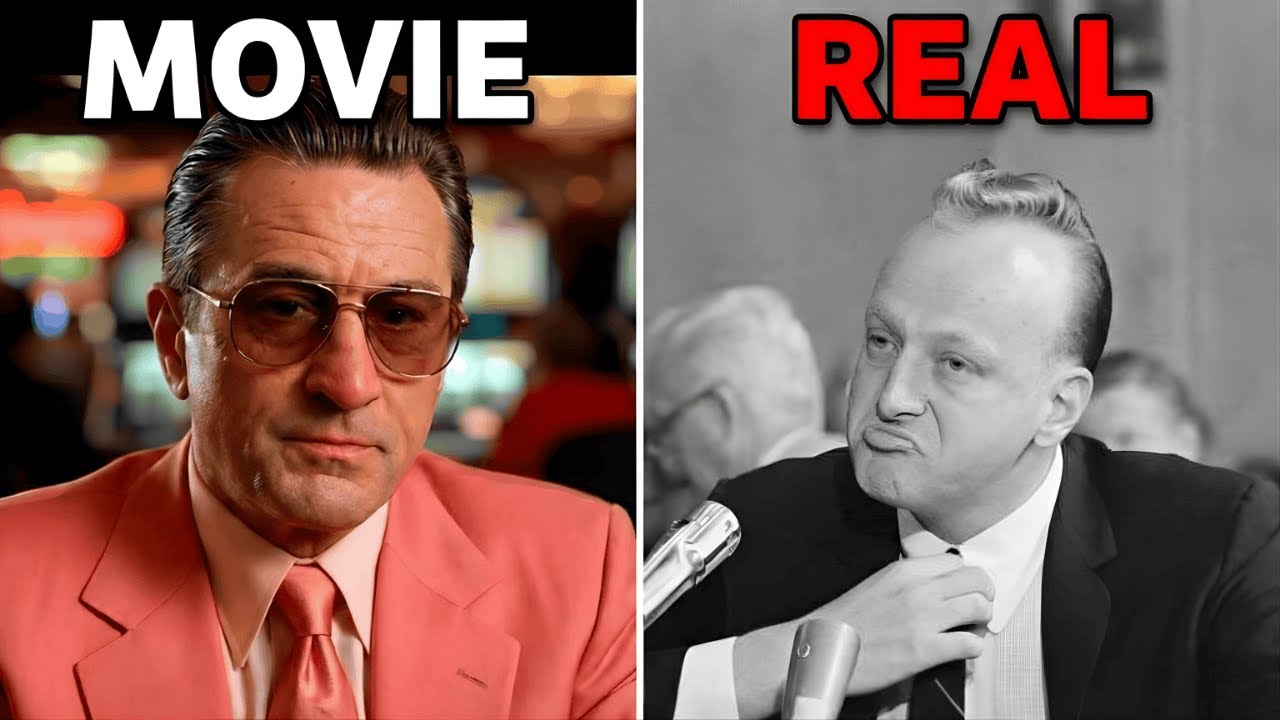
In the film, Ace manages just one fictional casino, the Tangiers. Rosenthal’s real operations were controlled by the Chicago Outfit, a criminal organization that is never named once in the film. Rosenthal grew up in Chicago betting on sports and learning odds from a father who owned racehorses. By the 1950s, he was running illegal bookmaking operations for the Outfit.
When the FBI closed in on his Chicago activities, he moved to Miami in the early 1960s, where federal investigators documented his work with prominent crime figures. A 1982 court deposition in Miami showed Rosenthal had hired a former CIA demolitions expert to blow up rival bookmakers’ property to establish his authority. When Rosenthal moved to Las Vegas in 1968, the Chicago Outfit already had plans for him. Nicholas Pileggi, who spent months interviewing Rosenthal for the book that became Casino, described him as a loner who “only rooted for the odds” and never showed real affection.
People who knew him described a man who treated every relationship like a calculated bet. In 1976, the Nevada Gaming Commission held hearings on whether Rosenthal could receive a casino license. The commission, which included future Senate Majority Leader Harry Reid, denied it based on his criminal record, his history of illegal bookmaking, and his connections to organized crime. Rosenthal did not fight the decision.
He simply changed his job title to entertainment director and kept running the casinos anyway. The real source of the casinos’ money is also missing from the film. In 1974, a Vietnam veteran and lawyer named Allen Glick borrowed $62. 7 million from the Teamsters pension fund to buy the Argent Corporation, which owned four Las Vegas casinos.
Mob-connected union officials controlled the pension fund. Glick believed he was making a legitimate business investment, but he was unknowingly fronting for Milwaukee and Kansas City mob bosses. The Chicago Outfit appointed Rosenthal to run the casinos and coordinate the skim. Every month, couriers carried millions of dollars in cash from Las Vegas counting rooms to Kansas City and Chicago before the money was recorded for tax purposes.
FBI surveillance documents from the late 1970s detailed the operation. Frank Cullotta, who later became an FBI informant, estimated they were skimming about $1 million a month from slot machines plus another $75,000 from table games. The film changes this story significantly. In Casino, Ace runs a single casino, and Philip Green, played by Kevin Pollak, appears as an incompetent frontman who signs whatever Ace tells him.
Green fumbles through meetings and eventually cooperates with the FBI because he is weak. In reality, Allen Glick was a legitimate businessman who cooperated with investigators when FBI agents convinced him he was fronting a criminal enterprise. His testimony in 1985 and 1986 helped convict multiple mob bosses. Pileggi himself told interviewers that Glick was basically a legitimate businessman the mob needed to operate the casinos.
The real Allen Glick showed courage. Casino’s Philip Green is presented as a joke. Scorsese and Pileggi had legal reasons for compressing four casinos into one and changing every name. Pileggi’s book had not been fully fact-checked before filming began, and Universal Pictures lawyers were reportedly terrified of lawsuits.
The studio insisted the film be called “adapted from a true story” rather than “based on a true story. ” They refused to allow the Chicago Outfit to be identified by name. The organization that controlled Las Vegas gambling in the 1970s appears in the film only as vague, faceless mob bosses. The film’s depiction of the 1976 licensing hearing is also heavily distorted.
Casino shows Ace facing petty, vindictive bureaucrats who resent his success, and delivers an impassioned defense of his record. The scene plays as moral vindication. But Las Vegas Sun coverage of the real hearing shows commission members presented specific evidence, including arrests, bookmaking operations, attempts to bribe college athletes to fix games, and associations with known crime figures. During the hearing, commissioner Jeff Silver questioned Rosenthal about his history with Joey Aiuppa and Tony Spilotro.
Rosenthal grew angry, accused Silver of badgering him, and said Silver spoke with a forked tongue. The commission voted 5–0 to deny his license because he had a criminal record and was running casinos illegally. Tony Spilotro, nicknamed “the Ant,” and Frank Rosenthal were indeed boyhood friends from the same Chicago neighborhoods. The Nevada Gaming Commission cited that friendship as evidence of Rosenthal’s organized crime connections.
In 1971, the Chicago Outfit sent Spilotro to Las Vegas to protect their interests and keep an eye on Rosenthal and the skim. So the film’s depiction of Ace and Nicky as childhood friends is accurate. What the movie exaggerates is the rest of their relationship. Spilotro did have an affair with Rosenthal’s wife, Geri McGee, and the affair is documented.
Frank Cullotta testified in 2007 that Spilotro was targeted for murder partly because of that affair. But Casino turns the love triangle into the central drama of the entire film, making it the reason everything falls apart. The truth is more complicated and less dramatic. Geri McGee Rosenthal struggled with alcohol and drug addiction.
Her marriage to Frank was troubled long before Spilotro arrived. They fought constantly, Frank hired private detectives to follow her, and she would leave Las Vegas with their children for days. The marriage ended in divorce in 1981. On October 4, 1982, someone planted a bomb under Rosenthal’s Cadillac outside a restaurant.
Journalist Myram Borders heard Rosenthal emerge from the burning car shouting, “They’re trying to kill me. ” He survived only because General Motors had installed a metal stabilizing plate under the driver’s seat in that model. Rosenthal refused to tell investigators who tried to kill him. A month later, on November 9, 1982, Geri McGee died in a Los Angeles motel from an overdose of cocaine, Valium, and whiskey.
The coroner ruled it accidental. She was 46. Casino opens with the car bombing and frames Ace as someone targeted because he was too good at his job. The film never identifies who ordered the hit.
FBI reports suggest Chicago Outfit bosses blamed Rosenthal for bringing law enforcement attention to the skimming operations. Some suspected Spilotro; others pointed to Milwaukee mob boss Frank Balistrieri, who was heard on wiretaps threatening Rosenthal. The car bombing was about a criminal organization cleaning house, not personal betrayal. The film ends with Ace alone in San Diego, watching horse races through binoculars, and mourning that Las Vegas lost something when corporations replaced the mob.
The final montage shows the Tangiers demolished as corporate casinos rise. The closing speech frames mob-controlled Vegas as somehow more authentic than what came after. The film asks audiences to feel nostalgia for an era when criminals stole pension money and murdered people who got in their way. Frank Rosenthal left Las Vegas after the bombing, moving first to Laguna Niguel, California, then to Boca Raton, Florida.
Nevada gaming authorities permanently banned him from every casino in the state. He continued sports handicapping, ran offshore betting websites, and consulted for gambling operations. He died in Miami Beach in 2008 at age 79, having never faced prosecution for his role in the skimming operation. Rosenthal himself criticized Casino for downplaying his achievements and exaggerating his personal problems.
Even the man Hollywood made sympathetic thought they got it wrong. Gaming historians and journalists who covered the era note that the myth Casino created persists because it fits what audiences want from true crime stories: the lone genius, the brilliant outsider whose downfall comes from trusting the wrong people. Tragedy is easier to sell than systemic corruption. Scorsese’s camera makes the Tangiers look like Ace’s kingdom, built by his genius.
But Rosenthal did not build anything. He was appointed by the Chicago Outfit to manage casinos bought with stolen Teamsters money. The film’s legal constraints transformed a story about systemic organized crime into a character study about a gambler who loved the wrong woman and trusted the wrong friend. The Chicago Outfit did not need brilliant individuals.
They needed competent operators who followed orders and maintained plausible deniability. The real power behind Las Vegas expansion in the 1970s came from the Teamsters pension fund, controlled by mob-connected officials, which financed casinos with money stolen from working people’s retirement savings. By compressing four casinos into one, erasing the Chicago Outfit’s name, and softening Rosenthal’s criminality, Scorsese and Pileggi turned systemic corruption into a story about personal ambition and betrayal. Scorsese said in DVD commentary that he saw Casino as a metaphor for Hollywood itself: a place where excess inevitably leads to collapse.
That metaphor requires Ace to be a tragic figure whose paradise is lost, not a criminal whose illegal operations were shut down by federal investigations. Today, many people still repeat the myth that Sam “Ace” Rothstein was a genius undone by love and loyalty. The documented record shows Frank “Lefty” Rosenthal was a Chicago Outfit operative who ran four casinos simultaneously, coordinated massive theft from pension funds, avoided prosecution, and lived comfortably until he died. That story did not work for Hollywood, so it was reshaped.
The cost is that millions of people misunderstand how organized crime actually controlled Las Vegas: not through individual brilliance, but through stolen pension money, political corruption, and violence.