When police opened an unclaimed leather trunk at a Swansea hotel in March 1920, they found women’s clothing and shoes neatly folded inside, along with a piece of paper bearing the address of a family in Sunderland. The discovery launched one of Britain’s most enduring missing-person investigations, a case that would not be resolved for more than four decades. Amy Stewart was born in Sunderland in 1893 to James Stewart, an experienced ship’s captain, and his wife Jane. She was one of three children raised in a respectable, hardworking household in the shadow of the shipyards.
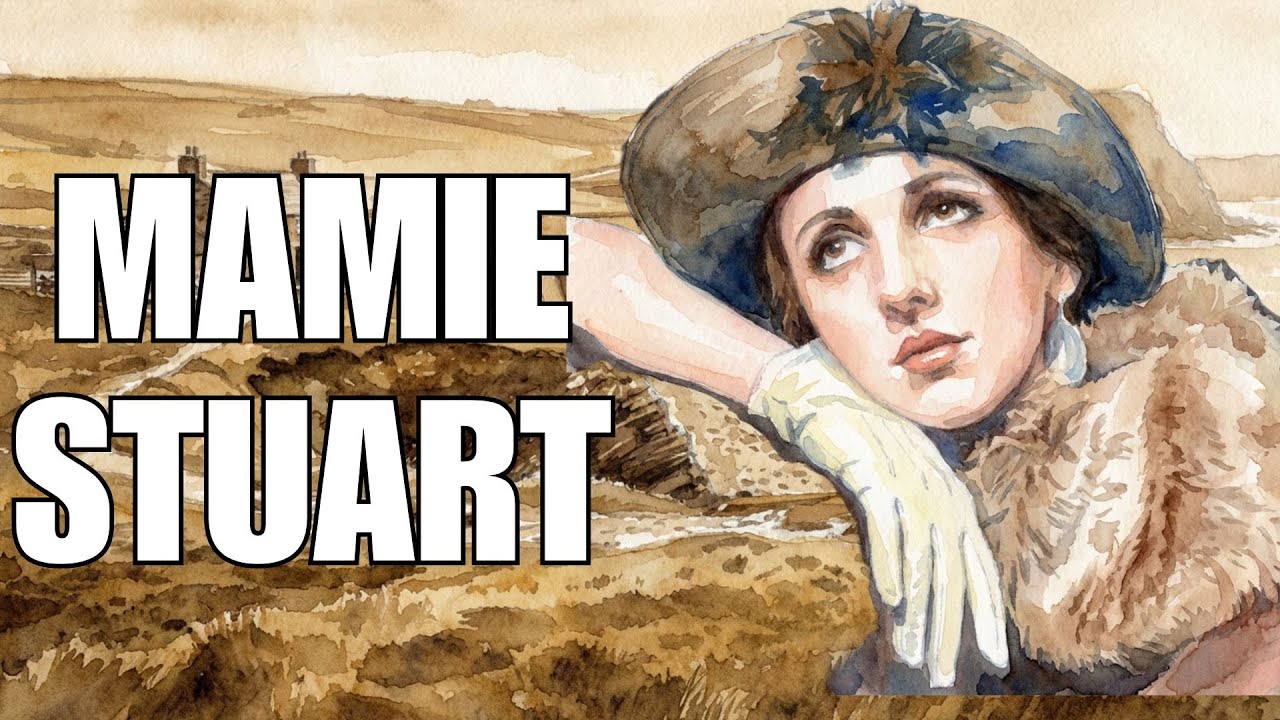
From an early age, Amy showed a remarkable talent for dancing, moving with a natural grace that set her apart. At 15, in 1908, Amy attended a performance by a touring dance troupe called The Magnets with her mother. She was captivated by what she saw. In a decision that surprised many in the community, her parents consented to let her join the troupe as it continued its tour across Britain.
She adopted the professional name Mamie. Mamie traveled with The Magnets for several years before forming her own troupe, The Five Verona Girls. The group performed across the country during the First World War, entertaining wounded soldiers returning from the battlefields. The venture eventually fell apart when one dancer became pregnant and another suffered a broken ankle.
Mamie returned to her parents’ home in Sunderland in 1916 at the age of 23. In the summer of 1917, Mamie met a man named George Shotton. He presented himself as a marine engineer whose work was vital to the war effort, elegant in manner and charming in conversation. He was in his late 40s, some 15 years her senior.
The courtship moved quickly. Within months, George proposed marriage and Mamie accepted. The wedding took place on March 25, 1918, at the register office in South Shields, close to Sunderland. What Mamie did not know was that George Shotton was already married.
His wife, Mary, lived with their son Arthur in Penarth, believing her husband was away on business. George had been married to Mary since 1905 and maintained two separate households, moving between them with practiced deception. After the wedding, the couple moved to Swansea in Wales, lodging at Trafalgar Terrace near the docks. Mamie continued her habit of writing letters home.
They began cheerfully enough, but a darker tone gradually entered her words. In 1919, the couple moved to a remote cottage called Ty Llwyn Wif at Caswell Bay on the Gower Peninsula, isolated and surrounded by cliff paths. George continued to travel for his work, leaving Mamie alone for days and sometimes weeks. When he returned, there were arguments.
He accused her of infidelity and the arguments turned violent. In one letter to her mother, Mamie wrote: “He hit me on the head until I was sick, and he went on laughing. I don’t think I will live with him very long. ”
Mrs.
Jane Stewart continued corresponding with her daughter through autumn 1919. In mid-November, a letter was returned marked “House closed. ” A telegram was also returned. Just before Christmas, Mrs.
Stewart received a telegram wishing her seasonal greetings, supposedly from her daughter. After that, all communication ceased entirely. In March 1920, the manager of the Grosvenor Hotel in Swansea contacted police about a leather trunk left unclaimed since December. Police opened it and found women’s clothes and items bearing the Stewart family’s address.
Mrs. Stewart confirmed the belongings were her daughter’s and provided police with the letters describing violence and fear. Around the same time, a maid cleaning the empty cottage at Caswell Bay found a damp brown leather handbag behind a dresser containing £2 in change and a sugar ration card in Amy Stewart’s name. Police now believed they were investigating a murder, though no body had been found.
Scotland Yard was brought in, and Chief Inspector William Draper traveled from London to oversee the case. Mamie’s description was circulated nationwide and her photograph appeared in newspapers, but no credible information about her whereabouts emerged. The investigation turned to George Shotton. Beyond the violence described in Mamie’s letters, detectives discovered he had committed bigamy.
George was brought in for questioning but denied ever marrying Mamie. He admitted living with her but claimed they had never been legally wed. He said she had simply packed and left one day without explanation. He acknowledged depositing her trunk at the hotel.
The case presented a fundamental legal problem. Under the law as it stood in 1920, a person could not be charged with murder without a body. No matter how suspicious the circumstances, without proof of death there could be no murder charge. Detectives privately referred to the matter as the perfect crime.
However, George could be charged with bigamy. In July 1920, he stood trial at the Glamorgan Assizes. He pleaded not guilty. The prosecution presented the marriage certificate bearing his signature.
His legal wife Mary testified confirming their 1905 marriage. Mamie’s sister testified that George had stayed at the family home as Mamie’s husband. Letters written by George addressing Mamie as his wife were entered into evidence. The jury found George Shotton guilty of bigamy, and the judge sentenced him to 18 months imprisonment with hard labor.
But the matter of Mamie’s disappearance remained unresolved, and the case generated extensive newspaper coverage. Over the years, there were reported sightings of the missing woman from Canada, South Africa, Australia, and India. One chief officer of a steamer acquainted with Mamie’s father claimed to have seen her in Karachi performing with a traveling troupe of artists. When he approached her, she denied being Mamie Stuart and quickly walked away.
George Shotton was released from prison in 1922. His wife Mary obtained a divorce. He moved to Tintern, a village on the Welsh border with England, where he became a regular churchgoer and ran the local tennis club. He established himself as a well-liked member of the community until a local newspaper published an article about the case of the missing Mamie Stuart.
George departed hastily and moved to Balham in South London. In May 1938, he was arrested for threatening his sister with a revolver over a dispute about their mother’s will and sentenced to 12 months imprisonment. Upon his release in 1939, he severed contact with his family and eventually settled in Bristol, growing old in obscurity. The case gradually faded from public attention.
In 1950, the cottage at Caswell Bay was sold to a new owner. During excavation work around the property, workers discovered a woman’s shoe in a pit filled with quicklime beneath the house. Nothing further was found, and the work continued. Eleven years later, on November 5, 1961, three experienced potholers entered a disused lead mine at Brandy Cove on the Gower Peninsula.
Graham Jones, John Gerke, and Colin McNamara descended approximately 50 meters into the abandoned shaft. Behind a rock in a narrow chamber, they found a human skull. Beside it lay a sack containing bones, rings, a hair clip, and the deteriorated remains of clothing. The location was just 200 yards from the cottage where Mamie and George had lived more than 40 years earlier.
Pathologists determined the bones belonged to a young woman in her early 20s who stood approximately 5 feet 3 to 5 feet 4 inches tall. The cause of death could not be conclusively established, and strangulation and stabbing could not be ruled out. The pathologist reported that the body had been dismembered before being concealed in the shaft. An inquest began on December 14, 1961.
A friend of Mamie’s from the war years identified the rings found with the remains as belonging to her, remembering that Mamie had always worn her engagement ring. The rings had been manufactured between 1912 and 1918, a period consistent with when George would have given them to her. The skull also bore evidence of a missing tooth, the same tooth Mamie had lost as a girl. A retired postman named William Simmons testified that in December 1919, he had encountered George Shotton carrying a large sack at a time that stood out in his memory.
When Simmons offered assistance, a startled George replied: “No, no, no. Oh God, you gave me a fright for a minute. I thought you were a policeman. ” George loaded the sack into his van and drove off toward Brandy Cove.
Simmons said he had not reported the encounter because he had not connected the two matters. The coroner’s jury ruled that the skeleton was that of Mamie Stuart and that she had been murdered, probably by her husband, George Shotton. Police set about locating him but discovered he had died following a stroke on April 30, 1958, more than three years before the discovery of her remains. He had been buried in an unmarked grave at Arnos Vale Cemetery in Bristol.
George Shotton had, it seemed, gotten away with murder. Interest in the case waned when it became known he was deceased. No effort was made to lay Mamie to rest with dignity. Her skeleton was kept in a cupboard at Cardiff University, occasionally used to teach students of anatomy and forensic science.
It was not until December 2019 that the remains were finally returned to Sunderland. Researchers making a television program about unsolved murders contacted Susie Oldnall, a great-niece of Mamie Stuart, informing her of the whereabouts of her great-aunt’s remains. Arrangements were made. One hundred years after her disappearance, Mamie Stuart was buried alongside her parents in Bishopwearmouth Cemetery.
The grave bears a simple headstone. The shipyards of Sunderland are silent now, but the stone remains, marking at last a place of rest for a young woman who dreamed of stages and applause, who met a charming gentleman in the summer of 1917, and who was never seen alive again.