
The execution chamber at Sing Sing Prison fell silent at 11:09 a. m. on June 12, 1941, as the state of New York exacted its final toll on Harry “Pittsburgh Phil” Strauss, the man law enforcement officials and underworld figures alike have since identified as the most prolific contract killer in American history.
Strauss, 31, walked calmly to the electric chair without a struggle, abandoning the elaborate insanity charade that had defined his final months in custody. His death marked the beginning of the end for Murder Incorporated, the syndicate’s enforcement arm that had terrorized New York and beyond for nearly a decade.
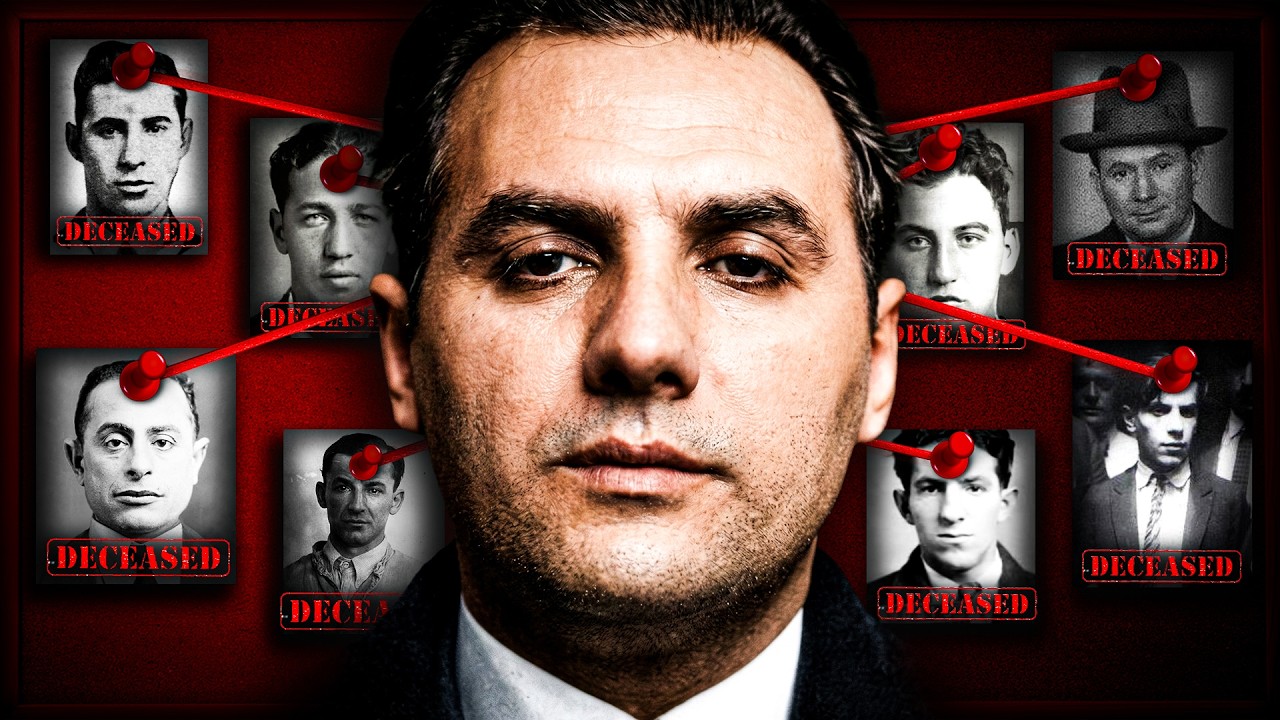 The execution came just three minutes after his longtime accomplice, Martin “Bugsy” Goldstein, met the same fate in the adjacent chamber. The two men, who had risen from the impoverished streets of Brownsville, Brooklyn, to become the most feared assassins in the nation, died within minutes of each other, their bodies strapped to the same wooden chair that had claimed dozens of other condemned men. Witnesses reported that Strauss displayed no emotion as the leather straps were tightened around his wrists and chest, his eyes drifting across the room with a strange, unreadable acceptance.
Harry Strauss was born Harry Horowitz on July 28, 1909, in Berdychiv, a city in present-day Ukraine that was then part of the Russian Empire’s Pale of Settlement, a region where Jewish families like his faced constant persecution, economic restriction, and the ever-present threat of pogroms. His parents, Jacob and Eda Horowitz, made the desperate decision to flee the old world when Harry was just five years old, joining the massive wave of Jewish immigration that brought more than 1.5 million people to American shores between 1880 and 1920.
The family’s journey to America was brutal, crammed into steerage compartments on steamships where disease spread quickly and privacy was nonexistent. When they finally arrived at Ellis Island, they faced the harsh reality of the examination halls, where doctors marked the sick with chalk and families could be separated or sent back across the ocean entirely. The Horowitz family survived the ordeal and settled in the Bronx, changing their name to Strauss to make life easier on forms and in factories.
Jacob found work as a harness maker, and for a brief period, it appeared they had escaped the violence of the old world.
That illusion shattered in 1916 when Jacob Strauss was involved in a fatal industrial accident at work, dying at Lebanon Hospital in the Bronx. Harry was just seven years old. Two years later, his brother Hyman died at Mount Sinai Hospital at age 16, leaving the family fractured and destitute.
With no safety net and no income, Eda Strauss made the decision that would seal her youngest son’s fate. She moved the family twenty miles south to Brownsville, Brooklyn, settling at 574 Vermont Street, a modest row house in one of the most overcrowded and poorest neighborhoods in New York City.
Brownsville in the early 20th century was a pressure cooker of poverty, crime, and desperation. Tenement buildings were old, badly maintained, and crammed with immigrant families. Hallways were narrow and dark, ventilation was poor, and the streets were dominated by teenage gangs that formed for protection, petty theft, and control of corners.
Police presence was thin and often corrupt. For boys like Harry, the streets offered something that school and factory work never could: power, money, and a kind of respect that came from being feared.
At Public School 109, a massive overcrowded building on Dumont Avenue, Harry met the boys who would become his partners in murder. Abe Reles, who would later earn the nickname “Kid Twist” for his preferred method of killing with a rope, and Martin “Bugsy” Goldstein, nicknamed for being crazy as a bedbug, both lived off Livonia Avenue and walked home with Harry regularly. Teachers remembered Harry as sharp-eyed and intelligent, a boy with obvious ability but little patience for the classroom.
By his early teens, the pull of the streets was stronger than any lesson a textbook could offer.
In 1924, at age 14, Harry dropped out of school for good and fell in with the Brownsville Boys, one of the neighborhood’s most notorious juvenile gangs. Their early endeavors were petty, lifting from pushcarts, picking pockets, and running errands for older gangsters who controlled the local rackets. But the Brownsville Boys were more than just another street gang.
They were a pipeline, a street-hardened finishing school for organized crime. Among their ranks were teens with names that would soon echo across the underworld: Albert Tannenbaum, Seymour Magoon, and Mendy Weiss.
Harry’s friends called him “Pep,” short for pepper, early 20th century slang for someone hot-tempered and quick to react. But as he began making money and dressing in tailored suits, polished shoes, and crisp collars, he picked up a new nickname. Pittsburgh Phil, not because he’d ever been to the Pennsylvania city, but because he reminded people of a famous 19th century gambler, slick, stylish, and always looking for the next score.
Harry understood that image mattered, and he made sure people remembered him.
When Prohibition began in 1920, the Brownsville Boys went to work for the men who controlled their neighborhood’s criminal economy: the Shapiro brothers of Brooklyn, Meyer, Irving, and Willie. The three ruthless Jewish siblings ran bootlegging, illegal gambling, labor racketeering, truck hijacking, and protection schemes across Brownsville and East New York. The boys guarded trucks, moved stolen liquor, collected small debts, and enforced orders when needed.
It was dangerous work, but it paid better than factory wages and came with the protection of men whose names carried weight on the streets.
The turning point came when the boys made a connection that would change everything. Meyer Lansky, the “accountant of the mob” and right hand of rising star Lucky Luciano, saw potential in the Brownsville crew. He financed them with bootlegging millions to expand their slot machine and gambling operations, taking a cut in return.
With Lansky’s protection, the boys grew bolder, expanding into loan sharking, crap games, and labor racketeering. They were no longer street kids running errands. They were building a criminal operation powerful enough to challenge the men who once owned them.
The Shapiro brothers recognized the threat and decided to eliminate the upstarts. A war for Brownsville began, with both sides trading shootings over gambling routes and control of territory. When Reles and Goldstein were lured into a trap and shot, surviving by sheer luck, the war shifted from business to extermination.
The boys also gained a powerful ally in Louis Lepke Buchalter, who controlled huge sections of the garment industry and labor unions. When the Shapiros interfered with his trucking operations, Lepke put out bounties of $10,000 each on all three brothers.
The first to fall was Irving Shapiro, beaten and shot to death in July 1931 inside the family home at 691 Blake Avenue. Meyer Shapiro survived twenty assassination attempts before Reles, Harry, and Bugsy abducted him from a Manhattan speakeasy and executed him in a Lower East Side basement. The final act came three years later when Willie Shapiro was located after years on the run.
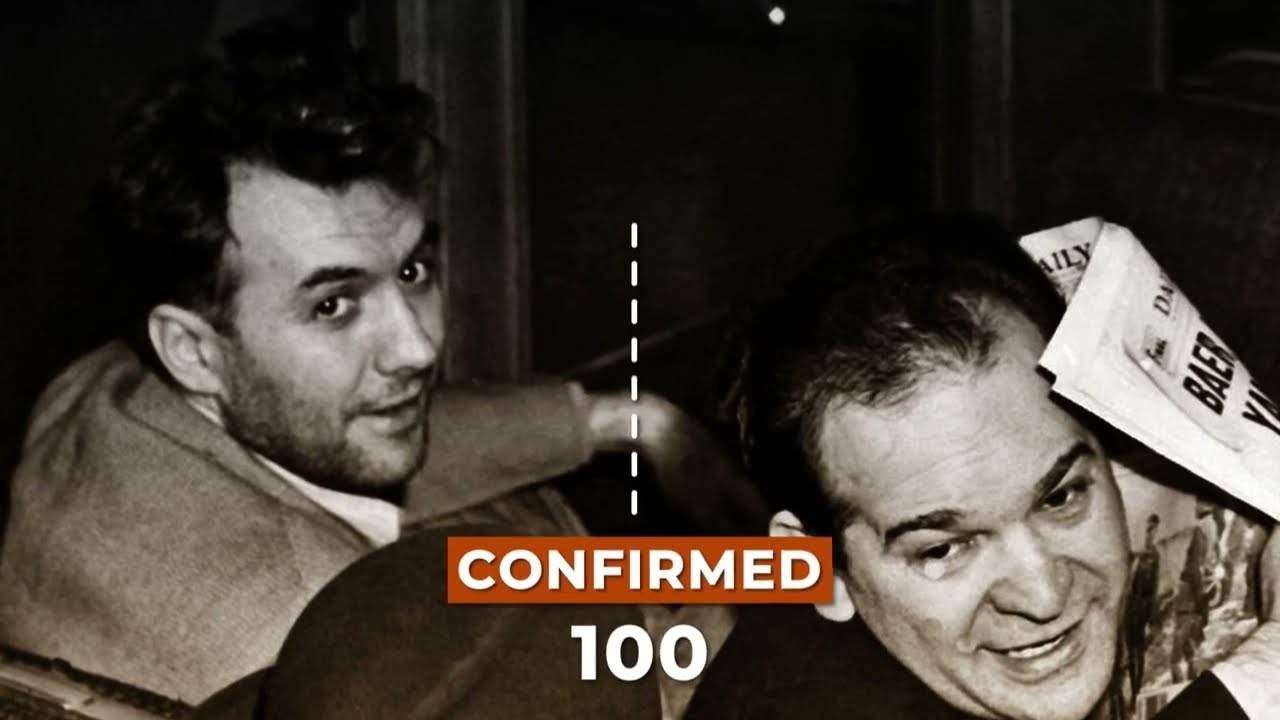 Harry, along with Harry Maione and Frank Abbandando, tortured him brutally, breaking his skull, jaw, and wrists before binding him in a sitting position with a cord around his throat so any movement would strangle him. They then buried him alive in an abandoned sandpit in Canarsie.
The complete destruction of the Shapiro organization sent a message that could not be ignored. Lepke recognized the value of the Brownsville Boys, not as street thugs, but as a disciplined extermination squad. What began as a street war had revealed something far more dangerous: a dedicated killing force that could serve the highest levels of organized crime.
That force would come to be known as Murder Incorporated, and Harry was set to become its most lethal weapon.
By the early 1930s, the National Crime Syndicate had formed, a partnership between Italian and Jewish organized crime that spanned major American cities. Lucky Luciano had created the Commission, a board of directors for the Mafia that settled disputes and approved major hits. But the bosses needed distance between themselves and the actual killings.
They needed a team of professional killers who could quietly remove problems before they became conflicts. Lepke and Albert Anastasia, the “Lord High Executioner” who controlled Brooklyn’s docks, began shaping that team.
Murder Incorporated was a mixed crew of Jewish and Italian killers who answered not to one family, but to the higher interests of organized crime itself. The Italian members reported to Anastasia, the Jewish mobsters to Lepke. They were paid a regular salary of $3,000 a week, equivalent to $72,000 today, with additional support for their families.
Their headquarters was a small Brownsville candy store called Midnight Roses at the corner of Saratoga and Livonia Avenue, where orders came in through a payphone. When it rang, someone, somewhere, was about to die.
Harry stood apart from the others. He was a cold, efficient killer, but also an outright psychopath who reportedly took special pleasure in reading newspaper accounts of his work, particularly when coroners vomited at the scenes. He was linked to at least 100 murders, with some accounts placing the number closer to 500.
Unlike most of his colleagues, Harry didn’t 𝓀𝒾𝓁𝓁 just because he was ordered to. He actually enjoyed it. His preferred weapon was the ice pick, which he used with such surgical precision that some victims were initially ruled to have died of natural causes like brain hemorrhages.
Harry had a strict personal rule that kept him out of prison for years: he never carried a weapon unless he was about to use it. For most killings, he used whatever was immediately available, a length of pipe, a heavy chain, a fire extinguisher, or his signature ice pick. If cops found him, no evidence was on him or around him.
He was arrested several times but never convicted, slipping through the hands of the law repeatedly while building a reputation as the most feared hitman in New York.
The first major contract came in October 1932 when Rocco Morgandy, a racketeer in the painters union, was lured to a poker game and executed by Harry and Reles. In May 1933, Harry participated in the murder of John Freiza, who had been skimming profits from Joe Adonis. The hit was planned with cold precision, with Freiza climbing into a Cadillac with his killers, unaware that death sat beside him.
When the gunfire erupted at point-blank range, Freiza slumped forward, dead before the car had traveled another block.
In 1933, a young thief named Red Alpert made the fatal mistake of crossing Harry. Alpert had stolen a load of valuable gems worth nearly $10,000 and approached Harry to sell them. When Harry offered an insultingly low price of $700, Alpert refused, and refused again when Harry returned with Reles and Goldstein.
With Louis Capone’s approval, Harry cornered Alpert and shot him three times in the head. The killing seemed like just another execution, but it would not disappear as so many others had.
A rare crack appeared in the crew’s discipline in February 1934 when Reles became involved in a dispute with a garage attendant. Harry and Reles returned and stabbed another attendant, Alvin Snyder, who died from his wounds. The error drew the full attention of law enforcement, and Harry, Reles, Bugsy, and Maione were arrested and charged with first-degree murder.
In the end, Reles was convicted of second-degree assault and sentenced to three years in prison. The murder charge against Harry was dismissed for lack of evidence, and Pittsburgh Phil slipped away cleanly once again.
The machinery of violence never paused. In September 1935, Pretty Amberg, who had attempted to carve out his own territory, was marked for death. His brother Joseph was executed first, lined up against a wall in a Brownsville garage and shot coldly.
Three weeks later, Pretty Amberg’s body was discovered in the backseat of a burning car, his hands bound with wire, a sack over his head, and three bullets in his skull, delivered by Maione and Harry.
The most infamous hit came on October 23, 1935, when Dutch Schultz, a volatile mob boss from the Bronx, was executed at the Palace Chop House in Newark, New Jersey. Schultz had been determined to 𝓀𝒾𝓁𝓁 special prosecutor Thomas Dewey, a move the Commission flatly rejected. When Schultz vowed to proceed anyway, his fate was sealed.
 Charles “The Bug” Workman and Mendy Weiss opened fire, killing Schultz and three of his top aides. The hit would become one of the most infamous executions in organized crime history.
By 1936, the greatest threat to Lepke’s empire came not from rival gangs, but from men who might talk. Special prosecutor Thomas Dewey was closing in on the syndicate through labor unions, and every whisper of cooperation was treated as a death sentence. One such liability was Joseph Rosen, a former trucking business owner who had been crushed by Lepke’s labor racketeering.
When Lepke became convinced Rosen was preparing to cooperate, the contract was issued. On September 13, 1936, Weiss fired six shots into Rosen’s chest, then Harry stepped forward and fired four more rounds into the lifeless body.
The killing of George “Whitey” Rudnick in 1937 demonstrated Harry’s capacity for extreme violence. Rudnick, a loan shark and 𝒹𝓇𝓊𝑔 addict, was suspected of talking to a detective. Harry slipped a clothesline over his head and pulled it tight, then stabbed him repeatedly in a savage frenzy.
When the body was loaded into a car and made a choking sound, Harry believed Rudnick was still alive and stabbed him 63 more times. Maione then lifted a meat cleaver and split Rudnick’s skull in two, muttering, “Let me hit this bastard once for luck.”
Walter Sage, a close friend of Harry who oversaw slot machine operations in the Catskills, was next. When money went missing, Harry decided Sage was stealing. Around July 20, 1937, Harry drove an ice pick into Sage more than 30 times, then tied a cord around his feet and neck so he would strangle himself.
The body was dumped in Swan Lake with a pinball machine attached, but ten days later it floated to the surface. When word reached Harry, he only smirked and muttered, “With this bum, you got to be a doctor, or he floats.”
By late 1937, Harry’s reach extended beyond New York. Harry Millman, a violent fixture of Detroit’s Purple Gang, had crossed the Italian Mafia by interfering in rackets and assaulting a made man. After a dynamite attempt failed, Harry and Maione were dispatched to Detroit.
On November 25, 1937, they entered Bosti’s Restaurant and opened fire with automatic pistols, killing Millman instantly and wounding several others. It was a public execution meant to be seen, showing just how far Murder Incorporated’s reach extended.
By 1939, as Dewey’s investigation tightened its grip, even long-time insiders became liabilities. Whitey Friedman, a collector for Lepke, was arrested and released on bail, and Lepke became convinced he might talk. Harry leaned out of a car and fired a single devastating blast from a sawed-off shotgun, killing Friedman instantly.
The escape was as methodical as the 𝓀𝒾𝓁𝓁, with weapons discarded in separate locations and retrieved the following morning.
The last major hit came in September 1939 when Irving “Puggy” Feinstein, a betting operator in Borough Park, was marked for death by Vincent Mangano. After weeks of searching, Harry recognized Feinstein on a street corner in Brownsville. Bugsy offered to help him find a loan shark and drove him to Reles’s house.
The moment Feinstein stepped inside, Harry struck. A violent struggle erupted, with Feinstein biting down on Harry’s finger, sending him into a rage. The crew tied him up and strangled him with a clothesline, then dumped the body at a refuse site and set it on fire.
The end began on January 2, 1940, when Reles, Goldstein, and Maffetore were arrested for the murder of Red Alpert, based on information from a petty criminal named Harry Rudolph. Two weeks later, Maione and Abbandando were taken into custody as well. The first to crack was Maffetore, who began offering details about the Alpert killing and hinting at the wider web of contract murders.
Then Reles made the fateful decision that would reshape organized crime history: he agreed to cooperate.
Reles systematically laid out names, dates, motives, methods, and the internal hierarchy of the killing squad, tying street murders directly to Lepke’s labor racket empire. Acting on his information, detectives found seven bodies of Murder Incorporated victims, including the remains of Hyman Yuran. Reles’s testimony implicated Louis Capone, Abbandando, Bugsy Goldstein, Maione, Lepke himself, and countless lesser enforcers.
For the first time, high-ranking racketeers faced capital charges based on the testimony of their own hit men.
As Reles talked, panic spread through the remaining ranks. A woman claiming to be Harry’s sister made repeated visits to the jail, but authorities grew suspicious and 𝓮𝔁𝓹𝓸𝓼𝓮𝓭 her deception. She was Evelyn Mittelman, the “kiss of death girl,” wearing three diamond rings she claimed Harry had given her.
The rings matched Reles’s testimony about the robbery of Red Alpert. The walls were closing in from every direction. Harry, the man who had once laughed at death, now wavered.
Word spread that he was willing to cooperate too.
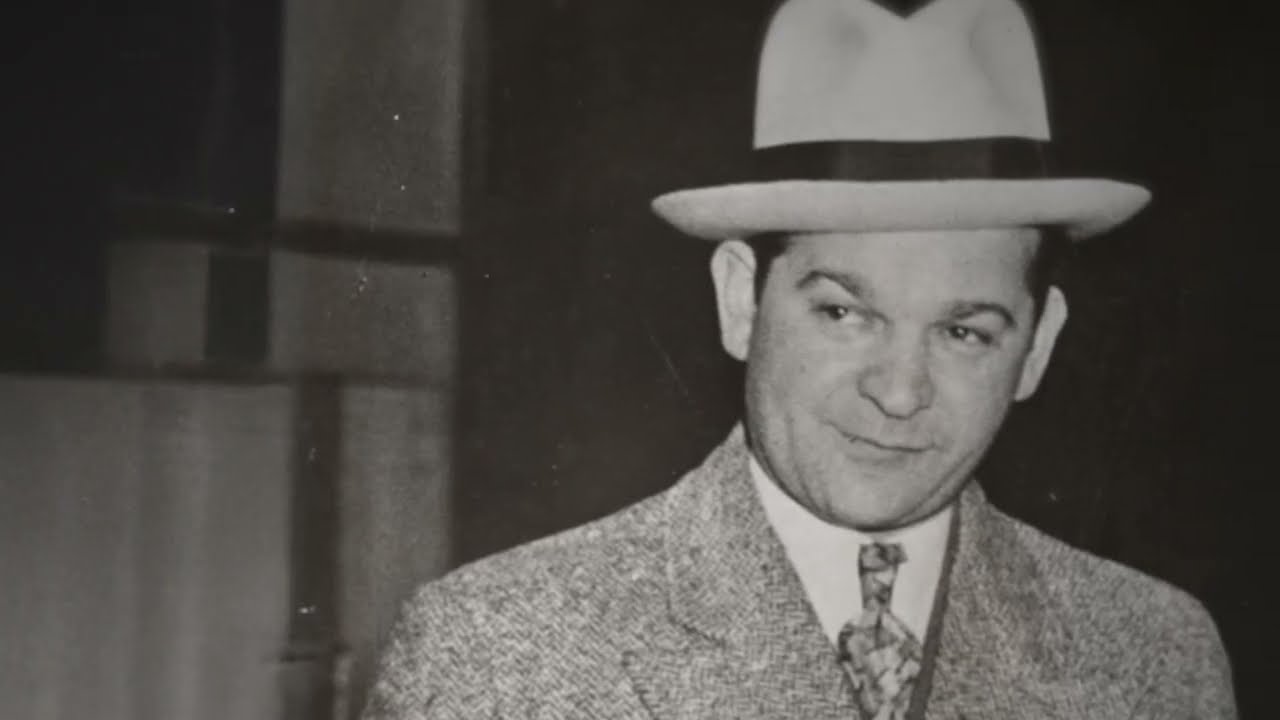 Harry’s trial for the murder of Puggy Feinstein opened in September 1940. He leaned hard into an insanity act, muttering to himself, rolling his eyes, and chewing on a leather briefcase strap. But the courtroom did not waver.
Reles took the stand and described the murder in cool, direct language. On September 19, 1940, after just one hour and 25 minutes of deliberation, the jury returned a verdict of guilty of first-degree murder. The sentence was death by electric chair.
As the sentence was read, the illusion finally shattered. Harry was led from the courtroom shuffling and mumbling, stripped of the iron confidence that had once defined him. Bugsy broke instead, tears forming as he cried out, “Don’t I deserve a chance to say one little word before I die?”
Judge John J. Fitzgerald revealed that prosecutors had evidence tying Harry to 28 murders since 1930. As the condemned men were escorted out, Harry paused only long enough to turn toward his mother and two sisters, offering a faint, almost apologetic smile.
In his final days at Sing Sing, Harry abandoned the insanity act. He allowed himself a clean shave, a final quiet assertion of control. Evelyn Mittelman was granted one last visit, and they spoke softly through the bars.
What was said was never recorded. On June 12, 1941, at 11:00 a. m.
, Bugsy Goldstein was led to the chamber first. Three minutes later, he was pronounced dead. At 11:06 a.
m. , guards returned for Harry. He rose quietly and walked with a steady, measured pace, the same calm precision with which he had once entered garages and backrooms where others met their end.
Witnesses later said that as Harry was seated in the chair, he looked out across the room not with panic, but with a strange, unreadable acceptance. His eyes drifted slowly from face to face, as if taking inventory one final time. The leather straps were tightened, the metal cap secured against his shaved scalp.
At 11:09 a. m. , the switch was thrown.
The current surged through his body, arching him hard against the restraints. A second charge followed, absolute, unforgiving. When the physician stepped forward and pronounced him dead, the story of Harry Strauss reached its final line.
Harry was laid to rest at Beth David Cemetery in Elmont, New York, where his family gathered quietly after the execution to complete the final rites. The convictions and executions of Harry and Bugsy marked the first decisive breakthrough against a machine that had operated in darkness for nearly a decade. But the architects of the bloodshed still walked free.
Above them all loomed Albert Anastasia, the Lord High Executioner, who had directed the Italian wing of the killing bureau.
The case against Anastasia was forming into fact, with Reles prepared to testify about the murder of Pete Panto, a dock union reformer whose skeletal remains were found sealed in concrete in a New Jersey lime pit. For months, Reles was kept under maximum protection on the sixth floor of the Half Moon Hotel on Coney Island. Then, just before dawn on November 12, 1941, everything collapsed.
Reles was found dead on the roof of a second-floor extension beneath his hotel window, his body twisted in the darkness.
Authorities declared it an escape attempt gone wrong, with two bedsheets tied together and fastened to a wire hooked to a radiator. But nothing about the scene made sense. The wire was barely secured, the knots clumsy and mismatched, and six officers claimed to have seen or heard nothing.
The newspapers coined the phrase that would follow the case forever: “The canary who could sing, but couldn’t fly.” All six officers were quietly demoted, and rumors spread that Frank Costello had raised as much as $100,000 to ensure Reles would never reach the witness stand.
With Reles dead, the case against Anastasia disintegrated. He walked free and eventually muscled his way into the top job of the Gambino Family, becoming one of the most powerful Mafia bosses in America. But his brutal impulses eventually alienated the Commission, who approved a move that had once been unthinkable.
On the morning of October 25, 1957, Anastasia sat in the barber’s chair at the Park Sheraton Hotel when three gunmen rushed in and opened fire. The last remaining pillar of Murder Incorporated had finally fallen.
The executions continued in the wake of Harry’s death. Maione and Abbandando were convicted again after their first verdicts were overturned, and both were executed on February 19, 1942. Louis Lepke was convicted of first-degree murder in November 1941, becoming the only reigning mafia boss in US history to be executed by the state.
On March 4, 1944, Lepke was executed alongside Mendy Weiss and Louis Capone. In a single night, three of Murder Incorporated’s central architects were erased.
Harry Strauss entered history as one of the deadliest killers the American underworld ever produced, a man who treated murder the way most people treated a paycheck. His death and the dismantling of the murder machine he served marked something larger: the end of an era when professional contract killers could operate in plain sight, protected by silence and fear. The days of Murder Incorporated were no more, but the legacy of Pittsburgh Phil, the immigrant boy from Brownsville who became the most feared hitman in American history, would never be forgotten.