The final days of the Third Reich were a maelstrom of fire, smoke, and desperation, but for the family of Martin Bormann, Hitler’s ruthless gatekeeper, the collapse of the Nazi state was not an ending, but the beginning of a harrowing, decades-long ordeal of flight, concealment, and the crushing weight of a poisoned inheritance. While the world’s attention fixated on the hunt for the fugitive Reichsleiter, his wife and ten children vanished into the ruins, their lives fractured by the very ideology that had once elevated them to the pinnacle of German society. Their story is one of survival against impossible odds, of children forced to shed their identities, and of a family forever haunted by the ghost of a father who orchestrated genocide from the shadows.
The saga begins in the rarefied air of the Bavarian Alps, at Hitler’s mountain retreat, where the Bormann clan lived in opulent isolation. As April 1945 dawned, the Red Army was closing in on Berlin, and the Allies were pounding German cities into rubble. Martin Bormann, the man who controlled all access to the Führer, was trapped in the capital’s bunker, but his wife, Gerda, was at Obersalzberg with the children.
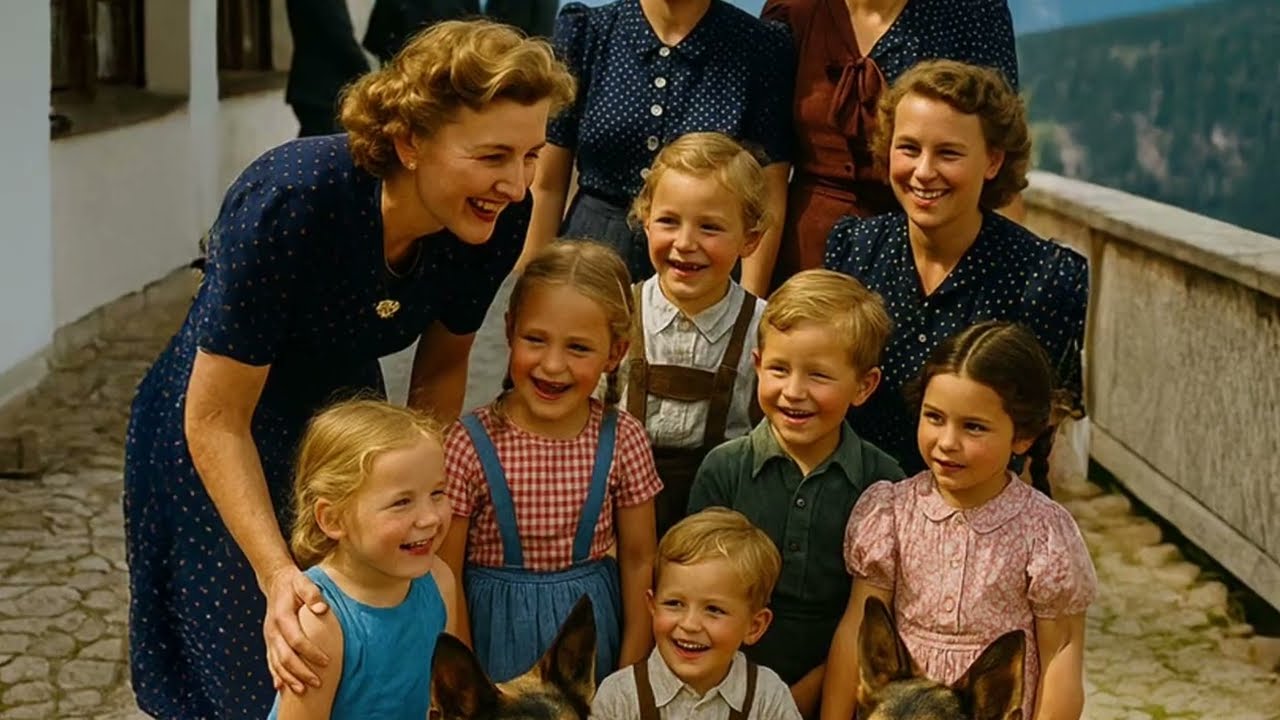
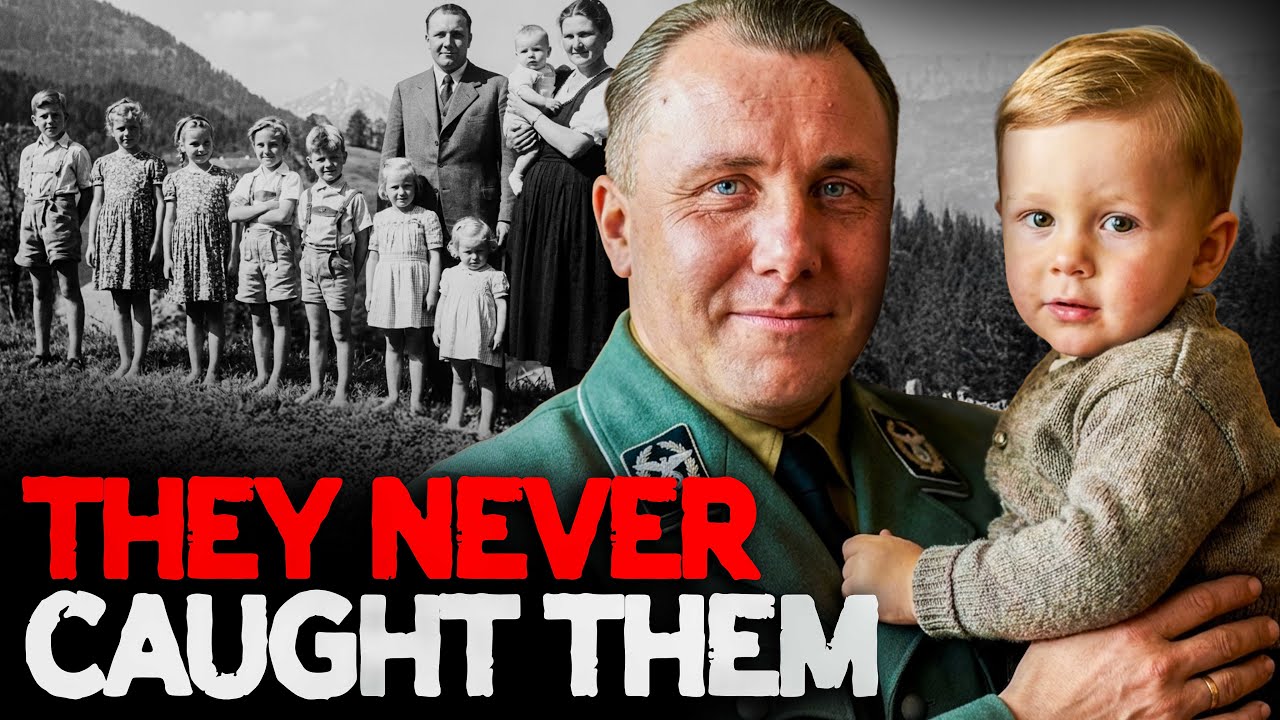 On April 25th, 1945, with Allied bombs falling around the mountain complex, Gerda made a desperate decision. She gathered eight of her ten children, ranging in age from fifteen-year-old Ilse to two-year-old Volker, and fled south toward Italy, abandoning the material wealth that her husband had amassed through corruption and forced contributions from industry. The journey was a terrifying gauntlet through collapsing armies and vengeful civilians, a desperate exodus of Nazi families seeking refuge from the Soviets who showed no mercy to their kind.
The children carried names that were badges of honor in the Reich, but would become scarlet letters in the postwar world. Martin Adolf, the eldest, was absent, attending the Nazi party academy in the Tyrolean Alps, but his name alone spoke volumes, for his godfather was Adolf Hitler himself. Ilse had been named for Ilse Hess, wife of the deputy Führer, until Hess’s flight to Scotland in 1941 brought disgrace, after which her name was changed to Aika.
Rudolph Gerhardt became Helmut after Hess’s fall, while Hinrich Hugo bore the name of Heinrich Himmler, the architect of the Holocaust. These children were not merely bystanders to history; they were living symbols of the Nazi elite’s ambitions, bred to be the next generation of leaders for a thousand-year Reich that was crumbling into ash around them
Gerda led her brood through war-torn territory, eventually reaching the village of Vulcanstein in South Tyrol, twenty kilometers northeast of Bolzano. They traveled with other fleeing Nazi families, part of a desperate caravan of those who knew precisely what awaited them if they fell into Soviet hands. They carried only what they could hastily pack, abandoning the vast estates, the art, the jewelry, and the bank accounts that Bormann had accumulated through his control over Hitler’s finances.
That wealth, built on the backs of slave labor and the plunder of a continent, was now worthless. The family that had once dined on delicacies while others starved was reduced to refugees, dependent on the charity of strangers in a land that wanted nothing to do with them
Martin Adolf, however, faced his own odyssey. When the academy closed on April 15th, 1945, he traveled alone through the chaos of a dying nation to reach his mother. By the time he arrived, the circumstances had shifted dramatically.
In autumn 1945, Gerda was arrested and interrogated by Allied authorities seeking information about her husband’s whereabouts. She could offer them nothing useful, but the stress of the interrogation, combined with the trauma of flight, revealed a more insidious enemy. Doctors discovered cancer ravaging her body.
On March 23rd, 1946, less than a year after fleeing Obersalzberg, Gerda Bormann died at the age of thirty-seven, leaving behind nine living children, with the youngest, Volker, dying later that same year. She was buried in a military cemetery in Merano, in grave number 610, sharing the plot with a German soldier named Hans Burger. Later, her remains were exhumed, cremated, and scattered at sea, erasing even her final resting place, as if the world sought to wipe all trace of her existence from the earth
Martin Adolf, then just fifteen, learned of his mother’s death a full year later, when he stumbled upon a mention in a local newspaper. He had been taken in by Catholic priests after reaching Italy, men who saw a lost, traumatized boy and chose compassion over judgment, regardless of whether they knew his identity. The boy who had been raised as the crown prince of Nazism, nicknamed Kronprinz for his status, who had worshipped his father and believed utterly in the regime, was now utterly alone, questioning every truth he had ever been taught.
The priests offered him shelter, but more importantly, they offered him a new moral framework, one that stood in stark opposition to the nihilistic ideology of his upbringing. It was the first crack in the edifice of his beliefs, a crack that would eventually shatter his entire worldview
The other eight surviving children were dispersed into foster homes across Germany and Austria, their identities deliberately hidden to protect them from retribution and to allow them any chance at a normal life. A clergyman named Theodor Schmidtz reportedly took in several of them, showing a moral courage that drew criticism from those who believed the Bormann family deserved no kindness whatsoever. The children grew up separated from each other, losing not only their parents but also their siblings, scattered across a devastated nation like seeds thrown into barren soil.
They were given new names, new histories, new lives, but the truth of their parentage was a ticking time bomb, waiting to explode at any moment, whether through a chance encounter with a document, a whispered rumor, or a journalist’s investigation
For Martin Adolf, Catholicism became his lifeline, his refuge from the chaos of his past. He converted to the faith and in 1958 was ordained as a Roman Catholic priest, dedicating his life to service in a way that contrasted starkly with his father’s pursuit of power. He became a missionary in the Congo, working in African missions, ministering to the poor, building schools and churches, living a life of genuine humility that was geographically and ideologically as far from Nazi Germany as physically possible.
He served the very people his father’s regime had classified as subhuman, marked for enslavement or extermination. He embraced a faith his father had worked systematically to undermine, replacing Christian morality with the pagan mysticism of the SS. Yet the memories of his father remained, cold and demanding, a man who showed little warmth even to his own children, who beat them with whips and kicked them for minor transgressions, yet who also provided for them materially, creating a confusing duality of brutality and tenderness that would haunt Martin Adolf for decades
Living in Africa, confronting poverty and suffering on a daily basis, Martin Adolf began to understand the full scope of what his father had done. He read historical accounts, studied the Holocaust in meticulous detail, learned of the six million Jews, the millions of Slavs, Roma, disabled people, and political prisoners who had been murdered in the name of the ideology his family had embraced. He came to distinguish between the father he had known personally, a man who ensured his children were fed and clothed, and the politician whose administrative genius had facilitated genocide, whose control over Hitler’s schedule and access had made the machinery of mass murder function with terrifying efficiency.
This distinction, the ability to hold both truths simultaneously, would define his later public statements and his approach to his own history, allowing him to condemn the crimes without entirely erasing the man
In 1969, Martin Adolf suffered a nearly fatal injury and was nursed back to health by a nun named Cordula. The experience forged a bond that transcended his vows. He left the priesthood in the early 1970s, married Cordula in 1971, and they had no children.
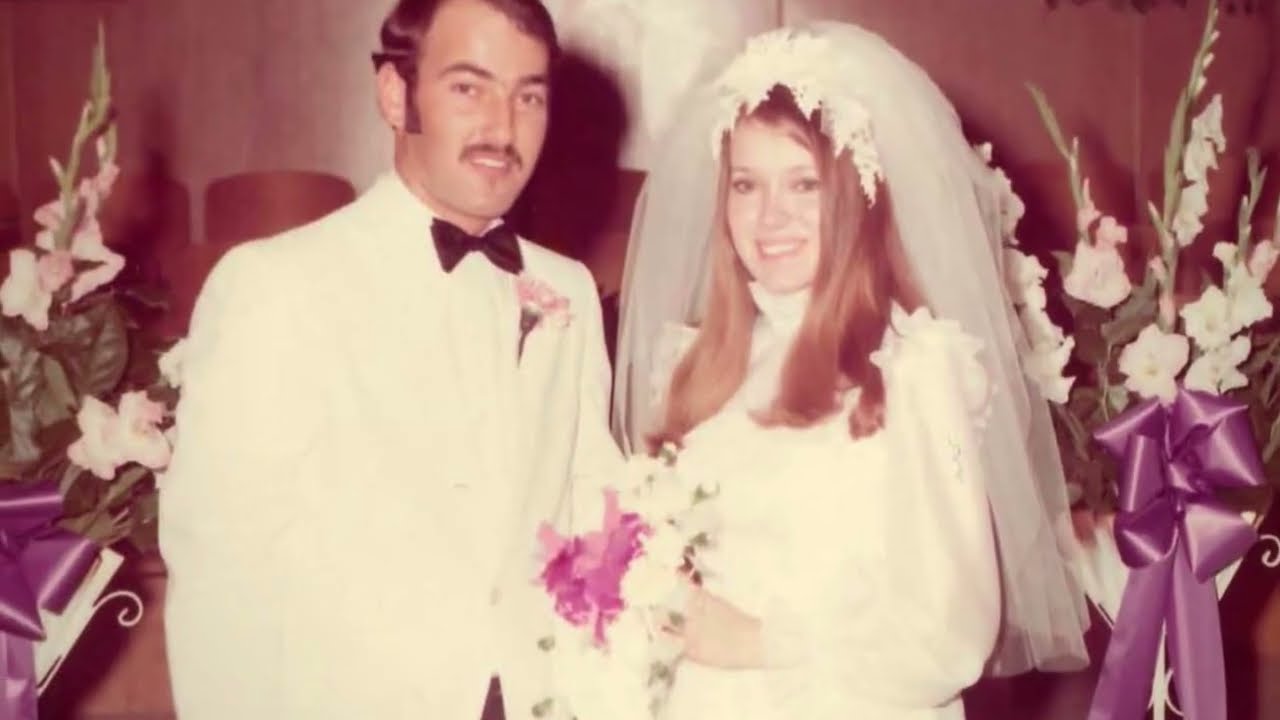 He became a teacher of theology, retiring in 1992, but his true vocation emerged in retirement. By 2001, he was touring schools in Germany and Austria, speaking candidly about the horrors of the Third Reich, using his own family history as a cautionary tale. He visited Israel and met Holocaust survivors, offering his testimony as a form of atonement, acknowledging that his family’s name was synonymous with evil and that he bore a moral obligation to educate the next generation about the dangers of totalitarianism
However, his past was not without its own shadows. In 2011, accusations emerged that Martin Adolf had raped a twelve-year-old girl while serving as a priest in the early 1960s. Other former pupils alleged severe physical violence at his hands.
By that time, Martin Adolf suffered from dementia and could not respond to the allegations. No legal proceedings followed, but an independent commission awarded compensation to some victims, acknowledging the claims without formal adjudication. Martin Adolf Bormann died on March 11th, 2013, at the age of eighty-two, his death marking the passing of the most publicly visible of Martin Bormann’s children, a man who had spent his later years trying to reckon with the legacy of a father he could neither fully embrace nor entirely reject
The other Bormann children maintained far lower profiles, choosing anonymity with deliberate purpose. Ilsa, renamed Aika after Rudolph Hess’s disgrace, died in 1958 at just twenty-six years old. The circumstances of her death remain shrouded in mystery, with no clear indication whether illness, accident, or something darker claimed her life.
She had been old enough at war’s end to remember everything, to carry clear memories of life at Obersalzberg, of the luxury and privilege that had been purchased with blood. She was fourteen when the war ended, living through the most formative years of adolescence while watching her family’s world collapse into ruin. Her early death meant she never had to navigate the full weight of being a Bormann in postwar Germany, never had to explain herself to employers or potential spouses, never had to watch documentaries about her father’s crimes or answer questions from coworkers who discovered her identity.
She escaped that burden, but at the cost of her life
The other siblings, Margarete, Rudolph Gerhardt, later known as Helmut after Hess’s fall from grace, Hinrich Hugo called Hainer after his godfather Heinrich Himmler, Eva Ute, the younger Gerda, and Fritz Hartmut, all survived into adulthood, but details of their lives remain frustratingly scarce. They did not give interviews to journalists, did not write memoirs exploring their impossible inheritance, and did not seek public attention of any kind. They married, possibly had children of their own, worked ordinary jobs in offices, shops, and schools, and aged without drawing attention to their parentage.
They chose anonymity with the same fervor that their father had chosen power. They likely changed their names through marriage or legal proceedings, disappearing into the fabric of postwar German and Austrian society. They became shopkeepers, teachers, clerks, ordinary citizens living ordinary lives, their extraordinary burden carried in private silence, a silence that is itself significant and telling
Unlike Gudrun Himmler, who never wavered in defending her father, Heinrich Himmler, and became a prominent figure in far-right circles, attending SS reunions and supporting convicted war criminals, or unlike Niklas Frank, who built an entire career condemning his father Hans Frank and speaking publicly about inherited guilt and the obligations of perpetrators’ children, the younger Bormann children simply vanished into ordinary life. They made no public statements defending or condemning their father. They gave no interviews to historians or journalists.
They wrote no memoirs exploring their psychological journey. For them, the best possible outcome was to be forgotten, to let the name Bormann fade from public consciousness, to live as normal citizens, unburdened by constant questions about their father. It was a strategy of survival through invisibility, a choice that raises profound questions about inherited responsibility and the nature of moral obligation
Their mother, Gerda, had been a devoted Nazi, born Gerda Buch in 1909, daughter of Walter Buch, chairman of the Nazi party court. She married Martin Bormann in 1929 when she was just nineteen, with Hitler and Hess serving as witnesses. Over fourteen years, she bore ten children, earning the Cross of Honor of the German Mother in gold, a Nazi decoration awarded to women who bore large families for the Reich.
Gerda embraced Nazi ideology completely, actively supporting Martin’s infidelity, embracing the concept of parallel marriages, the idea that genetically superior men should father children by multiple women. She allegedly asked her husband to ensure either she or his mistress was pregnant every other year, viewing reproduction as a patriotic duty rather than a personal bond. His lover, actress Manja Behrens, spent more time with him than Gerda did, yet Gerda showed no jealousy, only ideological commitment to the cause of racial purity and demographic expansion
Martin Bormann treated Gerda terribly in public, often humiliating her, whistling for her like a dog according to witnesses. Hitler’s valet reported that everyone knew Bormann terrorized his family and resorted to physical violence in rage, allegedly beating his children with a whip and kicking another child for falling in a puddle. Yet at home, he reportedly showed affection, creating a confusing dynamic where brutality and tenderness coexisted.
This contradiction appears frequently in accounts of Nazi family life, men who organized mass murder coming home and playing with their children, compartmentalizing their monstrous public actions from their private roles as fathers. The Bormann children saw both sides of their father, the stern authoritarian and the provider, making it difficult to reconcile who he had been with what he had done, a duality that would complicate their own psychological recovery for decades
The question of Martin Bormann’s fate haunted his children for nearly three decades. He fled the Führerbunker on May 2nd, 1945, trying to escape Berlin as the Red Army closed in. He left in chaos, and rumors followed him for years.
Sightings were reported in Argentina, Spain, Paraguay, and elsewhere, fueling speculation that he had escaped to South America like other high-ranking Nazis, including Josef Mengele and Adolf Eichmann. That belief shaped the lives and hopes of his children, who lived with the possibility that their father might still be alive, might one day reappear, might offer some explanation for his actions. In 1972, construction workers near Lehrter Station in Berlin uncovered two skeletons.
 One was identified as Hitler’s physician, Ludwig Stumpfegger. The other was initially unidentified, but later analysis suggested it might be Bormann. In 1998, DNA testing definitively confirmed the remains belonged to Martin Bormann.
Evidence suggested he had committed suicide by biting a cyanide capsule while attempting to escape Berlin, dying within days of Hitler, never having escaped Germany
The confirmation brought closure, but no comfort. The children had lived for decades, not knowing if their father was alive or dead, wondering whether they might one day face him again, whether he might offer some reckoning for his crimes. The revelation that he had died in 1945 was almost anticlimactic, a quiet end to a life of immense power and infamy.
He had simply died, taking with him any chance for explanation or reckoning. For the children, this meant living with unanswered questions, wondering what Martin Bormann had thought as he fled Berlin, whether he regretted his role in the Holocaust, whether he thought of his wife and children in his final moments. They would never know.
His death freed them from the possibility of confrontation, but trapped them in permanent uncertainty about his inner life, his motivations, his humanity, or lack thereof
Their story raises difficult questions about inherited responsibility that German society grappled with for decades, questions that remain unresolved to this day. Should the children of monsters bear any obligation to speak publicly about their father’s crimes? Should they apologize for actions they did not commit?
Should they dedicate their lives to education and remembrance as a form of intergenerational atonement? They were children when the regime fell, legally and morally innocent of their father’s actions. Yet they benefited from those crimes during the regime, living in luxury at Obersalzberg, eating fine food while others starved, playing in gardens tended by forced laborers, wearing clothes purchased with stolen wealth.
They were raised with every privilege while millions suffered and died to create that privilege, marked by material advantage before they were marked by historical shame
The question of complicity is complex and uncomfortable, a moral calculus that defies easy resolution. At what age does awareness become responsibility? The older children like Martin Adolf and Ilsa were teenagers when the war ended, having been indoctrinated in Nazi ideology at Hitler Youth meetings and party rallies.
They had believed, genuinely believed in their father’s cause and their nation’s destiny, internalizing the propaganda that portrayed Jews as subhuman and Germans as a master race. When does youthful indoctrination end and adult accountability begin? These are questions German courts, philosophers, and families wrestled with for generations, questions that have no clear answers, only difficult compromises and painful acknowledgements.
After the war, they lost privilege, but kept the stain, the name Bormann becoming synonymous with Nazi evil. The children placed in foster care anonymously may have been given new identities, but at some point each child had to confront the reality of their parentage through documents, records, or confessions, a moment of revelation that must have been shattering, forcing them to reconcile the loving father they remembered with the monster depicted in history books
The post-war treatment of Nazi families was inconsistent, reflecting the broader chaos of denazification efforts. The Bormann children as minors were not prosecuted, treated as victims of circumstance rather than perpetrators. The foster care system did what it could with limited resources, placing children in homes across Germany and Austria, often without adequate psychological support to help them process their trauma.
Theodore Schmidtz, the clergyman who took in several children, showed moral courage in caring for them, despite criticism from those who believed the Bormann family deserved no kindness whatsoever, arguing that children should not be punished for their parents’ sins. For Martin Adolf, choosing the priesthood was both escape and confrontation, a way to be Father Martin rather than Martin Bormann Jr. , crown prince of the Nazi elite.
The Catholic Church offered a new identity, a way to shed the burden of his name and embrace a life of service. It offered absolution through good works, a path to redemption that existed outside the judgment of secular society, but it also required him to confront his past directly, to acknowledge his father’s crimes without equivocation, and to distinguish himself through opposite choices
His missionary work in the Congo was geographically and ideologically as far from Nazi Germany as possible, serving the people his father’s regime would have classified as subhuman and marked for enslavement or extermination. He embraced Christianity while his father had worked systematically to undermine the churches, replacing Christian morality with Nazi ideology, viewing religion as a competitor for the loyalty of the German people. He lived in poverty and hardship while his father had accumulated immense wealth and power through corruption and exploitation, controlling Hitler’s finances and administering a vast fund of forced contributions from German industry.
For years, Father Martin labored in obscurity in African missions, ministering to the poor, building schools and churches, living a life of genuine service that stood in stark contrast to his father’s pursuit of power. He was far from Germany, far from the questions and judgments and accusations that would have followed him there, far from reporters and historians who would want to interview the son of Martin Bormann. But he carried the memories, remembering his father as stern and demanding, someone who expected absolute obedience and perfection, someone who showed little warmth or affection even to his own children
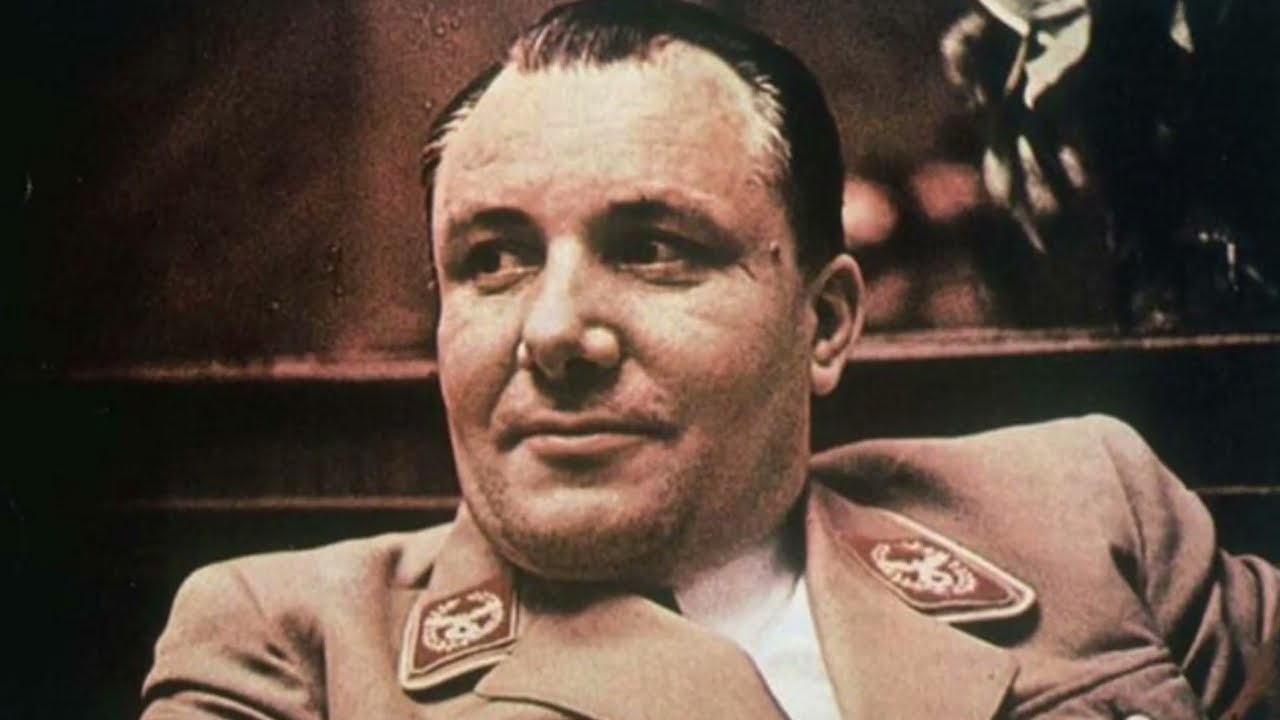 Later in life, Martin would tell interviewers that there had been no connection or human warmth between him and his father, that their relationship had been cold and authoritarian rather than loving, a relationship built on fear rather than affection. Yet as a boy he had loved Martin Bormann despite the sternness, had aspired to follow in his footsteps and had believed completely in the Nazi ideology his parents embraced and promoted. The break came gradually over years living in Africa confronting poverty and suffering directly and ministering to people the Nazi regime would have deemed inferior and disposable.
Martin Adolf began to understand what his father had truly been, reading books and historical documents, studying the Holocaust in detail, learning the full scope of the war crimes for which his father had been convicted at Nuremberg. He came to distinguish between the father he had known personally, a man who provided materially for his family and ensured they had what they needed, and the politician whose actions facilitated genocide, whose administrative skill made the Holocaust possible, whose control over Hitler’s schedule ensured that no one could see the Führer without his approval, making him one of the most powerful men in the Reich
This distinction, the ability to hold both truths simultaneously, would define his later public statements and his approach to his own history, allowing him to condemn the crimes without entirely erasing the man. The younger children born during the war had fundamentally different experiences. Eva Ute, born in 1938, was seven when the war ended, too young to have formed clear memories of her father or of Obersalzberg.
The younger Gerda and Fritz Hartmut were even younger, having no memories of their father at all. These youngest children knew their father only as a monster in history books, connected to him through biology alone, without emotional ties that memory provides. They were forced to carry guilt for someone they never really knew, to answer for crimes committed by a stranger who happened to be their father, a burden that must have felt arbitrary and profoundly unfair
As the Bormann children aged and the 20th century progressed, Germany’s relationship with its Nazi past evolved dramatically. The immediate post-war years were marked by widespread denial and repression, many Germans claiming they had not known about the Holocaust, had not supported the regime enthusiastically, and had simply been following orders or trying to survive. This culture of denial began to crack in the 1960s and the 1970s, driven by a series of watershed moments.
The trial of Adolf Eichmann in Jerusalem in 1961 brought unprecedented attention to the Holocaust, forcing the world to confront the scale of the atrocities. The Frankfurt Auschwitz trials from 1963 to 1965 forced Germans to confront the reality that ordinary citizens had participated in mass murder, that the perpetrators were not monsters but humans. Television miniseries like Holocaust in 1979 reached millions of viewers and sparked intense public discussion, breaking the silence that had enveloped the subject for decades.
Universities introduced comprehensive curricula about the Nazi period, memorials and museums were built, and the process of national reckoning changed how subsequent generations learned about and remembered the past
This evolution from a culture of silence to a culture of remembrance meant that for the children of Nazis, each wave of increased attention brought renewed scrutiny and difficult questions. The Bormann children, mostly anonymous in foster care, may have been spared some of this public attention, but Martin Adolf, who maintained his birth name and became a priest, could not escape it entirely. Every documentary about the Nazi leadership mentioned his father prominently.
Every history book named Martin Bormann as one of the key architects of the regime’s crimes, the man who controlled access to Hitler and made the bureaucracy of genocide function efficiently. Martin Adolf had to navigate this constant attention throughout his adult life, finding ways to acknowledge his father’s criminality while also claiming his own separate identity and moral choices, a delicate balancing act that required immense psychological fortitude
The Bormann children’s story reminds us that history does not end with the perpetrators, that the ripples of atrocity spread across generations, affecting innocent people in ways both profound and subtle. It reminds us that justice is complicated and incomplete, that moral accounting cannot always balance, that healing requires more than trials and sentences. The story also raises profound questions about inherited responsibility and evil, questions that have no easy answers.
Can evil be inherited? Are the children of monsters tainted? Most would say children bear no responsibility for their parents’ actions, yet these children benefited materially from genocide, living in luxury purchased with blood as they grew into adults with full knowledge of what their father had done.
Did they have an obligation to speak out or did they have the right to simply live quietly? There are no easy answers, every child of a Nazi perpetrator navigating these complexities differently, some choosing active engagement with the past, others choosing complete silence, neither choice being clearly right or wrong
Today, the Bormann name is remembered through historical scholarship, Martin Bormann exemplifying the banality of evil, the ordinary man who commits extraordinary crimes through devotion to duty and blind obedience. He was not a ranting ideologue like Goebbels, nor a theatrical showman like Göring. He was a bureaucrat who happened to be administering mass murder, a man whose power derived not from charisma but from his position at the center of the Nazi apparatus, controlling access to Hitler and ensuring that the machinery of genocide ran smoothly.
His children are footnotes to this history, people whose lives were defined by circumstances beyond their control, who inherited their father’s notoriety but not his power, his legacy but not his choices. They were forced to answer for crimes they did not commit, to carry shame they did not earn, to live with the weight of a name that was synonymous with evil
The surviving Bormann descendants carry this legacy forward into an age of internet search engines, where escaping one’s family history is nearly impossible. Anyone researching their ancestry will discover the connection, will find the name Bormann linked to the Holocaust, to the Nazi regime, to the man who was Hitler’s shadow. The question for each generation becomes what to do with that knowledge, how to move forward while acknowledging the past, how to build a life of meaning and purpose while carrying the burden of a family name that evokes horror.
Martin Bormann’s legacy is one of bureaucratic evil, of power wielded without conscience, of a man who facilitated genocide through meticulous administration. His children’s legacy is one of survival, silence, and scattered attempts at redemption, of lives lived in the shadow of history, of children who were forced to bear the weight of their father’s crimes without ever having chosen to be born into that legacy. They lived through the consequences of his choices, bore the weight of his crimes, and tried to build lives in the shadow of history, reminding us that every perpetrator is also someone’s parent, that evil ripples through families and generations, and that the work of reckoning with the past is never truly finished, that each generation must confront the legacy of those who came before, and that the only way forward is through honest acknowledgment of what was done and a commitment to ensure it never happens again