For more than 140 years, a simple question has refused to die along with its subject: Did Sheriff Pat Garrett really kill Billy the Kid in 1881, or did one of the most famous outlaws of the Old West slip away and live out his life under a different name? The official record states that Garrett shot the outlaw on July 14, 1881, at Fort Sumner, New Mexico Territory, in the home of Pete Maxwell. That version has been repeated in history books, museum exhibits, and Old West timelines ever since. Yet the circumstances of the death left just enough shadow for legend to grow.
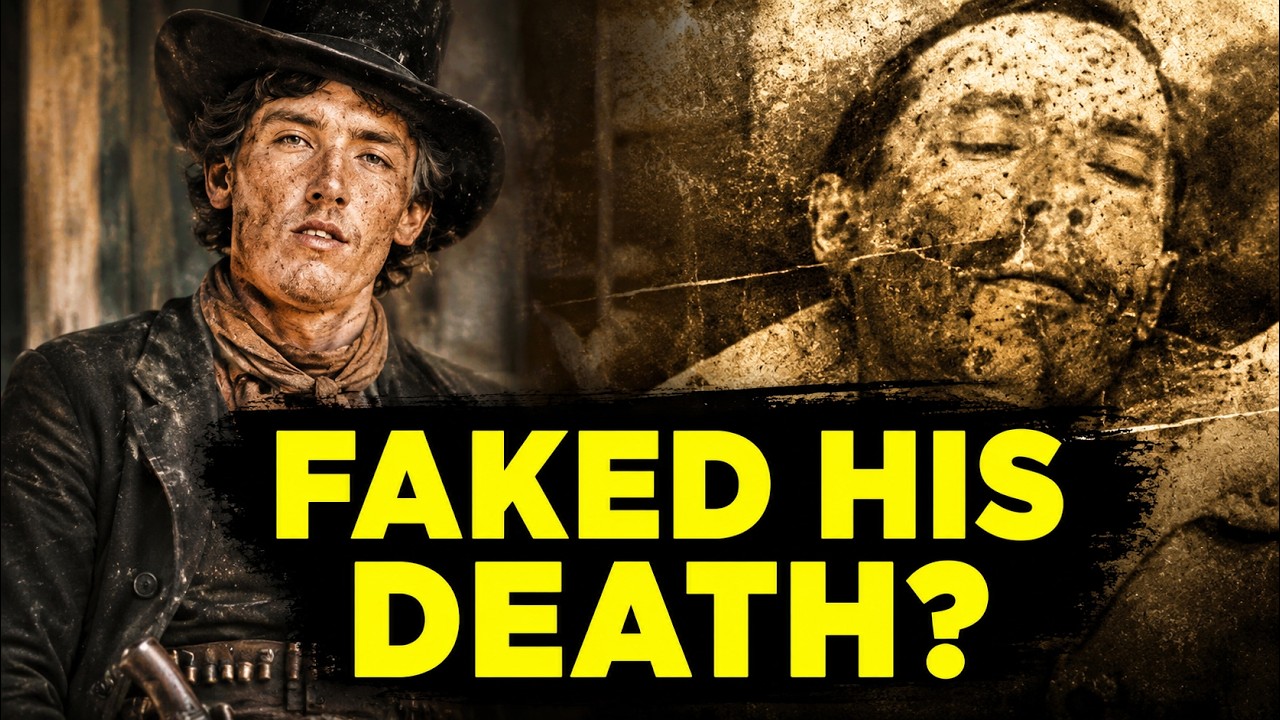
The shooting happened at night in a dark room. The body was buried quickly by modern standards. There was no fingerprint system, no DNA testing, and no professional medical examiner as people understand those roles today. Identification depended on local people who knew Billy, a coroner’s jury, and the word of the sheriff himself.
For 1881, that was normal procedure, but to modern eyes it looks thin. The real historical question is not whether the scene feels strange by today’s standards. It is whether the evidence from that time supports the idea that Garrett killed the wrong man, helped Billy disappear, or joined a cover-up. Before his death, Billy was already famous.
Newspapers had turned him into a symbol of the dangerous frontier. He had used several names—Henry McCarty, Henry Antrim, and William H. Bonney—which made his identity feel flexible and elusive. The survival theory depends on gaps, confusion, and claims made much later.
The official version depends on witnesses, local identification, Garrett’s account, a legal ruling, and the fact that no serious challenge emerged in Fort Sumner immediately after the shooting. That timing matters. Fort Sumner was a close-knit local setting, and Billy had friends there. If Garrett had shot the wrong man in a community where Billy was well known, the mistake would have been extremely difficult to hide.
That does not make the official story perfect, but it makes a total fake death much harder to accept. By the time of his death, Billy the Kid had strong reasons to run, but that does not automatically mean he had a realistic path to faking his own demise. He was not just another drifting cowboy. He was a wanted outlaw tied to the Lincoln County War, a violent local conflict in New Mexico involving ranchers, merchants, hired fighters, and sheriffs.
In April 1881, he was convicted for the killing of Sheriff William Brady and sentenced to hang. He then escaped from the Lincoln County jail, killing two deputies during the breakout, and became one of the most hunted men in the territory. Pat Garrett had already captured Billy once, in December 1880, and he knew the people and places connected to the outlaw. After the jail escape, Billy’s options were narrowing.
He could not easily settle in a known town, could not safely return to places where lawmen expected him, and every choice carried risk. Fort Sumner was one of the places where he still had connections, which made it useful for hiding but also dangerous. Garrett understood this. He did not need to search every canyon; he needed to watch the people Billy trusted.
To fake his death, Billy would have needed a substitute body that could fool people who knew him, a sheriff willing to risk his career, local witnesses willing to stay silent, and a town willing to accept the story without serious protest. The survival theory runs into a practical problem here. That kind of controlled deception is possible in a movie version of the Old West, but real life is usually messier and harder to manage. Pat Garrett is central to the debate because almost every survival theory has to turn him into either a liar, a partner in deception, or a man who made a fatal mistake and covered it up.
According to the traditional account, Garrett and two deputies went to Fort Sumner after hearing Billy might be in the area. Garrett questioned Pete Maxwell in a dark bedroom at night. Billy entered the room, did not immediately recognize Garrett, and Garrett fired. Different versions describe the scene with small differences, but the core point remains the same.
Garrett later worked with journalist Marshall Upson on a book about Billy, and that book helped shape the public version of the story. His account is not a perfect source. He had reasons to defend himself, and some people criticized the shooting as an ambush. But caution about a source is not the same as rejecting it.
A self-serving source can still tell the truth about the main event. More importantly, Garrett was not the only person involved after the shooting. The body was seen by others, a local coroner’s jury ruled on the death, and Billy was buried at Fort Sumner. Garrett did not become universally loved because of the killing.
If anything, ending Billy gave him fame but also made him controversial. People who disliked him had a reason to expose him if he had lied. Yet the strongest survival claims did not come from Fort Sumner immediately after 1881. They grew later, when memory had faded and legend had grown.
That does not prove Garrett’s story in every detail, but it weakens the idea of a simple fake death. The biggest weakness in the fake death theory is the body. Not because it was tested by modern science, but because it was identified locally at the time. After the shooting, a coroner’s jury examined the situation and accepted that the dead man was Billy the Kid.
People in Fort Sumner saw the body, and a wake and burial followed. Billy was not an unknown traveler. He had spent time in that area, and people knew him as William Bonney, as the Kid, and as a familiar young man connected to the community. In many survival stories, the body becomes almost invisible, as if Garrett shot someone in a room and buried him before anyone could look closely.
That version makes the hoax easier, but it does not match the strongest historical accounts. The fake death theory needs more than one mistake. It needs a chain of mistakes or a chain of silence. If the dead man was not Billy, then who was he?
Where did Garrett find a person close enough in appearance to pass as Billy? Why would nobody ask about that missing person? Why would Billy’s friends accept the burial? There is also the matter of speed.
Billy had escaped jail in April 1881 and was killed in July 1881 after more than two months on the run. The territory was watching the case, newspapers were interested, and Garrett’s actions were public enough to become news. A fake death would not only need to fool one room; it would need to survive public attention. That is why most historians see the identification of the body as one of the strongest reasons to accept the official version.
The hoax theory survives because it has just enough mystery to feel possible. The Old West was full of weak paperwork, changing names, local loyalties, and stories told long after the fact. Billy himself helped create the problem because his life was already hard to pin down. Even his early years are uncertain.
He used different names, his exact birth date has been debated, and he moved through different places before becoming famous in New Mexico. When a person’s beginning is unclear, people are more willing to believe the ending is unclear too. The way Billy died also leaves room for imagination. A nighttime shooting in a dark room is not the kind of clean public event that shuts down rumors.
If he had been executed in front of a large official crowd, the survival theory would be much weaker. Instead, he died in a private house at night, with Garrett as the main figure in the story. Emotion plays a role as well. Billy the Kid became more than a criminal case.
To some, he became a symbol of the young outlaw who fought powerful enemies and stayed loyal to friends. When people admire a figure, they often resist a simple ending. The survival theory also benefits from later claimants. Once an elderly man says, “I was Billy the Kid,” the story gets a new life.
Even if the claim is weak, it gives people something to debate. Photographs get compared, old scars get discussed, and family stories get repeated. The hoax theory sounds tempting because the setting is mysterious and the records are imperfect, but a living rumor is not the same as living evidence. The most famous survival claimant was Brushy Bill Roberts, an elderly man in Texas who came forward in the late 1940s and said he was Billy the Kid.
His story became popular because it offered exactly what legend wanted: the outlaw did not die young, the sheriff did not really win, and Billy lived quietly for decades under another identity. Brushy Bill said he wanted the pardon that had once been discussed for Billy after the Lincoln County War, which gave his claim a clear motive. The problems with his claim are serious. Billy the Kid was believed to have been born around 1859, but Brushy Bill’s family records have been reported as showing a birth year of 1879, which would make him far too young to be Billy.
His supporters have argued over names, dates, and identity records, but the claim never reached the level of proof needed to overturn the 1881 death record. Coming forward in 1950 meant the claim arrived almost 70 years after Billy’s reported death, when many direct witnesses were dead and the legend had been shaped by books and films. New Mexico Governor Thomas Mabry rejected the claim in 1950, and most historians do not accept Brushy Bill as Billy the Kid. Another survival theory centers on a man named John Miller, who lived in the Southwest and was later suggested by some to have been Billy under a new name.
This theory became part of the larger debate because of attempts to use DNA and exhumation. In the early 2000s, officials explored DNA testing connected to Billy the Kid, his mother, and survival claims, but the effort faced legal and practical barriers. In 2005, John Miller’s remains were reportedly exhumed in Arizona for possible DNA comparison, but the larger plan did not produce the clear final answer that popular audiences expected. Old graves, uncertain remains, chain of custody issues, legal limits, and degraded samples can turn a simple idea into a dead end.
The lack of DNA proof does not automatically help the survival theory. It only means modern science has not cleanly resolved every rumor. The historical evidence still has to be weighed on its own, and when it is weighed, the official account has more direct support than the John Miller theory. The fake death story lasted because it sits at the perfect meeting point between missing records and powerful myth.
The Old West was not as neat as later movies made it look. Billy’s case had all the ingredients: a young outlaw, a violent local feud, a broken pardon promise, a dramatic jail escape, a famous lawman, a nighttime death, and later men who claimed the story was not over. But when the question is handled like a historical investigation, the fake death theory remains weaker than the official account. The strongest evidence says Garrett killed Billy at Fort Sumner on July 14, 1881.
The body was identified, a coroner’s jury accepted the death, and local people did not produce a strong immediate challenge saying the wrong man had been buried. The later claimants, especially Brushy Bill Roberts, arrived too late and carried too many problems. The DNA attempts added mystery but not proof of survival. Billy the Kid probably did not fake his death, but the way he died left enough shadows for people to keep asking.
The rumor refuses to disappear not because the evidence for survival is strong, but because Billy’s life was already built from aliases, conflict, fast movement, and unfinished promises. A clean ending never really fit the image people had created around him. In the gap between record and legend, the question keeps coming back.
The evidence says no, but the legend keeps asking.