On August 14, 2006, a 15-year-old boy walked into a Chicago police station clutching a bag full of cash. He told officers the money was counterfeit and said much more could be found at a nearby apartment. A raid on that apartment uncovered $889,000 in fake bills, along with printing equipment, and the boy’s father was arrested on the spot. The twist was that the counterfeit operation had not been run by the father alone.
The teenager admitted to making some of the bills himself—and he was the one who turned his father in. The arrest ended the decades-long criminal career of Art Williams Jr. , a man the Secret Service reportedly called one of the most skilled counterfeiters they had ever encountered. Williams did not grow up planning to become a criminal mastermind.
Raised in the rough streets of Chicago, his childhood was marked by chaos. His earliest memories included watching his parents rob a truck filled with televisions when he was barely old enough to understand what was happening. By age nine, his mother had been institutionalized for schizophrenia, and his father abandoned the family, leaving Williams to fend for himself. His mother eventually stabilized after returning to medication and began rebuilding her life.
That was when she met Da Vinci, an Italian man with money and charm who treated her well. For Williams, Da Vinci became the father figure he never had. At 17, Williams got his girlfriend pregnant. Desperate to provide for his new family, he turned to stealing cars.
He was caught and sentenced to three months in juvenile detention. Da Vinci saw the arrest as a wake-up call and offered Williams a way out—an introduction to a trade that would define his life. Da Vinci took Williams to a rundown warehouse next to an abandoned railroad track. Inside was an old print shop with presses, barrels of ink, and stacks of paper.
The end product was not flyers or newspapers but crisp, flawless $20 bills. Da Vinci was part of a counterfeiting family tradition that went back generations, and he decided to pass the trade down to Williams. Da Vinci taught Williams everything: mixing inks, crafting plates, and mastering the delicate details of counterfeiting. There were strict rules: never spend the counterfeit money, only sell it; never print too much, as it draws attention; and never tell anyone about the operation.
Just as quickly as Da Vinci entered Williams’s life, he disappeared without a trace. Williams never learned whether Da Vinci was arrested, killed, or simply abandoned him. With Da Vinci gone, Williams lost the resources to continue the operation and was forced back into the streets. By the early 1980s, the drug trade had taken hold in Chicago, and cocaine was flooding the neighborhoods.
Williams saw an opportunity—not as a dealer but as a predator. He rented a black Chevrolet Caprice, fitted it with fake antennas, red strobe lights, and a badge pinned to his shirt. Posing as a police officer, he would pull over drug dealers, conduct mock searches, and rob them. The scheme sometimes paid $15,000 per hit.
The high-risk lifestyle was not sustainable. Williams decided to leave the streets and start fresh. He married his girlfriend and promised her a new life away from crime, telling her he had found work in construction. The truth was different: every morning his wife dropped him off at what she thought was his job site, but Williams walked to a secret apartment where he was building a counterfeit operation using the skills Da Vinci had taught him.
He purchased an old press, barrels of ink, and cameras to craft his own plates. With the advent of Photoshop, he blended old-school techniques with modern technology to create counterfeit bills that were nearly indistinguishable from real currency. Word spread quickly through Chicago’s underworld. Williams built a distribution network that included cab drivers, drug dealers, and street hustlers.
The operation brought in $50,000 a month. Success brought temptation. Despite Da Vinci’s rule to avoid greed, Williams started living lavishly—buying cars, throwing parties, and splurging on VIP tickets to games. His wife, already suspicious, filed for divorce in 1993.
The personal loss pushed Williams further into his work. He expanded beyond Chicago, traveling across the country to distribute his bills. He also broke another of Da Vinci’s golden rules by spending the counterfeit money himself, targeting places with young, inexperienced cashiers. He used fake $100 bills to buy cheap items and pocketed the real change.
In the aftermath of his divorce, Williams left Chicago for Texas to live with his mother, hoping a slower pace would give him clarity. For a while, the rhythm of church on Sundays and quiet dinners offered a glimpse of normal life. Then he met Natalie. She was bold, confident, and unapologetically rebellious, with her own way of working the streets—often targeting drug dealers, drugging them, and cleaning them out.
Williams shared his vision of getting back into counterfeiting. Natalie was all in. The two returned to Chicago, rented a small shop, and rebuilt the operation from the ground up. This time, the goal was more ambitious: counterfeit the new 1996 $100 bill, a design specifically created to combat counterfeits.
The 1996 redesign featured watermarks, color-shifting ink, microprinting, and security threads. It was touted as counterfeit-proof. Banks rushed to exchange old bills, and businesses became hyper-vigilant. For most counterfeiters, it marked the end of the road.
For Williams, it was a challenge he could not resist. He experimented tirelessly. For the paper, he scavenged rolls of newsprint from the Chicago Sun-Times, discovering it could mimic the feel of real currency. For watermarks, he layered tissue-thin paper during the printing process.
Even the color-shifting ink was replicated using low-rider paint. Williams’s bills passed field tests, pen tests, and even counterfeit detectors that relied on magnetic ink. With Natalie managing logistics, the operation ran smoothly, and the couple raked in millions. They traveled the country, passing counterfeit bills at malls, gas stations, and tourist hubs, using fake $100 bills to buy cheap items and pocketing real change.
The Secret Service, however, had begun tracking his bills, which were appearing in cities across the country. Williams’s counterfeit empire eventually caught the attention of the Russian mafia, who approached him with a lucrative proposition: $100,000 worth of counterfeit bills in a single deal. The timing was complicated—Williams had promised to drive his in-laws to the airport the same day—but his ego convinced him he could juggle both. He completed the deal in a hotel room while his in-laws waited at the airport.
That night, chaos unfolded. A noise complaint brought police to his hotel room. When Williams opened the door, officers barged in, claiming they saw a large bag of marijuana on the nightstand. They discovered $660,000 in counterfeit bills alongside the drugs, and Williams was arrested.
Natalie’s sister, who was also in the room, added to the scandal. When the Secret Service arrived, they were stunned by the quality of Williams’s work. One agent reportedly called his counterfeit bills “some of the best we’ve ever seen. ” But Williams knew they were building a case against him.
During the legal proceedings, Williams caught an unexpected break. His attorney argued that the police search was illegal, as officers had no probable cause to enter the room. The judge agreed, dismissing the case on the grounds of unlawful search and seizure. Williams walked free.
The close call left him shaken. For a brief moment, he considered leaving the counterfeit life behind. Natalie urged him to focus on their future. But Williams’s talent for counterfeiting was not just a skill—it was an addiction.
The thrill of outsmarting the system was part of who he was. He returned to Chicago with renewed determination, printing more counterfeit bills than ever before and expanding his network. The cracks in his empire, however, were starting to show. Amid the growing operation, Williams’s relationship with his teenage son, Art Williams III, began to deteriorate.
Williams had always envisioned a better life for his son, one free from the criminal cycle that had defined his own life. But his son had been quietly watching, absorbing the skills and mindset that made his father one of the best counterfeiters in the game. One day, Williams returned home to find stacks of counterfeit bills—sloppily printed, nowhere near his level of precision. They were not his.
His son had made them. Williams was furious. His worst fear had come true: his son had followed in his footsteps. The two argued.
In the heat of the moment, the son stormed out, taking a bag of counterfeit bills with him. Resentful and angry, he made a decision that would change everything: he contacted the Chicago Police Department and told them about the counterfeit operation. When police arrived at Williams’s apartment, they found $889,000 in counterfeit bills, printers, and other equipment. Williams was arrested.
His son’s accusations painted Williams as the mastermind behind the operation, while Williams denied the claims. Investigators had been tracking the spread of his counterfeit bills for years, and now they had what they considered the smoking gun. The Secret Service, already familiar with Williams’s reputation, connected the bills found in his home to those circulating nationwide. During questioning, the son admitted to making some of the bills himself, but his father’s long history made it impossible for authorities to believe the younger Williams was acting alone.
In court, prosecutors presented a mountain of evidence, including the $889,000 seized during the raid. They argued that Williams had not only created the counterfeit bills but had trained his son to follow in his footsteps. The narrative of a father-son counterfeiting duo was too compelling, and the jury quickly reached a verdict. Art Williams Jr.
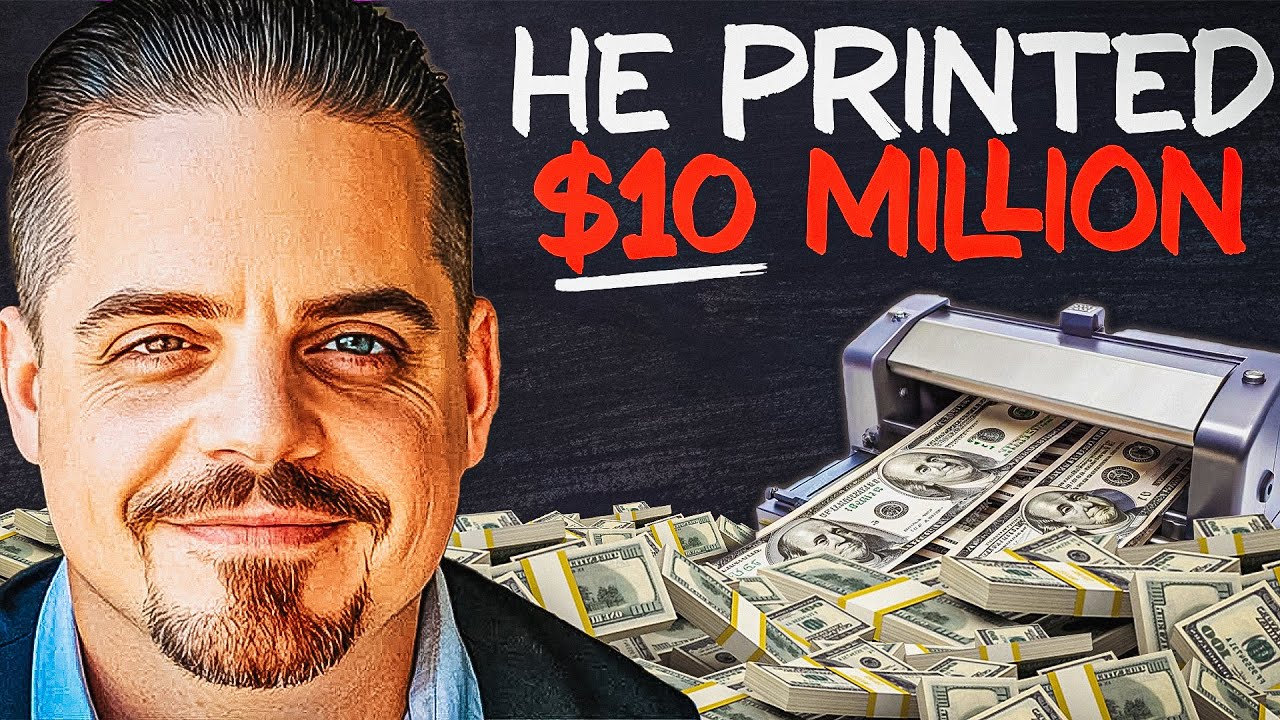
was sentenced to three years in federal prison for his role in counterfeiting over $10 million during his criminal career. His son received a lighter sentence due to his age and cooperation with authorities. For Williams, the betrayal cut deeper than any prison sentence. The sting of his son’s actions was not just about the arrest—it was the realization that his choices had perpetuated the very cycle he had hoped to break.
His own father had abandoned him when he was young, and now Williams was facing the same fate with his own child. It was a parallel he would carry with him for the rest of his life.