Lawrence Shirley, the fourth Earl Ferrers, was executed on May 5, 1760, for the murder of his steward, a crime that made him the last peer of the realm to be hanged for murder. His death, carried out at Tyburn, marked the conclusion of a scandalous life that had begun with immense privilege and ended in public dissection. As the eldest son of the Honorable Lawrence Ferris, the third son of Robert Shirley, the first Earl Ferrers, he was born into nobility and inherited estates of great value in Leicestershire, Derbyshire, and Northamptonshire. However, his life quickly deviated from the path expected of a man of his station, as he developed a taste for drink and gambling.
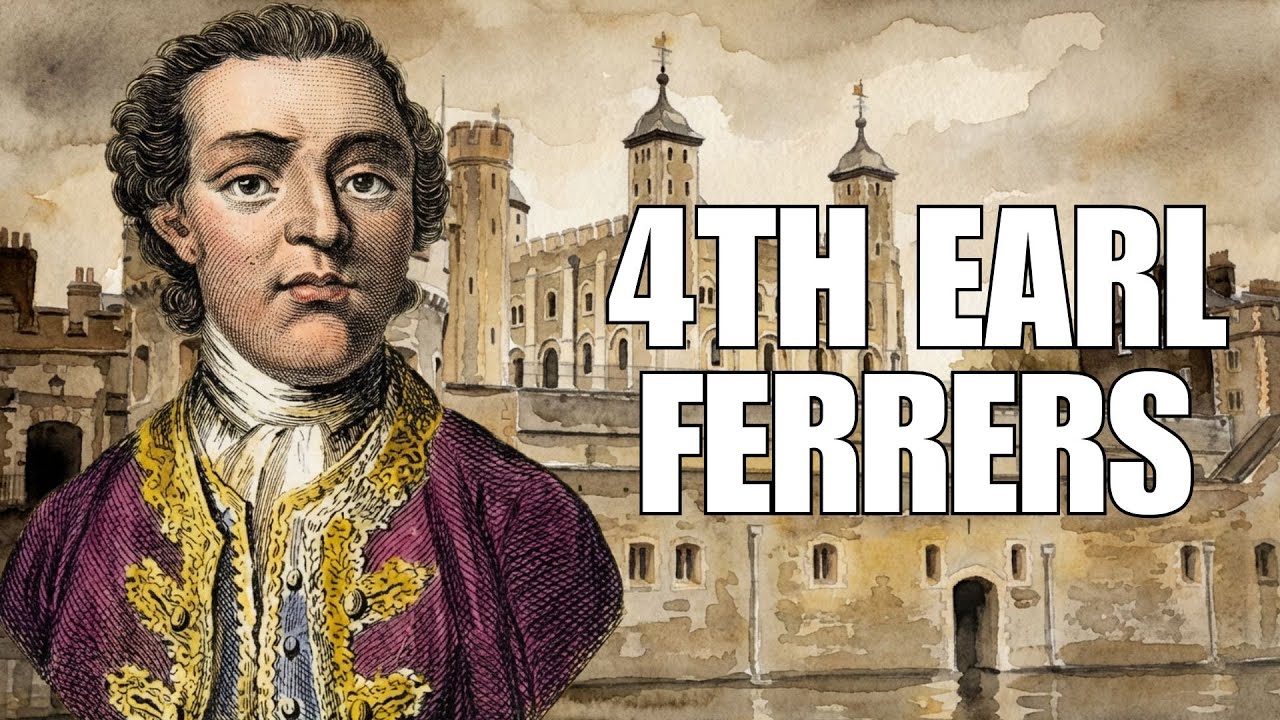
At the age of twenty, he abandoned his studies and left England for Paris, where he lived extravagantly. Those who knew him said that when under the influence of alcohol, he acted with the wildness and brutality of a madman. His marriage to Mary, which lasted six years, was marred by his cruelty. He would fly into rages over trifling matters, and on one occasion, he beat a servant so severely that the man was lamed for life and suffered lasting health problems.
The countess herself was not spared his wrath. In 1758, after six years of marriage, she obtained a legal separation on the grounds of cruelty, a highly unusual step for the time. The courts appointed trustees to administer his estates, and they selected a gentleman named Johnson to serve as the receiver of the Earl’s rents. Johnson had initially declined the position, understanding the difficulty it would place him in.
When he finally arrived at the Earl’s residence, he found that the Earl had already sent away his mistress, Margaret Clifford, and their daughters, leaving only three maidservants in the house. During a meeting about business matters, the Earl commanded Johnson to kneel before him and confess his wrongdoing. When Johnson refused, the Earl produced a pistol from his pocket and fired, shooting him in the torso. Despite his injury, Johnson managed to flee and raise the alarm.
He declared that he was a trustee appointed by the courts and that the Earl must cease his violence. The servants were alarmed, but the Earl followed Johnson into the chamber where he lay and remained there until he died. The ball that had entered Johnson’s torso could not be safely extracted, and he succumbed to his injuries. A coroner’s inquest was convened, and the Earl was initially held at a public house, guarded through the night.
On February 14, 1760, he was transferred to the Tower of London and committed to the custody of the Black Rod to await trial before the House of Lords. His accommodations were comfortable, but visits from Margaret Clifford were not allowed, and he remained in the Round Tower for two months. The prosecution was led by Attorney General Sir Charles Pratt, who later became the first Earl Camden. The Earl entered a plea of insanity, and witnesses testified to his strange behavior.
A woman who had known him for years stated that he would drink coffee straight from the spout of the pot rather than pouring it into a cup, insisting that he was sober when he did so. However, the prosecution countered that eccentricity was not the same as legal insanity, and that mere bad temper did not absolve a man of responsibility for his crimes. The trial lasted two days. Each lord, from the most junior to the most senior, stood in turn to declare his verdict.
Each one said, “Upon mine honor, guilty. ” Not one peer found cause to acquit their fellow nobleman. The Earl was sentenced to death by hanging, followed by dissection, in accordance with the Murder Act of 1752. The execution was stayed until May 5, 1760, to allow him time to settle his affairs, though his will was not valid because a condemned man possessed no right to determine the disposition of his property.
On the day of his execution, the Earl wore a light-colored suit embroidered with silver, the same suit he had worn on his wedding day eight years prior. It has been said, though not confirmed, that as a concession to his rank, the rope used was fashioned of silk rather than hemp. When asked if he had any final words, he replied, “Oh God, forgive me all my errors. Pardon all my sins.
”
Following the execution, his body was taken to the Barber Surgeon’s Hall for public exhibition and dissection. However, in deference to his rank, the dissection was not completed. On May 8, his body was released to his friends for interment.
The story of a wicked nobleman executed like a common criminal was told well into the nineteenth century, a reminder that even a man who believed himself above the law could not escape justice.