A drill bit pierced the back wall of Bertha’s Gifts and Home Furnishings in Las Vegas on July 4th, 1981. Frank Colada and his crew worked in silence, their routine familiar after dozens of similar jobs. But the instincts that had kept Colada alive for 30 years were screaming that something was wrong. He was right to worry.
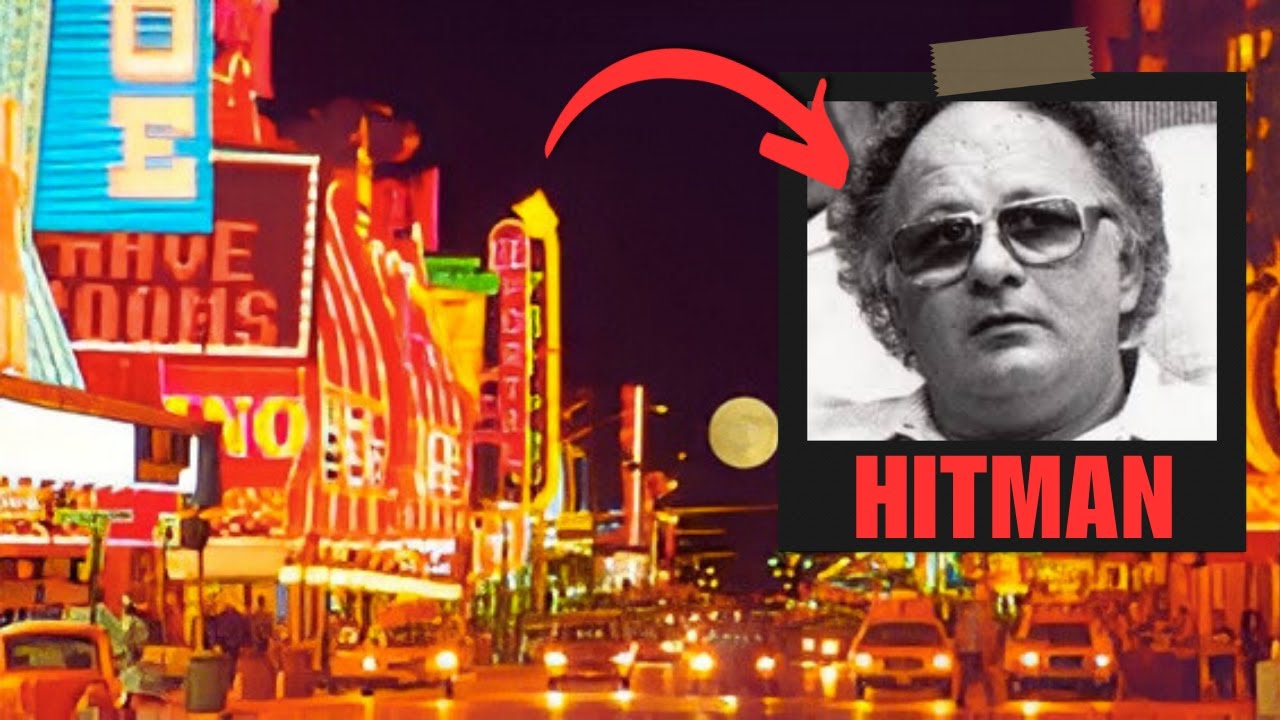
Las Vegas Metro Police had already surrounded the building, and FBI agents waited in unmarked cars three blocks away. Someone had talked. Within the hour, most of the crew was in handcuffs. Within six months, Colada made a decision that would destroy the Chicago Outfit’s control over Las Vegas—a criminal empire worth hundreds of millions of dollars built on decades of violence and carefully maintained silence.
The man who brought it all down wasn’t a fed, a rival mobster, or a crusading prosecutor. It was Frank Colada: hitman, burglar, Tony Spilotro’s oldest friend, and the rat who killed the golden goose. Born on the West Side of Chicago on December 14th, 1938, Colada entered a world where crime wasn’t an aberration—it was infrastructure. By age 8, he was stealing as an apprenticeship, learning to pick locks before he learned algebra.
His first arrest came at 11 for petty theft. While most kids like him ended up dead or in prison before 30, Colada beat those odds by getting better at the game. By the mid-1950s, he’d graduated from shoplifting to car theft to armed robbery, combining a violent streak with a discipline that made him valuable. He met Tony Spilotro through mutual friends.
The connection was immediate. Both men were short—Colada at 5’7″, Spilotro at 5’5″—and both had reputations for violence. Spilotro became more than a friend; he became a mentor and a big brother. “If Tony said jump,” Colada later recalled, “I didn’t ask how high.
I just jumped. ”
The work in Chicago during the 1960s was methodical brutality. Colada participated in beatings, helped dispose of bodies, drove getaway cars, and planned precision burglaries. As Spilotro rose through the Outfit’s ranks, Colada followed everywhere.
The 1960s were good years for the Chicago Outfit, with gambling revenue, loan sharking, and control over Teamster pension funds generating enormous wealth. But the real prize was 1,200 miles west in the Nevada desert. Las Vegas was engineered for theft. The Chicago Outfit and crime families from Kansas City, Milwaukee, and Cleveland secretly controlled several casinos through frontmen.
The “skim” worked simply: trusted insiders siphoned cash before the official count. Millions of dollars every month went untaxed and untraceable, packed into suitcases carried by couriers on commercial flights to mob bosses across the Midwest. The system had a vulnerability: distance. The Outfit needed an enforcer—someone brutal enough to command respect, smart enough to avoid attention, loyal enough to be trusted with the empire’s most valuable asset.
They sent Tony Spilotro. He moved to Las Vegas with a simple mandate: protect the skim and enforce discipline. Spilotro called Colada to Vegas. Colada arrived with a single suitcase and a lifetime of criminal expertise, becoming Spilotro’s eyes, fists, and problem solver.
The work paid well, and Las Vegas in the 1970s was a strange hybrid—neon lights and Frank Sinatra on the surface, systematic corruption beneath. But Spilotro wasn’t satisfied with just enforcing. He wanted to earn independently, and that ambition would eventually destroy everything. When Colada grew bored with enforcement work, Spilotro gave his blessing for him to form a burglary crew.
Colada assembled his team carefully: Larry Newman Jr. , Ernie Deino, and Herbert “Fat Herby” Blitzstein, among others. They called themselves the Hole-in-the-Wall Gang, named for their signature technique of drilling through walls and roofs to bypass alarm systems entirely. The method was surgical: case the target for weeks, cut phone lines, wear masks and gloves, take jewelry and cash, get out.
No violence, no witnesses, no evidence. For several years, it worked brilliantly, generating hundreds of thousands of dollars. But success bred carelessness. The crew hit targets more frequently and more brazenly, attracting media attention and special police task forces.
Spilotro was also attracting heat. He’d started an affair with Jerry McGee, the wife of Frank “Lefty” Rosenthal, the man who ran the Stardust and controlled the skim. The affair violated the Outfit’s code. And Spilotro’s legendary temper led to beatings, murders, and bodies turning up in the desert.
Chicago’s bosses grew nervous—the entire point of the Vegas operation was to stay quiet. In August 1979, Jerry Lner’s body was found buried in a shallow grave outside Las Vegas. Lner was a small-time criminal involved in burglaries, possibly talking to police. Colada participated in the murder, luring Lner to a meeting, shooting him, and helping dispose of the body.
The FBI, already investigating the Hole-in-the-Wall Gang, now had physical evidence and forensic connections to Colada and his crew. The July 4th, 1981 Bertha’s Gifts job was the end. Police were waiting. Multiple crew members were arrested.
Colada narrowly escaped, slipping away before police could identify him. But he knew the game was over. His crew was facing serious prison time, and when people faced serious prison time, they talked. Colada was now a liability.
He knew too much—about the Lner murder, Spilotro’s operations, the casino skim, which Chicago bosses received the money. Spilotro understood the equation perfectly. The solution was simple: eliminate Colada before he became a problem. Colada got the warning through a police contact.
The message was blunt: Tony Spilotro had sanctioned a hit. The man who had been his best friend for 25 years, the man he’d followed to Vegas, the man he’d committed murders for, wanted him dead. The betrayal was absolute. Colada understood the logic.
In the mob, loyalty was transactional. His options were limited: stay and die, run and be hunted, or flip and become a federal witness. It was the only option that kept him alive. In September 1982, Frank Colada walked into the Las Vegas FBI field office and destroyed an empire.
He confessed to the Jerry Lner murder, naming participants and providing dates and evidence. He detailed the Hole-in-the-Wall Gang’s operations and the fences who bought stolen merchandise. Then he went bigger. He told them about Tony Spilotro—the enforcement operations, the ordered murders, how he operated and who he reported to.
He explained the skim with actual mechanics: money removed from countrooms, specific individuals who handled the cash, couriers who carried suitcases on commercial flights, names of mob bosses in Kansas City, Chicago, Milwaukee, and Cleveland who received the money. The FBI had suspected most of it. Colada confirmed it with details that couldn’t be challenged in court. Between 1983 and 1984, Colada testified in federal courtrooms across the Midwest.
Members of the Hole-in-the-Wall Gang received convictions for burglary, conspiracy, and racketeering. In murder trials, his testimony was clinical and unemotional. Defense attorneys attacked his credibility, but his testimony held up because it was detailed and matched physical evidence. Then came the racketeering trials in Kansas City, Chicago, Milwaukee, and Cleveland.
Colada was a key witness, explaining how the money moved and identifying the mob bosses who controlled the operation. Convictions followed across multiple cities. The Outfit’s Vegas pipeline shut down. The financial impact was catastrophic.
The skim had generated hundreds of millions of dollars over 15 years, funding the Outfit’s entire Midwest operation. Without it, the Chicago mob couldn’t pay street crews, maintain political protection, or enforce discipline. The empire was collapsing—and everyone knew who’d caused it. Colada’s testimony had another effect.
Tony Spilotro was now useless to the Outfit. He’d failed to protect the skim, failed to control his crew, failed to eliminate Colada before he flipped. Chicago’s bosses decided Spilotro was a liability. On June 14th, 1986, in Bensenville, Illinois, Tony Spilotro and his brother Michael were lured to a meeting.
Neither walked out. Both were beaten severely, then suffocated. Their bodies were driven to a farm in Enos, Indiana, and buried in a shallow grave in a cornfield. Farmers found the remains a week later.
Tony Spilotro, the man who terrorized Las Vegas, was dead at 48, killed by his own organization. Colada disappeared into the federal witness protection program—new name, new social security number, new city, new job. He lived knowing that Outfit members would kill him if they ever found him. But he was alive, which was more than he could say for most of his former crew.
In the 1990s, as the Outfit’s power collapsed and corporate owners took over Las Vegas, Colada slowly re-emerged into public life. He gave interviews and spoke with journalists and historians. When Martin Scorsese developed “Casino,” based on Nicholas Pileggi’s book about the Las Vegas mob era, Colada was hired as a consultant. He advised on period details and even appeared in the film in a small role as a member of Nikki Santoro’s crew—the character based on Tony Spilotro.
Colada’s cooperation had made that history possible. The city that once feared him eventually turned him into a tourist attraction. The Mob Museum in downtown Las Vegas opened in 2012, and Colada gave talks, describing murders with the same clinical detachment he’d used in court. Some visitors found him fascinating; others found him disturbing.
Colada seemed unbothered by either interpretation. Frank Colada died on August 20th, 2020, at age 81, of natural causes complicated by COVID-19. Obituaries appeared in major newspapers, describing him as a former mobster who became a government witness, as the hitman who brought down Tony Spilotro, as a key figure in the dismantling of organized crime’s control over Las Vegas. The Chicago Outfit never recovered from Colada’s cooperation.
Without the Vegas skim, they couldn’t maintain their infrastructure. Prosecutions continued through the 1990s. By the 2000s, the Outfit was a shadow organization running low-level rackets. Las Vegas itself transformed into a city of publicly traded companies under strict oversight.
Colada’s betrayal also changed the calculus of organized crime. For decades, omertà—the code of silence—had protected mob operations. Colada proved that cooperation was survivable, that the federal government could protect witnesses. After him, more mobsters flipped: Sammy “The Bull” Gravano, John Vece, Philip Leonetti.
Each defection weakened omertà further. The mob’s greatest strength, enforced silence, became its fatal vulnerability. The story of Frank Colada isn’t about redemption. He never claimed to be reformed, never apologized for the murders, never suggested he’d acted from moral conviction.
He flipped because Tony Spilotro wanted him dead. Loyalty was a transaction, and when that transaction became one-sided, Colada chose survival. But his survival destroyed an empire. The Chicago Outfit wasn’t defeated by FBI raids alone.
It was defeated by the one thing mob bosses feared most: a trusted insider who decided loyalty no longer mattered. Tony Spilotro’s biggest mistake wasn’t the affair, the reckless burglaries, or attracting federal heat. His biggest mistake was betraying the man who knew everything. Frank Colada spent 30 years as a mobster, built his reputation on violence and silence, and committed murders for men he called brothers.
In 1982, he walked into an FBI office and spoke. The Chicago Outfit never recovered from what he said.