VERSAILLES, France — The Supreme Commander of the Allied Expeditionary Forces stood motionless at his desk in the East Wing of the Chateau de Versailles, the telephone receiver still in his hand, his face betraying the exhaustion of ten sleepless nights and the weight of a decision that had hung over the fate of 20,000 American soldiers.
The call that came at approximately 6:30 p. m. on December 26, 1944, carried the news that General Dwight D.
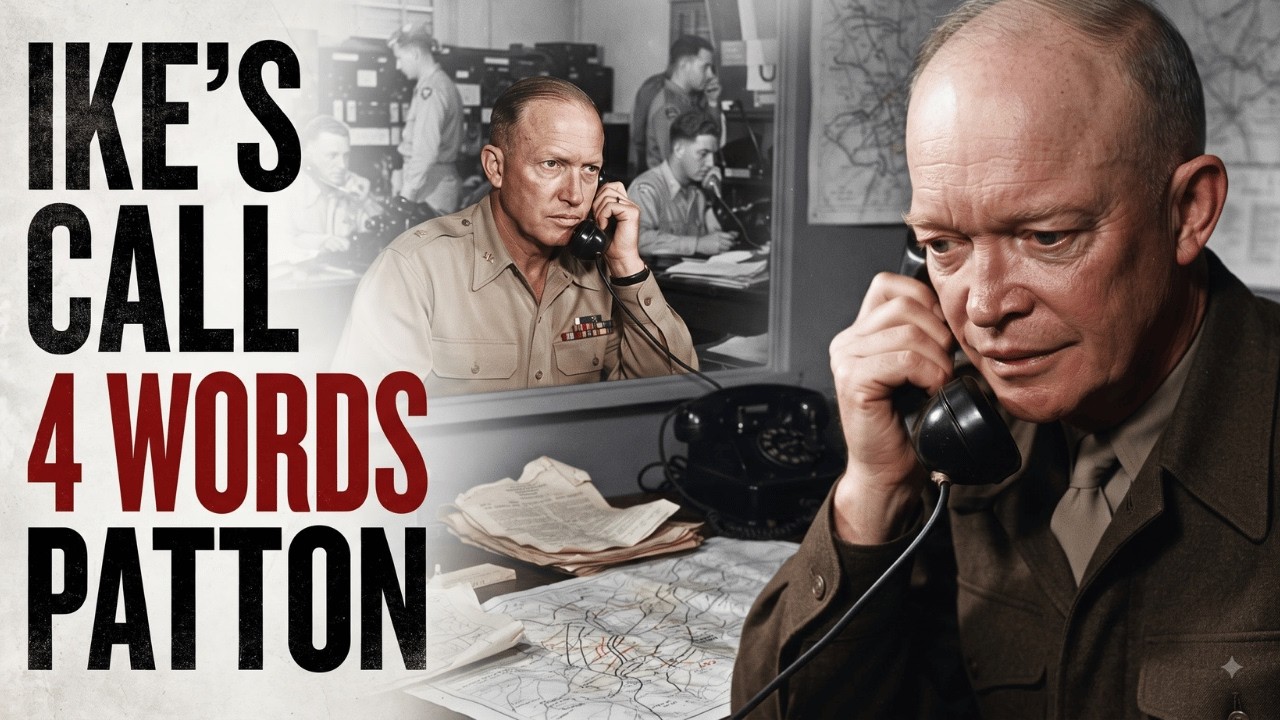 Eisenhower had been waiting for since the pre-dawn hours of December 16, when German forces had launched their massive counteroffensive through the Ardennes forest. For a full minute, the 54-year-old commander did not speak. His personal secretary, Kay Summersby, standing in the adjacent office, watched through the open door as the man who had commanded the D-Day landings struggled to find his voice.
When Eisenhower finally spoke, his voice was thick with emotion. He said only two words: “Thank God.”
The news was that Lieutenant General George S. Patton Jr.’ s Third Army had broken through the German encirclement of Bastogne, reaching the besieged Belgian town at approximately 4:50 that afternoon.
The 20,000 American soldiers of the 101st Airborne Division and supporting units, who had been surrounded and freezing in the snow since December 20, were finally safe.
The moment represented the culmination of seven days of extraordinary military maneuvering, personal trust, and a promise made at a French military barracks in Verdun that most senior American commanders had believed impossible to keep.
On December 19, with the German offensive tearing through American lines and the situation in the Ardennes deteriorating by the hour, Eisenhower had convened an emergency meeting of his senior commanders at the Caserne des Jardins Fontaine at Verdun. The meeting room was a cold, spartan officers’ mess with a single pot-belly stove providing the only heat. Present were Eisenhower, 12th Army Group commander Omar Bradley, 6th Army Group commander Jacob Devers, and Patton, whose Third Army was positioned 70 miles to the south near Nancy.
Eisenhower opened the meeting with a statement that would become legendary: “The present situation is to be regarded as one of opportunity for us and not of disaster. There will be only cheerful faces at this conference table.”
Patton, characteristically, responded with dark humor. “Hell, let’s have the guts to let the sons of bitches go all the way to Paris,” he said. “Then we’ll really cut them off and chew them up.”
Eisenhower was not amused. He moved to the business at hand, briefing his commanders on the tactical situation and the decision that Bastogne must be held at all costs. Then he turned to Patton directly.
“George, I want you to command this move under Brad, of course. When can you attack?”
Patton had been preparing for this question for six weeks. His intelligence officer had identified the German buildup opposite the Ardennes on December 9, and Patton had ordered his staff to prepare contingency plans for a 90-degree pivot from the Third Army’s eastward advance toward Frankfurt to a northward attack. In the hours before the Verdun meeting, he had telephoned his chief of staff, Major General Hugh Gaffey, and communicated code phrases that would initiate the pivot if needed.
Patton answered Eisenhower’s question with four words that stunned the room into silence: “December 22nd, three divisions.”
The American officers present were in a state of disbelief. Bradley thought Patton was joking. Devers thought Patton was exaggerating for effect.
But Eisenhower, who had known Patton for 32 years, understood that his old friend was serious. He had seen that same intensity in Patton’s eyes before, and he knew that the man who had driven the Third Army 600 miles across France in four months was not making an idle boast.
Patton continued: “This time the Kraut has stuck his head in a meat grinder, and this time I’ve got the handle.”
Eisenhower approved the plan. Patton walked out of the meeting room, telephoned Gaffey at Nancy, and communicated the code phrase that his chief of staff had been awaiting for 72 hours: “Play ball.”
The 90-degree pivot of the Third Army began immediately. It was one of the most complex operational movements in the history of the United States Army during World War II. Three divisions — the 4th Armored, the 26th Infantry, and the 80th Infantry — would have to disengage from their positions facing east, turn north, and drive approximately 100 miles through frozen roads and snow-covered terrain to reach Bastogne.
 The weather was the enemy’s ally. The winter of 1944 was the coldest European winter in 40 years, with temperatures reaching minus 20 degrees Fahrenheit on the coldest nights. Fog had grounded the American Ninth Air Force since the first days of the German offensive, leaving the Third Army’s tank columns without air cover and the defenders of Bastogne without resupply.
Eisenhower returned to Versailles that evening, arriving at approximately 8 p. m. Summersby met him at the East Wing office and watched as he sat at his desk, lit a cigarette, and stared at his maps for a full hour without speaking.
She did not disturb him.
The days that followed were among the most difficult of Eisenhower’s career. On December 20, he received two pieces of news. The first was that the United States Senate had confirmed his promotion to General of the Army, the five-star rank created by Congress on December 14.
Eisenhower was the youngest American general to receive the rank at age 54, but he received the news without visible emotion, returning immediately to the tactical situation reports.
The second piece of news was more troubling. The German penetration had effectively separated Field Marshal Bernard Law Montgomery’s British 21st Army Group from the American First Army under Courtney Hodges and the American Ninth Army under William Simpson, which were operating on the northern shoulder of the German bulge. Communications between Bradley at Luxembourg City and Hodges at Spa had been cut by the German advance.
Eisenhower made the decision to place the American First and Ninth Armies under Montgomery’s temporary operational command. Bradley was furious, and his angry voice could be heard through the closed door of Eisenhower’s office as he argued that the transfer was an insult to the American Army. Eisenhower listened without interrupting, responded briefly, and hung up.
The decision was tactically correct — Montgomery was physically closer to the northern shoulder — but it would produce a bitter press storm when it became public in January.
On December 21, Eisenhower wrote in his personal diary: “This is the shortest day. How I pray that it may by some miracle mark the beginning of improved weather.”
The fog continued. The American forces at Bastogne could not be resupplied from the air. The Third Army’s tank columns could not receive air cover.
Eisenhower prayed, despite having moved away from the formal religious practice of his youth during his years at West Point.
On December 22, at approximately 11:30 a. m. , four German officers approached the American forward outpost of the 327th Glider Infantry Regiment on the eastern perimeter of Bastogne under a white flag of truce.
They carried a typewritten ultimatum demanding the unconditional surrender of the 20,000 American soldiers inside the town.
The ultimatum was carried up the chain of command to the basement of the Heintz Barracks in the center of Bastogne, where Brigadier General Anthony McAuliffe, the 46-year-old acting commander of the 101st Airborne Division, read the letter and said one word: “Nuts.”
The reply was typed on a piece of American Army stationery and read in its entirety: “To the German Commander: NUTS! The American Commander.”
The news of McAuliffe’s reply reached Eisenhower at approximately 3 p. m. that afternoon.
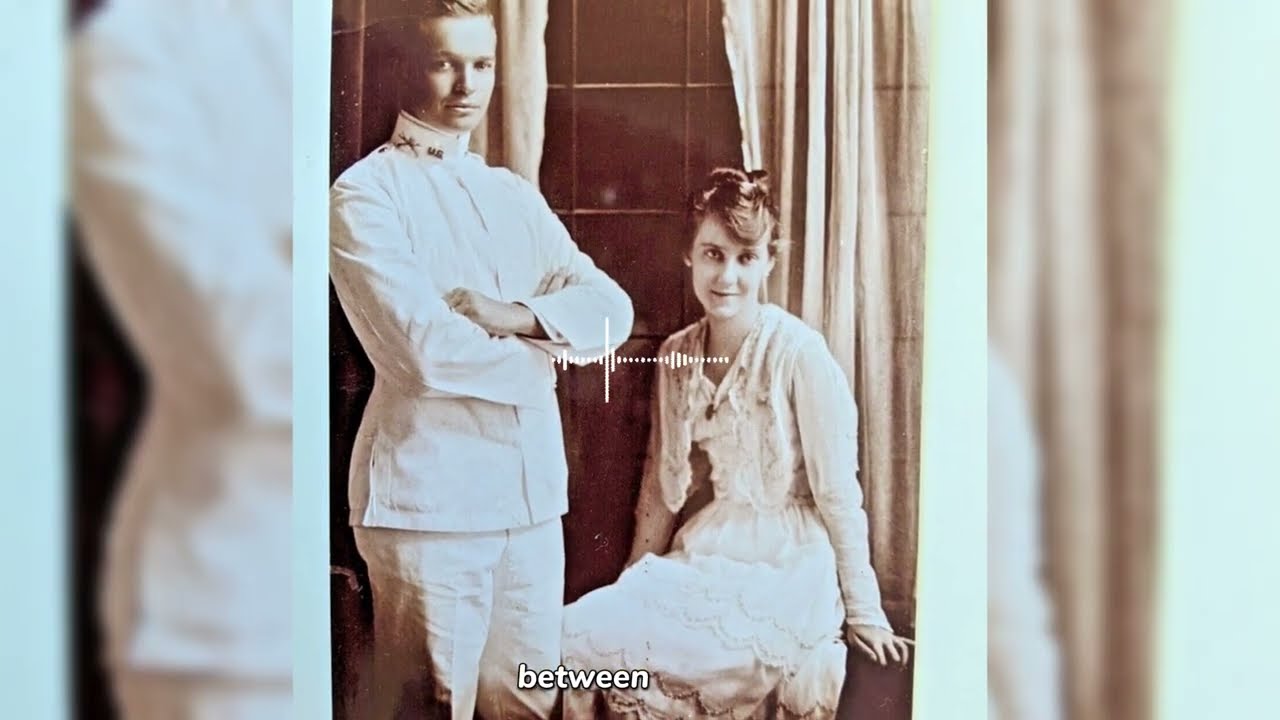 Summersby brought the news to the inner office and described Eisenhower’s reaction as the first moment of genuine humor she had witnessed from him since December 16. He laughed, read the single word again, and laughed again.
On the morning of December 23, the weather cleared. A high-pressure system moved south from the Soviet Union across the Eastern European plain and reached the Ardennes in the pre-dawn hours. The overcast that had covered the region for seven days lifted, and the sky over Bastogne was clear and blue by approximately 8 a.
m.
The American Eighth Air Force flew approximately 13,113 sorties over the Ardennes region between December 23 and December 27 — the most sustained air support effort of the American Army Air Forces in the European theater during the entire war. Transport aircraft dropped supplies on Bastogne beginning on the morning of the 23rd, giving the defenders rations, ammunition, medical supplies, and blood plasma for the first time in four days.
Patton’s Third Army chaplain, Colonel James Hugh O’Neill, had distributed a weather prayer to every soldier in the Third Army in the days preceding the weather change. When the weather cleared, Patton awarded O’Neill the Bronze Star Medal.
On Christmas Eve, Eisenhower remained at Versailles, working in the East Wing office and eating his evening meal alone. He had ordered no Christmas tree to be erected at the Chateau, saying there would be no Christmas until the 101st Airborne Division was safe. Summersby joined the staff at an improvised Christmas Eve gathering at the palace gymnasium, where a small tree had been erected despite Eisenhower’s order.
At approximately 8:30 that evening, German Luftwaffe bombs struck the ground-floor aid station in the Sarma building on the Rue du Vivier in the center of Bastogne, killing 28 American wounded soldiers and a Belgian civilian nurse named Renee Lemaire. The 30-year-old nurse, who had volunteered to work in the American aid station because the medical staff was severely understaffed, had treated approximately 350 American wounded soldiers during the first four days of the siege. She is remembered today as the Angel of Bastogne.
Eisenhower learned of the bombing on Christmas morning. Summersby described him as personally silent for a full minute after reading the casualty list. He worked through Christmas Day, ate his Christmas dinner alone in the office, and telephoned his wife Mamie at the Wardman Park Hotel in Washington, D.
C. , at approximately 6 p. m.
The call lasted about three minutes. He wished her a Merry Christmas, asked after their son John, and did not mention the Ardennes crisis.
On the morning of December 26, the American forces at Bastogne received supplies dropped by the 9th Troop Carrier Command during the fourth consecutive day of clear weather. Twenty miles south of Bastogne, the 37th Tank Battalion of Combat Command R of the American 4th Armored Division was reaching the Belgian village of Assenois, three miles south of the town.
Lieutenant Colonel Creighton Williams Abrams Jr. , the 30-year-old commander of the 37th Tank Battalion, ordered a coordinated tank and infantry assault on the village at approximately 3 p. m.
American artillery battalions fired approximately 4,000 rounds on the village in the 20 minutes preceding the assault.
Company C of the 37th Tank Battalion, commanded by 1st Lieutenant Charles Pershing Bogus Jr., 25, of Greenup, Illinois, led the advance in an M4A3E2 Sherman Jumbo assault tank named Cobra King. The Jumbo was a heavily armored variant developed for infantry support, slower than the standard Sherman but considerably better protected against German anti-tank fire.
Bogus broke through the northern edge of Assenois at approximately 3:30 p. m. and continued north on the approach road toward Bastogne, which ran through a strip of woods.
At approximately 4:30 p. m. , he spotted American paratroopers in the woods.
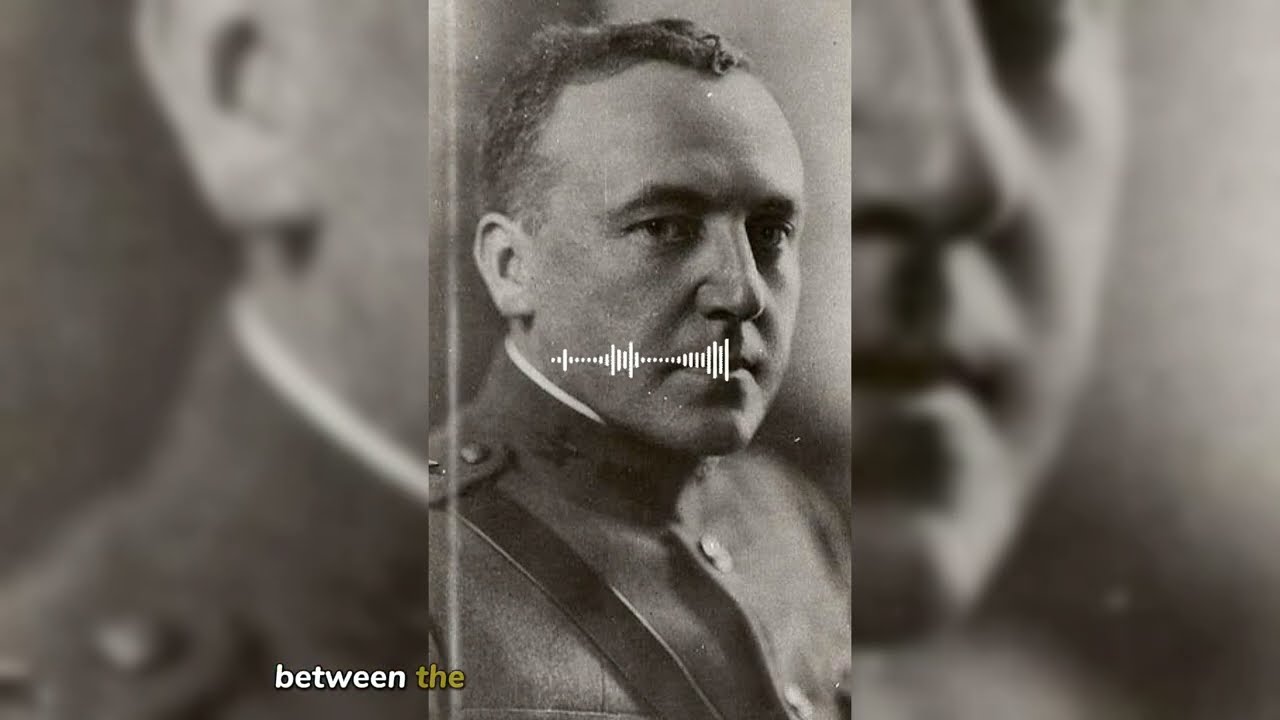 Cautious — the American command had received intelligence reports that German special operations troops under Otto Skorzeny had been infiltrating American lines in captured American uniforms — Bogus halted the tank and called out to the soldiers.
One of them emerged and walked forward. “I’m Lieutenant Webster of the 326th Airborne Engineer Battalion, 101st Airborne Division. Glad to see you.”
Bogus climbed down from the turret of Cobra King and shook Webster’s hand. The time was approximately 4:50 p. m.
on December 26, 1944. The German encirclement of Bastogne was broken.
The news was flashed to Third Army headquarters at Luxembourg City within the hour, then to 12th Army Group headquarters, then to Supreme Headquarters at Versailles at approximately 6 p. m. At approximately 6:30, the telephone rang on Eisenhower’s desk.
The caller was General Omar Bradley.
Eisenhower listened. He did not speak immediately. Summersby, standing in the outer office, watched him through the open door.
When he finally spoke, his voice was thick with emotion. He said only two words: “Thank God.”
He hung up the telephone and remained standing at his desk for another minute. Then he turned to Summersby and told her that Patton had kept his promise from Verdun, that the 20,000 American soldiers at Bastogne were safe, and that the worst of the professional crisis was over.
He asked her to place a telephone call to General George Marshall in Washington. Eisenhower spoke to Marshall for approximately five minutes, communicating the news of the breakthrough. Marshall’s response expressed his personal relief and congratulations.
Eisenhower hung up and returned to his desk. Summersby brought him a fresh cup of coffee. He drank it and said that this Christmas would be a Christmas after all.
But he did not work through the evening with the single-minded intensity that had defined his ten days between December 16 and 26. He sat at his desk, smoked his cigarettes, drank his coffee, and was at rest for the first time since the pre-dawn morning of December 16.
The Battle of the Bulge continued for another four weeks. American combat casualties in the six-week battle totaled approximately 89,000 men, including approximately 19,000 killed. It was the single largest American battle of World War II.
By January 25, 1945, the American forces had eliminated the German bulge and restored the line to approximately its December 15 position.
Eisenhower commanded the Allied Expeditionary Forces through the final four months of the European war, accepting the formal German surrender at Reims on May 7, 1945. He returned to the United States on June 18, 1945, and was received by President Truman and enormous crowds in Washington.
Patton died on December 21, 1945, of injuries suffered in an automobile accident near Mannheim, Germany — exactly 360 days after Eisenhower had stood silent at his desk at Versailles. He is buried at the Luxembourg American Cemetery at Hamm, among the 5,076 American soldiers of his Third Army who were killed in the Ardennes and Rhineland campaigns.
Eisenhower served as Army Chief of Staff, president of Columbia University, and Supreme Allied Commander of NATO before being elected the 34th President of the United States in 1952. He served two terms and died on March 28, 1969, at Walter Reed Army Medical Center — the same hospital where his firstborn son, Doud Dwight Eisenhower, had died of scarlet fever on January 2, 1921, at the age of three years and three months.
He is buried at the Eisenhower Presidential Library in Abilene, Kansas, next to his wife Mamie and next to his firstborn son. Three graves in a small chapel called the Place of Meditation. The father who could not save his own son had saved the sons of 20,000 American families.