
The dry, late-summer air of the Arikaree River valley was split by the crack of Spencer rifles and the war cries of hundreds of Cheyenne Dog Soldiers, marking the beginning of a nine-day siege that would etch the name “Beecher Island” into the annals of frontier warfare. For Major George A. Forsyth and his 50 hand-picked civilian scouts, what began as a pursuit of a small raiding party on September 17, 1868, had rapidly devolved into a desperate, bloody struggle for survival against an estimated 1,000 warriors, including the legendary Cheyenne war chief Roman Nose.
The scouts, a motley crew of Civil War veterans, hardened frontiersmen, and even a few inexperienced youths, found themselves trapped on a small sandbar in the middle of the river, their only refuge against a relentless tide of lead and arrows.
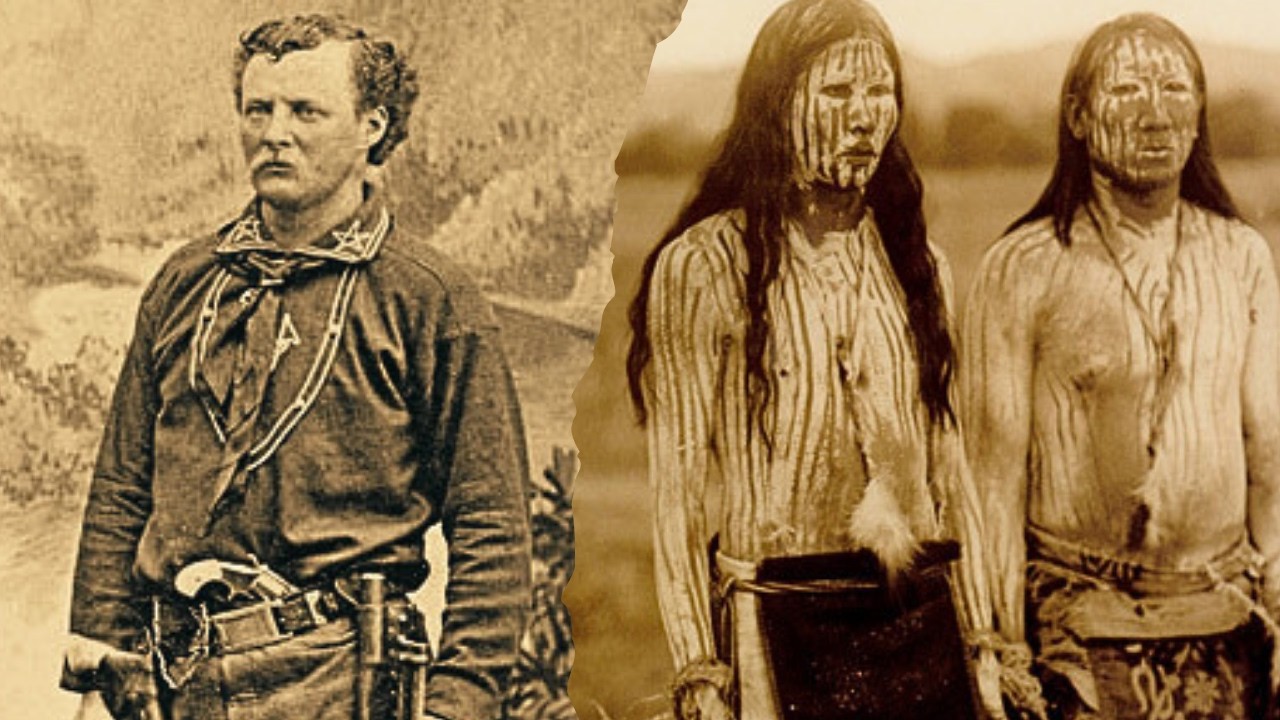 The battle, which would become known as the Battle of Beecher Island, was not a chance encounter but the culmination of decades of escalating violence, broken treaties, and cultural annihilation on the Great Plains. The Cheyenne, pushed from their ancestral lands in the Great Lakes region by white encroachment and better-armed enemies, had established a powerful presence across the plains, only to see their territory shrink with each passing treaty. The Fort Laramie Treaty of 1851 promised them vast lands in present-day Colorado, Nebraska, Kansas, and Wyoming, along with annual compensation.
But the annuities rarely arrived, and subsequent agreements, like the Treaty of Fort Wise in 1861, stripped away even more of their territory. The final straw for many Cheyenne was the Sand Creek Massacre of November 29, 1864, where Colonel John Chivington’s Colorado cavalry attacked a peaceful village, murdering an estimated 70 to 500 men, women, and children in a frenzy of brutality that included the mutilation of bodies and the targeting of infants. This act of genocide ignited a firestorm of vengeance that burned across the plains for years, with warriors like Roman Nose leading raids against settlers and travelers, determined to drive the invaders from their lands.
Roman Nose, a member of the Crooked Lance Society, was not a chief but a warrior of immense renown, a figure who embodied the fierce resistance of the Cheyenne. Standing six feet tall with a muscular build, he was described by a military surgeon as a “good representative of the god of war,” armed with four navy revolvers and a bow, his manner showing “plainly that he did not care whether we talked or fought.” His reputation was such that he was feared by his enemies and revered by his people.
He was a leader in the raids that plagued the Solomon and Saline rivers in the summer of 1868, and his presence on the battlefield at Beecher Island was a testament to the gravity of the conflict. Yet, according to Cheyenne oral tradition, Roman Nose fought his final battle under a fatal handicap. He had eaten a meal prepared with a metal utensil, a strict taboo that had “messed up his medicine.”
Despite knowing he was vulnerable without his cleansing ritual, he joined the fight, leading a charge in the afternoon of the first day. He was mortally wounded, and knowing he would be paralyzed if he lived, he refused medical help and died, a warrior to the last.
On the island, Major Forsyth, a 31-year-old Civil War veteran who had served as an aide to General Sheridan, was leading his men in a fight for their very existence. The scouts had been tracking what they believed was a small war party of 25 Cheyenne, but as they pushed deeper into hostile territory, they realized they were following an entire village, and then several villages. Despite warnings from his more experienced scouts, Forsyth pressed on, driven by a determination to engage the enemy and a false confidence in his men’s fighting ability.
On the morning of September 17, they were attacked by a force that seemed to “grow them that they appeared to start out of the very earth,” as Forsyth later wrote. The scouts, caught in the open, made a desperate dash for a small, willow-covered island in the middle of the Arikaree River. It was a move that likely saved their lives, as a planned ambush in a nearby gorge would have annihilated them.
The island, however, was a precarious refuge. The men were outnumbered nearly twenty to one, and they had lost their pack mules, along with their extra ammunition, food, and medical supplies, in the initial charge.
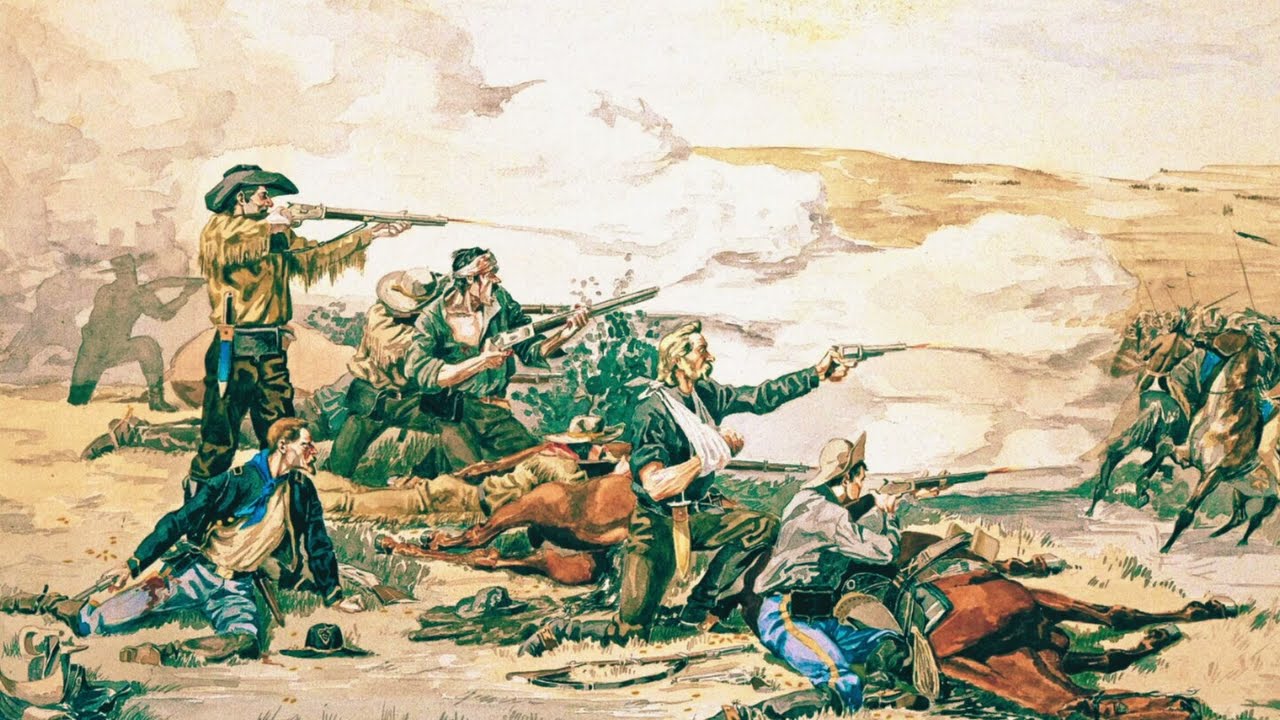
The first day of the battle was a maelstrom of violence. The Cheyenne launched a massive charge, led by a warrior Forsyth believed to be Roman Nose, who rode “in all his barbaric strength and grandeur,” his horned headdress trailing behind him. The scouts, firing in disciplined volleys from their hastily dug rifle pits, managed to repel the attack, but not without cost.
Lieutenant Frederick H. Beecher, Forsyth’s second-in-command and a veteran of Gettysburg, was mortally wounded, staggering to Forsyth’s pit to utter his final words: “My poor mother.” Army surgeon J.
 H. Moors was also struck in the head and would die three days later. By nightfall, the scouts had suffered several dead and many wounded, including Forsyth himself, who had taken a bullet in his thigh and another that shattered his left leg.
The men were exhausted, dehydrated, and out of food, but they had survived the first onslaught.
The siege settled into a grim routine of sniper fire, heat, and the stench of rotting horseflesh. The scouts used the carcasses of their dead horses as makeshift breastworks, and they dug deeper into the sand with their knives, tin plates, and bare hands. They were forced to eat raw horsemeat, which quickly spoiled under the September sun.
The wounded grew delirious, and gangrene set in on Forsyth’s leg. He was horrified to see his wounds crawling with maggots, and he was forced to dig a bullet out of his own thigh with a straight razor after his men refused to risk cutting near his main artery. Despite the horrific conditions, acts of bravery were commonplace.
Young Hudson Farley, an 18-year-old sharpshooter, continued to fight even after his father was killed and he was shot through the shoulder. Scout Howard Morton lost an eye to a bullet but wrapped his head and kept fighting. Frank Harrington was shot in the head with an arrow, the arrowhead lodging in his skull, only to have it dislodged by a subsequent bullet.
He too stayed in the fight. And then there was Sigman Slesinger, a 19-year-old Jewish immigrant from Czechoslovakia who had never fired a gun before joining the scouts. While a more experienced frontiersman lay paralyzed with fear, Slesinger fought with a ferocity that earned him praise from Forsyth as a “gallant soldier among brave men.”
On the second night, Forsyth sent two of his best men, Pierre Trudeau and 18-year-old Jack Stillwell, to sneak through the Cheyenne lines and make the 110-mile journey to Fort Wallace for help. The two men crawled for three miles before they could stand, hiding during the day and moving at night, surviving on rotten horsemeat that made Trudeau sick. At one point, they were forced to hide inside the carcass of a dead buffalo as Cheyenne warriors passed within feet of them.
Their journey was a harrowing epic of survival, and they would eventually reach the fort, but it would take days. Meanwhile, on the island, the situation grew more desperate. On the third day, the Cheyenne attempted to approach under a white flag of truce, but Forsyth, suspecting a ruse, ordered his men to fire on them.
He sent two more scouts, Donovan and Ply, for help on the third night, and they too managed to slip through the lines. The men on the island were now waiting, hoping that help would arrive before they were overwhelmed or died of their wounds.
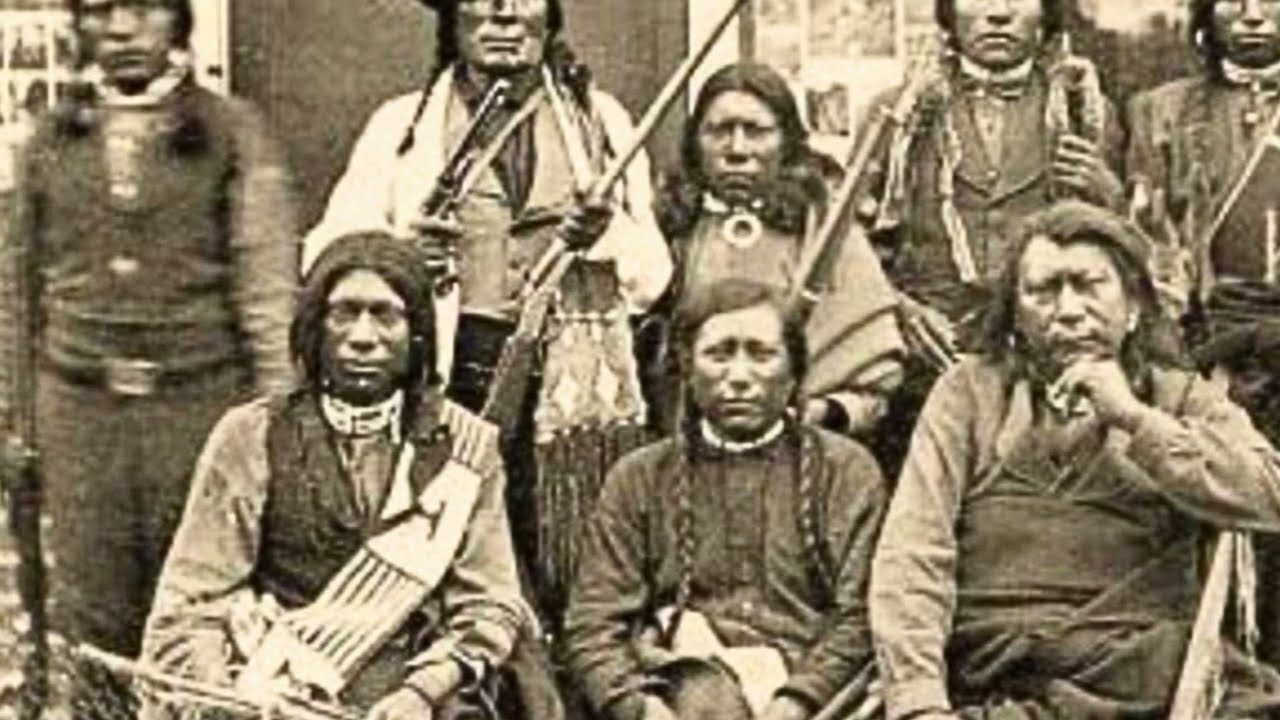 The Cheyenne, for their part, were also suffering. They had lost warriors in the charges, and their women could be heard wailing for the dead from the nearby villages. The wailing was a constant, eerie soundtrack to the siege.
By the fourth day, the Cheyenne began to withdraw, their sniper fire tapering off. The scouts, though, were in no position to celebrate. The wounded were dying, and the healthy were weak from hunger and exhaustion.
Forsyth, realizing they might all die if help didn’t come soon, offered to let the able-bodied men leave and save themselves. But his men unanimously refused, with William McCall declaring, “We fought together, and by God, if need be, we’ll die together.” The next few days were a blur of heat, hunger, and the howling of wolves that came down from the hills to feast on the dead horses.
On the morning of the ninth day, September 25, a scout spotted movement on the horizon. It was a troop of the 10th Cavalry, the famed “Buffalo Soldiers,” under the command of Lieutenant Colonel Carpenter. The men on the island, who had given up hope, erupted in cheers, laughing, crying, and dancing.
The rescue was a testament to the endurance of the scouts and the bravery of the men who had risked their lives to save them. Trudeau and Stillwell had made it to Fort Wallace, and their report had triggered the relief column. The battle was over.
Six of Forsyth’s scouts were dead, including Lieutenant Beecher, and many more were wounded. The Cheyenne casualties were never accurately counted, with estimates ranging from nine to 75 killed, but the battle was a significant blow to their forces and a turning point in the Plains Wars.
The aftermath of the battle was complex. Major Forsyth would recover from his wounds, though he suffered headaches and had a permanent dent in his forehead for the rest of his life. He would go on to serve in the Apache Wars and retire in 1890, passing away in 1915.
Jack Stillwell, the young scout who had risked his life to get help, would go on to a storied career as a scout, a deputy U. S. marshal, and eventually a lawyer.
He became friends with Buffalo Bill Cody and was present at the Battle of the Washita. His younger brother, Frank, would become involved with the Cowboys in Tombstone, Arizona, and was famously killed by Wyatt Earp in a train station shootout. The battle site itself, now known as Beecher Island, was named after the fallen lieutenant, the nephew of Harriet Beecher Stowe.
 A monument now stands there, listing the names of the fallen scouts.
But the battle was more than just a footnote in military history. It was a symbol of the brutal, tragic conflict that defined the American West. For the Cheyenne, it was a desperate stand against an encroaching civilization that was systematically destroying their way of life.
The buffalo, their relatives, were being slaughtered by the thousands, the railroads were cutting through their lands, and the treaties that were supposed to protect them were being broken. Roman Nose, who died on that battlefield, was a symbol of that resistance, a warrior who chose death over submission. The battle at Beecher Island was a microcosm of the larger struggle, a clash between two worlds that could not coexist.
The Cheyenne would fight on, participating in the Battle of the Little Bighorn eight years later, but their fate was sealed. They would be forced onto reservations, their nomadic way of life extinguished.
The story of Beecher Island is a story of courage and desperation on both sides. It is a story of men fighting for their lives against overwhelming odds, and of a people fighting for their very existence. It is a story that raises uncomfortable questions about heroism, savagery, and the cost of “civilization.”
The scouts were brave, but they were also instruments of a government that was robbing the Cheyenne of their land and their culture. The Cheyenne were fierce warriors, but they were also victims of a genocide that included the massacre at Sand Creek. The battle was a tragedy, a bloody chapter in a long and painful history.
As author Michael Blake wrote, “Perhaps it is all coming full circle. Perhaps nature will be allowed to restore some of what was destroyed. Perhaps there will come a day when a new monument will sit at the site of Beecher Island.
A monument listing the names of the warriors who died there, beginning with the man called Roman Nose.” The battle may be a “colorful curiosity” in American military history, but for the Cheyenne, it was a profound and enduring consequence of a war they could not win.