The legend of Billy the Kid’s death is one of the most repeated stories of the American West: Pat Garrett waits in a dark room, the outlaw walks in, a burst of gunfire, and it is over. The reality, according to the witness statements from that night, is far messier—a series of conflicting accounts and contradictory details that, when placed side by side, reveal a confusing human moment that history has never fully cleaned up. Billy, born Henry McCarty and later known as William H. Bonney, was about 21 when he died near Fort Sumner, New Mexico, on the night of July 14, 1881.
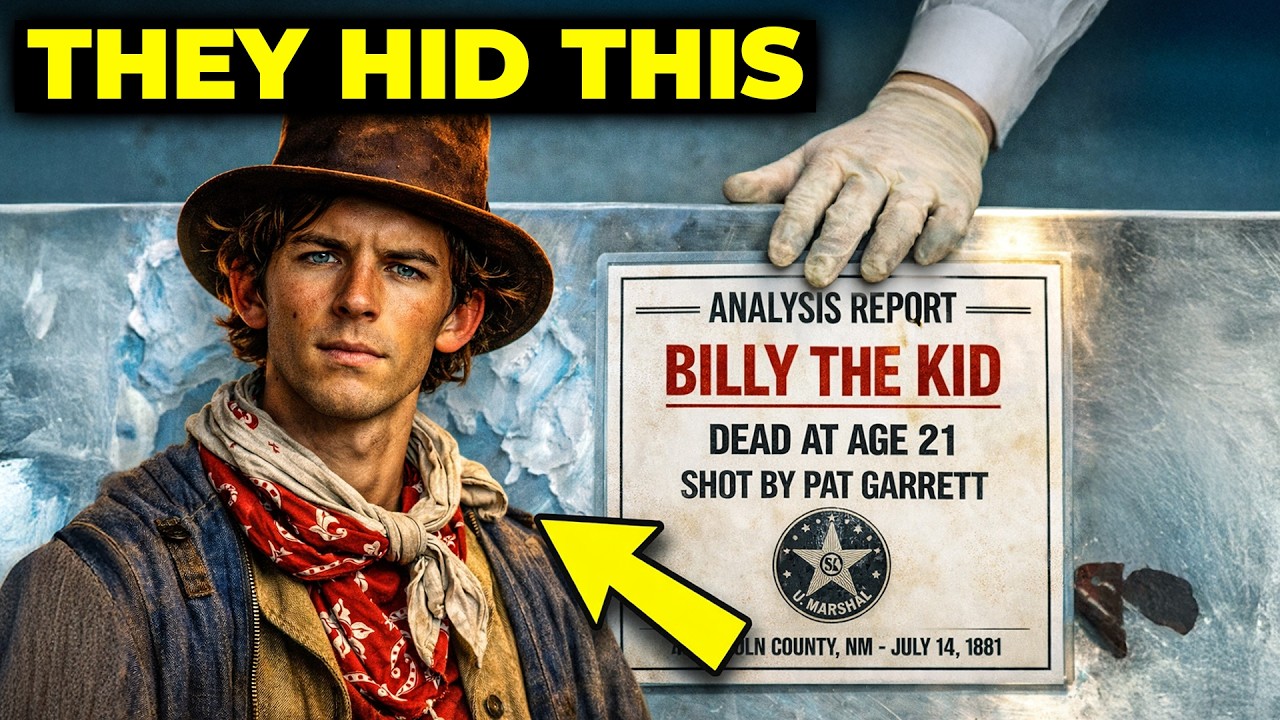
He was already a national figure. He had claimed to kill 21 men, though historians place the real number far lower, likely under 10. Captured by Garrett late in 1880 and convicted of murder, Billy escaped from the Lincoln jail in April 1881, killing two deputies in the process. Newspapers turned the escape into a sensation, and by the time Garrett tracked him down, Billy was as much a symbol as he was a fugitive.
The place where Billy died was not the empty frontier stage later versions suggest. The old military post at Fort Sumner was tied to the Bosque Redondo Reservation, where Navajo people forced on the Long Walk and many Mescalero Apache people were interned under brutal conditions in the 1860s. By 1881, the Maxwell family ownership had absorbed parts of the old fort, making the area a crowded social space dish of household life, local loyalties, and older frontier history. Billy knew that world well, spoke Spanish fluently, and moved comfortably through it.
The lawmen were the outsiders slipping in cautiously by night. Garrett’s pursuit was not the straight line of legend. After Billy’s escape, Garrett waited for reliable tips, then set out with two deputies, John Poe and Tip McKinney. Poe entered Fort Sumner alone because he was not known there, but his questions about Billy only made people tense and silent.
Convinced Billy was likely nearby, the three men waited for hours in a peach orchard near a house Billy was thought to visit. By Poe’s account, Garrett had begun to think the trail was cold and decided, before leaving, to speak with Pete Maxwell at the Maxwell house. The detail people remember most—Billy arriving hungry and half-dressed—is supported by the early accounts. Garrett later wrotethat Billy had asked a Mexican friend for coffee and a butcher knife, then headed toward Maxwell’s place hatless and in his stocking feet.
A freshly butchered yearling hung on Maxwell’s porch. John Poe, waiting outside, also recalled a man approaching who was partly dressed, bareheaded, and barefoot except for socks. Where the accounts begin to split is on what Billy carried. Garrett said Billy held a revolver in one hand and a butcher knife in the other.
Poe later said that after light was brought, they saw a six-shooter at Billy’s right hand and the knife at his left. A later memory attributed to Deluvina Maxwell, a Navajo woman connected to the household, disputed that and claimed Billy only had the butcher knife. That disagreement is central. If Billy had both weapons, Garrett’s shot can be framed as reacting to an armed threat.
If Billy had only the knife, the moment changes shape entirely. Poe’s view from outside the room captures the confusion better than most retellings. He sat in the gateway, partially hidden. He had never seen Billy or Maxwell before.
A partly dressed man approached almost within arm’s reach before spotting him. The man instantly covered Poe with a revolver, jumped onto the porch, and began asking in Spanish, “Quién es? ”—who is it? Poe tried to calm him.
The man backed toward the doorway of Maxwell’s room, repeating the question, then disappeared inside. Poe heard a sharp voice ask, “Pete, who are those fellows on the outside? ” Then came a shot, followed by two more reports that seemed to follow. Garrett emerged and said he thought he had got the kid.
Poe’s immediate response was that Billy would not come to this place and that Garrett had shot the wrong man. Only after light was brought and the body was identified did Poe accept it was indeed Billy. Garrett’s own version became the classic one. He wrote that as Billy entered and approached the bed, Maxwell whispered, “That’s him.
” Billy sensed another person, quickly raised his pistol within a foot of Garrett’s chest, and retreated across the room crying, “Quien es? Quien es? ” Garrett drew and fired twice. The second shot, he later said, was useless.
But Garrett’s account was also a defense of his own conduct. He argued he could not answer Billy’s question because Billy knew his voice and would have used it as a target. Historians also note that Garrett’s 1882 book was ghostwritten and contained significant myth-making. Garrett remains indispensable because he fired the fatal shot, but he is the least neutral narrator imaginable.
The shot count breaks apart under inspection. Garrett eventually settled on a simple answer: he fired twice, Billy did not fire at all. But in the immediate aftermath, Poe and McKinney believed there had been three shots, and Maxwell also thought Billy had fired. When they searched the room, Garrett said they found only his own bullet marks.
Billy’s revolver held five live cartridges and one spent shell. Garrett argued the empty shell might have been old. Poe later explained the supposed third shot as the second bullet rebounding after striking the wall and bed. Robert Utley notes Maxwell was certain Billy had fired once.
Historians remain divided, with some arguing Billy may indeed have gotten off a round. The physical record never became simple enough to close the matter. After the shots, the Maxwell place filled with people, grief, anger, and argument. Women including Paulita Maxwell, Nasaria Yerby, Abrana Garcia, and Deluvina Maxwell wept together, while some armed young men shouted threats at Garrett and his deputies.
The next morning, Justice of the Peace Alejandro Segura convened a coroner’s jury. Proceedings took place in Pete Maxwell’s bedroom, where Billy’s body still lay on the floor. The jury concluded William Bonney had died from a bullet wound near the heart from a gun in the hand of Pat Garrett, ruling the act justifiable homicide. Even the official language revealed tension between the legal record and the community’s emotions.
One further mismatch appears: Poe’s later narrative and Rudolph’s account imply Billy’s body was moved the same night, but the coroner’s report itself says the body was examined in the Maxwell house. Memory drifts even around historic moments. Why did later generations remember such a clean version? The machinery of legend was already running before Billy died.
Newspapers had made him a star outlaw even while alive, and his escape from Lincoln set off a flood of stories. By August 1881, reprints had reached London, and Garrett was receiving broad acclaim. Garrett’s own book, published in early 1882, gave the public a version mixing fact, self-defense, and myth. A legend works best when every person has one clear role, so the final night had to become simpler than the evidence.
The real witness statements resist that treatment. They give us a lawman briefly believing the wrong man was shot, disagreement over whether Billy fired, disagreement over whether he definitely had a pistol, and a coroner’s report and later memories that do not fully line up about where the body lay. What survives is still a firm outline. Billy, a young outlaw on the run, was near Fort Sumner on the night of July 14.
Garrett came there with his deputies after receiving information. Garrett entered Maxwell’s room while his deputies waited outside. Billy approached in stocking feet late at night, entered the space, and Garrett fired the fatal shot. The body was identified, an inquest ruled the killing justifiable homicide, and Billy was buried the next day in the old military cemetery.
But beyond that, the witnesses refuse to give a polished ending. They do not agree on the exact order of words, whether Billy had both knife and revolver or only the knife, whether he fired, or whether the body was moved during the night. What remains is not a perfect duel, not a perfect ambush, not a perfect legend. It is a dark room, a few seconds of surprise, a handful of statements that overlap but do not fully match.
And one hard fact: the witnesses agree on the death, but they do not agree on every last second that produced it. That may be the most honest way to understand Billy the Kid’s final night.