On October 29, 1985, Cornell Jones walked into the Hyatt Regency Hotel on Capitol Hill and paid $30,000 in cash to undercover D. C. police officers for what he believed was one kilogram of cocaine. During the recorded conversation, Jones said he could handle 20 kilos a week.
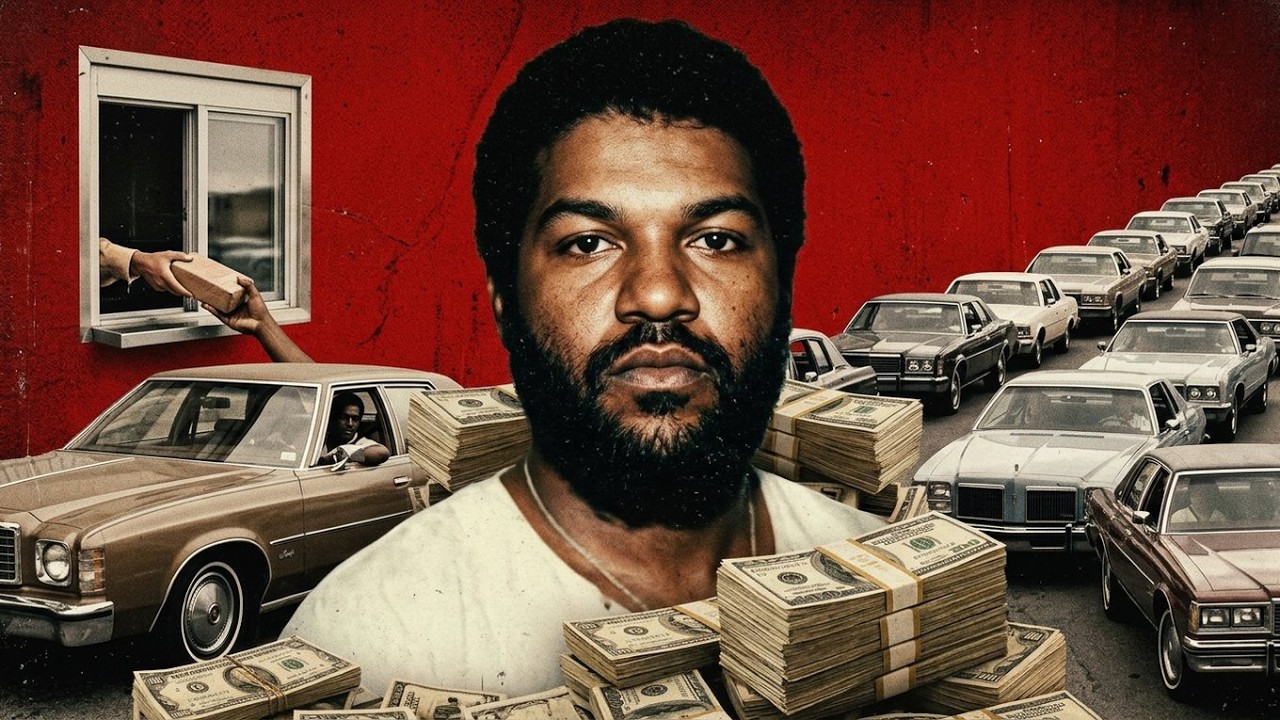
He was arrested right there in the hotel. The arrest capped a decade-long rise that turned one dead-end block in Washington, D. C. , into the most brazen, most profitable open-air drug market in American history.
A federal jury would later hear that, at its peak, Hanover Place Northwest ran three shifts a day, seven days a week, with more than 20 sellers working the street at any given time. Law enforcement conservatively estimated that one kilogram moved per shift, meaning roughly 21 kilosa week flowed through a single residential block. Customers came from the suburbs, Maryland, Virginia, lining up bumper-to-bumper, horns honking, so far back that traffic backed up onto Constitution Avenue. The block was four blocks from the United States Capitol.
Dealers on the street used to point at the white dome and say, "Over there they make the laws. Over here we break them. "
Jones did not stumble into this operation. He grew up on Hanover Place, at the house at number eight, and knew every inch of the block, its sight lines, its exits, which neighbors would talk and which ones would not.
As a teenager, still in high school, he robbed the Army Navy Bank near the Pentagon with a group of friends and got away with it. He served time over the years, and while inside, he built connections. By 1975, he was out with a plan nobody in D. C.
had tried: import directly, bypass local middlemen, bring in PCP, heroin, and cocaine from Amsterdam and Thailand at prices that undercut everything on the street. Then sell it right there, on his home block, in the open. No back rooms, no coded knocks. Step up, pay, drive away.
Like a store. The Washington Post called it the city’s cocaine supermarket. Police commanders called it the most flagrant open-air drug market they had ever seen. One commander who worked narcotics and homicide said, "There might be 20 different people out on that street selling, and literally cars lined up coming in to buy.
"
Jones wanted to be known. He called himself the Tsar of Hanover Place. He bought real estate, putting three properties on the block in the names of his aunt, his brother, a friend, and his mother. His 10-year-old daughter’s name was on one, held in trust.
He expanded distribution across the Eastern United States. He also mixed PCP with marijuana to produce a drug called butt naked, named for what it made users do: strip their clothes and lose their minds. He produced love boat, another concoction linked to hallucinations, rage, and self-harm. He was running a laboratory and a distribution network simultaneously.
The money was staggering. The IRSlater calculated conservatively that Jones generated $40 millionin the 10 months of 1985 before his arrest. They hit him with a $16 million tax bill, on the theory that even illegal income is taxable. The Tsar of Hanover Place owed the IRS $16 million in back taxes on his cocaine empire.
By 1984, D. C. police launched Operation Beat It, named after the Michael Jackson song, and hit Hanover Place hard, arresting sellers and pushing back the operation. It lasted five months.
Within five more, the cars were back, the sellers were back, the horns were honking again. You cannot arrest a market. You can only move it temporarily. By 1985, the FBI, D.
C. police, and the U. S. Attorney’s Office built a case carefully, arresting low-level sellers and flipping them one by one.
All roads led to Jones. They made contact through a cooperating informant, and on October 29, 1985, they set the trap at the Hyatt Regency on Capitol Hill. After the arrest, authorities hit his house, two apartments, and two safe deposit boxes, seizing more than $2. 5 million in cash, jewelry, cocaine, cars, and gold.
When Jones entered his guilty plea in U. S. District Court, he smiled and waved to his family. Georgetown University basketball coach John Thompson, one of the most respected men in the city, testified to his character.
More than 100 people from Hanover Place signed a petition asking the judge to release him on bond. The neighborhood loved the Tsar. The judge sentenced him to 9 to 27 years in federal prison at Leavenworth, Kansas. Hanover Place went quiet for the first time in years.
Jones walked out of Leavenworth in 1995 after nine years. He came back to D. C. and appeared to go legitimate.
He started a non-profit called Miracle Hands, billing it as a resource center for the unemployed, the underserved, and people coming out of incarceration. BET featured him in its American Gangster documentary series, giving him the nickname "the Ghost"for a man who ran something massive and left almost no fingerprints. Miracle Hands did real work and got real funding: between 2004 and 2008, D. C.
‘s HIV/AIDS administration gave the organization more than $4 million. The same city that spent years trying to shut him down was now writing him checks. Then Jones applied for city grants, specifically $329,654 to renovate a warehouse on Queen’s Chapel Road Northeast into a job training center for ex-offenders. The city approved it.
Four months after receiving those funds, he opened a nightclub in that same building: the Stadium Club, a strip club. The job training center never opened, not for a single day. The invoices submitted to the city were for work never done or done without permits. Nine documents were falsified.
D. C. sued him in 2011. He countersued for defamation; the countersuit was thrown out in 2012.
In 2014, a jury found him guilty on all counts. The czar had used the government’s own grant money to build his nightclub. He walked in two nights a week to host the entertainment, drawing 200 people through the door on his name alone. The city that could not stop him on Hanover Place, that took nine years of his life, had just paid for his strip club.
Hanover Place today is quiet. Condos sit where garages used to be. Hardwood floors and gas fireplaces sit inside houses that used to be stash houses. The house at 8 Hanover Place, Jones’s childhood home, sat abandoned and boarded for years, windows punched in, floors heaped with garbage and liquor bottles.
An unofficial memorial to what used to be. The Washington Post spoke to Leroy Harris, 82, a 30-year resident and one of the only homeowners left, who said nothing much had happened there–just a lot of vacant buildings. Stand at the east end of that block today, look down Constitution Avenue:the dome is still there, white, enormous, exactly where it always was. Over there, they make the laws.
Over here, Cornell Jones built a $40 million cocaine supermarket on his childhood block, defrauded the city that jailed him, and opened a strip club with government grant money until a jury said enough.