
DACHAU, Germany — The American soldiers of the 45th Infantry Division had already survived more than 500 days of combat, storming the beaches of Sicily, enduring the artillery hell of Anzio, and freezing in the forests of France. They believed they had witnessed every horror war could produce. On the cold, gray morning of April 29, 1945, they discovered how catastrophically wrong they were.
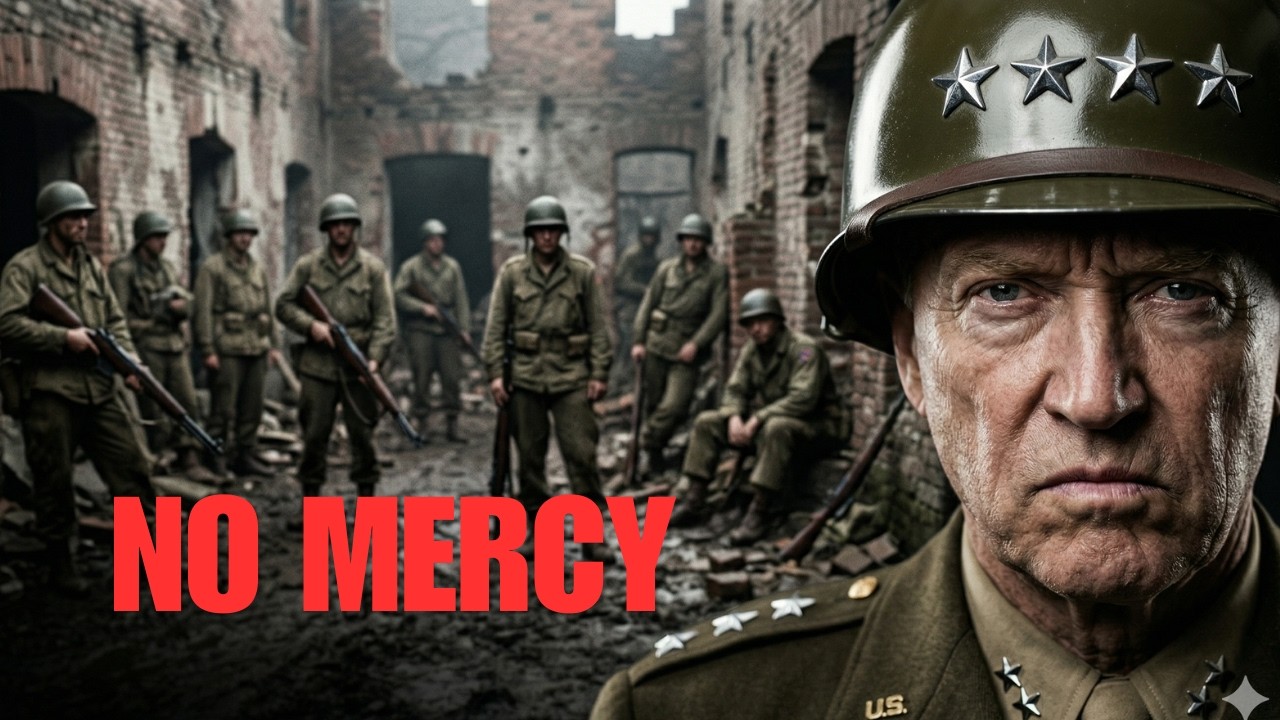
What began as a routine mission to secure a facility marked on military maps as a concentration camp ended in one of the most controversial episodes of World War II — a bloodbath that would see surrendering SS guards executed on the spot, an official investigation buried by General George S. Patton himself, and the thin line between liberator and executioner permanently erased.
Lieutenant Colonel Felix Sparks, a 27-year-old commander whose eyes betrayed a man twice his age, led the Third Battalion of the 157th Infantry Regiment toward the outskirts of Munich. The orders were simple: proceed to Dachau, secure the facility, and accept the surrender of its garrison. The men expected a standard prisoner-of-war camp — perhaps downed Allied pilots, some hungry political prisoners, and a handful of German guards ready to capitulate.
They expected a routine military surrender. They walked instead into the absolute center of human evil.
The first warning came miles from the camp. A heavy, sickeningly sweet stench drifted across the Bavarian countryside — utterly unlike anything on a battlefield. A young scout slammed on his brakes, leaped from his Jeep, and vomited violently into the mud.
A grizzled tank commander popped his hatch for fresh air and immediately gagged. The joking stopped. The men tied olive drab handkerchiefs over their faces and checked the bolts of their M1 Garand rifles.
Near a quiet railway siding, the column halted beside a long freight train — 39 wooden boxcars attached to a black, lifeless locomotive. The sliding doors of several cars hung slightly open. The stench was physically paralyzing.
A 19-year-old private from Oklahoma reached out with a trembling hand and pushed the first heavy door open. He dropped his rifle, staggered backward, collapsed into the dirt, and wept uncontrollably. Sparks ran to the car and froze.
Inside, packed from floor to ceiling, were thousands of naked, skeletal human corpses — eyes wide open, mouths locked in silent screams, piled in a tangled web of broken arms and legs.
He walked mechanically down the length of the train. The second car was the same. The third car.
And so it continued. Thirty-nine cars. More than 2,000 dead men, women, and children crammed into rolling wooden coffins.
The Americans would later learn the train’s terrible history. Weeks earlier, SS guards had packed thousands of prisoners from Buchenwald into the cars for transport to Dachau. When Allied bombing destroyed the rail lines, the train was delayed.
Rather than release the prisoners, the guards simply locked the doors and left them inside for three weeks without a single drop of water — letting them slowly freeze and starve to death.
On the gravel beneath the cars, the gray stones were stained with frozen blood and human waste. Inside, some victims faced the wooden walls with fingers broken and fingernails torn out. They had tried to claw their way through solid wood in their final moments of suffocating panic.
The scale of the atrocity short-circuited the minds of the American soldiers. Grown men who had survived D-Day without shedding a tear sobbed openly against the steel hulls of their Sherman tanks. Some threw their helmets into the mud and screamed curses at the empty gray sky.
Others vomited until their stomachs convulsed empty.
A combat medic named William Walsh walked the edge of the tracks, desperately searching for anyone still alive. Deep inside one car, he spotted a tiny movement — one man out of thousands still breathing. The man was a walking skeleton, nothing but bones and thin skin.
He looked up at the American, forced a weak, pathetic smile, tried to speak, and died. Walsh stood. The tears stopped.
A terrifying, cold blankness washed over his eyes. The sadness was instantly replaced by pure, blinding rage.
It was not just Walsh. It was every soldier standing in that railway yard. The psychological transformation was instantaneous.
They were no longer the liberating army of the United States. They were a heavily armed mob of executioners. The Geneva Convention ceased to exist.
Empathy for the German uniform was permanently erased.
Sparks felt the terrifying shift in his men. He knew he was losing control of the battalion — and a dark part of his soul did not care. He chambered a round in his pistol and ordered his men forward toward the towering brick walls of the main Dachau compound.
They did not move with tactical caution. They moved with a reckless, burning desire for violence. They reached the outer perimeter and kicked the massive wooden doors off their iron hinges.
Inside the courtyard, near the railway entrance, they spotted a small reinforced concrete guardhouse holding four SS officers — the men responsible for the death train. They were young, arrogant, and immaculate. Their gray and black uniforms were perfectly pressed.
Their black leather boots were polished to a mirror shine.

The four guards watched the Americans storm the courtyard. They did not look afraid. They looked annoyed.
German propaganda had told them the Americans were soft, undisciplined, and eager to follow the rules. They assumed this was a routine capture — a formal arrest, a quiet POW camp in France, hot meals, and eventual passage home.
The lead SS guard smirked. He unbuckled his pistol belt, stepped out of the guardhouse, and slowly raised his hands in a gesture of proud, confident surrender. He opened his mouth to introduce himself by rank.
He never got the chance to speak.
The explosive crack of an M1 Garand shattered the heavy silence. The bullet struck the smiling officer squarely in the center of his face. His arrogant grin vanished in a violent spray of red.
His knees buckled and he collapsed backward into the mud, his polished boots pointing at the gray sky. He never even said his name.
His three comrades screamed. The illusion of civilized surrender evaporated in a fraction of a second. They dropped to their knees, threw their hands into the air, and begged for the protection of the Geneva Convention.
A young corporal from New York raised his Thompson submachine gun, pulled the trigger, and held it down. A devastating burst of . 45 caliber rounds ripped through the freezing air.
The three remaining guards folded into the dirt beside their commander, their immaculate uniforms instantly soaked in dark blood.
Dozens of battle-hardened soldiers watched the four men die. Nobody shouted an order to fire. Nobody reprimanded the shooters.
Lieutenant Colonel Sparks stood only feet away, watching the blood pool into the frozen ruts of the road. Any other day, in any other European town, he would have court-martialed the men on the spot. But Sparks had just looked inside the 39 boxcars of the death train.
He said absolutely nothing. He turned his back, chambered a fresh round in his own pistol, and kept walking toward the inner gates.
The unwritten law was established. The Thunderbirds were not taking prisoners today.
The battalion pushed deeper into the sprawling complex, moving like a pack of wolves. Every shadow was a target. Every locked door was kicked off its hinges.
They reached the coal yard — an enormous staging area used to store fuel for the camp’s crematoriums. Tall black smokestacks rose vertically into the depressing gray sky. The air was unbreathable, thick with a fine, greasy ash that drifted down and settled on American helmets like dirty snow.
It was human ash.
Suddenly, a large group of German soldiers emerged from a nearby hospital building — approximately 50 men, most of them elite combat troops from a Waffen SS division sent to Dachau weeks earlier to recover from serious frontline wounds. They were in the wrong place at the absolute worst time in the history of the world.
The Americans swarmed them, screaming at them to drop their weapons and raise their hands. The SS soldiers obeyed. They were stripped of their gear and ordered to line up directly against the massive red brick wall of the coal yard, shoulder to shoulder, hands clasped behind their heads.
But even standing before a firing squad of furious, traumatized Americans, the SS men could not hide their towering arrogance. Some looked terrified, but many of the elite officers stood completely upright, chests out, looking down their noses at the filthy, exhausted infantrymen. They still believed in the absolute superiority of the Aryan master race.
They still thought the Americans were soft, democratic weaklings. They believed that because they were officially wounded combat veterans, the Americans were legally bound to treat them with high honors and respect.
They had no idea they were standing in front of men whose humanity had burned away an hour earlier.
First Lieutenant Jack Bushyhead, a Native American officer from Oklahoma, walked into the center of the coal yard. He had walked the entire length of the death train. He had seen the dead baby crushed beneath bodies in the third car.
His face was carved from stone. He directed two privates to set up a heavy . 30 caliber water-cooled machine gun directly facing the line of prisoners.
He stepped behind the weapon, gripped the wooden handles, and violently racked the heavy steel bolt. The metallic clack echoed off the high brick walls. The 50 SS men flinched.
An arrogant SS officer in the exact middle of the line finally lost his patience. The humiliation of being held at gunpoint by men he considered subhuman was too much for his ego. He lowered his hands, took a single defiant step away from the wall, and opened his mouth to demand his formal rights as a prisoner of war.

A young, terrified American private on the left flank panicked. He screamed at the top of his lungs: “They’re trying to escape! They’re escaping!”
Nobody was escaping. It was a complete, obvious lie. The 50 German men were cornered against a massive wall.
But for a mob of armed, traumatized soldiers begging for a reason to 𝓀𝒾𝓁𝓁, it was all the excuse they needed.
Bushyhead did not hesitate for a fraction of a second. He squeezed the butterfly trigger. The weapon roared to life with a deafening thunder.
A continuous stream of heavy . 30 caliber bullets ripped across the coal yard, slamming into the line of German soldiers with catastrophic force. The aristocratic officers jerked violently as the rounds shredded their bodies.
Thick sprays of blood painted the red brick wall behind them. Men screamed and folded in half. Soldiers on the far ends of the line dove into the black coal dust, but it was useless.
The American riflemen forming the perimeter opened fire as well, emptying their eight-round clips into the writhing pile of bodies, reloading, and firing again.
Sparks was walking toward the crematorium complex when the world exploded in gunfire. He recognized the heavy, continuous thump of the machine gun instantly. He spun around, pulled his pistol, and sprinted back toward the coal yard — directly into the line of American fire.
He threw himself at the machine gun, kicked the red-hot barrel skyward, grabbed the ammunition bearer by the collar, and threw him into the dirt. He screamed at his men to cease fire, fired his own pistol into the air, and physically rushed his own soldiers, knocking their rifles down with his bare hands.
Slowly, agonizingly, the gunfire stuttered to a halt. The silence that followed was deeply terrifying. A thick cloud of blue gunsmoke drifted over the coal yard.
At the base of the bullet-scarred wall, a massive pile of bleeding bodies lay tangled together. Seventeen elite German soldiers were dead. Dozens more were bleeding profusely, gasping and crying in the filthy coal dirt.
The arrogant officer who had stepped forward was completely unrecognizable.
Bushyhead simply took his hands off the grips of the smoking machine gun. He did not apologize. He did not look for an excuse.
He stared at the bodies, turned his head, and spat a dark wad of tobacco onto the frozen ground.
Sparks had stopped a total massacre — but the profound damage was irreversible. The American army, the supposed liberators of Europe, had crossed a terrifying, undeniable line into outright murder. Yet standing in the swirling ash of the coal yard, surrounded by the stench of burning bodies, the lines between good and evil were impossible to see.
Sparks gathered his traumatized men and ordered them toward the heart of the nightmare — the massive inner iron gates of the camp enclosure. Above the heavy bars were the twisted, mocking metal letters spelling out the ultimate lie: “Work Makes You Free.” Behind those electrified gates, 32,000 starving, dying human beings were trapped like animals.
As the Americans approached, the gates swung open. A large group of senior SS camp officials emerged from a reinforced concrete bunker, wearing immaculate black and gray uniforms, their silver death’s head insignias shining in the dull light. The leader was SS Lieutenant Heinrich Wicker, who had taken command of the camp only days earlier when the previous commander fled into the mountains.
He stepped forward holding a clean white flag of truce, accompanied by a neutral Swiss Red Cross representative to guarantee his safety under international law.
Wicker expected a formal, dignified military surrender. He approached Brigadier General Henning Linden, who had just arrived with a separate unit, and rigidly raised his right hand to his polished visor to deliver a perfect military salute. He opened his mouth expecting to dictate the terms of his surrender.
He never got the chance to finish his sentence. An enraged American infantryman who had just stepped over the bodies in the coal yard lunged forward. He did not care about the white flag.
He did not care about the Red Cross. He violently shoved the SS lieutenant backward against the brick wall and drove the heavy steel barrel of his rifle brutally into the man’s polished chest, telling the arrogant Nazi officer to shut his mouth or he would blow his head clean off his shoulders.
The era of the gentleman’s surrender was over. The era of brutal, unadulterated consequence had arrived.
Behind the fences, the prisoners realized what was happening. A deafening roar erupted — the collective, tortured scream of 32,000 ghosts suddenly realizing they were still alive. Hundreds of starving men threw themselves against the barbed wire, electrocuting themselves on the deadly current in frantic attempts to reach the Americans.
High above, an SS guard in a central wooden watchtower panicked and fired his Mauser into the surging crowd, killing an innocent man. Every Thunderbird infantryman in the vicinity instinctively raised their weapons and unleashed a solid wall of lead into the tower. The wooden structure splintered into hundreds of jagged pieces.
The guard’s lifeless body tumbled over the railing and crashed into the dirt in front of the screaming prisoners — who surged forward, dragged the corpse into the crowd, and tore it apart with their bare, emaciated hands.
Inside the camp, American soldiers found dozens of SS men desperately hiding under filthy wooden bunks or frantically stripping off their uniforms to slide into striped prisoner pajamas. The Americans were not fooled. They grabbed the hiding men by their hair, dragged them into the freezing mud — and then did something that permanently broke the laws of civilized war.

In several areas of the camp, American combat soldiers unholstered their loaded . 45 caliber pistols and handed the heavy steel weapons to the starving, skeletal prisoners. The GIs pointed silently down at the kneeling, terrified SS men.
Then they turned their backs and walked away, letting the victims act out their own terrible, primal revenge.
The results were catastrophic and utterly merciless. Dozens of former SS guards were beaten to death in the dirt with rusty shovels and heavy rocks. Others were dragged toward the deep, freezing camp moat and drowned by the very people they had systematically tortured for years.
The American boys stood back against the brick walls, lit cigarettes, and watched the arrogant, untouchable monsters get reduced to bleeding pulps in the mud.
By the time the cold sun set on April 29, over 50 surrendering SS guards had been executed without trial. Most were shot by the furious, traumatized Americans in the coal yard. The rest were torn apart by the victims.
Word of the massacre spread rapidly up the Allied chain of command. It could not be hidden. The next morning, a team of high-ranking military lawyers and Inspector General investigators arrived at Dachau in clean jeeps, wearing perfectly pressed uniforms and carrying leather briefcases.
They had not been on the front lines. They had not smelled the death train. They had not seen the human ash falling like greasy snow.
They saw only a horrific violation of the Geneva Convention — the bloody corpses of 50 surrendered German soldiers.
They began a massive formal legal investigation known as the Howard Report. They gathered sworn testimony, interviewed exhausted soldiers, and took devastating photographs of the bodies piled against the red brick wall. They officially concluded that First Lieutenant Jack Bushyhead and several other Americans had committed explicit, undeniable war crimes.
The report recommended that the shooters be immediately court-martialed — that the very men who had liberated Dachau be thrown into federal military prisons.
The thick, damning report was sent all the way up the chain of command to the commanding general of the Third United States Army: George S. Patton.
Patton was not a lawyer. He was a ruthless, brilliant killer who understood the dark reality of total war better than almost anyone alive. He had recently visited the liberated camp at Ohrdruf and been so physically sickened by the mounds of starving bodies that he had walked behind a wooden shed and vomited his breakfast into the grass.
He had forced arrogant local German civilians to march into the camp and dig mass graves with their bare hands. He hated the SS with a burning, unquenchable passion.
The immaculate military lawyers placed the Howard Report on Patton’s heavy wooden desk and stood at attention, confidently explaining that American soldiers had executed unarmed, surrendered German troops. They demanded severe, objective legal justice.
Patton sat completely quietly. He read the thick report. He read the names of the exhausted Oklahoma farm boys broken by the unimaginable horrors they had witnessed.
He stared at the black and white photographs of the 39 cars of the death train. He looked up at the slick, pristine lawyers standing in his office.
General George S. Patton picked up the thick stack of damning legal papers. He did not call for a military tribunal.
He did not authorize a single court-martial. He threw the entire official report into a metal trash can beside his desk. He struck a match and dropped the lit flame into the bin, watching the fire slowly consume the photographs and sworn testimonies.
He stood up from his leather chair and looked the military lawyers dead in the eyes. Patton told them that not a single American soldier under his absolute command would ever be punished for killing an SS guard at Dachau. He coldly stated that any American man who walked into that hellish camp and failed to pull his trigger was less than human.
The massive investigation was permanently closed on the spot. The official paper trail was turned entirely to ash. The evidence was buried forever.
The men who liberated Dachau eventually went home to their quiet farms in Oklahoma and their noisy offices in New York. They simply never spoke about the bloodbath in the coal yard. They never spoke about the SS men they pushed into the freezing moat.
They carried the heavy, dark secret in their minds for the rest of their lives.
The Thunderbirds had undeniably violated the sacred laws of civilized war. They had become, by any strict legal definition, cold-blooded murderers. But they had also destroyed the arrogant, untouchable monsters who believed they were a master race above the very law of God.
They learned a terrifying, permanent lesson about themselves and about the fragile nature of humanity — that the thin line separating a civilized, disciplined soldier from a ruthless executioner is practically invisible.
They learned that sometimes absolute, pure evil cannot be defeated by polite lawyers and slow court trials. Sometimes it can only be permanently stopped by a heavy, water-cooled machine gun and a solid wall of red brick.
The question of whether Patton was right to burn the evidence — whether the traumatized American soldiers deserved to face a military tribunal for executing unarmed prisoners, or whether they delivered poetic justice to the architects of the Holocaust — remains one of the most haunting and unresolved moral questions of the Second World War.