Vincent Gigante, the Genovese crime family boss known as “The Chin,” built one of the most elaborate deceptions in American organized crime history by shuffling through the streets of New York in a bathrobe and slippers, mumbling to himself for decades to convince authorities he was mentally unfit. His carefully crafted facade held for years, but it finally collapsed in 1997 when he was convicted and sentenced to 12 years in federal prison. Born in New York City on March 29, 1928, Gigante grew up in Greenwich Village, where he would spend most of his life. He was one of five sons of Salvatore and Yolanda Gigante, immigrants from Naples.
His childhood nickname “The Chin” came from his mother’s affectionate abbreviation of his given name, Vincenzo. He dropped out of textile high school in the ninth grade. Before entering the underworld, Gigante fought as a light heavyweight boxer from age 16 to 19, winning 21 of 25 bouts in neighborhood clubs. One of his managers was Thomas Eboli, known as Tommy Ryan, a high-ranking Genovese leader.
Between the ages of 17 and 25, Gigante was detained seven times for offenses including receiving stolen property, carrying an unlicensed handgun, and arson, though most charges were dropped or resulted in fines. Gigante’s rise in the Mafia began in the 1950s when he worked as an enforcer for Vito Genovese, the powerful boss who ran the family that bore his name. The family had been founded in the 1930s by Charles “Lucky” Luciano, who was later deported to Italy and died in 1962. The Gigante family reportedly owed a debt to Genovese, who had loaned money to cover surgery for Vincent’s mother when he was a young boy.
In early 1957, Genovese plotted to overthrow Frank Costello, the head of the Luciano family, and ordered Gigante to kill him. On May 2, 1957, as Costello entered his Central Park West apartment building, Gigante emerged from behind a pillar, said “This is for you, Frank,” and shot him before fleeing. Costello survived with a wound just above his right ear. A warrant was issued for Gigante’s arrest after the doorman identified him as the shooter.
Gigante turned himself in after reportedly being sent out of town to change his appearance. The case collapsed because Costello refused to identify him as the shooter. According to some reporters present in 1958, as Costello walked away from the trial, Gigante was overheard saying, “Thanks a lot, Frank. ”
Unknown to Gigante and Genovese, Carlo Gambino had switched sides after cooperating with Genovese to eliminate Albert Anastasia.
The Costello, Luciano, Lansky, and Gambino forces devised a scheme to deliver Genovese to federal authorities on a drug-related charge. Costello insisted that Gigante be included in the net. The scheme succeeded, and in 1959 Genovese received a 15-year sentence, along with lengthy prison terms for 24 associates. Gigante received a seven-year sentence but was released on parole after five years and was promoted to the rank of capo in 1969.
Gigante was later charged in New Jersey with conspiring to bribe the entire five-member Old Tappan police force to disclose law enforcement surveillance operations. The accusation was dropped after his attorneys presented psychiatrist reports stating he was mentally unfit to stand trial. According to Mafia informers, Gigante gained control of the Genovese family in a peaceful transition in the early 1980s when boss Philip Lombardo stepped down due to ill health. The Mafia Encyclopedia states Gigante was named acting boss in 1987 with the conviction of Fat Tony Salerno.
Under Gigante, the Genovese family rose to prominence again, surpassing the Gambino family led by John Gotti, with whom Gigante had a long-running power struggle. On April 13, 1986, Gigante and Lucchese boss Anthony Corallo ordered the bombing of Frank DeCicco’s car, killing him instantly and injuring Frank Bellino, whom the hit team mistook for John Gotti. In January 1987, after Fat Tony Salerno was given a 100-year prison sentence for racketeering, his longtime right-hand man Vincent “The Fish” Cafaro turned informant and revealed to the FBI that Salerno had actually been a front for the real boss, Gigante. Cafaro claimed he turned himself in partly to shield his girlfriend and son from legal action.
He provided convincing firsthand proof that Gigante had been orchestrating a bluff for years, setting up Salerno to conceal his own control of the family. Cafaro told the FBI that Gigante authorized two murders in 1982 that impacted significant federal investigations, including one that law enforcement incorrectly connected to a probe into Raymond Donovan, the first Secretary of Labor in President Ronald Reagan’s administration. Cafaro also provided information about Gigante paying $175,000 to reduce his brother Mario’s federal sentence of eight years by two years. Roy Cohn, the attorney who represented numerous mobsters, allegedly informed Cafaro that a three-year sentence reduction would cost $250,000 and a two-year reduction $175,000.
According to Cafaro, Gigante chose the two-year term and paid Cohn in cash. None of the accusations against Cohn, who died in 1986, led to a criminal complaint. After Cafaro flipped, Gigante circulated a warning to the Genovese and other families that he would severely punish anyone who used his family name or his nickname in direct conversation or over the telephone, to avoid being implicated through circumstantial evidence in a RICO or other criminal indictment. Soldiers and associates would silently point to their chins or make the letter “C” with their fingers when referring to him.
Gigante’s heart condition was one illness he was not pretending to have. He had his aortic valve replaced in 1988 and a pacemaker implanted to control his heartbeat. At one Commission meeting, Gotti arrived with Lucchese representatives, and Gigante appeared in pajamas and a robe, explaining he was recovering from surgery. Gotti urged Gigante to reinforce his family with 40 additional men, but Gigante rejected the idea.
As they left, Gotti remarked to Sammy “The Bull” Gravano about how clever and security-conscious Gigante had been, saying, “He’s as clever as a fox, this guy. ” Gotti did not understand the depth of Gigante’s enmity, unaware that Gigante plotted with two traitorous Gambino capos to have him killed. The Commission case exposed the effectiveness of the government’s electronic eavesdropping, and Gigante became even more obsessed with isolating himself after learning the FBI was watching his townhouse. He attempted to strengthen his medical history by visiting a mental health clinic at a Westchester County hospital more often, receiving treatment from his personal psychiatrist for dementia rooted in organic brain damage.
After being charged with racketeering and murder in 1989, Philadelphia mobster Phil Leonetti defected and turned government witness. According to Leonetti, Gigante’s administration was the most sophisticated, cautious, secretive, and powerful Cosa Nostra family in the United States. FBI surveillance revealed Gigante frequently dressed and behaved strangely, stopping to expose himself and urinate on the street, appearing too weak to walk without assistance. Of the five crime families in New York, four, including the Genovese family, rigged bids for 75 percent of the $191 million in window contracts that the New York City Housing Authority awarded between 1978 and 1990.
Installation companies had to pay unions between one and two dollars for every window installed. The Genovese family’s share was controlled by soldier Gerard Papa and associate Pete Savino. Before Savino became an informant, the window scheme had operated for years. The decision to cooperate came after federal agents confronted him with evidence that he had participated in six murders and offered leniency in exchange for his cooperation.
He grew close to Gigante during this time and decided to wear a wire for the following two years to gather evidence. Gigante trusted Savino and did not consider him a liability or an informant, despite the advice of other family heads. Gigante was charged on May 30, 1990, along with members of four New York crime families, with conspiring to rig contractor bids for multi-million-dollar window installation contracts with the New York City Housing Authority. His attorney, Barry Slotnick, successfully argued that Gigante was mentally ill and unable to aid in his defense, securing his release on a $1 million bond provided by his family.
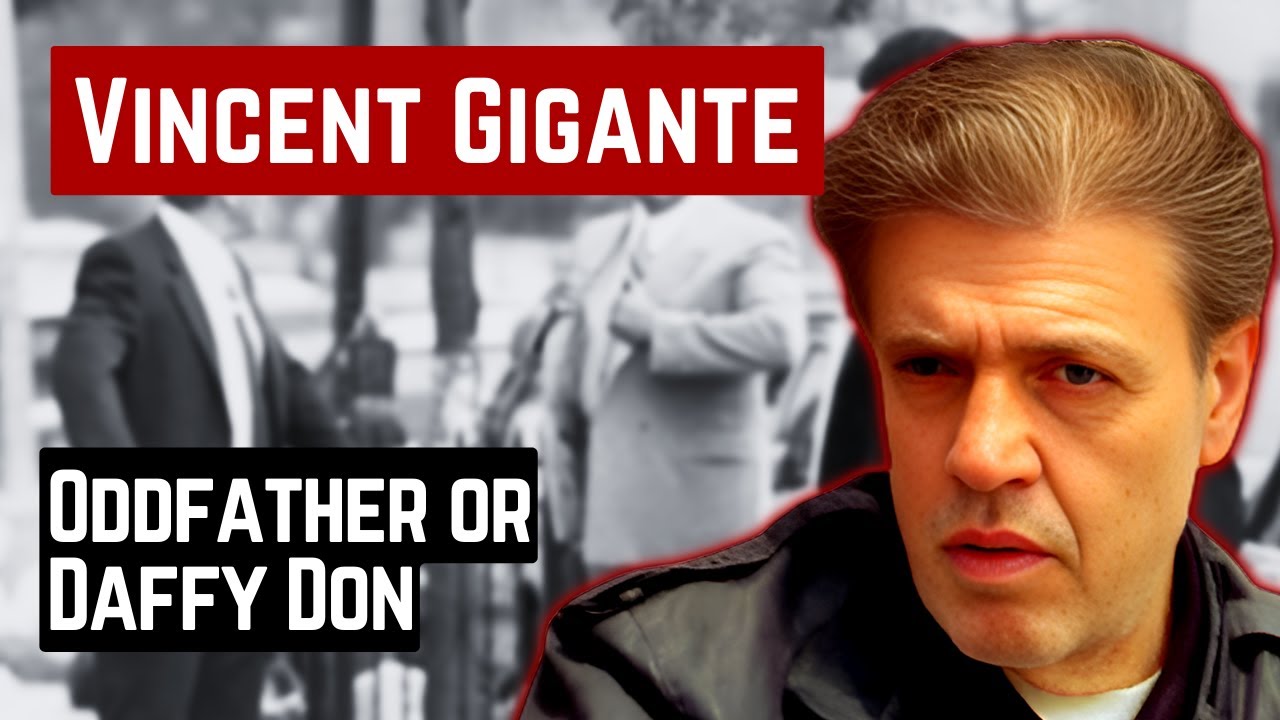
His arrest and behavior in court became big news, with tabloid headlines calling him “The Daffy Don” and “The Odd Father. ” Legal disputes over his ability to stand trial continued for seven years. As the battle dragged on, three key mobsters defected with new evidence against him. Sammy Gravano and Al D’Arco were prepared to testify that Gigante was a Godfather and to describe his relationship with the Gambino and Lucchese families.
D’Arco and Phil Leonetti planned to implicate him in six murders and several attempted murders. In June 1993, Gigante was back in court, still free on $1 million bond, as the sole defendant on a superseding indictment. He was accused of being the Genovese boss and having authorized a series of murders, including the bomb attempt on John Gotti’s life that killed Frank DeCicco, in addition to the windows racket. In a pivotal sanity hearing in the spring of 1996, federal prosecutors presented rebuttal opinions from psychiatrists that Gigante was faking, along with testimony from Savino, Gravano, D’Arco, and Leonetti that Mafia leaders understood Gigante’s irrational behavior was an act.
Gigante was found mentally fit to stand trial in August 1996 by senior judge Eugene Nickerson. The trial was delayed for six months while Gigante recovered from open heart surgery for the second time, a double coronary bypass, performed a day before it started. When he was finally wheeled into a courtroom in the summer of 1997, none of the surveillance recordings played during the trial featured Gigante’s voice, but the government had wiretaps and audio recordings of mob figures like John Gotti referring to him as “The Chin” and “Vincent” as the boss. Peter Savino, the prosecution’s most compelling witness, testified at the conclusion of the trial.
After three days of deliberation, an anonymous jury found Gigante guilty of running a racket as the head of the Genovese family and conspiring in murder plots against other mobsters. Judge Jack Weinstein imposed a 12-year prison term and a $1. 25 million fine on December 18, 1997. At the age of 69, Gigante continued acting insane from behind bars while maintaining his position as the Genovese family’s leader.
Federal prosecutors needed another five years to reveal his true power. He was charged again in 2002, along with other organized crime figures including his son Andrew, with racketeering and obstructing justice. In April 2003, Gigante acknowledged that he had misled a series of psychiatrists who had been evaluating his mental capacity for the previous three decades. In exchange for his admission and guilty plea to obstruction of justice, the government dropped the racketeering charge that he had continued to run a crime family from prison.
His additional 20-year exposure was reduced to serving three more years plus three years of supervised probation. Vincent Gigante died on December 19, 2005, at the medical center for federal prisoners in Springfield, Missouri, at the age of 77.