LONDON — For seventy-four years, the British royal family maintained a carefully constructed silence about the four German sisters of Prince Philip, the late Duke of Edinburgh, whose marriages to Nazi-affiliated aristocrats forced them into exile from his 1947 wedding and erased them from official royal history.
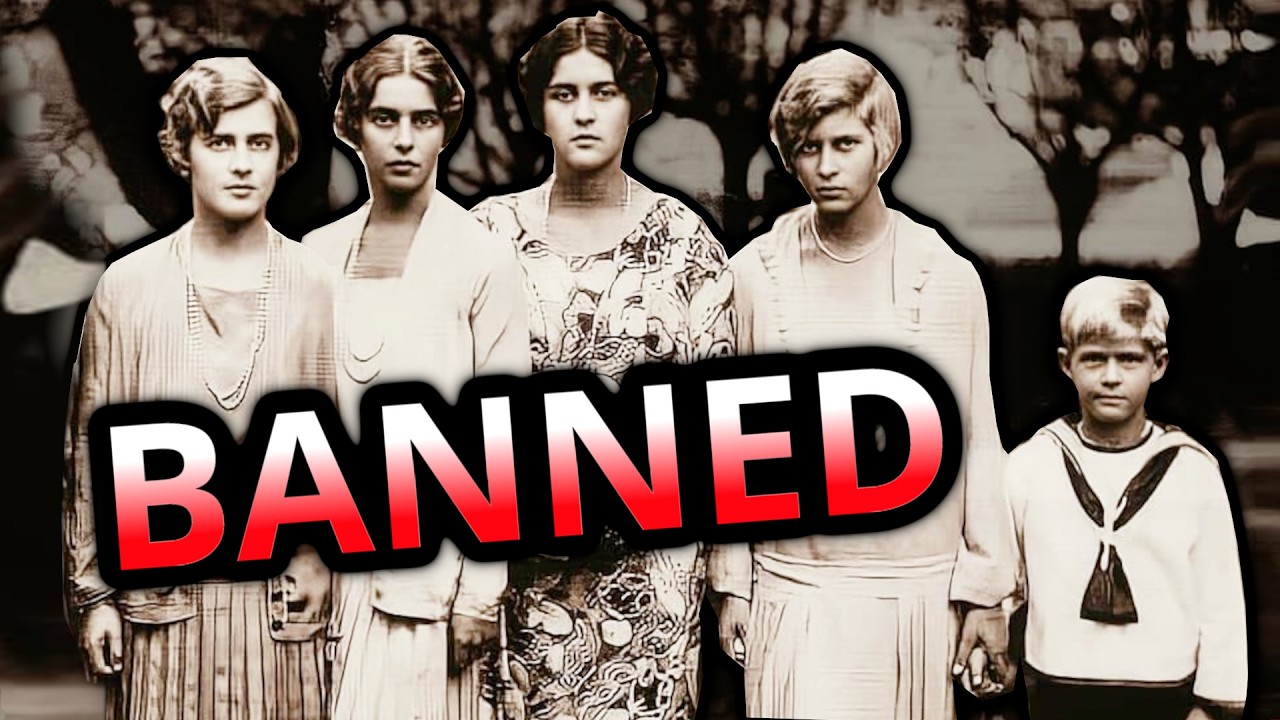
That silence was shattered this week by a documentary that reconstructs, in unflinching detail, the story of Margarita, Theodora, Cecilia, and Sophie — the sisters who raised Philip after his mother was institutionalized and his father abandoned the family, and who were then banned by King George VI from attending his wedding to the future Queen Elizabeth II.
The program, drawing on unpublished memoirs, archival photographs, and declassified records, presents a portrait of a family fractured by history and a monarchy determined to bury the evidence.
At the center of the story is a single, devastating fact: when Philip Mountbatten married Princess Elizabeth at Westminster Abbey on November 20, 1947, not one of his surviving sisters was in the congregation. The official explanation was that they had married Germans and the war had ended only two years earlier. The documentary argues the real reason was darker — three of the four had married men who were members of the Nazi Party.
Philip walked down the aisle essentially alone. His father, Prince Andrew of Greece, was dead. His mother, Princess Alice, was permitted to attend only after palace officials forced her to remove the gray nun’s habit she had worn for years and dressed her instead in a simple silk gown.
His sisters listened to the ceremony on the radio from Germany.
The documentary traces the roots of that decision to a childhood marked by almost unimaginable upheaval. Philip was born on a kitchen table on the Greek island of Corfu on June 10, 1921 — the fifth child and only son of Princess Alice and Prince Andrew. Within eighteen months, a military coup had toppled his uncle, King Constantine I, and the family fled Greece aboard a British warship, with the infant Philip carried to safety in an orange crate.
They settled in Paris, living on the charity of wealthy relatives. But the family was already disintegrating. Philip’s father, humiliated by exile, grew bitter and distant.
His mother began hearing voices, claiming she received divine messages from Jesus and Buddha and possessed healing powers. In 1930, when Philip was nine, she was diagnosed with schizophrenia and committed to a Swiss asylum, where doctors subjected her to barbaric treatments including ovarian X-rays intended to cure her delusions.
His father did not stay. He moved to Monte Carlo with his mistress, spending his days gambling and sailing on her yacht, effectively abandoning his only son.
One by one, the sisters married German princes and left. Sophie wed at sixteen in 1930. Margarita and Theodora married in 1931.
 Cecilia married in 1931 as well. Within two years, all four were gone. Philip, nine years old, was alone — his mother locked away, his father living with another woman, his sisters scattered across Germany.
He was shuffled between relatives in England and boarding schools, passed around, in the documentary’s words, “like an inconvenience.” He did not see or hear from his mother for five years.
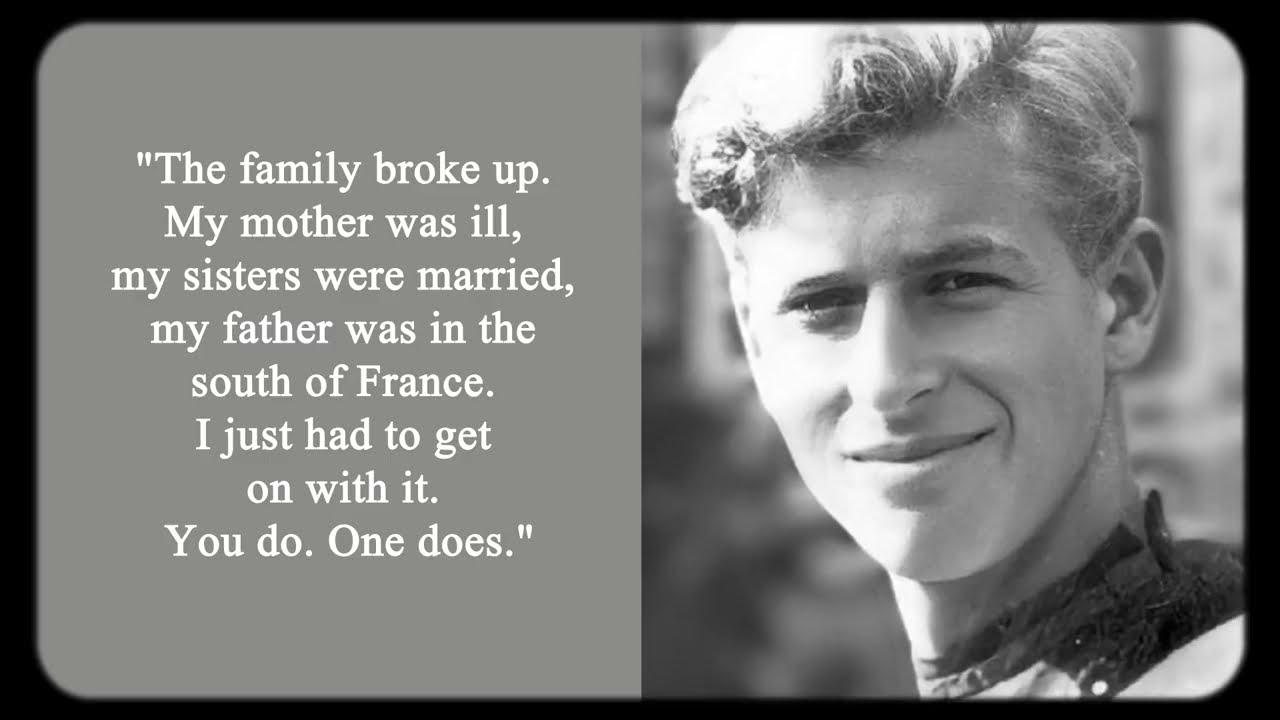
Years later, Philip refused to dwell on the period. “It’s simply what happened,” he said. “The family broke up.
My mother was ill. My sisters were married. My father was in the south of France.
I just had to get on with it.”
But the documentary makes clear that getting on with it did not mean forgetting. In 1933, Theodora brought the twelve-year-old Philip to Germany to live with her so he could attend Schule Schloss Salem, a progressive school founded by the Jewish educator Kurt Hahn. The move placed Philip directly in the shadow of the rising Reich.
Theodora’s husband, Berthold, Margrave of Baden, was the only one of Philip’s brothers-in-law not affiliated with the Nazi Party. He worked closely with Hahn and used his aristocratic connections to help secure the educator’s release when the Gestapo arrested him in 1933. Hahn fled to Scotland and founded Gordonstoun, the school Philip later attended and which shaped much of his character.
The other sisters were not so fortunate. Margarita and her husband, Prince Gottfried of Hohenlohe-Langenburg, joined the Nazi Party on May 1, 1937, and used their royal connections to promote the regime abroad, particularly in Britain. Gottfried served on the Eastern Front and was severely wounded.
By 1944, however, he had turned against Hitler and was implicated in the July 20 assassination plot. He survived the war.
The darkest chapters belong to the two youngest sisters. Cecilia, described by biographers as the most beautiful of the four and by her father as his favorite child, married Georg Donatus, Hereditary Grand Duke of Hesse, in 1931. They joined the Nazi Party in 1937.
Six months later, they were dead.
On November 16, 1937, Cecilia — eight months pregnant — boarded a plane in Frankfurt with her husband, their two young sons, and Georg’s mother, bound for London for a family wedding. Somewhere over Belgium, thick fog rolled in and Cecilia went into labor. The pilot diverted toward Ostend, desperate to land.
The plane clipped a factory chimney, tore apart, and burst into flames.
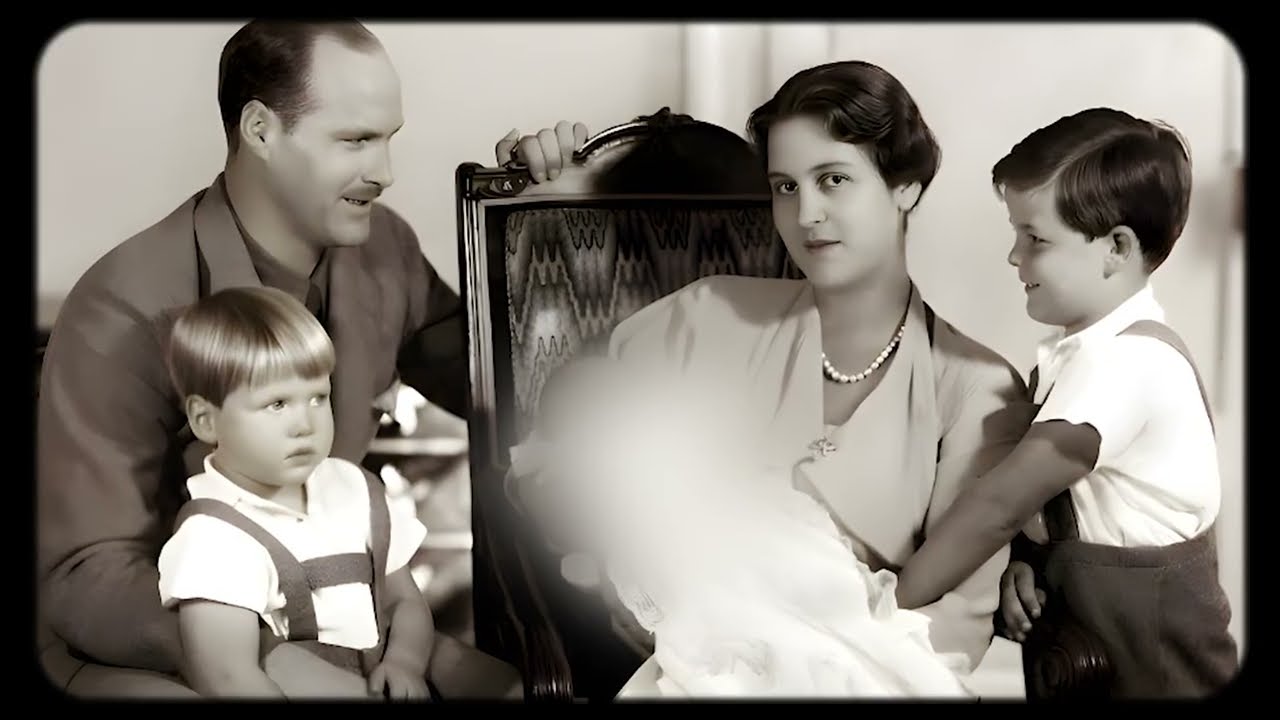
Rescuers found a newborn baby among the bodies. Cecilia had given birth in the final moments, either in the air or during the crash. Neither survived.
The funeral in Darmstadt became one of the largest royal gatherings before the war — and a Nazi propaganda event, with swastikas lining the streets, crowds giving the Hitler salute, and soldiers in full Nazi regalia forming the honor guard. Walking behind his sister’s coffin was sixteen-year-old Philip, surrounded by men in Nazi uniforms. Those photographs would haunt him for decades.
Little Johanna, the toddler left behind, was adopted by an uncle. She died of meningitis two years later, at the age of two.
If Cecilia’s story is a tragedy, Sophie’s is a cautionary tale. Married at sixteen to Prince Christoph of Hesse, she watched her husband join the Nazi Party one month before their wedding and the SS a year later. By the mid-1930s he was an SS-Oberführer and head of the Forschungsamt, Hermann Göring’s secret intelligence service, responsible for wiretapping political opponents and intercepting diplomatic cables.
In her unpublished memoir, Sophie described how Göring repeatedly insisted that she and Christoph meet Hitler personally. They invited him to lunch at their apartment. “I have to say here that, although Kri and I changed our political view fundamentally some years later, we were impressed by this charming and seemingly modest man, and by his plans to change and improve the situation in Germany,” she wrote.
A 1935 photograph shows Sophie at the top table of Göring’s wedding, seated directly across from Adolf Hitler. When her first son was born, she and Christoph named him Karl Adolf Andreas — Adolf, after the Führer.
Christoph grew disillusioned and reportedly welcomed the assassination of Reinhard Heydrich in 1942. He was killed on October 7, 1943, when his plane crashed into an Italian hillside. Sophie was widowed at twenty-nine, pregnant with their fifth child.
She remarried in 1946, just before Philip’s wedding, which she was forbidden to attend. She lived until 2001, dying at eighty-seven, having become godmother to Prince Edward. Her memoir remained unpublished until a Channel 4 documentary unearthed it in 2015.
By then Philip was ninety-four. He never commented.
When war broke out in 1939, Philip was eighteen and serving on British warships. At the Battle of Cape Matapan in 1941, he controlled the searchlights on HMS Valiant, helping the British fleet sink three Italian cruisers. He was mentioned in dispatches and awarded the Greek War Cross.
His brothers-in-law were fighting for the other side. The same family, split down the middle by the deadliest war in human history.
 Bridging the divide was Philip’s mother, Princess Alice, who stayed in Athens during the Nazi occupation, living around the corner from Gestapo headquarters. She hid a Jewish family — Rachel Cohen and two of her children — in her residence for over a year. When the Gestapo came to investigate, she pretended she could not understand them, using her deafness to her advantage.
The Cohens survived. Israel later recognized Alice as Righteous Among the Nations. She is buried on the Mount of Olives in Jerusalem.
The documentary details how, to marry Elizabeth, Philip renounced his Greek and Danish titles, became a naturalized British citizen, converted to the Church of England, and changed his name to plain Philip Mountbatten. He agreed never to mention his sisters. Elizabeth’s mother, the future Queen Mother, privately called him “the Hun.”
One courtier reportedly dismissed him as “a prince without a home or kingdom.”
The ban held for six years. Philip’s sisters were finally allowed back for Elizabeth’s coronation on June 2, 1953, seated quietly in the Abbey as their brother knelt before his wife and swore to be her liege man of life and limb. No announcements were made.
No explanations given. The palace simply pretended nothing had ever happened.
Reconciliation was slow. Philip visited his German relatives throughout the 1950s and 1960s. Margarita was named godmother to Princess Anne.
Theodora died in 1969; Philip, on an official trip to Canada, could not attend her funeral. Five weeks later, Princess Alice died at Buckingham Palace. Margarita died in 1981.
Sophie outlived them all, dying in 2001.
In 2015, Philip and Elizabeth made a state visit to Frankfurt, where they met publicly with his German relatives — the children and grandchildren of the sisters banned from his wedding.
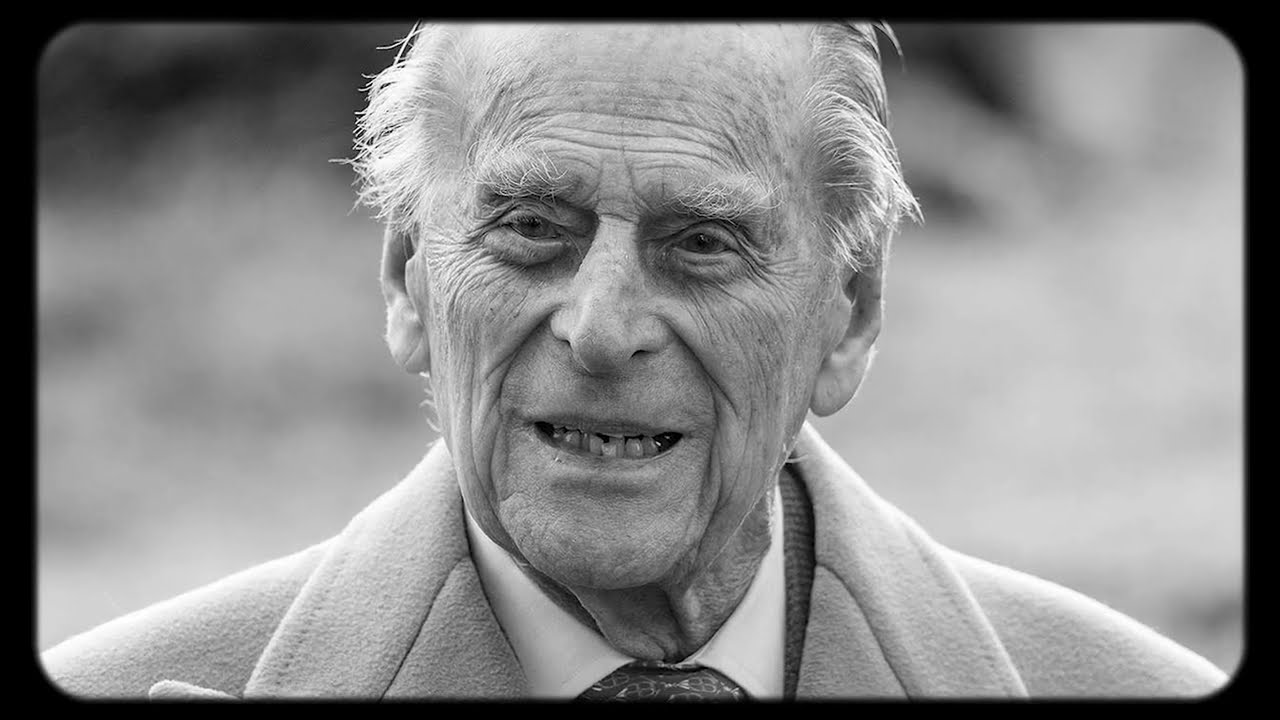
When Philip died on April 17, 2021, at ninety-nine, COVID restrictions limited his funeral to thirty mourners. Among them were three men most British viewers had never seen: Prince Donatus of Hesse, descended from both Cecilia and Sophie; Bernhard, Hereditary Prince of Baden, Theodora’s grandson; and Prince Philip of Hohenlohe-Langenburg, Margarita’s grandson. The media called them distant German relations.
They were not distant at all. Philip had personally requested their presence.
After a lifetime of silence, the family the palace had spent decades pretending did not exist was finally, quietly, acknowledged — through the grandchildren who came to say goodbye.