
LOYAL VALLEY, Texas — The old man in the Comanche war bonnet ran the yearling down at a gallop, dropped it with a single arrow, and ate its raw liver while the grandstand fell silent, and no one watching at that Texas Hill Country fair in the autumn of 1925 could have guessed that the hunter they were applauding had been born a few miles down the road to German immigrant farmers.
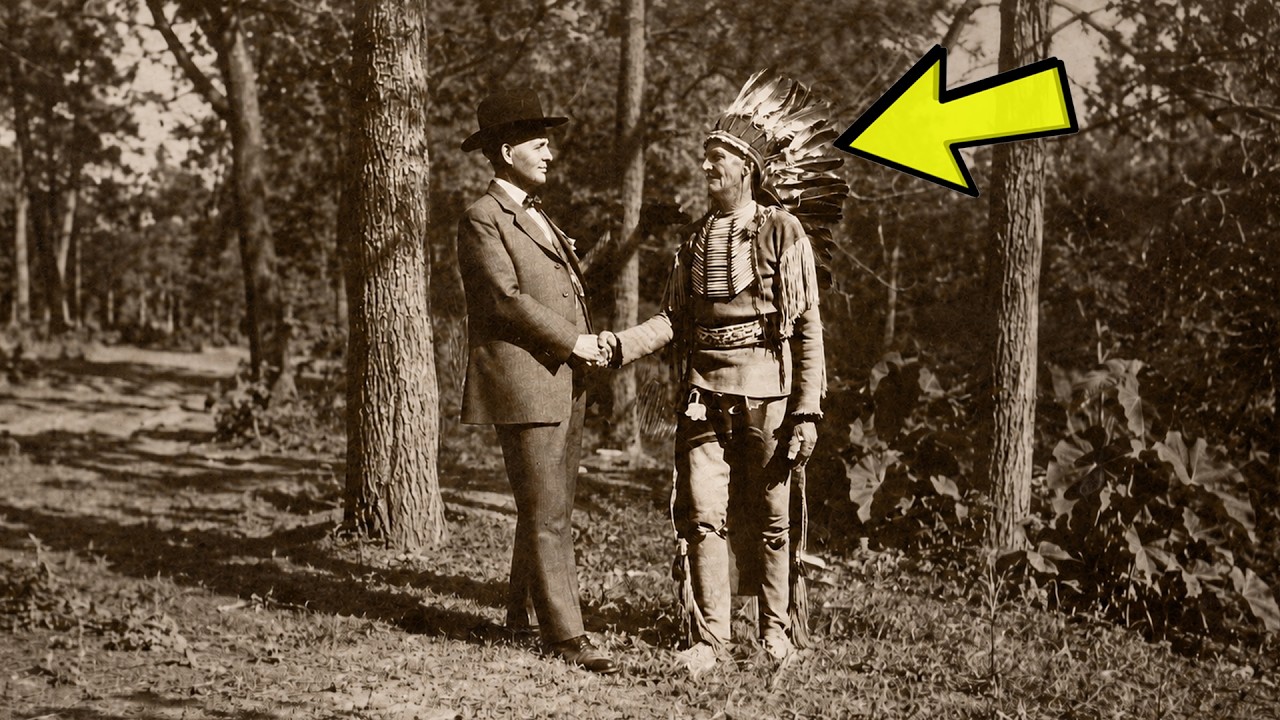
His name was Herman Lehmann, and by the time he died in this small Mason County community on Feb. 2, 1932, at the age of 72, he had lived two complete lives in a single body — one as a kidnapped white boy taken from a wheat field, the other as a Comanche warrior who refused, to his last breath, to become white again.
The story of how a blue-eyed son of Lutheran homesteaders became the adopted son of the legendary Comanche chief Quanah Parker — and then petitioned the United States government for recognition as an Indian — remains one of the most extraordinary and least understood chapters of the American frontier.
It began on May 16, 1870, a warm Monday in the wheat fields near Loyal Valley, where the grain was ripening and the birds had found it. Auguste Lehmann sent her children out to scare them off. Herman was three weeks short of his 11th birthday.
His brother Willie was 8.
The field sat within sight of the house. It was about as safe as any task on that frontier could be. The children never saw the raiders until they were already among them.
A small party of Apache warriors — Mescalero and Lipan men who had ridden hundreds of miles east from the New Mexico mountains — came out of the brush at a run. Herman would later remember a warrior seizing him so fast he had no time to cry out. The girls bolted for the house.
The men wanted the boys.
They stripped Herman and Willie of their homespun clothes — the practical logic of raiders who knew a naked child in cactus country will not run far — threw them across horses and turned west at a gallop.
The man who claimed Herman as his own prize was a warrior named Carnoviste. Herman did not know it yet, but that name would define the next six years of his life.
What followed was an ordeal by distance. The raiders rode hard for days north and west across the Llano country and out onto the open plains. The boys were given almost nothing to eat.
Their bare skin blistered in the sun, and Herman later described being so consumed by thirst and exhaustion that the days blurred into a single unbroken smear of grass and sky.
A few days into the ride, the party got careless or got unlucky. They were spotted and pursued, and in the confusion of a running skirmish, little Willie was left behind on the trail. He was 8 years old, naked, sunburned, and alone in country he did not know.
Somehow, Willie walked and wandered his way back toward the settlements until searchers found him blistered, starving, and alive — carrying the only eyewitness account the family would get for the better part of a decade.
He came home to a mother who wept over one recovered son and then had to absorb what his return meant. Herman was still out there somewhere beyond the horizon, and there was nothing anyone in Loyal Valley could do about it.
Auguste Buckmeyer made a decision that spring that is easy to read past and hard to actually do. She decided not to bury her son in her mind. For the next eight years, she wrote letters to army officers, to Indian agents, to newspapers, to anyone with authority on the frontier, describing a blond, blue-eyed boy taken from a wheat field near Loyal Valley in May of 1870.
The frontier was full of grieving parents, and most of those letters changed nothing. One of them eventually would.
Herman, meanwhile, was carried west into the mountains of New Mexico, into an Apache camp, and a fate he could not have imagined. What the Apaches did next was not simply cruelty, and it was not simply kindness. It was a process, old and deliberate, for turning an enemy’s child into one of their own.
The first weeks were the breaking. Herman was, by his own later account, beaten, burned, mocked, and worked to exhaustion. He was the camp’s lowest creature, hauling water and wood, sleeping wherever he was allowed to drop.
But alongside the 𝓪𝓫𝓾𝓼𝓮, something else was happening that Herman only understood in hindsight. He was being trained. The same men who cuffed him also forced him to run long distances until his lungs gave out, then further.
They threw him into icy mountain streams in winter and made him swim. They put him on half-wild horses and expected him to stay on.
Every torment doubled as a lesson, and the lessons had a direction. The Apaches were not keeping a slave. They were making a son.
Around the hard schooling, ordinary life went on, because an Apache camp was not a war machine. It was a household, moving with the seasons through the mountains of southern New Mexico. Herman came to know its rhythms the way he had once known planting and harvest.
There were women who fed the captive boy without being asked, and children who fought him, then played with him, then simply included him. Cruelty and tenderness came from the same lodges, and a lonely child does what lonely children have always done. He attached to whoever was there.
Still, a captive who dreams of home is a captive who will run. Carnoviste understood this, and so at some point in that first year he told Herman a lie, calmly and completely. He told the boy that the raid had not ended in the wheat field.
He told him the warriors had gone back and killed his entire family. His mother, his stepfather, his brother, his sisters, all of them dead.
There was no farm on the Llano to run back to. There was nothing behind him at all.
 Herman believed it. Why wouldn’t he? He was 11, a thousand miles of hostile country from anything familiar, and the lie did exactly what it was designed to do.
It cut the rope. A boy with no family has no reason to escape, and a boy with no reason to escape can be given a new family.
The Apaches gave him a name, Anda, which meant white boy, and Carnoviste began treating him less like a prize and more like an heir. It worked with a speed that Herman himself found remarkable when he looked back on it as an old man.
Within a couple of years, the German boy who had prayed in a Methodist pew was riding bareback across the malpais, shooting a bow from a galloping horse, and thinking in Apache.
The skills came with a worldview attached. Courage was the highest currency, generosity ranked just behind it, and the band was the world. His first raids taught him the craft behind the terror the settlers felt.
A party traveled light and mostly at night, riding relay horses across distances that made pursuit feel supernatural. The full moon the Texans dreaded was simply working light.
Herman started at the bottom, holding horses in the dark at the edge of a sleeping ranch while the men slipped in among the corrals, and graduated by degrees until somewhere in those years he stopped being the boy the warriors protected and became a warrior.
From around age 13, he rode on raids into Texas and Mexico, and horse raids were not bloodless adventures. His memoirs describe fights in which people on both sides were killed, and he does not pretend to have been a bystander. The people sleeping with rifles by the fence posts were now sometimes sleeping with rifles because of him.
By 15, there was no meaningful sense in which he was a German boy in costume. The transformation captivity narratives always hint at had, in his case, simply completed.
By the mid-1870s, the world Herman had been adopted into was visibly running out of room. Texas had reorganized the Rangers into the Frontier Battalion in 1874, companies of young, well-armed riders whose entire job was hunting raiding parties. That same year, the army’s Red River War broke the military power of the Comanches and Kiowas and drove band after band onto the reservation at Fort Sill.
When the troopers destroyed the great Comanche camps in Palo Duro Canyon and shot over a thousand captured horses, everyone on the plains understood how this was going to end. A horse people without horses on a buffalo plain without buffalo cannot stay free.
In August of 1875, that collision became personal. Herman’s raiding party had swung through the Texas Hill Country when a company of Texas Rangers cut their trail and ran them down in a running fight across miles of broken country. Herman fought as rear guard, his long braided hair flying, indistinguishable at speed from any other young warrior.
One of the Rangers chasing him that day was a 19-year-old named James Gillett, who would become one of the most famous lawmen in Texas. In the chaos of the fight, Gillett closed on the long-haired rider, brought his rifle up, and had him. One squeeze of the trigger and this story ends in a nameless draw in 1875.
The horse swerved, the shot went wide, and Gillett rode on with no way of knowing he had just nearly killed a kidnapped boy from Loyal Valley.
Herman escaped that fight on foot, hunted and stripped of nearly everything, and the ordeal of getting back to the band across all that open country was a survival story in itself. The larger pattern was unmistakable. The raids into Mexico still worked, but the Texas side was closing like a fist.
Everywhere the war parties rode, they crossed buffalo grounds turning into bone fields, white with skeletons as far as a man could see.
Then, around 1876, disaster arrived from inside the camp rather than outside it. During a drunken quarrel, a medicine man of the band shot and killed Carnoviste. The man who had stolen Herman’s childhood, lied his family into their graves, beaten him, trained him, and finally loved him as a son, was suddenly gone.
Herman’s reaction tells you everything about who he had become. He did not feel liberated. He felt orphaned again.
And under the code he now lived by, an orphaned son had one clear obligation. Herman killed the medicine man.
He was 17 years old, and in the space of a few days, he had lost his father and made blood enemies of the dead man’s kinsmen, men with real standing in the only community he had. He took horses and weapons, slipped out of camp at night, and rode east onto the staked plains alone.
For roughly a year, a teenage boy lived entirely alone on the Llano Estacado, the high, flat, nearly featureless tableland straddling the Texas and New Mexico line. He could not go to the whites, who as far as he knew were the enemy that had killed his family. He could not go back to the Apaches because a dead medicine man’s kin were somewhere behind him.
So he simply lived the way an animal lives in the seams of the country. He camped in draws where his fire would not show, moved every few days, and hunted with the bow when he could because a gunshot on the plains announces a man for miles.
Through the summer that discipline was survivable, even in his telling occasionally sweet. He had horses, meat, and absolute freedom. But then the northers came, the blue winter winds that dropped the plains temperature 40 degrees in an hour, and the freedom turned into something closer to a sentence.
Herman spent that winter huddled in brush shelters with his horses, a boy of 17 with no band, no family, no language he could safely speak to another human being. He talked to his horses because they were the only company that could not betray him. More than once he lay in the grass at night watching the glow of a distant campfire and felt the pull toward that light like a physical force, weighing warmth and voices against the possibility of a bullet.
Each time, for months, caution won, and he backed away into the dark.
By the spring of 1877, the loneliness beat the caution. Herman cut the trail of a Comanche band and made a decision that could easily have killed him, because a lone rider in Apache gear approaching a Comanche camp was a legitimate target. He rode toward the smoke anyway.
What happened next was a standoff. Warriors surrounding a stranger who sat his horse and signed that he came in peace. Then a wary escort into camp, then a council.
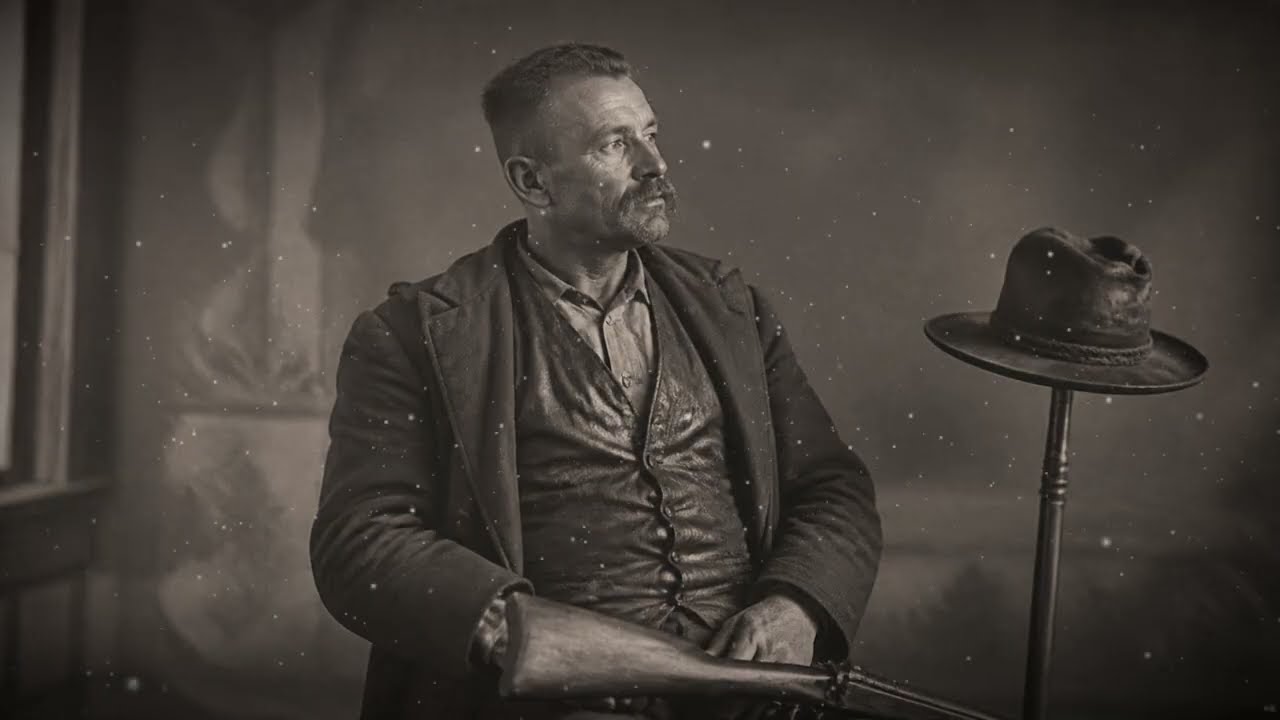 He spoke Apache. Some of them did, too. He was young, obviously hardened, obviously alone.
And the Comanches, at the end of their own freedom and short of fighting men, made room at the fire.
Herman Lehmann had just joined the last free Comanches on Earth in the final months there would ever be such a thing.
The band moved in the orbit of the Quahada Comanches, and the Quahadas meant one man above all, Quanah Parker. To understand why Quanah looked at this blue-eyed warrior and saw something worth protecting, you have to know his own family story, because it is Herman’s story reflected in a mirror.
In 1836, Comanche raiders had carried off a 9-year-old settler girl named Cynthia Ann Parker. Like Herman, she was absorbed completely. She became Naduah, married the war chief Peta Nocona, and bore Quanah.
Then in 1860 at the Pease River, Texas Rangers recaptured her and returned her by force to a white family she no longer knew.
Texans expected a joyful redemption. What they got was a woman who repeatedly tried to escape back to the plains and who, after her young daughter died, essentially grieved herself to death.
Quanah grew up with that wound. His mother had been taken twice, once by the Comanches and once by the whites, and it was the second taking that destroyed her. Quanah had answered that grief by becoming, for a time, the most uncompromising holdout on the plains, keeping his Quahadas free on the Llano Estacado longer than any other Comanche band before leading them into Fort Sill in 1875.
So when a white-born, Apache-raised young man rode out of the emptiness and asked to belong, Quanah Parker understood exactly what he was looking at. In time, Quanah did not merely tolerate Herman. He took him into his own family and called him a son.
Herman, who had now lost two fathers, a German farmer he could barely remember and an Apache warrior he had avenged, was given a third.
The belonging was real. The timing was terrible. By 1877, the free Comanche life Herman had just been welcomed into was measured in months.
The buffalo were nearly gone from the southern plains, shot into bone piles by the hide men. The army held Fort Sill and the reservation in Indian Territory, and Quanah himself, reading the future clearly, had already led his people in and was urging the last holdouts to follow.
In the summer of 1877, the band Herman rode with came in to Fort Sill. There was no battle at the end, no last stand. The last free Comanches simply rode toward the agency because the alternative was watching their families starve on a plain the buffalo had left.
And Herman rode with them.
Just like that, his world shrank to the boundaries of a reservation. And on a reservation, unlike on the open plains, people get counted. Agency clerks recorded names, officers walked the camps, and sooner rather than later, somebody official looked closely at a young Comanche warrior and noticed that under the paint and the braids and the sun-blackened skin, his eyes were blue.
Herman did not cooperate with the discovery. When questioned, he denied being white. It was not exactly a lie.
He no longer spoke English or German. He had no memory he trusted of any life before the plains, and the life he could remember told him white men were the enemy who had destroyed everything he loved.
Quanah shielded him for a time, and among the Comanches, he was simply one of their own. But Herman had a complication no other young Comanche man had. Somewhere in the paperwork of Texas, he matched a description.
Because far to the south, Auguste Buckmeyer was still writing letters. Eight years of them by now, describing a boy taken from a wheat field near Loyal Valley in May of 1870.
In the reservation era, those letters finally had something to be checked against. A young white man of exactly the right age living among the Comanches at Fort Sill. The pieces fit.
In the spring of 1878, the army made its decision, and it was not framed as a question. Herman Lehmann was going home, whether or not he believed he had one. Accounts of that moment agree on something quietly devastating.
Quanah Parker, the adopted father, did not fight the order. He had watched his own mother be dragged between worlds, and he seems to have told Herman, in effect, that a living mother was not a thing a man should refuse.
So in April of 1878, an escort of soldiers took Herman south, out of Indian Territory, across the Red River, and down through Texas, retracing in reverse the geography of his childhood abduction. Around the 12th of May, almost exactly eight years after he had been carried out of the wheat field, the escort rode into Loyal Valley and delivered him to a stone and timber farmhouse full of strangers.
The Buckmeyer family had prepared a homecoming. Neighbors gathered, there was food, and there were tears, and there was a mother searching the face of a 19-year-old warrior in braids and paint for her little boy.
Herman later described that day with unsparing honesty. He recognized no one. He felt nothing.
When his mother embraced him, he endured it. As far as his heart was concerned, his mother had died in 1870, and this crying stranger was a white woman in a white house in enemy country.
One person eventually got through, and it makes a certain sense who it was. Willie. The little brother who had shared the first days of captivity was now a grown man of 16, and he carried memories from both sides of the divide, the farm and the raiders, the German hymns and the hard ride west.
Through Willie and through sheer daily repetition, the fact of the family slowly became believable to Herman. These people were, apparently, his. Which meant Carnoviste’s lie finally stood fully 𝓮𝔁𝓹𝓸𝓼𝓮𝓭, and Herman had to absorb a brutal piece of arithmetic.
The grief that had converted him, the dead family that had made escape pointless and adoption possible, had been fiction. His mother had spent eight years writing letters. He had spent eight years mourning her.
You might expect that realization to snap him back, to make the white world feel like home again. It did not. The months after his return read less like a reunion than like a slow-motion standoff.
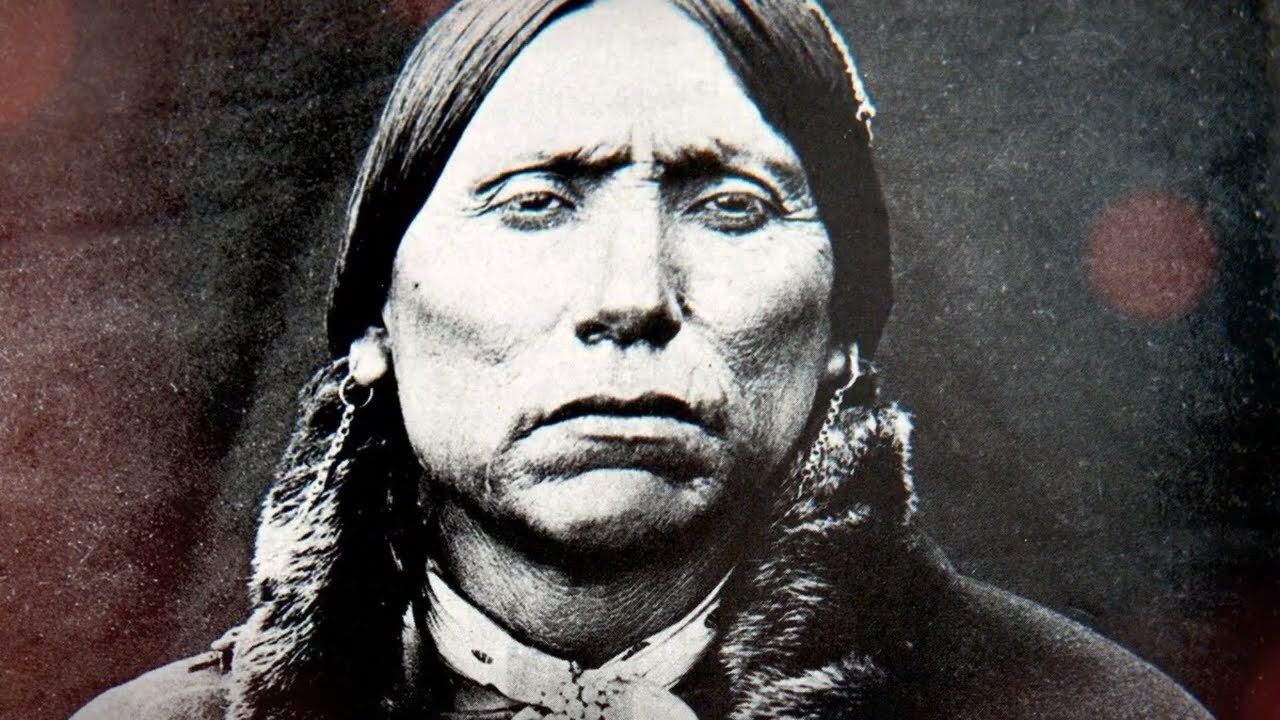
Herman refused the bed made up for him and slept on the floor or outside, wrapped in a blanket under the sky. He refused bread. He refused pork, which the Apaches had taught him was unclean.
He kept his hair long, kept his weapons close, and kept trying to leave. The family took turns watching him the way you would watch a door you knew was going to open.
Once invited to a neighborhood gathering, Herman decided to contribute to the entertainment the way an honored guest should, and performed a full war dance in paint and regalia. The room emptied. Some of those neighbors had buried relatives killed in raids exactly like the ones Herman had ridden on.
Herman was genuinely puzzled. He had meant it as a gift.
More than once he simply left and was talked back or ridden after and brought back. Auguste seems to have understood, with a patience that is its own kind of heroism, that her son could not be reclaimed by force a second time. He could only be waited for.
So the family waited and fed him and let him sleep under the stars in the yard of his own home, and very slowly the waiting worked, at least part way. Loyal Valley was being asked to reabsorb a young man who had been, in plain terms, one of the raiders. Some neighbors managed it, some never did.
Herman lived among people who saw, when they looked at him, both the stolen child and the enemy warrior, and there was no honest way to tell them they were wrong about either.
Slowly, over years rather than weeks, a partial peace set in. German came back to him first, then English. He was baptized into his family’s Methodist faith and worked when work suited him, anything on horseback, though he never made peace with the plow.
Digging in the earth, he thought, was no life for a man who had run buffalo.
A first marriage in 1885 came apart quickly. Then, in 1896, he married Fannie Light, and this one held. They raised five children, and Herman became something almost ordinary, a Hill Country husband and father with unusual stories.
Almost ordinary. Because the pull north never went away, and in the new century, Herman finally stopped resisting it. Around 1900, he moved his family north to Oklahoma, settling near the Comanche communities on the old reservation lands.
The Comanches received him as what he was, a relative. He visited Quanah Parker’s famous Star House, sat at gatherings not as a curiosity but as kin, and spoke the language he had never let go of.
Then he asked for something remarkable, and Quanah backed him. Herman applied to be formally recognized as a member of the Comanche nation on the grounds of his adoption as Quanah’s son. Think about what that request was.
A white man born to German immigrants petitioning the United States government to certify that he was legally an Indian.
The process ground on for years, and in 1908 it succeeded. The government approved his enrollment as an adopted member of the Comanche nation and granted him the same 160-acre allotment given to Comanches by blood. The government that had forcibly dragged Herman back to whiteness in 1878 formally conceded 30 years later that he had been Comanche all along.
In 1911, Quanah Parker died at Star House, and Herman mourned him as a son burying a father, the third father he had lost, and the last. He stayed on in Oklahoma for years, but around 1926, aging and in declining health, he came back to Loyal Valley to live out his last years with the person who had known him longest on this earth, his brother Willie. The two boys taken from the wheat field in 1870 ended the story under the same roof.
In his later decades, Herman Lehmann became a performer. At fairs, rodeos, old settlers reunions, and trail drivers conventions across the Hill Country and beyond, he would appear in full Comanche regalia, war bonnet trailing, mount a horse, and demonstrate the buffalo hunt. A yearling would be turned loose in the arena to stand in for the vanished herds, and Herman would run it down at a gallop and 𝓀𝒾𝓁𝓁 it with an arrow, then dress it and eat the raw liver, the hunter’s traditional portion, in front of the grandstand.
Crowds paid to watch at the Old Trail Drivers Reunions in San Antonio, at Hill Country fairs in Mason and Fredericksburg. And he did not water it down for the audience. Many of those crowds were the children and grandchildren of the very families who had once slept with rifles by the fence posts because of raiders like him.
It is easy to flatten those performances into something sad, an old man reenacting his stolen youth as entertainment for the people who took it back. And there is some of that in it. But the accounts we have suggest he did not experience it as humiliation.
The arena was the one place left in Texas where he was allowed, even applauded, to be fully and publicly what he was. For a few minutes in front of the grandstand, the rules of 1878 were suspended, and Anda got to come back.
The fairs produced one reunion that closes a circle opened long ago. Among the old-timers Herman came to know on the reunion circuit was a celebrated former Texas Ranger named James Gillett, the same man who in August of 1875 had leveled his rifle at a long-haired young warrior and missed. The two men worked out that they had been on opposite ends of that gunsight, and instead of a grievance, it became a friendship.
They appeared together, two elderly survivors of the same vanished war, telling the same story from both sides.
Herman also told his story at book length twice, first in 1899, and then in the fuller 1927 account, “Nine Years Among the Indians.” It remains one of the most valuable captivity narratives ever recorded, precisely because of what it refuses to do. Herman does not perform repentance.
He describes the raids and the killings without flinching, and he describes his years on the plains by plain statement and by unmistakable tone as the best years of his life.
The homesickness in that book does not point toward Loyal Valley. It points north, toward a country of grass and horses that no longer existed anywhere except in the memory of old men.
Herman Lehmann died at Loyal Valley on Feb. 2, 1932, at 72, and was buried in the community cemetery there, a few minutes ride from the wheat field where this story began. The Texas he left behind was one of highways and radio.
The one he remembered best had no fences in it at all.
The wheat field is still roughly where it always was, off the old road near Loyal Valley. And if you drive that stretch of Hill Country today, you will pass within sight of both ends of Herman Lehmann’s life, the farm he was stolen from and the grave he was returned to.
Everything in between resists the simple versions. Two families claimed Herman Lehmann for 60 years, and the uncomfortable truth this story leaves us with is that both of them were right. He was Auguste’s son, and he was Quanah’s.
He was the boy in the wheat field, and he was the old man in the arena closing his eyes over a drawn bow and seeing for a moment the herds come back.
We do not have to decide which one was the real Herman. He never did.