British forces entering the Bergen-Belsen concentration camp in April 1945 walked into a landscape of death that defied comprehension, and among the horrors they uncovered was a system of brutality administered in significant part by female SS guards whose crimes would become the focus of one of the most searing war crimes trials of the twentieth century.
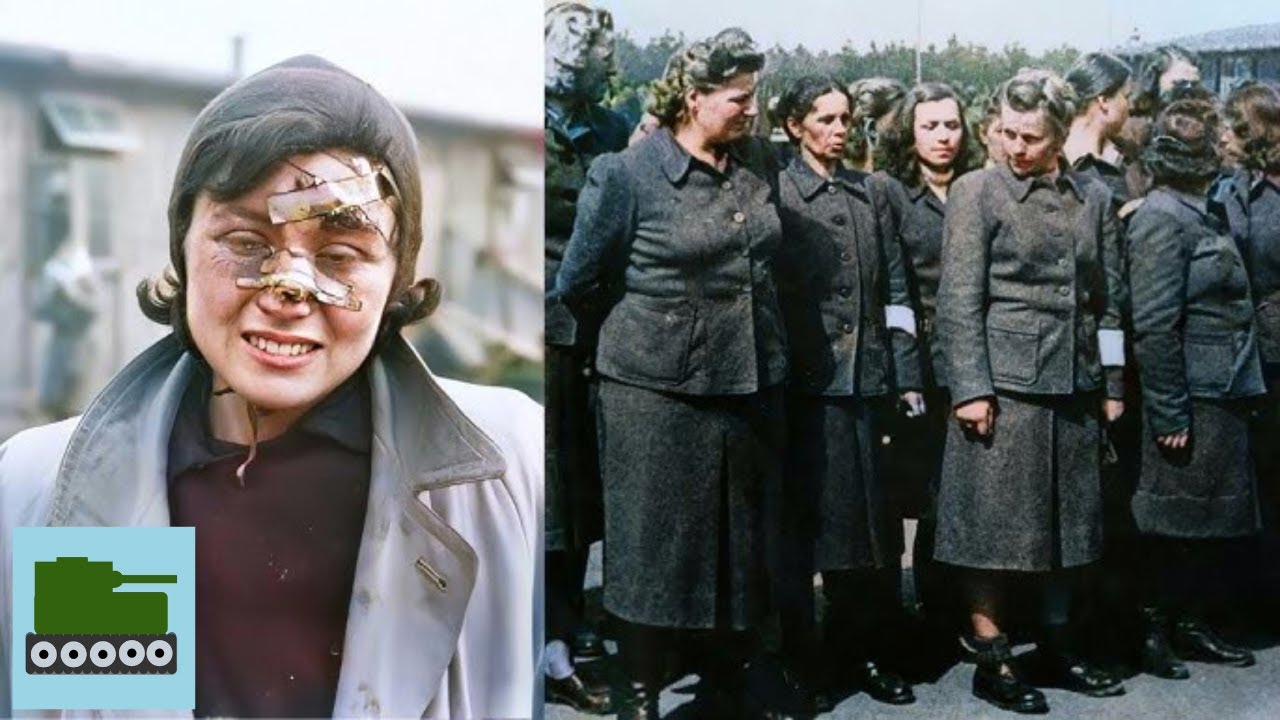
When the liberators pushed through the gates, they found thousands of dying prisoners and vast fields of unburied corpses. Disease and starvation ran rampant. At least 70,000 people are estimated to have been killed at Belsen over the course of its operation, even though the camp never possessed gas chambers.
The conditions themselves were the murder weapon, and the women who oversaw those conditions were among the deadliest instruments of the Nazi killing machine.
Bergen-Belsen began its life as a camp for the Reich Labour Service and later served as a military facility before falling into disuse following the German invasion of Poland. Its huts were then repurposed to house prisoners of war. In June 1940, Belgian and French POWs were held there.
As the war continued, it became an independent camp known as Stalag XI-C, intended to hold 20,000 Soviet prisoners. By the end of March 1942, 41,000 Soviet POWs had died there, killed by starvation, disease and exhaustion inflicted through forced hard labour.
In 1943, Belsen was taken over by the SS Economic and Administration Main Office and came under direct SS control. Further large transports of prisoners arrived as the war ground on. In August 1944, a new section of the camp was designated as the women’s camp of Belsen.
In the months that followed, transports of women were sent there, including 9,000 in November 1944. Many who were able to work stayed only briefly before being sent to other sites. But at Belsen itself, the site rapidly became one of pure death and depravity.
The rate of death accelerated to the point where hundreds of people were dying each day from typhus epidemics and other pestilences. Food rations were grossly insufficient, and starvation became universal. Anne Frank and her sister Margot succumbed at Belsen.
Overseeing this catastrophe were female SS guards, known as Aufseherinnen, many of whom had already earned reputations for pure evil at other camps such as Auschwitz before being transferred away from the front lines to Belsen, which was closer to the German heartland.
These women continued to oversee the harsh treatment of prisoners and violently beat inmates even as the war approached its end. One woman arrested at Belsen was Alma Grese, known as the Hyena of Auschwitz. Grese was a complete brute, responsible for selecting inmates at Auschwitz to go to the gas chambers.
 She wore heavy boots and carried a whip and pistol, and she was known for using physical and emotional methods to torture camp inmates. She was also known for shooting prisoners in cold blood. She sometimes beat women to death with her whip and seemed to take great pleasure in doing so.
She was identified as one of the guards who accompanied a prisoner evacuation transport to Belsen from Ravensbrück, and she was later sentenced to death and executed for her crimes.
Elisabeth Volkenrath was also arrested at Belsen. She had a long list of crimes and held a rather senior position. She was known for beating prisoners so severely that she hospitalised them and also took part in selections.
It was said at Belsen that she threw an old woman down the steps of a workshop, and following this the woman immediately died. Because of Volkenrath’s brutality, she also took food and water from prisoners, depriving them of basic necessities. She was known for beatings alongside other female guards.
She oversaw the women tasked with collecting wood and would drive them to work harder. During roll calls she forced people to exercise so hard that they collapsed. She was known as a real brute, and she was later executed.
Known as the woman with the dog, Johanna Bormann differed from Grese and Volkenrath in that she was much older. She was a guard who had regulated patrol with her dog and at times was known for encouraging it to maul women, and at times her actions resulted in the deaths of many women prisoners. She was transferred to Belsen, where she served under Joseph Kramer, and she was given the job of looking after the pigsty.
She ensured the pigs were better fed than the inmates, and it was noted that she was seen beating women prisoners on a number of occasions for taking vegetables. What was disturbing was that her dog, which had been with her at Auschwitz and had been trained to 𝓀𝒾𝓁𝓁, remained by her side at Belsen. She kept it even when she was arrested, and it was found inside her room.
Bormann was later executed.
Herta Ehlert had previously worked at Majdanek and later claimed she had been moved because she was too nice to prisoners, but this was not the case, and she moved camps for more money. She worked at Auschwitz overseeing slave labour groups and was then sent to Belsen, where she worked as a deputy warden. She had been seen conducting severe beatings, and it was alleged that she was even witnessed murdering a prisoner.
She denied everything. She was also accused of stealing jewellery. Ehlert was sentenced to 15 years in prison, and she actually served only around six of those.

Initially conscripted into the SS in connection with the conflict, Ilse Forster was involved in accompanying a transport to Belsen. She regularly hit prisoners with her hands and a stick if they tried to steal food, and she prevented many from getting the nutrition they needed. She was very stern and was seen beating prisoners with a thick stick at Belsen, but her actions ultimately led to many people starving to death.
There were a number of other female guards, including Herta Bothe, Irene Haschke, Gertrud Sauer and Anna Hempel, who conducted themselves with comparable ruthlessness at Belsen. The women who worked there had been schooled in how to instigate a reign of terror. They were known for being brutal in their nature, and they denied inmates medical treatment as well as food and water.
They were the ones responsible for the conditions and the disease that tore throughout the camp.
In March 1945, at least 18,000 inmates died at Belsen, the deadliest month in the camp’s history. As the Allies approached, many SS members and women tried to flee, but some, like those mentioned, attempted to remain at the camp to uphold law and order.
The scale of the catastrophe was described by liberators in terms that remain difficult to read. One account recorded that over an acre of ground lay dead and dying people, and you could not see which was which. The living lay with their heads against the corpses, and around them moved the awfully ghostly procession of emaciated, aimless people with nothing to do and no hope of life, unable to move out of your way and unable to look at the terrible sights around them.
Babies had been born there, tiny and weak, things that could not live. A mother driven mad screamed at a British sentry to give her milk for her child and then thrust a tiny mite into his arms and ran off crying terribly. He opened the bundle and found the baby had been dead for days.
It was described as the most horrible day of that witness’s life.
Over the time in which Belsen operated as a concentration camp, at least 480 people worked there, including at least 45 women in control of the women’s camp. One British lieutenant recounted that shortly after the British Red Cross arrived, though it may have had no connection, a very large quantity of lipstick arrived. This was not what the men wanted.
They were screaming for hundreds of thousands of other things, and he did not know who asked for lipstick. He wished so much that he could discover who did it. It was, he said, actual genius, sheer unadulterated brilliance.
 He believed nothing did more for those inmates than the lipstick. Women lay in bed with no sheets and no nightie but with scarlet red lips. You saw them wandering around with nothing but a blanket over their shoulders but with scarlet red lips.
He saw a woman dead on the postmortem table and clutched in her hand was a piece of lipstick. At last someone had done something to make them feel individuals again. They were someone, no longer merely a number tattooed on the arm.
At least they could take an interest in their appearance. That lipstick started to give them back their humanity.
There were so many dead bodies and corpses around, ridden with disease, that the guards who worked there were forced to help clean up. The captured female guards were forced to help and were involved in carting the bodies and corpses into the mass graves. Many were pictured on board the carts where the bodies were taken from, and a number of female guards caught typhus from cleaning up the camp.
This was seen as a necessary degree of punishment. The cleanup operation took days.
The captured female guards of Belsen were brought to trial, and a number were acquitted of crimes as they were said to have arrived too late to Belsen or their guilt in war crimes and crimes against humanity could not be established. Some were given prison sentences but were released early around 1952. There were three women executed for their crimes, not just at Belsen but also at Auschwitz.
The women who had worked previously at Auschwitz received harsher punishment due to the selections for the gas chambers that took place there. Some women, like Herta Bothe, were spared the death penalty but convicted of crimes at Belsen alone, not at Auschwitz.
Belsen did not have gas chambers, but the female guards at Belsen were considered some of the most brutal and loyal SS staff of the concentration camp system. They were sent with many transports of prisoners to make sure they reached their final destination and Belsen without any rebellion or escape. They were responsible for the conditions there but also for violent acts that caused the deaths of many people.
What happened inside Bergen-Belsen scarred many of the survivors and the liberators until the day they died. The trials that followed held only a fraction of the perpetrators to account, and many of the women who administered the camp’s reign of terror never faced justice at all. The testimony and photographs that emerged from Belsen remain among the most damning records of the Holocaust, a permanent indictment of the ordinary people who chose, day after day, to inflict extraordinary cruelty on the defenceless.